2.1 C
New York
Home Blog Page 1217

MOL to participate in construction, ownership, operation of FSRU for Jawa 1 gas-fired IPP project in Indonesia

0

Mitsui O.S.K. Lines, Ltd. has signed deals for construction of a floating storage and regasification unit (FSRU), FSRU services, and financing for the Jawa 1 Gas-Fired Project, through PT Jawa Satu Regas (JSR), a joint company of PT Pertamina, Marubeni Corporation, and Sojitz Corporation etc. MOL is entrusted with FSRU construction supervision, maintenance, and operation services.

In this project, PT Jawa Satu Power(JSP), jointly established by Pertamina, Marubeni, and Sojitz, will build, own, and operate a gas-fired power plant with a generating capacity of 1,760MW in Indonesia's West Java province while JSR will build, own, and operate a FSRU at sea to storage and regasify LNG to supply fuel to the power plant. The power plant and the FSRU will be maintained and operated integratedly and the electricity produced by these facilities will be sold to Indonesian state-owned electricity utility PT PLN (Persero) for over 25 years. This is Asia's first such Gas-to-Power project using FSRU, electric generation and gas related facilities will be developed in an integrated manner. The FSRU will feature the optimal tank capacity and regasification capacity tailored to the plant's power generation capacity.

This project is co-financed by the Japan Bank for International Cooperation, Asia Development Bank, Mizuho Bank, Ltd., MUFG Bank, Ltd., Oversea Chinese Banking Corporation, Crédit Agricole Corporate and Investment Bank, and Societe Generale Bank & Trust. Financing of private financial institutions is insured by Nippon Export and Investment Insurance.

Through this project, MOL will help ensure a stable supply of electricity in Indonesia, based on its accumulated achievements and experience in LNG carrier and FSRU operation, and promote the FSRU business, which meets diverse customer needs for LNG procurement.

The FSRU will be placed 14km offshore in the Cilamaya Sea, east of Jakarta. The power plant will be newly constructed on shore near the FSRU site, and connected to the FSRU via a pipeline about 21km long.

Source:portnews

BIMCO publishes two 2020 sulphur clauses

0

BIMCO has published two sulphur content related bunker clauses which are now available on the BIMCO website and on SmartCon, BIMCO’s contract editing solution.

The two clauses are BIMCO 2020 Marine Sulphur Content Clause for Time Charter Parties and BIMCO 2020 Fuel Transition Clause for Time Charter Parties.

The 2020 Marine Fuel Sulphur Content Clause replaces the BIMCO Fuel Sulphur Content Clause 2005 and can be incorporated into time charter parties as of now. The new clause forms an integral part of BIMCO’s Suite of Standard Bunker Clauses for Time Charter Parties.

By making the 2020 Marine Fuel Sulphur Content Clause part of the Suite of Standard Bunker Clauses, it means that we have been able to keep the revised clause short and simple. It is written as a straightforward compliance provision with the sulphur content requirements of MARPOL Annex VI,” says Grant Hunter, BIMCO head of Contracts & Clauses.

Transition clause

The 2020 Fuel Transition Clause is not part of the Suite of Bunker Clauses as it deals with the one-off event of switching from 3.50% sulphur content fuel to 0.50% sulphur content. The switch is a process that will need to be started before 1 January 2020 and so requires the owners and charterers to cooperate to ensure a smooth transition. The clause is designed to provide a fair allocation of responsibilities and liabilities between the owners and charterers in managing remaining stocks of fuel that will become non-compliant under MARPOL from 1 January 2020.

The clause has been specifically designed for time charter parties that will span 1 January 2020.

We would also recommend incorporating the clause into time charter parties with redelivery very close to 1 January 2020 where delays or extensions might result in the ship redelivering after the date the change comes into force,” Hunter says.


Maersk Broker Bulk Chartering and Wonsild Dry to merge as of January 2019

0

Wonsild Dry will merge with and become a fully integrated part of Maersk Broker Bulk Chartering as of January 2019, Maersk Broker said in a press release.

The cooperation between Maersk Broker and Wonsild Dry started in 2016 when Maersk Broker became a major shareholder of Wonsild Dry.

Wonsild Dry and Maersk Broker Bulk Chartering share the view that increasing expectations and demands from clients in a highly competitive dry bulk market will require best in class broking services both commercially and operationally. Maersk Broker Bulk Chartering will continue to invest considerable resources in terms of business development including enhanced Research, and Digital solutions.

The offices of Maersk Broker Bulk Chartering and Wonsild in Copenhagen and Singapore respectively will be combined. The Wonsild teams in Hong Kong and Bangkok will complement the existing network of Maersk Broker Bulk Chartering offices across the world – London, Hamburg, Dubai, Delhi, Beijing, Taipei, Seoul and Tokyo – adding to the depth of global reach.

Wonsild’s tanker activities will not be affected by or be part of this transaction.

COSCO SHIPPING Ports and Abu Dhabi Ports inaugurate CSP Abu Dhabi Terminal

0

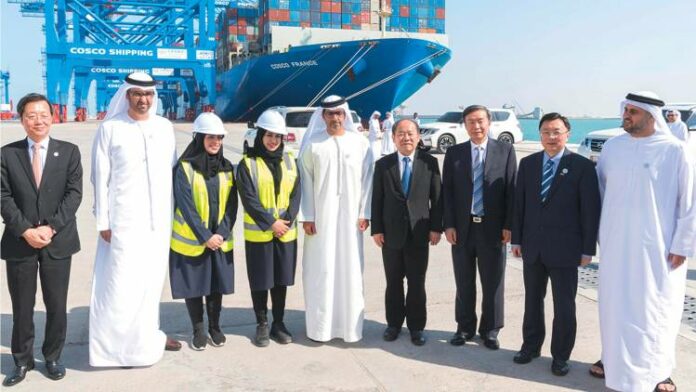
COSCO SHIPPING Ports Limited, a leading port operator in the world, held  the inauguration ceremony for the CSP Abu Dhabi Termina with Abu Dhabi Ports  during a high- level event at the  Khalifa Port, Abu Dhabi, Abu Dhabi Ports said in a press release. The Terminal  was formally inaugurated at a ceremony at Khalifa Port. 

CSP Abu Dhabi Terminal is the first international green -field subsidiary of COSCO SHIPPING Ports;  water depth of the semi -automat ic terminal is 16 .5 metres  which allow it to accommodate mega – vessels typically in excess of 20 ,000 TEU. With an annual design capacity of 2.5  million  TEU, the terminal will begin trial operations in April 2019 with 1.5 million TEU handling capacity, and will  gradually ramping up the volume until the official operations scheduled to commence  in the third  quarter of 2019.  Total capex made by CSP in the terminal  was US$300 million, which includes  the largest Container Freight Station (CFS) in the Middle East covering 275,000 square meters.

This state -of-the -art facility is the first of its kind in the region to be semi -automated with facilities for full and partial bonded container shipments, the full range of container packing services, short -term warehousing for  deconsolidated cargo as well as easy connectivity with container terminals in Khalifa Port. 

China is the UAE's largest non -oil trade partner. In 2017, bilateral trade between the two countries increased by 15 per cent to more than US $5 3 billion, representing 14.7  per cent of the UAE's total  foreign trade.  During the same period the UAE accounted for nearly 30 per cent of total Chinese  exports to Arab countries and about 22 per cent of total Arab- China trade. Bilateral trade is  expected to increase to US$70 billion a year by 2020.  The new terminal will also ease the way for companies seeking to establish, expand or enhance  their trade by using local manufacturing, warehousing or logistics operations within Abu Dhabi and,  through them, service regional, Middle Eastern, African and international markets. 

In addition to  attracting investors from Eastern Asia, it will increase Khalifa Port’s competitiveness and act as a catalyst for investment by foreign companies to set up in the free zone of Khalifa Industrial Zone Abu Dhabi (KIZAD), the region's largest industrial, manufacturing and logistics hub and free zone.  KIZAD, which comprises 410 square kilometres, has to date attracted more than 200 tenants and  AED 65 billion (US$17.7 billion) in investment. So far, a total of 19 Chinese companies have signed  lease agreements for land in the demonstration zone established within the Khalifa Port Free Trade  Zone in August 2017 by the Chinese Jiangsu Provincial Overseas Cooperation and Investment  Company (JOCIC). CSP Abu Dhabi Terminal is part of Abu Dhabi Ports ’ five -year  growth  strategy to increase Khalifa  Port,  with its  two container terminals,  to  a  combined  total capacity of 9.1 million TEUs.  The  addition of CSP Abu Dhabi Terminal has  already  moved  Khalifa Port up from being the 89th largest  container port in world rankings to within the top 25.

Source:portnews

Survey Drones Take Off

0

As part of an on-going focus on safety in enclosed spaces, ClassNK describes how it has carried out detailed drone tests to revolutionize ship surveying.

In spring this year, ClassNK introduced guidelines on the use of drones in class surveys, covering procedures and technical considerations for safe operation, as well as requirements for drone service suppliers. 

Drones – a generic term covering unmanned vehicles of all kinds – have a surprisingly long history. In air-borne applications, their beginnings can be traced back to World War II, and specifically to the BQ-7, a modified version of US Air Force’s B-17 bomber. One of the first industrial applications was a helicopter for spraying agriculture chemicals built by Japan’s Yamaha Motor Co in the late 1980s. 

The development of compact quadcopters – small devices distinguished by four propellers at each corner for enhanced maneuverability and stability – marked the arrival of modern day drones. Quadcopters eliminate the need for the complex system controlling rotor pitch found in conventional helicopters. Instead, hovering and movement can be controlled by electronically adjusting the rotation speed of individual rotors. Attitude control and maneuvering is more straightforward thanks to a dedicated flight controller and various sensors (accelerometer, GPS, air pressure and gyro sensors), which continuously send instructions to each of the rotors to ensure stability. Their small size, ease of flight and declining component costs mean contemporary drones are substantially cheaper than predecessor technologies. 

Although drones with multiple propellers on the same plane are currently the most widespread design, research is taking place into alternative arrangements with tilt rotors and propellers in a tetrahedral configuration. Meanwhile, significant progress has been seen in autonomous operations using higher precision positioning, and considerable advances in machine image recognition and processing.

Typically equipped with a compact camera for photography or recording video and Wi-Fi for data transmission, these easy-to-control, lightweight machines have rapidly grown in popularity. Apart from the consumer hobbyist market, and use for product delivery by online retailers, drones have attracted interest from across industry: they are ideal for collecting images from high or otherwise inaccessible or dangerous locations. They can be utilized for a range of aerial photography, inspections and surveying, and security applications, and have proved invaluable in planning rescues and emergency response. 

In the maritime industry, efforts are underway to use drones for inspections and surveys. In fact, discussions on Remote Inspection Techniques (RIT) are already well-advanced at the International Association of Classification Societies (IACS), which published revised guidelines on remote inspection techniques in June 2016. The revisions of the associated IACS Unified Requirements are complete and will take effect in January 2019.

Deploying drones on ships presents some significant challenges. The drone may not function properly in the cargo hold or ballast tank due to being in an enclosed space surrounded by magnetic material which may interfere with some of its sensors – particularly GPS and magnetic compass – that are tightly linked to flight stability. Dark environments can also make it difficult for operators to fly drones safely. 

Last September, ClassNK designated ‘survey technology innovation’ as one of four focus areas listed in its new R&D Roadmap, with drones identified as a key technology. The society has been verifying drone performance, with test flights conducted in a variety of enclosed spaces of the sort found on ships.

Assessing basic performance 

A basic performance verification test was devised to demonstrate maneuvering (take-off and landing, forward/reverse and lateral flight, reverse flight with 180-degree yaw) and to assess the capabilities of camera and sensors. The camera performance was tested with a Landolt ring chart – the kind of chart opticians use to test eyes – to evaluate definition of different line thicknesses from 0.1mm to 5mm, and a QR code. Differences in results were observed when the subject drone, a Phantom 3 Standard from DJI, was operating with and without GPS signal. Maneuverability tests in the vicinity of a powered-off crane to assess antimagnetic performance were also carried out. 

The outdoor maneuvering test took place in windy conditions, which significantly influenced the results. While fixed-point hovering was easier when using GPS, the gain was large causing the drone to over-compensate in its movements. In non-GPS mode, the gain was small and smooth maneuvering was possible, but wind-thrust had a more marked effect on the drone. 

In GPS mode, the drone immediately begins hovering when the operator removes his finger from the controller, whereas in non-GPS mode, inertial force continues to move it until a counter input is given. Consequently, non-GPS mode gives a manual feel to maneuvering and it is possible that operators will find the drone easier to control. When the wind subsided in the trial, stable flight was possible regardless of GPS availability.

Indoors with no wind, stable flight was possible both with and without GPS. Since these results were obtained with a low-cost drone, it is conceivable that higher-end drones equipped with ultrasonic sensors and other advanced features will be even more stable.

Many images photographed with the camera were extremely clear. However, because this model lacked an optical zoom, enlarged images were often indistinct. Image sharpness distinctly improved when the drone was flown closer in to its target. In survey applications, optical zoom would be an essential requirement. Camera specification and artificial lighting will also need to be considered if photography in dark environments is deemed necessary.

The tests in the material storage yard with a crane threw up some interesting results. The drone initially failed to take-off, with the system displaying a ‘compass abnormality’ error message. However, when launched from a more magnetically benign location, the drone was able to approach the crane without the issue. This suggests performance in the presence of magnetic structures must be carefully evaluated before a drone is deployed to carry out inspection work.

Tests in simulated tanks 

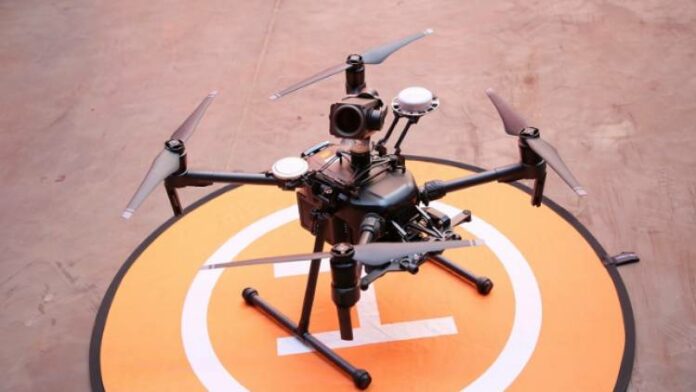
To simulate conditions inside a ship’s tank, a drone was put through its paces in a land-based, steel test tower. The experiments, using a DJI Matrice100 drone, studied the impact on performance due to compass unreliability, intermittent or complete lack of GPS and poor lighting both for flight control and photography. 

Take-off was possible when the drone was placed more than 50cm away from magnetic materials, i.e. the steel walls. There was no difference in attaining stable flight between GPS and non-GPS mode, revealing that drones are operable with only basic inputs from gyro and accelerometer. Piloting a drone that has relatively low control precision is a good way for operators to accumulate experience.

When flying near walls, there was a slight shaking in the drone motion, owing to the wind from the drone’s own propellers. To prevent collision with walls, it may be necessary to attach a guard or collision prevention device. 

Images taken inside the tower were generally of low quality, due to a combination of poor light conditions, small camera sensor size, and inappropriate ISO settings. Artificial light sources, both from ground level and mounted on the drone itself, resulted in improved images. When the photo subject contains highly polished or metallic surfaces, it will be necessary to experiment with different arrangements in order to produce diffused light that minimizes reflection. Night-vision cameras may also be considered as an option. It was also noted that videos transmitted from the camera were frequently corrupt on the receiving terminal such as a smartphone.

Tests onboard ships

The final phase of the study was directed at testing the performance of drones inside a cargo hold of a bulk carrier and tank of an oil tanker and was carried out with the cooperation of Kanda Shipbuilding and Orient Marine in the first instance and Tsuneishi Shipbuilding and Technos Mihara in the second. Drones used were the 4.5kg DJI Matrice 210 and the 3.5kg DJI Matrice 100. 

On the bulk carrier, the trial took place with the hatch half open, providing an intermittent GPS signal and good daylight for photography, so additional lighting was not required. The flight route was based on the path of an actual internal audit. Because the Matrice 210 is an industrial grade drone with sophisticated machine-vision based self-localization, its flight was stable regardless of GPS availability. 

Photography was carried out at a distance of 5m, as the drone itself is almost 1m wide. The high-quality camera benefited from both optical and digital zoom. Zoom photography is generally sensitive to vibration or movement, but good results were obtained thanks to the drone’s high stability when hovering at a fixed point. 

However, at higher altitudes the downward facing vision system found it harder to capture landmarks on the hold’s uniform ground surface. This inhibited the self-stabilization, especially when GPS was unavailable. In such conditions, manual flight by the operator is preferable. 

At one point during the trials both GPS and the vision system did not function at the instant that a compass error occurred. Although the drone drifted, the operator, who had more than 500 hours flight experience responded calmly and kept the flight stable. The exercise demonstrated that safe flight in a hold is possible but highlights the importance of having a skilled operator and choosing a drone with high redundancy for magnetic materials. Furthermore, as the size of Matrice 210 prohibited flight in close proximity to members, there will inevitably be blind spots in surveys with this type of drone.

On the oil tanker, as with the bulk carrier, the flight path was selected according to locations for photography needed in an actual close-up survey. The pilot worked together with an assistant in charge of the camera. A third surveyor checked the images as they came in, requested close-ups when needed, and signaled when to move to the next location. Additional illumination was provided by lights mounted on the drone. This configuration delivered good results for still images but video images suffered from noise.

Fixed-point hovering was difficult because flight was performed in non-GPS mode. The resulting movement caused blurring in photos of members and made pinpoint checks somewhat stressful. This degradation in image quality was exacerbated in zoom photography. During close-up photography, results were heavily dependent on the operational skill of the drone pilot, especially when flying close to walls or other structures. The pilots in these tests had at least 100 flying hours experience.

Compass error occurred and prevented take-off when attempting to fly the Matrice 100 after an extended period of time. Although it is hard to draw definitive conclusions about the effect of magnetic materials, it is thought that the accumulation of error due to the presence of magnetic materials was a factor. 

The procedures and best practice given in ClassNK’s guidelines combine the understanding of drone performance gained in these and other trials with its decades of experience conducting class surveys. The society will continue to actively work with innovative technologies like drones and will continue to make efforts to contribute to the further development of the maritime industry.

Source:maritime-executive

Ship Recycling Transparency Initiative Launched

0

The non-profit Sustainable Shipping Initiative has launched the Ship Recycling Transparency Initiative’s (SRTI) online platform, a tool for sharing information on ship recycling to drive responsible practice.

The platform comes nine months after a group of shipping companies first announced their collective effort to use the market-drivers that transparency brings to make responsible ship recycling the norm. Demanding transparency holds the shipping industry to account, raising the bar for current practice as well as creating fair competition among shipowners, say the companies involved.

The SRTI is neither a standard nor a rating tool, it is an online platform that shipping companies can use to disclose relevant information on ship recycling. It is hosted by the Sustainable Shipping Initiative and brings together leading shipowners, investors, banks, insurers, cargo owners and other key stakeholders from across the maritime industry. Its founding signatories include shipowners The China Navigation Company, Hapag-Lloyd, A.P. Moeller-Maersk, Norden, Stolt Tankers and Wallenius Wilhelmsen; financial stakeholders GES, Nykredit and Standard Chartered Bank; classification society Lloyd’s Register; and sustainability non-profit Forum for the Future.

However, Dr. Nikos Mikelis, Non-Executive Director of cash buyer GMS, has mixed feelings about the initiative. “On the one hand the group includes shipping companies and a bank that have done great things in recent times to encourage and sustain the virtuous cycle of improving standards in a number of South Asia’s yards. Without the commitment of these companies I do not think that the progress that has taken place in the last three to four years would have materialized“.

On the other hand I had attended in the Spring of this year a gathering of invited industry stakeholders where SRTI presented the preliminary structure, working procedure and extent of its intended database. I left that meeting quite concerned that the SRTI was aiming to be (or was destined to become) an exclusive club of exclusive members. 

Instead I have had great hopes that these powerful organizations would find the way to work with others in the industry so as to convince, or probably to cajole, laggard yards away from practices that lead to horrifying human and environmental consequences.

In 2017, 835 ships were recycled out of a world fleet of 50,000. 
Source:maritime-executive

Offshore Platform Could Boost Search and Rescue Operations

0

The enormous loss of life, especially migrant fatalities recorded in the Mediterranean, has continued despite the IMO's attention on maritime safety through conventions and new technologies. Offshore search and rescue (SAR) platforms could help reduce such tragedies.

The most important factor in SAR efforts is time. To prevent drowning and hypothermia, search and rescue centers need to respond quickly on receiving distress signals, detect the distress location, collect accident data to assess the situation and then plan and respond by deploying SAR units. 

Statistics have shown that existing search and rescue efforts takes long time from the receipt of the distress alert and until the search and rescue units reach the distress location. For example, in September 2002, the ferry Le Joola capsized and 1,864 people died before SAR responders could reach them. Delays occurs due to a number of different factors including the distance from the incident, weather conditions, inaccurate location, and time needed for dispatching officers and resources.

The use of offshore SAR platforms, used for the rapid deployment of marine and aerial robots, could boost response times. Such a platform could be fixed by anchor and could be operated by a minimal number of expert SAR staff in accordance with International Aeronautical and Maritime Search and Rescue (IAMSAR) Manual guidance. This would offer a cheaper, more efficient and easily maintained solution that can be integrated with SAR respond system requirements in hazard and challenging environments in the open seas. It could also be used to track vessels, in salvage operations and for underwater surveys.

The role of the platform is to provide a quick response to locate survivors using a drone's camera and to then drop safety and medical equipment while the situation is assessed further. An unmanned capsule could be launched to provide an inflating life raft, and underwater ROVs could collect data and assess the situation and the condition of any vessels involved. These tasks could be initiated before other SAR assets arrive on scene.

The offshore SAR platforms could be distributed in high-risk areas including migration routes and heavy traffic areas. The IMO should encourage cooperation between governments, research centers, SAR volunteers and companies to develop offshore SAR platforms. It could facilitate research, establish global standards, support legislation and fund development projects. The platforms could then become efficient tools for mass rescue operations.

The concept for the offshore SAR platform has been developed in a dissertation submitted in partial fulfilment of the requirements for the award of the degree of Bachelor of Science for cadets Hassan Kadous, Antony Magdi and Mohamed Gamal under the supervision of Captain Abdelkhalik Kamal Eldin Soliman Selmy, Lecturer at the Maritime Transport Technology Department of the Arab Academy for Science and Technology & Maritime Transport.

Source:maritime-executive

ITF Alleges Safety Shortcomings at Jakarta’s JICT Terminal

0

The International Transport Workers' Federation (ITF) dockers' union has set its sights on leading terminal operator Huchison's Jakarta International Container Terminal (JICT), alleging patterns of poor workplace safety.

On Monday, a new ITF Dockers' safety working group met in Hong Kong to discuss patterns of workplace incidents. Over the past year, more than 50 dockers have died in preventable incidents at ports around the world. During its review, the meeting noted a serious accident this week at Jakarta International Container Terminal (JICT) in which a container of dangerous chemicals dropped from an RTG crane. No one was injured in the accident. A union investigation concluded that equipment failure and an inexperienced operator were the main reasons for the accident.

[We] stand united in our utter condemnation and preparedness to fight so that every worker goes home safely,” said Suryansyah Bahar, deputy president of the ITF-affiliated union Serikat Pekerja Jakarta International Container Terminal (SP JICT). “Hutchison is the biggest stevedore in the world and has an obvious responsibility to its global workforce to meet occupational health and safety requirements."

According to ITF, five workers have died at JICT over the past two years, and there have been more than 10 nonfatal incidents per month in 2018. ITF alleges that the accidents are a direct result of the dismissal of one hundred experienced and unionized workers, who were allegedly replaced with inexperienced workers. “They chose to bust the union over safety and performance at the terminal, and this has led to injury and death,” said ITF president Paddy Crumlin. 

ITF and SP JICT have also accused Hutchison of reducing workers' wages, and other ITF-affiliated unions have raised allegations of unsafe conditions at the firm's other Asia-Pacific facilities. Separately, ITF has also targeted Philippine-based terminal operator ICTSI over alleged anti-union activity, safety shortcomings and other concerns. 

Source:maritime-executive

Panama Canal Welcomes 5,000th Neopanamax Transit

0

The Panama Canal welcomed its 5,000th Neopanamax vessel through the waterway on Monday.
 
The COSCO Faith container ship transited southbound from the Atlantic to the Pacific Ocean. The vessel has a 13,345 total TEU allowance (TTA) and measures 366 meters in length and 48.2 meters in beam. The COSCO Faith is part of Ocean Alliance's Manhattan Bridge-AWE2 service, between Asia and the U.S. East Coast. 

Of the 5,000 Neopanamax vessels that have transited to date, 51 percent have been container ships. LPG carries constitute another 26 percent, and LNG carriers, a relatively new segment to the Panama Canal, make up 10 percent. Dry and liquid bulk carriers, car carriers and cruise ships make up the remaining transits.

The Panama Canal closed its 2018 fiscal year with a record tonnage of 442.1 million Panama Canal tons (PC/UMS), a 9.5 percent increase from the previous year. This result, for the year ending September 30, surpassed the cargo projections for the year of 429.4 million PC/UMS tons. 

The main routes using the Panama Canal in FY 2018 were between Asia and the U.S. East Coast, the West Coast of South America and the U.S. East Coast, the West Coast of South America and Europe, the West Coast of Central America and the U.S. East Coast and intercoastal South America. The main users during FY 2018 were the U.S., China, Mexico, Chile and Japan. 62.8 percent of the total cargo transiting the Canal has its origin or destination in the U.S.

Earlier this year, the Panama Canal increased the total available booking slots to eight daily for its Neopanamax Locks.

Source:maritime-executive

For the First Time, Australia Takes Top Place for LNG Exports

0

For the first time, Austalia has overtaken Qatar to become the world's biggest exporter of liquefied natural gas. Thanks to the completion of multiple major liquefaction terminal projects over the past several years, Australia's export volumes have boomed, and in November, it exceeded Qatar's monthly production for the first time, shipping 6.8 million tons during the month (versus Qatar's 6.2 million tons).

According to WoodMac, QatarGas was conducting maintenace during November, which reduced Qatari output slightly, and it will likely regain top position during December. However, Australia is still adding new production: the Prelude floating LNG facility is expected to come online by the end of this year, and will add about 3.6 million tonnes per annum of output. In the medium term, Qatar has plans to boost its ranking, and will add another four liquefaction trains with 33 mtpa in capacity by  2023-2024. It hopes to earn an additional $40 billion in export revenues by the additional sales, which will provide more funding for Qatar's sovereign wealth fund. 

According to the International Energy Agency, Australia is likely to slip to third place over the course of the next five years as the United States brings more production volume online. IEA forecasts that Qatar, the U.S. and Australia will supply nearly two thirds of the rapidly-growing global LNG market by 2023, and American suppliers are expected to capture the largest part of the market's growth, adding some 80 mtpa over the course of five years. 

The growth of the global LNG market is being driven in part by expanding Chinese demand. China became the world's largest importer of natural gas in May, and it gets just over half of its gas import volume from LNG shipments. It imported about 38 mtpa of LNG last year, up from just 10 mtpa in 2010. Under Chinese President Xi Jinping, China has begun a large-scale push to shift from coal-fired power to gas, a measure that will significantly reduce smog-related emissions of particulate matter and SOx. Beijing hopes to power 15 percent of the Chinese economy by 2030 with natural gas, according to its National Development and Reform Commission.

Source:maritime-executive