1.8 C
New York
Home Blog Page 1216

Coastal Virginia heaven for Subsea 7

0

Subsea 7 unit Seaway Offshore Cables has won a contract to supply and install array cables for the 12MW Coastal Virginia offshore wind projects in the US.

The multi-million-dollar contract is Seaway's first in the US and will see the company operating from the Gulf of Mexico to bring array wires to the project, located 43km off the east coast state.

The project is a two-turbine demonstration project owned by Dominion Energy and constructed by Orsted.

It will feature two Siemens Gamesa 6MW turbines on monopile foundations connected to the existing onshore grid by submarine cables supplied by Seaway.

The company will also provide submarine composite cables, cable protection systems and accessories including post-installation termination, testing services and trenching.

Engineering for the project will start immediately, while the marine installation works are scheduled for 2020.

Some vessels and resources used by Seaway will come from the US, with the rest provided by Subsea 7.

Source:renews

Minesto nets €1m tidal boost

0

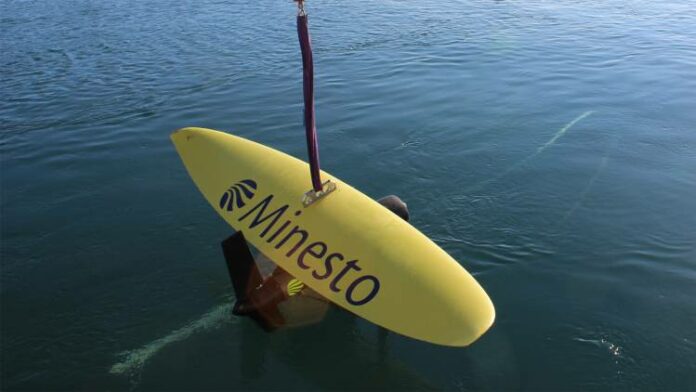
European sustainable energy accelerator InnoEnergy has invested a further €1m in Swedish tidal power technology developer Minesto.

The European Institute of Innovation and Technology-backed company has invested a total €5.5m in Minesto and its development of Deep Green tidal kites since 2015.

InnoEnergy chief executive Diego Pavia said: “We have great confidence in the technology, the company, the performance shown so far and Minesto’s plan for taking the product to the market.

Minesto chief executive Martin Edlund added: “This investment is a clear sign of confidence from InnoEnergy in the capabilities of our organisation and in the potential our disruptive clean energy technology.”

Source:renews

New project eyes world’s first digital shipping company in 2019

0

Israel-based IoT solutions provider Loginno unveiled a plan to form the world’s first digital shipping company. Under its initiative 'Contopia Factor', the startup will select one organization to have its entire container fleet digitalized in 2019.

Namely, TCF, 'The Contopia Factor'  is a term used to describe a world where every shipping container is real-time IoT connected.

Dr Rami Pugatch, one of the leading researchers at the department of industrial engineering and management at BGU, highlighted that some cases include an onboard scale-less weight measurement, the development of a 'Cyber Seal' certificate to replace a container's physical seal and in other cases operational optimization, supply chain management, smart cargo insurance and frictionless borders on countries.

Moreover, according to Nir Gartzman, co-founder of theDOCK, the creation of Contopia will provide the shipping company with advantages, by lowering operational costs and gaining competitive benefits. He continued claiming that via Contopia the customers will have upgraded services.

Also, theDOCK belongs to the group of Contopia collaboration.

Concluding, during the timeframe of six months, shipping companies of medium and small size will get the opportunity to submit a summary, giving details on what they're plans will be if selected to equip the entire fleet with Loginno's TCF. A panel of industry leaders will, then, opt the one to use the TCF.

Source:safety4sea

Steps towards shipping “Go Digital”

0

Despite facing several challenges (i.e. fall in freight rates, overcapacity, competition), commercial ships are becoming more and more connected, but also the workforce onboard them are being digital natives potentially trained on new technologies; seafarers who expect ubiquitous connectivity. This article is an overview of the shift from manual to digital systems and processes, a shift into … systems, driven by the aforesaid challenges and developed by both maritime-focused start-ups and organizations that have been around for a long while; the so-called pioneering technology leaders.

From manual systems to digital technologies: 7 Benefits

  • Time saving
  • Cost reduction
  • Greater efficiency
  • Cleaner transport
  • Higher customer satisfaction
  • Operational stability
  • Security and error prevention

Shipping Digitalization: Where do we stand


– Connectivity: Connectivity in shipping industry offers many benefits such as remote asset management that leverages data from critical on-board equipment systems to enable more efficient maintenance through predictive diagnostics. It further assists in vessel operations optimization as well as route management for improved fuel efficiency, while smart sensor and actuator networks help ensure safer ship operations

– Electronification: The electronification benefits in shipping industry can be divided in three areas;

  1. The electronic exchange of information on cargo, crew but also passengers with the aim to reduce errors, improve tracking and traceability, and reduce freight waiting and stopover times.
  2. The electronic ship clearance: The FAL Convention was agreed amended to require the implementation of electronic ship clearance by April 2019. This decision was also followed by information that IMO is continuing its work on developing a prototype electronic single window software for interested member states. Electronic and digital port clearance will simplify the port call process, but it will also force the administrations to go through all their reporting requirements and hopefully reduce the confusion related to what information is required in what format in what port.
  3. The support of electronic ship certificates: Many flag states now offer the opportunity of electronic ship certificates, as PDF documents that can be printed out when needed. Such certificates can be developed as fully electronic documents, e.g. in XML format, with secure digital signatures.

– Machine learning: As of now in shipping industry we see machine learning techniques, in the area of performance assessment, fault diagnosis, predictive diagnosis and optimization in service.

– Internet of Things: Thanks to IoT cargo handling and preemptive maintenance are becoming easier. This technology can improve the cargo handling based on satellite coverage, common sensor technology and the power of cloud computing, collecting data including voyage, weather, maintenance, machinery and state of cargo.

Source:safety4sea.

BPA: Comment on UK Withdrawal Agreement vote delay

0

Following the UK Prime Minister’s statement confirming that the Parliamentary vote on the Withdrawal Agreement has been delayed, the British Ports Association’s Chief Executive, Richard Ballantyne noted that many of the UK’s ports with EU trade and the wider logistics industry is becoming anxious to know 'what they might need to prepare for and when it may be needed'.

Theresa May, UK Prime Minister, postponed the parliamentary vote on her deal for the country to leave the European Union. To this matter, the BPA Chief Executive stated that the terminals and systems will not be able to adjust to the Brexit changes in a short time. Whereas, ro-ro ports will face less challenges.

According to Richard Ballantyne "If there is a hard Brexit the roll-on roll ports who facilitate tens of thousands of lorry and trailers movements between Britain and Europe every day could face real challenges".

BPA has already expressed its uncertainties on the effects Brexit will have on UK ports. BPA believes that the potential for new time consuming and costly processes for freight operators using this sector is a daunting prospect.

Moreover, the European Commission has already published the political declaration which describes the future relationship between the EU and the UK. The declaration describes the rules that will surround maritime transport and trade, among others.

Finally, Brexit will not only affect ports. Wider supply chains could also deal with major changes. As BPA stated that across industry substantial reorganisation and culture change would be needed to prepare for a‘no deal’ Brexit.

Source:safety4sea

ACCC: NSW Ports agreements with New South Wales are anti-competitive

0

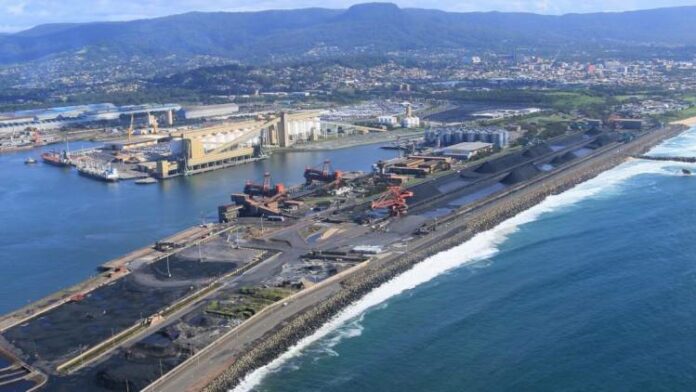
The Australian Competition and Consumer Commission (ACCC) has instituted proceedings in the Federal Court over the agreements signed between NSW Ports Operations Hold Co Pty Ltd and the State of New South Wales, claiming that these have an anti-competitive purpose and effect.

Namely, the ACCC claims that entering into the Botany and Kembla Port Commitment Deeds was possible to prevent or hinder the development of a container terminal at the Port of Newcastle, and aimed or was likely to have the effect of, substantially decreasing competition.

The ACCC supports that the reimbursement provision in the Port of Newcastle Deed is an anti-competitive consequence of the Botany and Kembla Port Commitment Deeds, and that it makes the development of a container terminal at Newcastle uneconomic.

Also, the ACCC looks for declarations that the compensation provisions in the 2013 Port Commitment Deeds contravene the Competition and Consumer Act 2010 (CCA), injunctions restraining the operators of Port Botany and Port Kembla from seeking compensation under these provisions, pecuniary penalties and costs.

The CCA only applies to the conduct of state governments in certain limited circumstances. The State of NSW is not currently a party to the ACCC’s proceedings and the ACCC is not seeking orders against the state.

On the contrary, NSW Ports highlights that the ACCC announcement has instituted proceedings in the Federal Court in relation to the 2013 Port Commitment Deeds.

Moreover, NSW Ports claims that the agreements signed with the NSW Government, to rental its assets at Port Botany and Port Kembla, operate in the best interests of all stakeholders, the economy and people of NSW.

By paying about $5.1 billion to the NSW Government in 2013 based on the full contractual terms contained in the agreements, NSW Ports expect to be vigorously defending the proceedings.

NSW Ports 80% belong to Australian superannuation funds investing on behalf of more than six million individual Australians. The NSW Ports support that the success of Port Botany and Port Kembla is in the national interest.

What's more, the NSW Government privatised Port Botany and Port Kembla in May 2013 and the agreements, known as Port Commitment Deeds, were entered into as part of the privatisation process, for a term of 50 years.

Finally, on May 2014, a 50-year-deed urges the port of Newcastle to reimburse the State of NSW for any compensation paid to operators of Port Botany and Port Kembla under the Botany and Kembla Port Commitment Deeds.

Source:safety4sea

Norwegian politician calls for marine mammal observers on seismic ships

0

A Norwegian politician called for marine mammal observer onboard seismic vessels, ahead of the agreement between Russia and Norway regarding mutual rights to seismic acquisition in the Barents Sea.

Namely, Green Party's Arne Liaklev said that acoustic surveys for oil deposits below the seabed should be avoided if there are whales nearby.

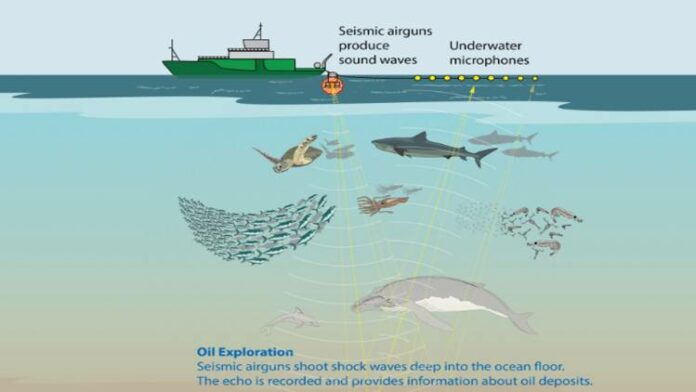
Seismic ships are used for oil and gas exploration below the seabed. Their sounds can infiltrate into hundreds of kilometres into the ocean floor. Namely, these ships’s airguns emit sound every ten to fifteen seconds, often for a whole. In addition, hydrophones are also used to analyze the sound that reflects back to the sea surface.

In order to mitigate this, along the coasts of Greenland, Denmark has made it mandatory for seismic vessels to collect seabird and marine mammal observation data. What is more, observers on board the ships must watch for whales before and during seismic survey.

However, according to Mr. Liaklev such a clause is not included in the Norwegian-Russian agreement. He also explained that whales can be injured or even die because of high noise blasts and other sound gear like airguns.

Specifically, due to the increased use of sonars underneath the surface, cetaceans are changing their diving behaviors because they are panicking. This causes decompression symptoms affecting vital organs, which can lead to death.

Some animals that are severely injured or even dead are washing up in the shores, however the majority of these animals die unnoticed in the open sea and sink.

Arne Liaklev added that Norway must collaborate with Russia to go on a study tour to New Zealand, which has updated its code of conduct for limiting acoustic disturbance to marine mammals from seismic operations. This code has been welcomed by New Zealand's oil exploration association.

Source:safety4sea

Sustainable ship recycling project in Bangladesh: Second phase launched

0

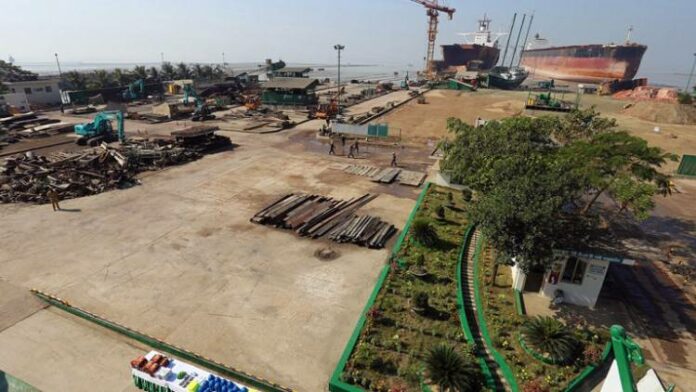
The second phase of an IMO-implemented project to enhance safe and environmentally sound ship recycling in Bangladesh has been launched at a meeting of stakeholders in Dhaka, Bangladesh, on 26 November. The 19-month project, funded under a US$1.1 million agreement with Norway, will focus on legal and institutional analysis of ship recycling in the country and will develop a roadmap for the Government of Bangladesh to accede to Hong Kong Convention.

The project will build on the first phase of the Safe and Environmentally Sound Ship Recycling in Bangladesh (SENSREC) Project, which resulted in economic and environmental studies on ship recycling in Bangladesh, the development of training materials and capacity building plans and a preliminary design for infrastructure including facilities for treatment, storage and disposing of hazardous wastes generated from recycling operations.

"The first phase of the project has achieved significant progresses in terms of developing health, safety and environmental standards as well as developing appropriate training programs for the industry stakeholders including its workers.  Norway is pleased to launch phase II of the project and to continue supporting Bangladesh on its road to compliance with the Hong Kong Convention. The Government of Bangladesh, the ship recycling industry as well as the international ship-owners, have a joint responsibility in making this happen"….said Ms Sidsel Bleken, Ambassador of Norway to Bangladesh, speaking at the Dhaka meeting.

Bangladesh is one the world’s top five ship recycling countries by capacity, alongside China, India, Pakistan and Turkey, together accounting for 98% of known ship recycling in the world. Unsustainable ship recycling practices have been raising concerns by global NGOs and humanitarian bodies with dangerous working conditions and polluting practices being among the key areas of concern.

On the contrary, Bangladesh will be assisted to build the capacity to develop and implement a legal, policy and institutional roadmap towards accession to the Hong Kong Convention. The Convention sets the international standards for ship recycling and, when in force, will ensure that ships do not pose any unnecessary risks to human health, safety or the environment when being recycled at the end of their operational lives.

To this end, a variety of stakeholders will be trained within a well-functioning training system to lay the foundation for an effective and sustainable training programme for the ship recycling sector in Bangladesh.

Two core work packages form the basis of the project. The first focuses on building the national capacities to prepare for accession to the Hong Kong Convention, through three interconnecting activities:

  • assessing the present situation;
  • exploring current best practices in other ship recycling countries; and
  • identifying recommendations and a roadmap to guide the Government of Bangladesh towards accession to the Hong Kong Convention.

The second work package will deliver targeted pilot training activities in line with the Hong Kong Convention requirements, establishing a robust training management and governance system and delivering training activities developed for various stakeholders and workforces. Two training workshops will address waste management issues. These will be supported by the Secretariat of Basel, Rotterdam and Stockholm Conventions (BRS), the treaties which aim to protect human health and the environment from hazardous chemicals and wastes.

IMO is acting as the implementing and executing agency for the project, working closely with the Ministry of Industries of the Government of the People’s Republic of Bangladesh as the national executing partner.

The project is funded by Norway’s Ministry of Foreign Affairs, channeling finance through the Embassy of Norway to Bangladesh. The budget is 9.0 million Norwegian Krone (approximately US$1.1 million), for the 19-month project.  The agreement between IMO and Norway on funding support was signed on 24 November 2017.

Other international partners include the Secretariat of the BRS Conventions, the International Labour Organization (ILO) and the United Nations Industrial Development Organization (UNIDO).

Source:safety4sea

Watch: BW LPG honors crew for thwarting piracy attack

0

Singapore-based owner of gas carriers BW LPG informed that one of its vessels, the 'BW Frigg' became subject of an attempted piracy attack on 29 October, but the attack was successfully thwarted by the 'fast reflexes' of the crew. To honor the crew for their bravery, senior management from BW LPG and WSM held an appreciation ceremony onboard.

Namely, the piracy attack occurred when the vessel was voyaging near Congo.

During the ceremony, the crewmembers explained in details what happened during the pirate attack and how they managed to escape.

Carl Schou, Wilhelmsen Ship Management, noted that being a seafarer comes with many challenges. He highlighted that when he received the call for the incident he was anxious for the crew's safety.

Moreover, Pontus Berg, BW LPG, stated that the crews effort to handle the situation wasn't expected from a normal crew. Yet, their bravery showed good seamanship. He added that the situation was also handled because of the good communication and cooperation that happened between the crew onboard and the crew ashore.

Finally, the Captain of the vessel, Lalit Dabas quoted that "I would like to thank all the people from the BW LPG and Wilhelmsen ship management who have come here today to appreciate us. I'm very thankful for their support throughout."

Source:safety4sea


Verifavia Shipping signs cooperations with 8 ROs to support IMO DCS verification

0

Verifavia, the world’s leading emissions verification company for the transport sector (aviation and shipping), has announced 8 new cooperation agreements with Recognized Organisations (ROs), supporting the verification of data for the International Maritime Organisation’s (IMO) Data Collection System (DCS) regulation.

ROs including Isthmus Bureau of Shipping (Class IBS), Intermaritime Certifications Services (ICS Class), International Naval Survey Bureau (INSB Class), Marine Consultants, Surveys & Naval Register (MACOSNAR), Overseas Marine Certification Services (OMCS Class), Panama Shipping Registrar (PSR), Universal Maritime Bureau (UMB Class) and Veritas Register of Shipping (VR Class) will outsource the review of their Data Collection Plans (DCPs) submissions, which outline the procedures, systems, and responsibilities to monitor fuel oil consumption data, hours underway, and distance travelled. When the verification activity has been completed, Verifavia is authorised by each RO to provide a recommendation for the issuance of the Confirmation of Compliance.

Similar to the European Union’s (EU) Monitoring, Reporting, Verification (MRV) legislation, the IMO has devised a mandatory fuel consumption data collection system for international shipping, requiring ships of 5,000 GT and above to start collecting and reporting data to an IMO database from 2019. Under these new strategic cooperations, the ROs will leverage Verifavia’s market-leading knowledge of these regulations for the benefit of their clients.

Earlier this year, Verifavia also became the first and only independent verifier authorised by the Panama Maritime Authority to conduct IMO DCS verification services for vessels registered in Panama. In 2017, Verifavia also became the first independent verifier authorised by the Liberia Maritime Authority. Verifavia is also authorized in Antigua & Barbuda, Vanuatu, Palau and Dominica.

The cooperation agreements complement the already signed EU MRV strategic agreements that Verifavia has in place with Class IBS, CR Classification Society (CR Class), INSB Class, International Register of Shipping (IRS Class) and Turkish Lloyd whereby Verifavia performs EU MRV verification on behalf of these ROs for their clients.

This news also follows the recent announcement of major cooperations with two of the world’s largest ship managers; Wallem Ship Management in Hong Kong and Zeaborn Ship Management in Hamburg (a consolidation of E.R. Schiffahrt and Rickmers Shipmanagement), to conduct verification services for EU MRV and IMO DCS, as well as certification of associated IT systems.

Source:portnews