1.8 C
New York
Home Blog Page 1213

Bidding underway for Massachusetts offshore prize

0

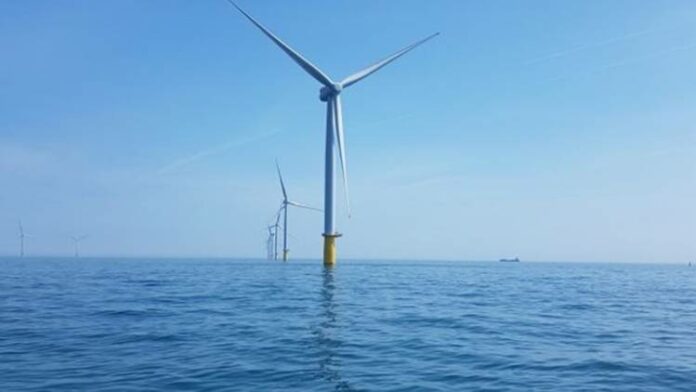
An auction for three wind lease zones off the coast of Massachusetts has kicked off with 11 bids.

The Bureau of Ocean Energy Management set prices of roughly $250,000 for the first round of the auction, which will continue throughout the day.

In the first round, lease one received six bids at $257,622, lease two received one bid at $254,776, and lease three received four bids at $264,740.

The auction consists of a series of rounds. During each round, companies can choose to pay the new price tag or drop out of consideration.

Nineteen companies from Europe and the US are qualified to bid on the leases, but BOEM will not release the names of specific companies bidding on the leases until the conclusion of the auction.

Each lease area contains about 53,000 hectares, and lie directly southeast of areas already leased to Vineyard Wind and Bay State Wind.

This auction is slightly different because the three leases are auctioned simultaneously and companies have the option to bid on any of the leases during each round.

This auction will have different dynamics than we've had in previous auctions,” a BOEM spokesperson said.

The other companies able to compete in the auction are Camellia Wind Energy, Blue Cloud Wind Energy, Cobra Industrial Services, East Wind, EC&R Developments, EDF Renewables, EDPR Offshore North America, Enbridge Holdings (Green Energy), Innogy US Renewable Projects, Mayflower Wind Energy, Northeast Wind Energy, Northland Power America, PNE Wind USA, Vineyard Wind, Wind Future and WPD Offshore Alpha.

Source:renews

Seacat eyes fleet 24/7

0

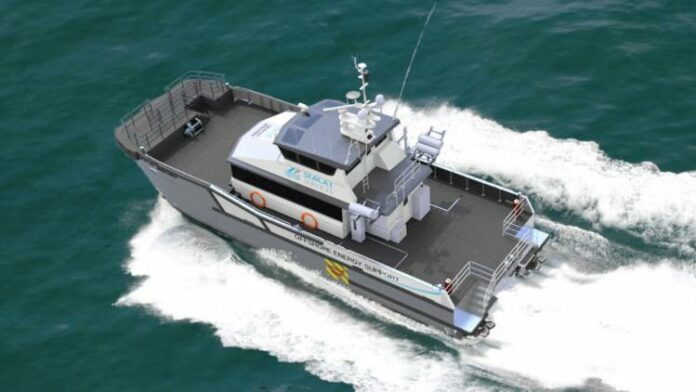
UK-based Seacat Services has installed remote monitoring technology on its entire fleet of catamarans.

The 14 vessels have been kitted out with Reygar’s BareFLEET system to give Seacat deeper insight into the operational performance of its vessels, enabling improved safety and technical availability to benefit crews and clients in the offshore wind and other marine sectors.

The monitoring system has been integrated with existing sensors and equipment and will be used to monitor key variables, including navigation data, vessel motion and the performance of engines and other critical machinery.

Seacat Services will be able to view a live feed of this data from its fleet operations centre in Cowes. Critical alerts – such as an engine alarm – will be flagged instantly to shore-based personnel.

As the volume of data collected by the system increases, Seacat will conduct trend analysis, condition monitoring and preventative maintenance, enabling the operations team to detect and address developing faults in critical components before they result in failure or unscheduled vessel downtime.

BareFLEET is integrated with the cloud-based crew and fleet management software Seacat Services is using, directing all data required for safe and effective crew management into one place.

Seacat Services managing director Ian Baylis said: “We’ve seen the wide-ranging benefits that digitalisation of operations has had for turbine owners and operators – and it’s time for the vessel market to follow suit by showing a commitment to matching these higher operational standards.”

He added: “Our investment in BareFLEET will not only enable us to protect our most important assets – our masters, crews and the vessels they operate – but also ensure that our customers get maximum value from the boats they have under charter."

As these digital systems become increasingly integrated, there is huge potential for cross-collaboration throughout the supply chain that ultimately helps us to change the way offshore wind farms are developed, built and serviced.

Reygar managing director Chris Huxley Reynard said: “The advantage of a fully digital approach to vessel monitoring is that the value and efficacy of the system continues to increase as more and more data is collected."

The comprehensive nature of information gathered by BareFLEET, encompassing motion, navigation, fuel efficiency, engine health, vibration and DPR data – and the quick, effective way in which this is all presented – provides Seacat and their customers an unparalleled level of insight into their fleet operations.

He added: “While Seacat Services will see immediate benefits from integrating BareFLEET onto its vessels, it is the first step in a process of incremental improvement that aligns very closely with their ethos of being a leader in the offshore wind vessel market."

We look forward to working closely with Ian and his team as they continue to innovate and realise the benefits of digitalisation in the coming weeks and months.

Source:renews

US OSV utilisation set to continuing rising if owners act ‘rationally’

0

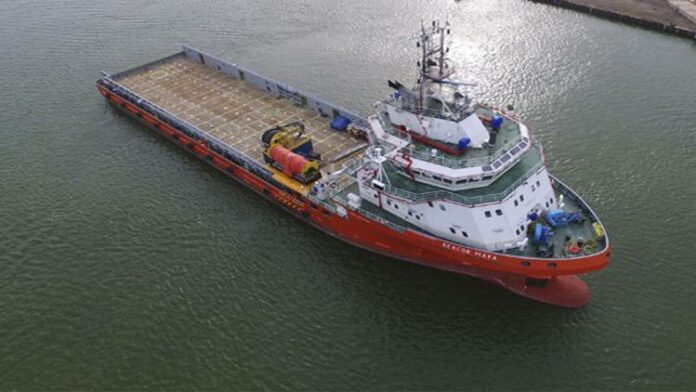
Rates for OSVs in the US remain underwater but utilisation levels are starting to rise and a “rational” approach to stacking and drydocking by owners could see pricing power start to return.

At the recent Workboat convention and conference in New Orleans the session on markets for OSVs, featured Matthew Rigdon, the executive vice president/Chief Operating Officer of Jackson Offshore Operators LLC, who discussed the current situation for boats in US waters, which means the Gulf of Mexico.

Like deepwater shipping, this subset of the larger OSV sector (where vessels are Jones Act compliant) exhibits the fundamental underlying tendencies towards oversupply as does other OSV geographies. Importantly, however, the sector is less fragmented than markets such as deepsea tankers, and this concentration allows the important players to actually gather together “in the same room”, at least figuratively.

Rigdon presented the OSV industry version of supply/ demand calculations. In contrast to the deepsea calculations of market utilization (where “laid up” vessels are still counted as part of the fleet) the OSV methodology, used by throughout the sector, takes the “stacked” (laid up) vessels out of the equation. The rationale is that “cold stacked” boats take many months to reactivate.

Demand of approximately 45 OSVs in the 4,000 dwt and above category, based on approximately 20 deepwater drilling rigs deployed in the US Gulf, is contrasted with a supply of 100 domestic OSVs, netted for those who fled to international waters) with 26 “stacked” units removed from the supply. The effective utilisation works out to something like 73%. At present, the daily hires on such boats are around $15,000 per day- about half of the all-in daily cost.

For tanker and dry cargo markets, the analysts draw supply curves that turn vertical, a necessary ingredient of sharp volatility, at 90% utilisation and above with laid up vessels included in the supply. As the price of oil vacillates widely, this is crunch time for the OSV business. Rigdon noted that “When effective utilisation [using the OSV methodology] gets to 70%, pricing power begins to return.” In response to a question, he suggested that re-activation of stacked equipment requires a lengthy timeframe.

Costs begin to butt up against emotions, perhaps, when it comes to drydocking underscoring the key message of the talk. Citing fleet data, Rigdon pointed to a high proportion of boats needing to be drydocked and put out of service in 2019.

After explaining that present hires do not cover drydocking costs, he implored boat owners to think very carefully about making drydock expenditures, presumably dipping into cash resources, or borrowing to finance them, and keeping the boats in service.

If owners of these big OSV’s “can act rationally” which he acknowledged to be a “big if” – then they would “stack” vessels, postponing drydocking for better times, and boosting the effective utilisation up towards 80% a number even a dry bulk or tanker guy might like.

Source:seatrade-maritime

Cheniere’s Corpus Christi Facility Ships First LNG Cargo

0

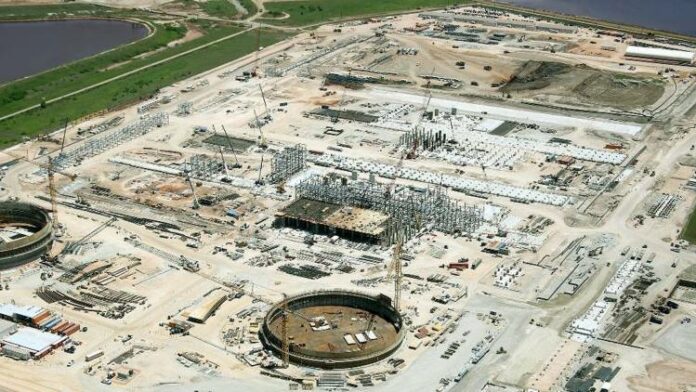
Houston-based liquefied natural gas (LNG) exporter Cheniere Energy said the first commissioning cargo of LNG has loaded and departed from its Corpus Christi liquefaction facility in Texas.

The LNG was loaded on the LNG carrier Maria Energy, chartered by Cheniere Marketing, said a press release.

“Exporting the first commissioning cargo of LNG from Texas demonstrates Cheniere’s ability to deliver projects safely and ahead of schedule, including the first greenfield LNG export facility in the lower 48 states,” said Jack Fusco, Cheniere’s President and CEO.

“This milestone further reinforces Cheniere’s position as the leader in U.S. LNG, with a world-scale liquefaction platform that provides significant competitive advantages as we continue to execute on our growth strategy,” Jack added.

The Corpus Christi liquefaction facility consists of three large-scale LNG production units — or trains — and supporting infrastructure, with an additional seven smaller trains proposed. The facility’s first train produced first LNG in November and is expected to reach substantial completion in the first quarter of 2019.

Train 2 is expected to reach substantial completion in the second half of 2019, and Train 3 in the second half of 2021. The facility will also feature three LNG storage tanks with capacity of approximately 10.1 billion cubic feet equivalent and two marine berths.

The seven smaller trains currently under development would increase the facility’s total expected nominal production capacity to approximately 23 million tonnes per annum (mtpa).

Source:marinelink

Offshore Wind: SeaTwirl Secures Funding

0

Swedish floating wind turbine player SeaTwirl has joined the Ocean Energy Scale-Up Alliance (OESA) that has been granted funding from the Interreg North Sea Region.

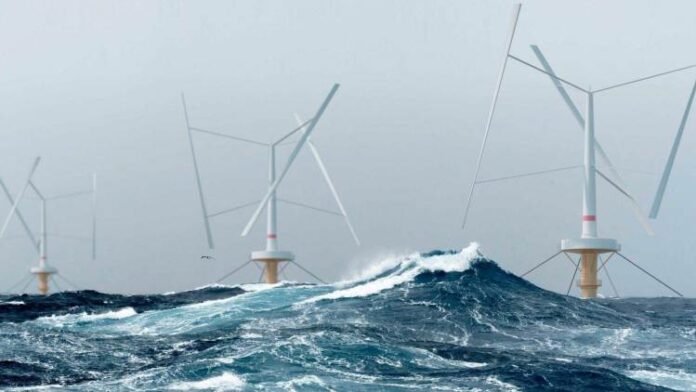
SeaTwirl is a vertical floating wind turbine that was tested off the west coast of Sweden in 2011. It is also the name of the company that produces the turbine.

OESA, which is coordinated by the Dutch Marine Energy Center, has been granted funding from Interreg North Sea Region for a three-year project which aims to accelerate the deployment of large-scale ocean energy pilots in the North Sea.

13 partners are tied to OESA, where eight of the partners will provide services for the pilot projects of the remaining five.

The service providers are Dutch Marine Energy Center, European Marine Energy Centre, Offshore Renewable Energy Catapult (UK), Aalborg University (DK), Danish Wave Energy Centre, ÅKP (Blue Maritime Cluster, NO), Uppsala University (SE) and SSPA Sweden.

The pilot projects come from Tocardo Tidal Power (tidal power, NL), Seabased (wave energy, NO), NEMOS (wave energy, DE), Floating Power Plant (combined wave and wind energy, DK) and SeaTwirl.

The alliance will also engage policy-makers, offshore companies and investors to pave the way for future developments. For SeaTwirl, the membership means access to consultancy services as well as funding of GBP433 952 for developing the turbine.

“We are very happy to be part of this alliance and this project and of course also for the money from the grant. There is a lot of expertise and experience available around the North Sea region that we can now more easily tap into and gain support from on our way to building a cost-efficient wind turbine”, says Gabriel Strängberg, CEO of SeaTwirl.

Source:marinelink

Dudgeon Offshore Wind Bags $1.77B Refinancing

0

One of the world’s largest offshore wind projects, the 402-megawatt (MW) Dudgeon offshore wind farm in the U.K., announced the signing and pricing of privately placed notes for the refinancing of the project’s existing non-recourse project debt, with financial close expected next week. The original financing for Dudgeon was successfully closed in May 2016.

The refinanced debt consists of approximately GBP1.27 billion ($1.77 billion) in fully-amortizing senior-term loans, comprising around GBP561 million in commercial debt and a GBP706 million private placement of senior secured notes, maturing in June 2032.

Both tranches were oversubscribed, reflecting strong credit features and investor interest. The commercial tranche will be fixed upon the financial close of the transaction and execution of interest rate hedging.

Dudgeon is developed and operated by Equinor (35 percent), formerly known as Statoil; Abu Dhabi’s renewable energy company Masdar (35 percent); and Chinese conglomerate – China Resources Group (30 percent).

Dudgeon started operations as scheduled in October 2017. It was one of the first U.K. offshore wind projects to be awarded an investment contract under the U.K. government’s ‘Contract for Difference’ (CfD) scheme, in May 2014, and the first CfD offshore wind project to obtain financing, in May 2016.

Dudgeon is a unique project with strong operational performance,” said Beate Myking, Chair and Director of Dudgeon Offshore Wind Limited. “The excellent collaboration with our partners and advisors has enabled the successful refinancing. The A- (EXP) credit rating and investors’ keen interest further underpins the market confidence in Dudgeon and is strong evidence of Equinor’s competence and capacity to successfully develop and operate offshore wind farms.“

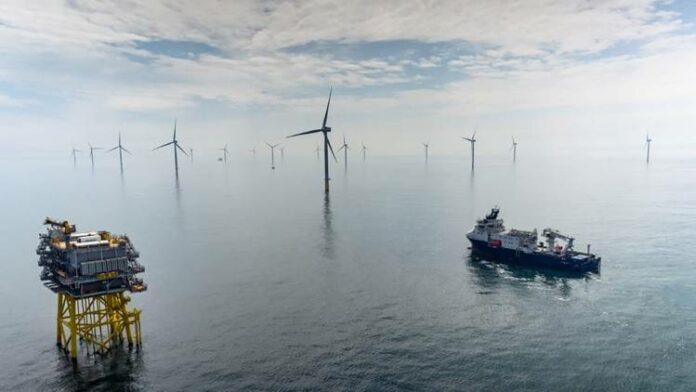
The 402 MW Dudgeon offshore wind farm is located 32 kilometers off the Norfolk coast in England. It produces 1.7 terawatt-hours (TWh) of electricity annually, the combined output of 67 wind turbines, sufficient to power an estimated 410,000 U.K. homes and displace 893,000 metric tons of carbon dioxide.

Source:marinelink

Scorpio Group acquires Nordic American Offshore

0

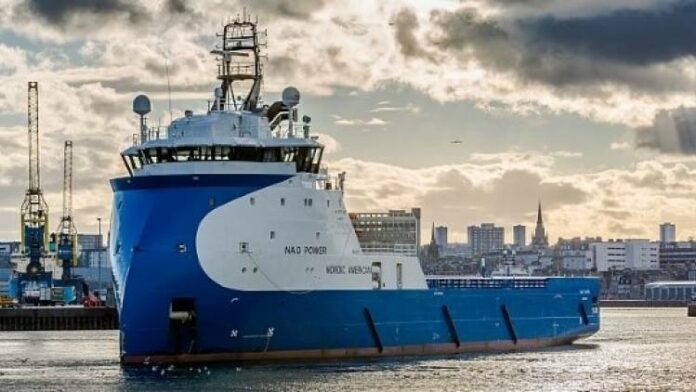
The Scorpio Group has taken control of Nordic American Offshore (NAO) in a deal worth US$5M.

The investment, which took place via a private placement with Scorpio subsidiary Scorpio Offshore Investments was announced by the North Sea-focused OSV owner this morning.

Scorpio founder Emanuele Lauro has been appointed chairman and chief executive of NAO, taking over from that company’s founder Herbjorn Hansson and bringing with him Scorpio’s Robert Bugbee as president, Cameron Mackey as chief operating officer and Filippo Lauro as vice president. Mr Hansson has resigned from the board of directors while Marianne Lie has resigned from the position of executive vice-chair but will remain a director.

Mr Lauro said “Though near-term challenges of the offshore market exist, I believe NAO has all the necessary attributes to succeed in the longer-term: high caliber people, high caliber assets, and strong relationships with key stakeholders, first among them its lenders and its shareholders."

“My focus in the coming weeks will be to ensure that this great enterprise can appropriately position itself for the improving fundamentals to come.

NAO’s deal with Scorpio comes after a potential merger with Canada-based OSV owner Horizon Maritime, agreed at the beginning of October, was shelved on Tuesday 27 November.

Bermuda-based NAO owns and operates a fleet of 10 OSVs designed to operate in harsh environments. The company was founded in 2013 and listed on the New York Stock Exchange in 2014.

Also active in the tanker and bulker markets, Monaco-based Scorpio entered the OSV sector in 2015 with the launch of Scorpio Offshore.

Source:osjonline

Navis: Trends for shipping industry in 2019

0

Major opportunities are laying ahead for ocean shipping, during an era of increasing technology change, which will continue through 2019 and beyond, Navis, a part of Cargotec Corporation, said.

Navis expects that the biggest trends that will characterize the industry over the next year will include increased IT spending, more collaboration and data standardization, trade wars, smart containers, automation productivity gains, and improved carrier capacity management and environmental efficiencies.

Namely, Navis’ 2019 predictions include:

1. More IT spend: According to Navis’ Business Bellwether survey, about 90% of respondents believe their organizations will increase technology spending, including 56% who plan for an increase of 6% or more. Much of this budget will be targeted at the adoption of new technologies to improve operational performance.

The top areas for increased technology spending include:

  • Automation;
  • Business intelligence;
  • Planning and management systems;
  • Big data analytics;
  • SaaS applications and cloud services.

2. More collaboration and standardization: According to Navis, more than half of all respondents said their operational performance would improve by at least 50% if they could share their real-time operational information. Moreover, 70% expect real-time collaboration between shipping lines and terminals to occur within the next five years.

3. Profitability despite protectionist worries: First in the list of concerns is the rise in trade protectionism and new tariffs. However, despite these fears, 82% expect either improved profitability over the next year or continued stabilization and reduced losses.

4. Smart containers: 2019 could be the year for the expanded use of smart containers. In fact, Maersk has announced investments in inexpensive, disposable tracking devices, along with initiatives to put sensors into its entire fleet of refrigerated boxes. MSC will also equip 50,000 dry cargo containers with smart container technology. Additionally, CargoSmart is connected to more than 40 ocean carriers to boost supply chain visibility.

5. Automation and data-driven operational improvement: Pressure from customers, costs of labor, competition, and new technology have increase the demand for terminals to invest and automate. A recent DS Research report indicated that 60 automation projects are planned for the next five years, which will create a total capacity of 90 million TEU.

6. Improved carrier capacity management, operational and environmental efficiencies: Capacity management will be a key point for 2019. Now, owners along with ocean carriers will seek opportunities to increase the cargo intake of their vessels, aiming to increase the flexibility of capacity management.

Regarding operational and environmental efficiency, IMO's strategy to reduce annual greenhouse gas emissions from ships by at least 50% by 2050 will motivate shipping lines to gain technological advantages.

Source:safety4sea

Action Taken Against NSW Ports for Anti-Competition Deals

0

The Australian Competition & Consumer Commission (ACCC) has instituted proceedings in the Federal Court against NSW Ports Operations Hold Co and its subsidiaries Port Botany Operations and Port Kembla Operations for making agreements with the State of New South Wales that the ACCC alleges had an anti-competitive purpose and effect.

The ACCC is alleging that making these agreements containing provisions which would effectively compensate Port Kembla and Port Botany if the Port of Newcastle develops a container terminal as it plans to do. This is anti-competitive and illegal, ACCC Chair Rod Sims said.

The NSW Government privatized Port Botany and Port Kembla in May 2013, and the agreements, known as Port Commitment Deeds, were entered into as part of the privatization process, for a term of 50 years. The Deeds oblige the State of NSW to compensate the operators of Port Botany and Port Kembla if container traffic at the Port of Newcastle is above a minimal specified cap.

Another 50-year deed, signed in May 2014 when the Port of Newcastle was privatized, requires the Port of Newcastle to reimburse the State of NSW for any compensation paid to operators of Port Botany and Port Kembla under the Botany and Kembla Port Commitment Deeds. The ACCC alleges that the reimbursement provision in the Port of Newcastle Deed makes the development of a container terminal at Newcastle uneconomic.

Port Botany is currently the only port in NSW with dedicated container terminal facilities. Port Botany had a container throughput of approximately 2.7 million TEUs for FY17/18. Port Kembla has handled approximately 1,600 TEUs per year since it was privatized in 2013. The Port of Newcastle has handled approximately 10,000 TEUs per year since it was privatized in 2014.

Under the 2013 Port Commitment Deeds, it was agreed the State of New South Wales would pay compensation to the operators of Port Botany and Port Kembla if container traffic at the Port of Newcastle exceeded a cap of 30,000 TEUs per annum (adjusted by an annual growth rate).

The compensation to be paid by the State of New South Wales to the operators of Port Botany and Port Kembla is equivalent to the wharfage fee the port operators would receive if they handled the containers. Container traffic at the Port of Newcastle has not yet exceeded the specified cap, and therefore no payments have been made by the state.

Sims said: “We are taking legal action to remove a barrier to competition in an important market, the supply of port services, which has significant implications for the cost of goods across the economy, not just in New South Wales. The impact of any lessening of competition is ultimately borne by consumers."

“If a competing container terminal cannot be developed at the Port of Newcastle, NSW Ports will remain the only major supplier of port services for container cargo in NSW for 50 years. I have long voiced concerns about the short-term thinking of state governments when privatizing assets and making decisions primarily to boost sales proceeds, at the expense of creating a long-term competitive market,” Sims said.

Port of Newcastle CEO Craig Carmody said late last month that the planned Newcastle Container Terminal will ensure Australia is not left behind. The future of world trade is large vessels – and the countries trading with them will enjoy a significant reduction in their supply chain costs. Countries that cannot accept these large vessels in their ports will pay more for their exports and imports. Where will Australia be in this scenario?

Currently, the east coast of Australia is limited to container ships of no more than 8,000 TEU. Brisbane and Botany have one berth each that can theoretically handle a 10,000 TEU vessel. But Australian ports typically handle vessels of around 5,000 TEU.

The east coast container ports are reaching their landside capacity, he says, yet in 2018, Australia's total throughput of containers will be over eight million TEU with an 11 percent growth over the past 12 months.

“We don't see our container terminal as competition for Botany – our catchment is regional New South Wales,” says Carmody. “The Hunter Region has a larger economy than Tasmania or Northern Territory, and NSW north of Sydney is growing strongly on the back of industries such as coal, wine, and agricultural exports – as well as advanced manufacturing, food processing, defense industry and high-tech services. Deloitte Access Economics – in a recent report – estimated that the existing potential from Northern NSW was around half a million TEU, growing to more than one million TEU in 2050.”

Port of Newcastle holds the largest and best-connected vacant port land site on the east coast of Australia, he says, and it has a channel to serve a deep-water terminal and support the largest container vessels. “This is one of those times where we can say: if we build it, they will come. The container vessels are already big – the reason they aren't here is there's nowhere for them to come.”

Source:maritime-executive

Carnival Takes Delivery of First LNG-Fueled Cruise Ship

0

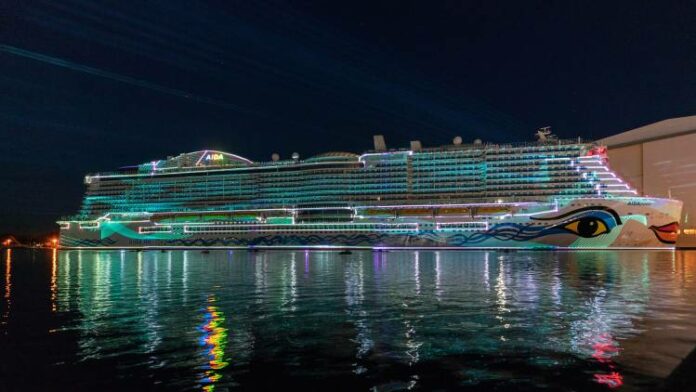
Carnival Corporation's German-market subsidiary AIDA has taken delivery of the world's first fully LNG-fueled cruise ship, the AIDAnova, from Meyer Werft. She is the largest cruise ship ever built by a German yard. 

"We are incredibly proud to be operating what is currently the world's most eco-friendly cruise ship, and we will be consistently pursuing this path of continuous development," said Felix Eichhorn, President of AIDA Cruises.

AIDA plans to continue to invest in LNG propulsion for its newbuilds, capitalizing on the clean-burning fuel to reduce public health-related emissions and comply with ECA requirements.  In less than five years, more than half of all AIDA guests will be traveling on board ships that are either fully or partially powered with LNG.

"With Carnival Corporation pioneering LNG technology, we start a new era of environmentally friendly cruising. It's important now that the respective infrastructure will be further developed as more and more cruise lines are following our example," said Michael Thamm, group CEO for Carnival's Costa Group and Carnival Asia. 

The first guests will be welcomed aboard AIDANova in Tenerife on December 19, 2018. Next summer, AIDAnova will sail for Mediterranean destinations, including Mallorca, Barcelona, Rome, Florence, and Marseilles. The new cruise ship will offer the two most popular routes for German guests – the Canary Islands for the winter season and the western Mediterranean in the summer months. 

AIDA says that the vessel will offer cruisers a significantly larger number of dining choices than previous vessels in its fleet, with 17 different restaurants and 17 bars. AIDAnova also features the first ever TV studio at sea, which will provide onboard live broadcasts in well-known TV formats. 

Source:maritime-executive