1.8 C
New York
Home Blog Page 1212

Petronas Wants Malaysia to be Regional LNG Bunkering Hub

0

Malaysian oil and gas company Petronas plans to introduce liquefied natural gas (LNG) bunkering operations at the country from the second half of 2019.

As a major player in the LNG business, PETRONAS is well-positioned to support the strategic intent for Malaysia to become the regional LNG bunkering hub,” it said in the Petronas Activity Outlook 2019-2021 report.

"Efforts are now being put in place towards advocating LNG as the preferred marine fuel of choice. In close collaboration with industry associations like MOSVA, programmes are aligned to encourage migration; to develop necessary infrastructures to support a swift and effective migration of local (currently diesel-fueled) OSV fleet to LNG, as the cleaner option," it said.

The first commercial LNG Bunkering is poised for start-up by second half of 2019 from RGT1 (Sg Udang, Melaka) and RGT2 (Pengerang, Johor), followed by KSB (Kemaman, Terengganu) and ASB (W.P. Labuan).

Dual-fueled LNG-based engines are expected to be the future solution, it said.

Meanwhile, the new LNG Regasification Terminal in Pengerang is a major strategic growth project for PGB, the company said.

It provides fuel requirement for Pengerang Cogeneration Plant (PCP), one of six Associated Facilities as well as the entire Pengerang Integrated Complex (PIC).

The LNG jetty is able to receive carriers up to 260,000 m3 and the two units of LNG Storage tanks with capacity of 200,000 m3 each, it said.

Source:marinelink
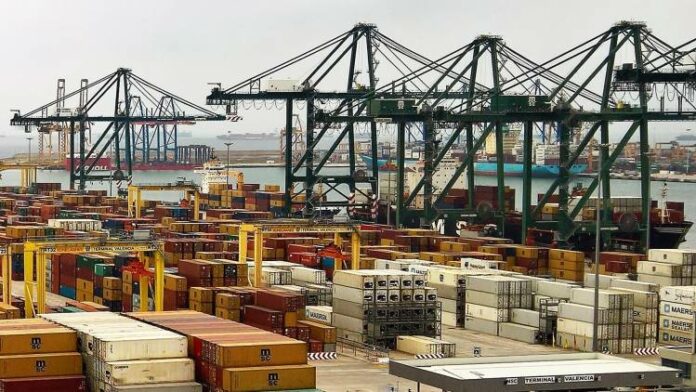
Port of Valencia Pilots IoT with MSC and Traxens

0

French start-up Traxens and  MSC Mediterranean Shipping Company is cooperating with its partner in a pilot project in Valencia to use an Internet-of-Things (IoT) network to improve the operational efficiency of the port.

MSC is already working with Traxens, which provides data and services for the supply chain industry, on smart container solutions using IoT for customers around the world. The use of such real-time tracking technologies brings unprecedented visibility of cargo flow from door-to-door, adding efficiency, safety and predictability where historically chasing information has been time-consuming and expensive.

The pilot project at MSC Terminal Valencia is being conducted in cooperation with the Port Authority at the Port of Valencia and Fundacion Valenciaport (FVP). It started in September and aims to provide a better overview of traffic for improved operational efficiency.

We have already used IoT devices by Traxens for tracking our containers and we believe that the functionality can really help port authorities in improving operations. This could bring benefits to all parties,” said Jaime Lopez, Intermodal Project Leader, MSC Spain.

As part of the pilot project, MSC Spain trucks have been equipped with dedicated IoT devices by Traxens, allowing for near real-time tracking of movement of vehicles. This can help port authorities to predict and manage potential congestion, as well as to anticipate truck arrivals at the gates.

A gateway has been installed at the MSC terminal to allow enhanced and secured connectivity and Traxens will also provide access to its big data analytics platform, TRAXENS-Hub, bringing enhanced analytics and reporting capabilities for port authorities.

Source:marinelink

Ports of Auckland aiming for zero emissions by 2040

0

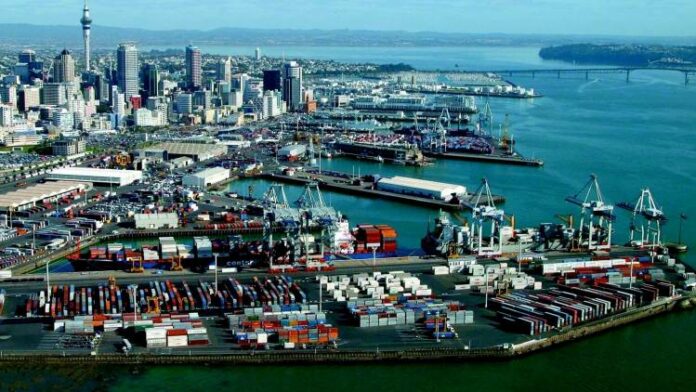
New Zealand’s Ports of Auckland is aiming for zero emissions by 2040 and is looking to hydrogen power as an alternative to batteries to power terminal equipment.

As it targets emissions free operation Ports of Auckland has committed to build a hydrogen production and refuelling facility at its Waitematā port.

As part of the project the port and its partners Auckland Council, Auckland Transport and KiwiRail, will invest in hydrogen fuel cell vehicles including port equipment, buses and cars.

Ports of Auckland chief executive Tony Gibson explained: "We have an ambitious target to be a zero emission port by 2040. In order to meet that target we need a new renewable and resilient power source for heavy equipment like tugs and straddle carriers, which are difficult to power with batteries. Hydrogen could be the solution for us as it can be produced and stored on site, allows rapid refuelling, and provides greater range than batteries."

The port will fund construction of the facility which will produce hydrogen from tap water with vehicles storing energy in fuel cells.

"If this trial is successful the technology would have a very wide application. It could help Auckland and New Zealand towards energy self-sufficiency and our emission reduction goals,” Gibson said.

Trucks, trains and ferries could also run on hydrogen – something which is already being done overseas – which would be a significant benefit for the community. Hydrogen powered vehicles are quieter and emit nothing more than clean water."

The New Zealand port joins a number of others globally in trialling hydrogen as a fuel source including the Port of LA and Port of Long Beach, Port of Honolulu, Port of Valencia and Port of Rotterdam.

Source:seatrade-maritime

Vopak tests drones for safer inspection

0

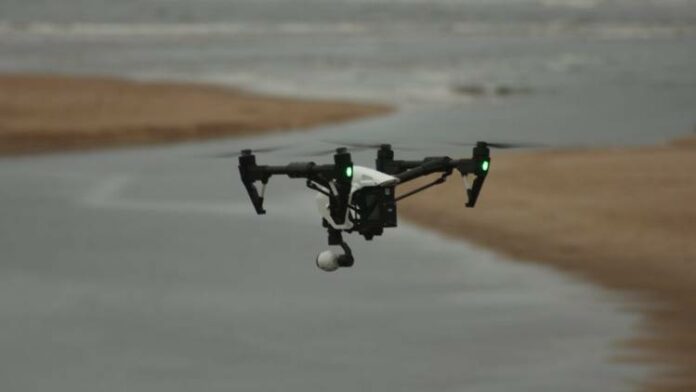
Vopak announced that it is testing the use of drones and robots, in order to ensure safer inspection and digital vessel clearance tool for better clearance process.  Among others the testing includes drone inspection and jetty inspection using an underwater remote operated vehicle (ROV).

At present, inspections are performed by people working inside confined space, which means that assets have to be terminated to ensure the safety of the inspectors.

The use of robots would avoid sending staff into confined spaces, minimize the exposure of personnel to potentially hazardous conditions, reduce downtime and waste water generation, and save resources.

"With support from Singapore Economic Development Board, we have embarked on a digital and innovative transformation journey to make smart terminals a reality." .. Mr Tan Soo Koong, Managing Director of Vopak Terminals Singapore stated.

Similarly, diving remote operated vehicles can already be used to inspect jetties and pipelines, while drones are being tested for the internal inspection of tanks. While the tank is inspected it is still available to the clients.

Normally, regarding vessel clearance, the operators have to manually check against the vessel specifications, terminal infrastructure data and a list of globally recognized embargoed vessels.

Through Vopak’s digital vessel clearance tool, operators can tap on internal data-driven platforms to automatically clear vessels in just four clicks, and can provide customers with the latest information on when the terminal can accommodate incoming vessels. This service is now available at all of its four terminals in Singapore.

With the successful implementation of all the projects, Vopak expects the reduction of safety incidents, an increase of sustainability, improvement  of service through better visibility on its supply chain and planning, and lower costs by improving terminal productivity.

Earlier this year, Vopak has tested the use of innovative sensors to monitor the health of product pumps and rolled out the use of ATEX proof mobile devices at the terminals to improve work processes at the terminal and become predictive.

Source:safety4sea

Corpus Christi LNG Terminal Ships First Cargo

0

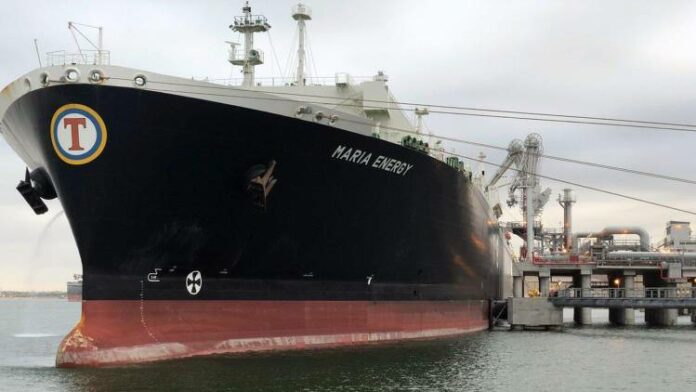
Cheniere Energy's first LNG commissioning cargo from its Corpus Christi terminal has been loaded aboard the LNG carrier Maria Energy, and is now headed for a destination in Greece. It is the first LNG cargo ever exported from the state of Texas. 

According to Greece's state-owned natural gas utility, DEFSA, the cargo will be delivered to the Revithoussa LNG terminal outside of Athens.

"Exporting the first commissioning cargo of LNG from Texas demonstrates Cheniere's ability to deliver projects safely and ahead of schedule, including the first greenfield LNG export facility in the lower 48 states," said Cheniere Energy president and CEO Jack Fusco in a statement. Cheniere's previous LNG development at Sabine Pass, Louisiana took advantage of infrastructure already built for the importation of LNG cargoes, before the shale boom made America a net exporter of natural gas. 

The Corpus Christi liquefaction facility consists of three large-scale LNG trains, with an additional seven smaller trains proposed. The facility’s first train produced its first LNG in November and is expected to reach substantial completion in the first quarter of 2019. Train 2 is expected to reach completion in the second half of 2019, and Train 3 in the second half of 2021. At full build-out – with the seven smaller trains – the $13 billion Corpus Christi LNG terminal would have a maximum capacity of 23 million tonnes per annum.

Thanks in part to Cheniere's development plans, the U.S. is expected to propel America into a leading role in the global LNG market, according to the International Energy Agency. The U.S. is expected to account for nearly three quarters of LNG export growth in the medium term. In addition to an abundant supply, American LNG prices are typically indexed to domestic natural gas prices, not to oil, and they often come without destination restrictions – attractive features for overseas buyers. As at Sabine Pass LNG, Cheniere has already signed long-term supply contracts with buyers for much of Corpus Christi LNG's capacity. 

Source:maritime-executive

EU Parliament Calls for Port Restrictions Over Kerch Strait Incident

0

On Wednesday, the European Parliament passed a resolution calling on the EU to close European ports to Russian vessels arriving from the Sea of Azov in retaliation for Russia's recent seizure of three Ukrainian naval vessels. 

On November 25, Russian forces fired on and seized two Ukrainian gunboats and one tug after the Ukrainian vessels tried to pass under the Kerch Strait Bridge. They detained 24 Ukrainian sailors in connection with its seizure, and several have been charged with "breaching Russia's borders," according to state media. Three sailors sustained "soft tissue injuries" and received treatment in Crimea. 

The altercation came after a period of heightened tensions between Moscow and Kiev over allegedly excessive Russian inspections for merchant shipping in Kerch Strait. The narrow waterway connects the Black Sea with the Sea of Azov, and a bilateral treaty ensures that Ukrainian vessels have the freedom to navigate through it. Russia denies that this freedom exists, and it asserts that the Strait lies within the Russian Federation's sovereign "state border.

Citing these concerns, the EU Parliament called for "targeted sanctions" in the event that Russia does not return the crews of the three Ukrainian Navy ships or in the event of any further military escalation. It warned that the recent actions appear to be a "creeping attempt to annex Ukraine’s sovereign rights in the Sea of Azov with the aim of transforming it into a Russian‘internal lake’" – comparable to the Soviet Union's longstanding claim that the Sea was part of its "internal waters.

Instead, the parliament called on Russia to ensure freedom of navigation through the strait. If it does not, the body said, it will call "on the EU and its Member States to close access to EU ports for Russian ships coming from the Sea of Azov" in retaliation. 

Kerch Strait Bridge

Russian contractors completed a new bridge across the Kerch Strait in May, providing a road connection between contiguous Russian territory and Russian-occupied Crimea. The bridge creates a new constraint on navigation through the Strait, according to the European Commission: its navigable span is 750 feet wide by 115 feet high, and the dredged channel through the strait has a navigable depth of about 26 feet. 

Ukrainian military intelligence sources assert that Russia has been using the bridge to transport military equipment onto the Crimean peninsula, including tanks and armored vehicles, with multiple convoys observed in recent weeks. 

Source:maritime-executive

Port Rashid Receives Five Cruise Ships in a Day

0

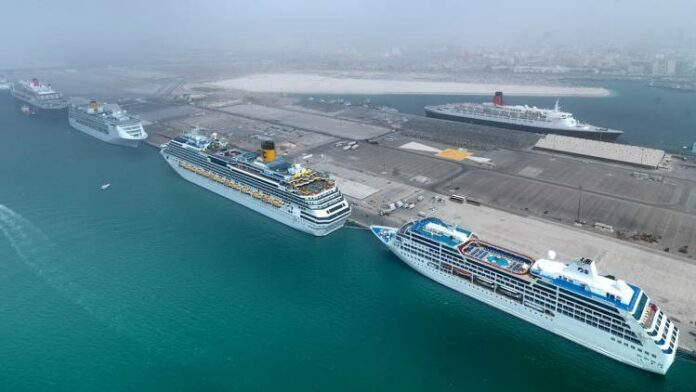
Port Rashid in the UAE received five international cruise liners on the same day at the Dubai Cruise Terminal earlier in December. 

The cruise ships, Marella Discovery, AIDAprima, MSC Splendida, Horizon (Pullmantur Cruises) and Celebrity Constellation, brought over 25,000 tourists that day. 

For three of the vessels, Marella Discovery, AIDAprima and Horizon, it was their maiden call to Dubai, and three of the cruise lines will be homeporting in Dubai for the full season, operating regular Arabian Gulf voyages. The other ships will be docking in the city for excursions and passenger turnaround as a part of their longer international programs. 

AIDAprima with 16 calls in the 2018/19 season is expected to bring over 60,000 cruise tourists to Dubai and Pullmantur Cruises marked its debut in the region with its cruise ship Horizon and is set to welcome over 45,000 cruise tourists via 14 calls to Dubai during the ongoing season. MSC Cruises will deploy two ships in the region with Dubai as its homeport for the first time with a total of 28 calls will bring in over 120,000 cruise tourists. 

Port Rashid has received a growing number of cruise passengers over the last few years. The number of cruise tourists to Dubai has doubled since 2014 from 320,000 in 2013-2014 season to 625,000 in 2016-2017. The number of cruises to Dubai grew by 68 percent from 93 in 2013-2014 season to 156 cruises in 2016-2017. Around 1.9 million cruise passengers have made it to Dubai between 2013-2014 to 2016-2017 on 489 cruise liners. 

The recently formed Dubai Cruise Committee has been working to raise the profile of Dubai as a leading destination for winter sun cruising. Dubai’s cruise industry is set for a strong performance throughout the 2018/2019 season, with 725,000 cruise tourists expected.  

Source:maritime-executive

Panama Canal Signs Agreement with Port of Itaqui

0

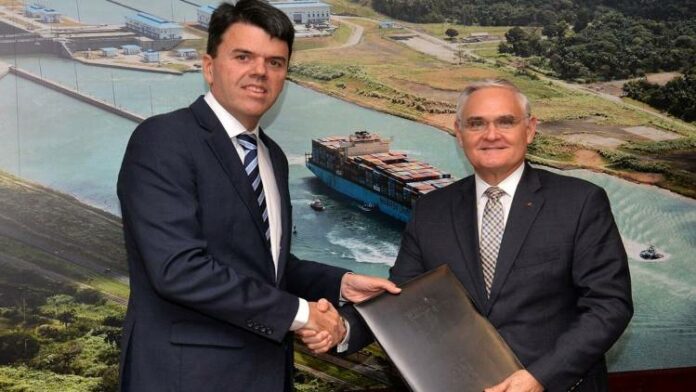
The Panama Canal signed a MOU with Port of Itaqui, located in the northeastern region of Brazil, to promote the shipment of grain, soybeans and other cargoes in the commercial route between the north of Brazil through the Panama Canal to destinations located in the Pacific Ocean.
 
The Port of Itaqui, located in São Luís, Maranhão, is the Brazilian port closest to the Panama Canal and has the infrastructure and connectivity necessary to move these exports to markets in Asia. With this agreement, the Panama Canal is looking to promote the use of the Panamax Locks for grain transits originating in northern Brazil and traveling to markets in Asia.

The agreement will allow the Panama Canal and Port of Itaqui to conduct joint marketing activities and exchange market studies and information on trade flows to support modernization and improvement programs.
 
Brazil ranks among the main producers of grain worldwide, and growth prospects are encouraging. In 2017, the port moved 19.1 million tons of cargo, becoming an important logistic corridor for the central-western region of Brazil. The MOU's signing comes at a time when Brazilian grain exporters are enjoying considerable increases in shipment volumes.  

Dry bulk vessels transporting grains and other dry commodities accounted for roughly 22.2 percent of the Panama Canal's total oceangoing commercial transits during its fiscal year 2018 (from October 1, 2017 to September 30, 2018).

Source:maritime-executive

Jan De Nul cleans up polluted beaches along the coast in southern France

0

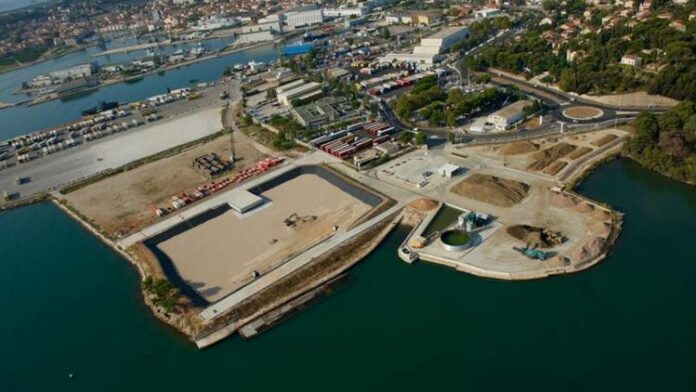
France engages the environmental expertise of Jan De Nul Group to clean up the oil-polluted beaches along the Mediterranean Sea. This week, Envisan, the environmental subsidiary of the dredging and construction company, signed a contract with the French company Le Floch Dépollution for cleaning up the polluted sand using Envisan’s soil treatment centre near Toulon. Le Floch Dépollution has been contracted by the insurance offices of shipping companies to tackle the consequences of marine pollution calamities that have occurred in the departments of the Côte d'Azur and the Var.

In early October, two vessels collided with one another on the Mediterranean Sea, causing a leak in the fuel tanks. Some of the resulting pollution was immediately captured at sea but within a couple of days, the remaining considerable part washed ashore onto the beaches of southern France. The Prefecture of the Var department was forced to close the beaches to the public, and up until now, oil pollution continues to be washed ashore onto the beaches.

Envisan is awarded the contract to treat all the polluted sand at its soil treatment centre near Toulon, where it will be subjected to a physical-chemical washing process. Currently, the treatment of approximately 2,000 tonnes of sand is expected, but as pollution continues to wash ashore, this quantity may still increase.

Presently, Envisan and local environmental authorities are investigating if it is possible to re-use the decontaminated sand to replenish the excavated beaches, leading to a fine example of how Envisan embraces the circular economy.

The soil treatment centre of Envisan near Toulon

Over the past few years, Envisan, a leading environmental company, has set up a network of sediment and soil treatment centres: five centres in Belgium and one in southern France in Toulon. The French centre, which opened in 2015, offers the Mediterranean construction and marine industry a solution for contaminated soils and dredged sediments. In this centre, sediments can be dried both in lagoons and by way of filter presses, and from this year, the centre also features a physical-chemical plant that is able to wash and revalorise heavily contaminated soils.

Source:portnews

Building of Johan Sverdrup Phase II begins

0

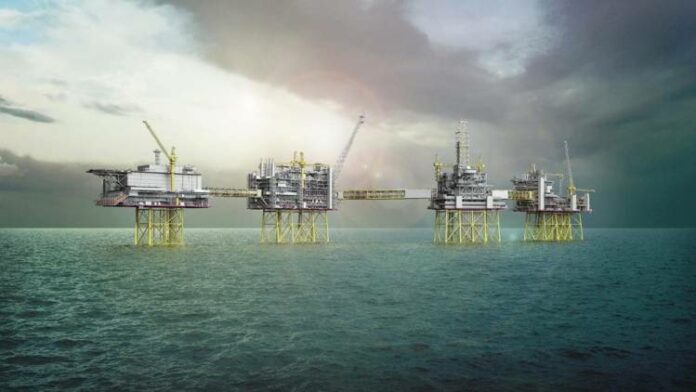
Aker Solutions, Kvaerner and Equinor celebrate the start of the fabrication for the second phase of the Johan Sverdrup development. This is Norway’s largest industrial project in three decades, the Company said in a press release. 

Aker Solutions has worked closely with Kvaerner in a 50/50 joint venture to support Equinor’s Johan Sverdrup Riser Platform modification project since May 2018. The scope of work includes engineering, procurement, construction and installation of a 5,000 metric-ton utility module, as well as modifications of the field center and integration of a second processing platform.

The utility module will be built at Kvaerner's yard at Stord. The prefabrication for the module will be done by various subcontractors in Poland. Aker Solutions' yard in Egersund will perform the prefabrication for the offshore integration.

"We are proud to deliver this giant industrial project together with Kvaerner and Equinor," said Knut Sandvik, executive vice president, greenfield projects at Aker Solutions.

Peak manning for Aker Solutions will be approximately 300 employees.

Johan Sverdrup
Johan Sverdrup is estimated to hold 2.2 billion to 3.2 billion barrels of oil equivalents. It is expected to produce up to 660,000 barrels of oil equivalents a day when fully developed in 2022, equal to about a quarter of the current domestic output. Production is scheduled to start in 2019. It is predicted to last for about 50 years.

Equinor is the operator for the development, which spans over three licenses. Other partners include Lundin Norway, Petoro, Aker BP and Total.

From FEED to Installation – Following the Development of Johan Sverdrup
Aker Solutions provided feasibility and concept studies for the Johan Sverdrup discovery in 2012-2013, supporting the partnership in developing a robust development concept. In late 2013, the company won a portfolio framework agreement from Equinor to provide engineering services, procurement and management assistance (EPMA) for the first phase of the development. The front-end engineering design (FEED) was executed in 2014, engaging one of the largest FEED teams ever assembled by the company to detail out the four platform field center concept.

In 2018, Aker Solutions completed the FEED for phase two of the development, including the module and work to integrate this with the riser platform. This work was secured in 2017 as part of a 10-year framework engineering agreement for Johan Sverdrup that was awarded to Aker Solutions in 2013.

Source:portnews