1.9 C
New York
Home Blog Page 1211

Wind Developers Bid Record-Setting Amounts for U.S. Leases

0

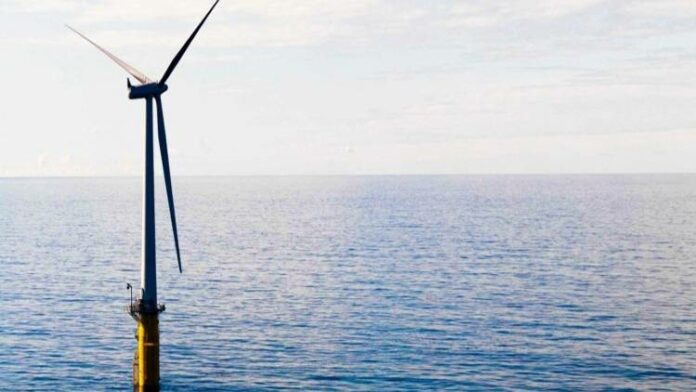
Norwegian oil company Equinor has secured one of the three lease blocks offered in Friday's federal offshore auction for waters off Massachusetts. 

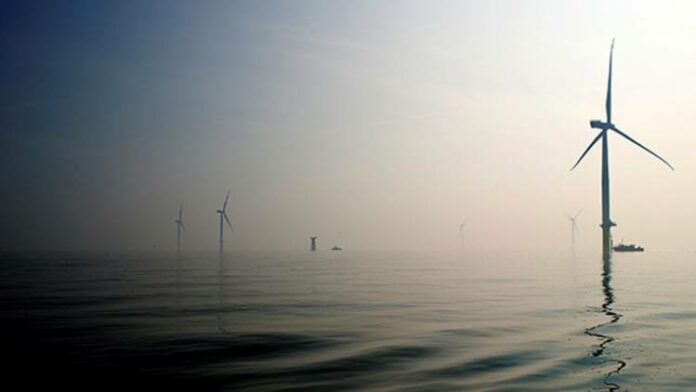
Equinor submitted a winning bid of $135 million for one of three lease areas in the online auction conducted Friday by the US Department of the Interior's Bureau of Ocean Energy Management (BOEM). Equinor says that the 130,000 acre site – the closest to shore of the three offered Friday – will give it the opportunity to explore future wind farm possilities. The other successful bidders were Mayflower Wind Energy and Vineyard Wind. 

All three firms entered nearly identical bids for similarly-sized parcels; eight other firms participated. The Department of Justice and Federal Trade Commission must conduct an anti-competitiveness review of the bidding before the awards can be finalized. If confirmed, the combined gross of $405 million will be easily the largest wind lease sale in America, ten times greater than the previous record. 

Equinor already holds an 80,000 acre lease site located off the entrance to New York Harbor, about 140 nm to the west, which it plans to develop into a 1-gigawatt wind farm dubbed Empire Wind. The $3 billion project would generate enough electricity to power one million homes. 

"This acquisition complements our existing position on the U.S. East Coast and gives us a foothold to engage in the Massachusetts and wider New England market, a region notable for its strong commitment to offshore wind," said Equinor Wind U.S. president Christer af Geijerstam in a statement.

Equinor derives its primary revenue stream from oil, gas, refining and related industries, and it is a leading proponent of Arctic oil exploration. While it is firmly rooted in the traditional energy economy, it recently changed its name to de-emphasize its oil business, and it plans to allocate a 20 percent fraction of its capex expenditures to alternative energy over the course of the next 12 years. Its current position in wind power includes four projects in the United Kingdom and Germany; it is also developing offshore wind power in Poland and solar energy projects in Brazil and Argentina.

Source:maritime-executive

Response Continues for Spill Near Port Sulphur, Louisiana

0

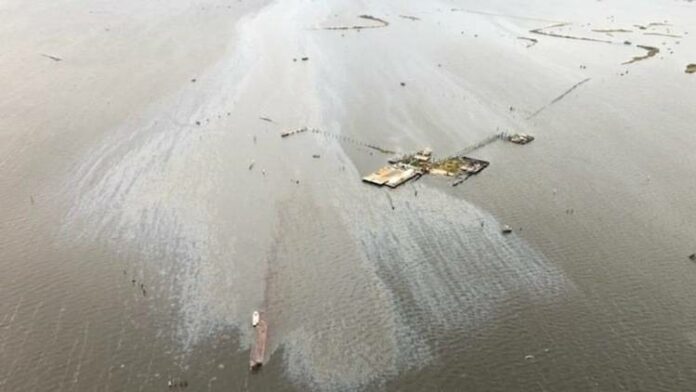
The wellhead at the source of the spill in Rattlesnake Bayou, Louisiana has been brought under control, but cleanup teams and response boats are still working to remove pollution from the waterway. 

“It’s a big spill,” said Patrick Harvey, emergency response director for Plaquemines Parish, speaking to local media. "Hopefully, the impact is not as bad as it was originally thought to be and, hopefully, they can get it cleaned up in a short period of time."

About 5,000 gallons of oil/water mixture has been recovered so far, but the exact extent of the spill is still unknown. The wellhead is still not fixed: responders are pumping saltwater into the well in order to keep back the mixture of oil, gas and water that began to spill out over the weekencd, but a permanent repair has not yet been completed.

Louisiana's Oil Spill Coordinator's Office, the U.S. Coast Guard, NOAA, Hilcorp Energy and state and local agencies are working on the response. Over 100 personnel have been deployed for the containment and cleanup effort, along with ten response boats, five work boats, ten skimming vessels, two drum skimmers, ten airboats and three drones. 

NOAA responds to dozens of oil spills of varying sizes along the Gulf Coast each year; in 2014, it counted 44 separate incidents. Environmental consultant P.J. Hahn told the local Fox News affiliate that oil spills are an unfortunate but inevitable part of the Gulf Coast economy. "Overall, it's going to happen and I think, as long as you can contain it without it getting out causing too much damage to the environment, it's something we have to live with," he said.

The last spill near Port Sulphur occurred in October 2017, when an estimated 1,260 gallons of oil and water discharged from a casing line on a well in Lake Washington. The leak resulted in a heavy rainbow sheen and pockets of brown oil over a two mile long by 200-foot-wide area.

Source:maritime-executive

Coast Guard Searches for Missing Passenger off Florida Keys

0

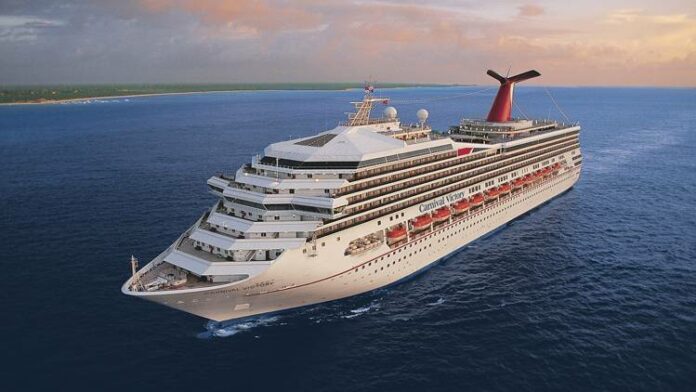
The U.S. Coast Guard has launched a search and rescue effort for a man who went over the side of the cruise ship Carnival Victory on Friday morning. According to a message released to passengers by the Victory's master, Capt. Roberto Tine, security camera footage confirmed that the man went overboard. 

"Sadly, all the facts surrounding this unfortunate incident indicate it was an intentional act," a Carnival spokesperson told NBC. "We remain hopeful that the U.S. Coast Guard effort will bring positive news."

The Coast Guard has identified the victim as Thomas McElhany, 26. 

At the time of McElhany's disappearance, the Victory was located about 35 nm off Islamorada in the Florida Keys. At about 0930 hours, the Coast Guard dispatched several search assets to the scene to begin a SAR effort. The Carnival Victory departed shortly thereafter to resume her commercial voyage, and she arrived at PortMiami later in the day.

U.S. Coast Guard District Southeast said in an update that its assets will continue the search on scene through the night. 

It was the third MOB situation aboard a Caribbean cruise ship within one month. Last weekend, a 69-year-old female passenger went missing from the MSC Preziosa, and on November 22, a male crewmember of the RCL vessel Adventure of the Seas disappeared. Neither were reported missing for several hours after the suspected time of disappearance, and neither were found. 

LRAUV: Arctic Oil-Spill-Mapping Robot Put to the Test

0

As commercial shipping and energy activities picks up in the Arctic region, the prospect of accidental oil spills in this pristine environment remain a concern. In response, the U.S. Department of Homeland Security (DHS) is taking the lead – through the U.S. Coast Guard – to develop a subsea robotic system to map and report on spills.

Because of ice coverage and the tyranny of distance, it is difficult to get resources and assets up in the Arctic in a quick manner,” said Kirsten Trego, Executive Director of the Coast Guard’s Interagency Coordinating Committee on Oil Pollution Research. “With better real-time data, more effective response strategies can be developed and deployed.

To help the Coast Guard map oil spills under ice, the DHS Science and Technology Directorate (S&T) has been working on an underwater robot for the past four years through a DHS Center of Excellence, the Arctic Domain Awareness Center (ADAC) at the University of Alaska Anchorage, in partnership with the Woods Hole Oceanographic Institution (WHOI) and Monterey Bay Aquarium Research Institute.

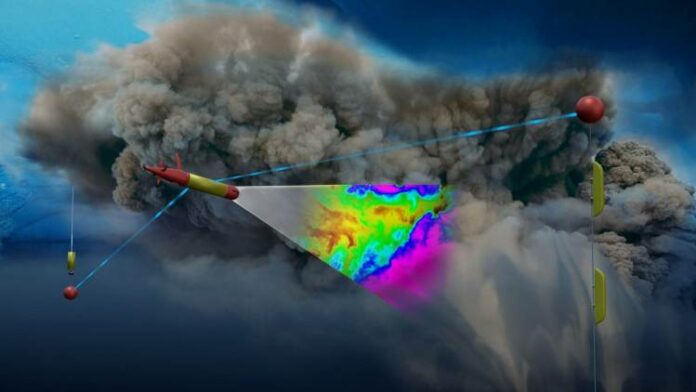
The result of this research is the Tethys Long Range Autonomic Underwater Vehicle or LRAUV, a helicopter-portable, torpedo-shaped system with oil sensors and navigation capabilities. This robot can provide real-time data for first responders by producing and transmitting 3-D maps of crude oil, diesel, gasoline and kerosene spills. ADAC recently tested this technology in California and plans to do more tests this year and next, including under-ice tests.

Meet LRAUV
Work on LRAUV started in January 2015, the idea born from the stress around the Deep Water Horizon spill in the Gulf of Mexico in 2010, which was measured with “limited sensors and short duration platforms,” said S&T Program Manager Theo Gemelas.

To help address the problem of duration, LRAUV – which measures eight feel long, is 12 inches wide and weighs 240 pounds – is designed to rove for 15 days and 373 miles without recharging batteries, with the latest prototype able to travel 2-4 feet per second (1-3 miles per hour), communicating with specially installed buoys.

Since there is no cellular coverage in the vast Arctic, the buoys – equipped with Very High Frequency antennas to transmit data via satellites – are a key component to the LRAUV’s success. When deployed, the buoys will provide solar or wave power to recharge the robot’s batteries, an effective way to keep it charged in such remote conditions.

 “This vehicle is the first of its kind. We haven’t previously been able to characterize oil spills with an underwater vehicle under solid ice pack,” said ADAC Executive Director retired Major General Randy “Church” Kee.

LRAUV Put to the Test
On September 27, 2018, ADAC conducted an open-water test of its LRAUV prototype in Monterey Bay, California, with the goal to characterize an oil spill and transmit data back to shore.

The researchers showed us how LRAUV works; this was the first test with the oil sensors and data transmission in action,” said Trego.

LRAUV was equipped with chemical sensors and simulated an oil spill from a vessel by “leaking” a non-toxic, neon green sea dye into the water. The dye, just like oil, can float in the top 13 feet of the water column, but biodegrades in sunlight in a matter of hours.

This specific water test was intended to check all the prior work in the newly fabricated vehicle to characterize an oil spill,” said Kee.

The robot surfaced every few minutes to transmit and receive data from the control vessel and check its location using cellular connection. After several hours, LRAUV had scanned successfully the whole area and transmitted the data to shore for analysis.

What’s Next?
LRAUV is currently being prepared for transport to WHOI in Woods Hole, Massachusetts, where the next test will take place. Researchers will process the navigation performance data from the test and will tune the navigation algorithms according to the results. Then the team will make three communication buoys and will test them with the robot under ice. The team is targeting to conduct the under-ice test in a large lake in New Hampshire, the Eastern Great Lakes, or Alaska during the winter season.

ADAC plans to complete all rigorous testing – including under-ice tests – and the construction of communication relay buoys by the end of June 2019.

Source:marinelink

RoRo Passenger ferry catches on fire again off Lymington

0

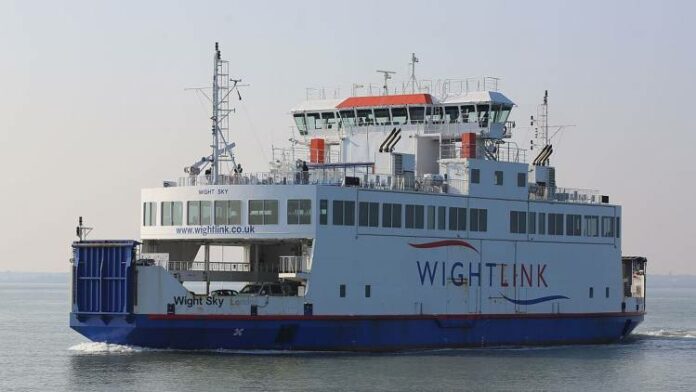
A fire broke out onboard ‘M/V Wight Sky’, a RoRO ferry, while she was in berth at Lymington, Hampshire, England, early this morning, December 14. No injuries have reported but the service, till further notice, has been suspended. This is the third time a fire has broken out on the 'Wight Sky' in the last 15 months.

According to local reports, the company stated that all customers and crew disembarked the ship safely, with no injuries. As a result, the company added that it has suspended the service from Lymington to Yarmouth, Isle of Wight.

Five mainland fire crews are present to the scene, alongside an aerial ladder platform, a specialist equipment unit, a command unit and a command support unit.

The firefighting team has sealed the fire in the engine room while monitoring the fire on CCTV.

This is not the first time that this vessel has experienced a fire onboard but the third. On 12 September 2017, while approaching Yarmouth, Isle of Wight, the ro-ro passenger ferry suffered a catastrophic failure of one of its main propulsion engines, and a fire broke out. The fire was controlled immediately, but the vessel's engineer suffered serious burn injuries. The fire was brought under control shortly, but the vessel’s engineer, who had been standing near the engine, suffered serious burn injuries to his hands and face.

After conducting an investigation, UK MAIB concluded that the debris in the engine’s oil channels caused a catastrophic engine failure and subsequent fire.

Source:safety4sea

Hammer down again on Massachusetts offshore sale

0

Round 27 of the Massachusetts offshore wind auction sees four companies still involved, with total bids amounting to $341m.

Two bids came in for lease zone one at $120,000, and single bids of $105m and $116m for zones two and three, respectively.

Of the 19 companies qualified to bid, including Avangrid Renewables, Norwegian company Equinor and Orsted-acquired Deepwater Wind, 11 of them placed bids at the start of the auction.

The auction consists of a series of rounds. During each round, companies can choose to pay the new price tag or drop out of consideration.

BOEM will not release the names of specific companies bidding on the leases until the conclusion of the auction.

Each lease area contains about 53,000 hectares, and lies directly southeast of areas already leased to Vineyard Wind and Bay State Wind.

This auction is slightly different because the three leases are auctioned simultaneously and companies have the option to bid on any of the leases during each round.

This auction will have different dynamics than we've had in previous auctions,” a BOEM spokesperson said.

The other companies able to compete in the auction are Camellia Wind Energy, Blue Cloud Wind Energy, Cobra Industrial Services, East Wind, EC&R Developments, EDF Renewables, EDPR Offshore North America, Enbridge Holdings (Green Energy), Innogy US Renewable Projects, Mayflower Wind Energy, Northeast Wind Energy, Northland Power America, PNE Wind USA, Vineyard Wind, Wind Future and WPD Offshore Alpha.

Source:renews

Suncor Energy Expects 2019 Upstream Production To Rise By 10%

0

Suncor Energy Inc.Canada’s second-largest energy producer, said on Dec. 14 it expects average upstream production to rise 10% in 2019, even after implementing Alberta’s mandated output cuts.

Alberta has mandated temporary output cuts of 325,000 barrels per day until excess crude in storage is drawn down. The Western Canadian province’s production cut, which will come into effect on Jan. 1, comes amid depressed prices for Canada’s heavy crude owing to pipeline bottlenecks.

The mandated cuts are controversial because heavily integrated producers such as Suncor and Husky Energy Inc. benefit from the low crude prices to feed their refineries.

Suncor forecast average upstream production of 780,000 to 820,000 barrels of oil equivalent per day (boe/d), an increase from about 730,000 boe/d in 2018.

The company also expects capex to be in the range of CA$4.9 billion to CA$5.6 billion (US$3.66 billion to US$4.18 billion), largely flat compared to 2018.

Source:epmag

Siemens Gamesa leads offshore R&D team

0

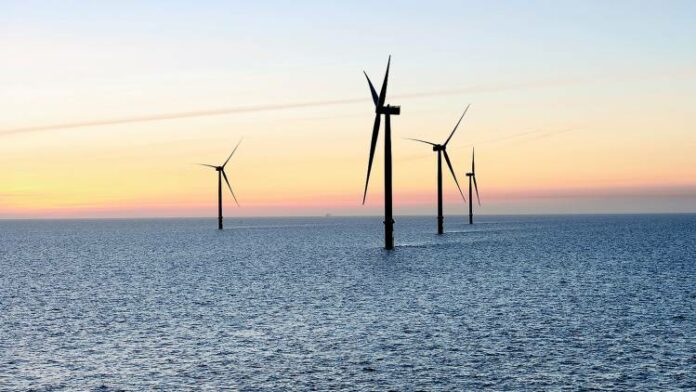
Siemens Gamesa and Aalborg University are leading a new research and development initiative that aims to cut the cost of offshore wind power by demonstrating and testing new technologies.

The i4Offshore project – officially known as 'Integrated Implementation of Industrial Innovations for Offshore Wind Cost Reduction' – is backed by an almost €20m grant from the EU's Horizon 2020 research and innovation programme.

It will test a new Siemens Gamesa offshore turbine, as well as a 1000-ton bucket foundation, a steel jacket, a concrete transition piece and cable connection.

The aim is to prove that the technology is “reliable, and that production, transport, and installation can be done more cost effectively than today”, Siemens Gamesa said.

Siemens Gamesa senior specialist in offshore technologies and project lead Jesper Moeller said: “Our constant focus on innovation – along with strong partners, customers, and support such as from the EU – enables us to push the industry forward, delivering a lower Levelized Cost of Energy and higher annual energy production."

The R&D work we'll do during this project has clear goals of benefitting our customers, ratepayers, and society-at-large.

Using a suction-bucket foundation benefits whales and other undersea life by eliminating the sound waves which hammering causes.

Also, once the wind turbine has exhausted its many years of operational life, the suction buckets, jacket foundation, and transition piece can be decommissioned and removed relatively easily. The materials, including steel, concrete and cables, can be re-used in a highly resource-efficient manner.

Other partners in the project include Universal Foundation, Bladt Industries, Per Aarsleff, Salzgitter, Windar Renovables, Dr Techn Olav Olsen, NKT Cables, Sintef Ocean, Bureau Veritas Marine & Offshore, Maersk Broker, Deugro Danmark, Fred Olsen Windcarrier and Technical University of Denmark.

Aalborg University professor Lars Bo Ibsen said: “One of the challenges of offshore wind energy is that the high cost of building offshore wind turbines has necessitated various governmental subsidies to improve the business case."

While all forms of industrial power generation receive governmental support, whether from renewable, fossil, or other sources, our project aims at making offshore wind energy even more cost-effective without external financial support.

We already have a lot of pieces that we know work separately. Now we are in the process of assembling them into a large puzzle, and testing that they work together.

“As this is proven, we look to demonstrate to customers, banks, and investors that offshore wind makes even more financial and environmental sense for the future.”

Source:renews

Acta Marine’s second walk-to-work CSV in final construction phase

0

Acta Centaurus, the second SX195 construction support vessel ordered by Acta Marine from Ulstein, has commenced the final phase of construction at the shipbuilder’s Norwegian yard in Ulsteinvik.

The vessel’s hull arrived at Ulstein Verft on 10 December, where it will undergo further outfitting and testing, from Ulstein’s Gdynia yard in Poland where the initial phases of construction took place.

Scheduled for delivery by the beginning of Q2 2019, Acta Centaurus is the third walk-to-work vessel in Acta Marine’s dedicated offshore logistics and accommodation fleet, which services both the offshore oil and gas and renewable energy sectors.

Sister vessel to Acta AurigaActa Centaurus offers walk-to-work transfer of crew and cargo via a motion-compensated gangway able to operate up to 3 m significant wave height. It is also equipped with a 3D motion-compensated knuckle-boom crane able to handle loads of up to 6 tonnes in sea conditions of 2.5 m significant wave height. Up to 120 people can be accommodated and there is 1,000 m2 of deck space for cargo storage.

The vessel shares its sister’s innovative use of Ulstein’s X-BOW and X-STERN hull concepts, which utilise a wavepiercing tumblehome hullform to offer greater stability whether under way or in dynamic positioning (DP) mode in rough seas. While under way, the X-BOW is able to absorb impacts more consistently across the hull’s surface, resulting in greater stability and reducing fuel usage. When operating in DP mode, the X-Stern can be faced into the wind to boost performance by offering reduced pitch motion, wave response and slamming, reduced trim and draft sensitivity and increasing the operational window.

Source:osjonline

Samsung Heavy Strikes New LNG Carrier Order

0

South Korean shipbuilding giant Samsung Heavy Industries (SHI) said Thursday that it has clinched a new deal to build a liquefied natural gas (LNG) carrier.

According to a press release from the shipbuilder, the price tag for the LNG carrier is 211 billion Korean won (USD188 million).

Under the contract with an unidentified customer, Samsung Heavy will deliver the vessel by March 2021, the company said.

Few days ago, SHI also secured a 400 billion won ($356 million) deal to build two 174,000-cbm LNG carriers for Japanese shipping giant NYK.

The release revealed that SHI's new order total for 2018 now stands at 45 vessels and 5.5 billion USD. which include 14 LNG carriers, 13 Containerships, 15 tankers, and 3 special purpose ships.

Source:marinelink