1.9 C
New York
Home Blog Page 1210

Nordic American Offshore Bags PSV Contract

0

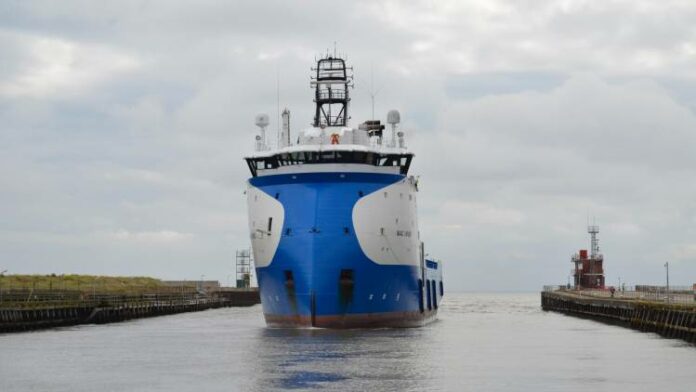
Bermuda-headquartered Nordic American Offshore (NAO) has been awarded a two-year fixed contract for the Platform Supply Vessel (PSV) built in 2015, 'NAO Viking'.

Commencement will be about mid-December 2018. The contract also grants the customer two one-year optional periods after the initial firm period, said a press release from the owner and operator of platform supply vessels in the North Sea

'NAO Viking' will be operating primarily in the North Sea for a first class company.  This contract has been concluded with one of the Company's regular customers.

The contract is securing steady employment and contribution for 'NAO Viking'.

Two days ago, NYSE-listed offshore support vessel owner Scorpio Group took control of NAO, via a private placement into company’s shares worth $5 million.

Source:marinelink

First Non-EU Ship Recycling Yards Join EU List

0

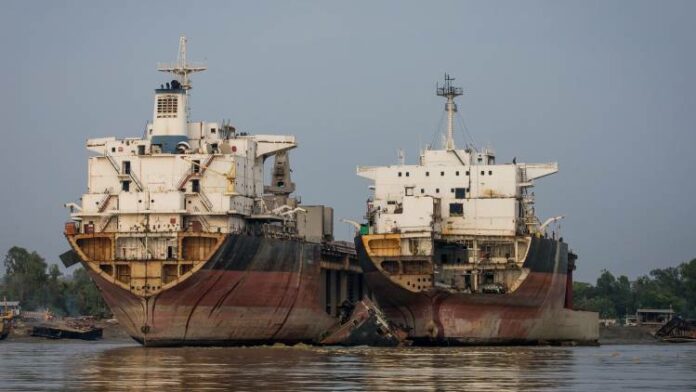
The European Commission published the fourth version of the ‘European List of ship recycling facilities’ last week, adding six new yards, taking the total up to 26.

It includes 23 facilities located in European Union (EU) member states, and for the first time ever, three located in non-EU member states – LEYAL and LEYAL-DEMTAS in Turkey and a facility in the USA, said a press release from Lloyd's Register.

From 31 December 2018, the EU Ship Recycling Regulation will require all ships flying the flag of an EU Member State to use an approved ship recycling facility included in the European List. The addition of the LEYAL Group facilities to the EU List will help meet the capacity requirements for the recycling of larger EU flagged ships.

LEYAL is the leading ship recycling company in Turkey and has a long and successful track record of robust performance and a wealth of experience in green recycling spanning 37 years, making it one of the most experienced ship recycling facilities worldwide.

LR previously certified LEYAL’s facilities in compliance with the IMO Hong Kong Convention in 2016. The assessment/verification was conducted through rigorous reviews of ship recycling facility plans and supporting documentation, and a series of demanding site inspections, ensuring that management systems and operations were in full accordance with the Convention.

On the occasion of the publication of the new ‘European List of ship recycling facilities’ EU Commissioner for Environment, Maritime Affairs and Fisheries, Karmenu Vella, said: “The EU is committed to reducing the impact of EU shipping industry on the environment, including through better protection of environment and workers in ship recycling."

Karmenu  added: "The inclusion of the first yards located outside the EU is a major milestone and the recognition of very significant efforts and resources dedicated by the concerned yards towards this goal. The updated List will increase the recycling capacity of the European List, and give European ship owners a wider range of recycling options.

Dimitri Ayvatoglu, Head Special Projects & External Affairs at LEYAL, said: “We are once again proud to have achieved another major milestone in our continuous effort to offer the industry sustainable ship recycling options, both in relation to realising significant asset values as well as with respect to safe and environmentally sound recycling operations."

"Being the first non-European ship recycling facility worldwide to be added the EU List and the first and only from Turkeyis a showcase of our high quality environment, health and safety standards and a testament to our strong commitment to remain at the forefront of developments,” Dimitri added.

LR’s Ehud Bar-Lev, Global Manager, Ship Inspection & Assessment, said: “LEYAL’s commitment towards safe and sustainable ship recycling is a continuous effort reflected in its day-to-day operating culture. Lloyd’s Register is proud to play a major role in changing this industry towards a better future for the environment, employees and the shipping industry.

Source:marinelink

Gazprom, Itochu Sign MoU on Baltic LNG

0

Russian oil and gas company Gazprom and Japanese trading house Itochu have signed a memorandum of understanding (MoU) on the proposed Baltic liquefied natural gas (LNG) export project.

"With this document, the parties confirmed their interest in potential cooperation in the framework of the project," said a press note from the Russian gas giant.

A working meeting between Alexey Miller, Chairman of the Gazprom Management Committee, and Yoshihisa Suzuki, President and Chief Operating Officer of Itochu Corporation, took place in St. Petersburg on December 13.

Itochu Corporation is one of Japan's largest general trading companies. It is engaged in oil & natural gas production and processing and LNG projects.

The Baltic LNG project envisages the construction of an LNG plant with the annual capacity of 10 million tons in the port of Ust-Luga, Leningrad Region.

Source:marinelink

Energy Observer Vessel Fitted With Oceanwings Wingsails

0

One year after the signature of the technology partnership between VPLP Design and CNIM, Oceanwings®, a new wind propulsion method, is coming to industrial maturity.

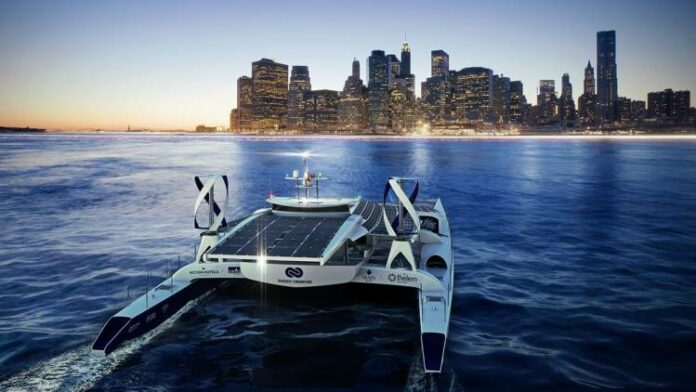
Energy Observer, the first hydrogen-powered vessel aiming to achieve energy self-sufficiency, with zero greenhouse gas and fine particle emissions, has been equipped with Oceanwings® wingsails. This hybrid propulsion system consisting of a composite mast 12m high and two sails of 32m², will reduce the craft’s energy spending. Designed by VPLP Design, Oceanwings® wingsails are jointly developed and manufactured in CNIM’s industrial facilities in La Seyne-sur-Mer.

Installation of Oceanwings® onboard Energy Observer is a first step towards reducing the environmental impact of global shipping. Inspired by the rigid sails of America’s Cup, this technology allows energy savings of between 18 and 42% depending on the vessel. A significant figure when it is recalled that 90% of all world trade transits by sea. Some 50,000 ships are therefore responsible for severe air pollution by rejecting into the atmospheric pollutants such as fine particles, and oxides of nitrogen (NOx) and sulphur (SOx).

With its fully automated system, Oceanwings® offers the possibility of using wind as the propulsive force, without any need for a sailor-trained crew. The wing is equipped with sensors connected to an embedded intelligence that analyses the environmental conditions and allows it to adapt to them. “Depending on the direction you want to take, the navigation system sends adjustment instructions directly to the sail. You don’t have to do anything. Everything is automatic” says Nicolas Sdez, engineer and designer of the Oceanwings® prototype at VPLP Design.

From the idea to the joint development and industrial manufacturing

At the end of 2017, CNIM and VPLP Design signed a technological partnership agreement for design and manufacture of the Oceanwings® propulsion system. The partnership took up the challenge of designing a product suitable for industrial production. The Oceanwings® wingsails have now reached maturity, with the first two being integrated in the Energy Observer vessel.

CNIM has brought its expertise as an equipment manufacturer and industrial contractor to ensure that the Oceanwings® design meets the technical and industrial challenges of mass production.”Oceanwings® is the association of 2 expertises: the expertise of CNIM, an industrial company for more than 160 years, greatly involved in the design and manufacture of products for shipping, and that of VPLP design, a firm of naval architects and an essential player in the biggest competitions in the world of sailing,” says Philippe Lazare, chief executive of CNIM’s Industrial Systems Division. “We offer an industrial product with high added value that meets not only the performance levels expected by our customers but also the economic constraints imposed by the market.”

A hybrid propulsion system for a wide variety of new markets

Oceanwings® wingsails will undoubtedly find their place in fields as diverse as recreational sailing, yachting, maritime transport (bulk carriers, chemical tankers, oil tankers, etc.) and offshore fishing,” says Marc Van Peteghem, joint founder of VPLP Design.

Energy Observer, an experimental platform for the energies of the future

This former legendary racing boat has been repackaged into an electrically-powered ship of the future, operating thanks to a renewable energy mix and a low-carbon hydrogen production system using seawater. Now equipped with a revolutionary energy architecture, Energy Observer is the first vessel in the world to produce its hydrogen from seawater thanks to renewable energies. More than a boat, Energy Observer is a reduced model of the energy networks of the future: digitized, decarbonized and decentralized. A genuine experimental laboratory aiming at achieving energy autonomy, each brick of this model has been tested and optimized in extreme environments in order to ultimately enable its application in a terrestrial environment.

Source:marineinsight

North P&I warns owners of contaminated bunker risks

0

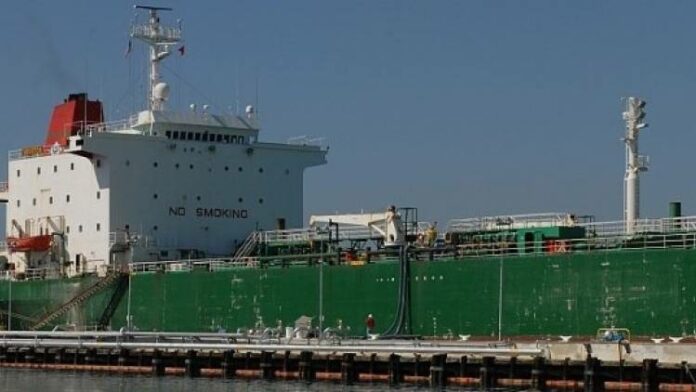
The risks posed by contaminated bunkers are “one of the biggest challenges facing the marine fuels industry,” according to North P&I director of freight, demurrage and defense (FD&D) Mark Church

Speaking at the recent Tackling Global Challenges event in London, Mr Church noted the spate of contamination problems which originated in Houston earlier this year, and which are believed to have resulted from a contaminant known as 4-cumylphenol and other fatty acids entering the supply chain via cutter stock.

Such contamination is undetectable via conventional fuel testing methods, meaning owners are only alerted to a problem at the point of use, potentially resulting in serious mechanical failures. Mr Church said that the total number of affected vessels may be in the 300-400 range and that North P&I itself has dealt with claims from 40 members.

From a legal standpoint, another problem exists in that owners who take on contaminated bunkers may find it difficult to find a remedy from suppliers, if, from a supplier’s perspective, the bunkers are compliant with the stated specification under ISO 8217.

Mr church also flagged up concerns related to the strict time bars associated with bunker supply contracts. He explained that owners may only discover a problem with their bunkers once the period for notification of such issues to suppliers has passed.

“It’s not great if it’s taking you 20 days to do the tests to establish there is something wrong and then you find out … you have to [bring a claim] within 10-15 days after stemming the bunkers.”

However, he also noted that the time bar itself does not prevent a claim being brought and while suppliers may use it as a defense, owners can get around this.

Given the difficulties involved in testing, it can also be difficult to establish that the cause of an incident, and any subsequent issues, stems from organic compounds in the fuel. There is some good news though, according to Mr Church; most contracts will have a “fit-for-purpose” clause, so if an owner can demonstrate that the bunkers are not fit for purpose, a claim may be brought against a supplier or charterer, if they are responsible for bunkers, on this basis.

Mr Church advised owners to sample and test fuels and to check contracts and consider agreeing a specification that deals with this specific issue. He also suggested gaining a familiarity with time limits and sampling responsibilities and, if a concern arises, to consider debunkering.

“We would hope and expect that courts may have sympathy with an owner who decides, on reasonable grounds, that there may be a problem with these bunkers and takes the decision to debunker, rather than run the risk of a serious main engine problem,” he said.

To help avoid contamination in the first place, Mr Church advised owners to use reputable bunker suppliers, conduct regular monitoring of the engine function and to avoid mixing fuels in storage tanks or during fuel changeover.

He warned that contamination may rise in coming years, as more blending takes place to ensure compliance with the 2020 sulphur cap.

Source:osjonline

Watch: the importance of helicopters in rescue operations

0

The USCG Aviation Training Centre Mobile, is hosted by Coast Guard Sector Columbia River. Aviators take part in Coast Guard’s Advanced Helicopter School in order to acknowledge the important role helicopters have in rescue and search operations. Aviators participating explain the importance of the school during breaks in training along the coasts of northern Oregon and southern Washington.

Namely, aviators are getting taught how to get survivors from the water to the helicopter into difficult weather conditions.

Samuel Lerand, Petty Officer 3rd Class, Aviation Survival Technician, noted in the video that the training started with the aviators learning their body techniques when trying to save a survivor and experienced dry-docking.

He continued stating that the training offers the opportunity for someone to understand whether they are able to continue the helicopter operations as a profession. The participants face many phases of training. If a participant passes the first phases, then they have the opportunity to train in more real-life environments and gain experience.

Moreover, according to Cpt Jeremy Smith during, Commander Coast Guard, during fall and spring the extreme weather conditions are ideal for hands-on training because of the Pacific North storms that come through.

The training procedures are of a big importance to pilots since they experience real-life rescue scenarios, such as surf rescue training, cliff rescue training, cave rescue training, etc.

Finally, communication is the biggest factor of having positive results during rescue operations.

Soruce:safety4sea

OCIMF: Seafarers’ behavioural competence assessment

0

Seafarers work in highly risk environments, where skills and abilities play a key role in performance at both individual and organizational level. Competencies can be difficult to assess. As such, OCIMF and Intertanko issued a report presenting a system for assessing competency in seafarers, highlighting that behaviour and attitude are key elements of a positive safety culture. The paper provides guidance on how to assess and verify seafarers’ behavioural competence.

Indicative assessment tools for evaluating technical and behavioral elements

  • Psychometrics: Including cognitive ability tests, such as verbal, numerical, spatial and logical reasoning ability tests and personality tests, such as a psychometric personality questionnaire.
  • Role play/simulation: Incident simulations can be designed to examine candidates' ability to deal with specific problems they may encounter in their role.
  • Group exercise: Candidates are asked to work collaboratively as a group to address a given topic
  • Briefing exercise: This is a prioritization exercise where a candidate is given selection of tasks relevant to the role and is asked to create a schedule and present results. This tests a wide range of skills and knowledge such as decision making.

Key steps for assessment process

Competency assessment definitions

-Exceptional 

  • Recognised within the company as outstanding in this competency
  • Almost always exceeds expected results
  • Is a clear role model or mentor and helps others develop this competency

-Exceeds expectations

  • Exceeds the expectations of the position
  • Frequently exceeds expected results
  • May be viewed as a role model or mentor and helps others develop this competency

-Meet expectations 

  • Demonstrates this competency at a level appropriate for the position
  • Meets and sometimes exceeds expected results
  • Is reliably and consistently successful

-Needs improvement

  • Needs further development or evaluation to consistently demonstrate this competency at a level appropriate for the position
  • Needs to strengthen this competency to achieve results
  • Does not always learn from feedback, coaching or training

-Unsatisfactory 

  • Regularly fails to achieve results
  • Regularly demonstrates behaviors inconsistent with this competency
  • Does not allow through on feedback, coaching or training.

Challenges

It is important that stakeholders from every level be included in the discussions of implementation. Organizations should be aware that:

  • This system should be seen as a strategic tool for developing seafarers and should reflect current and future needs
  • A phased introduction at the senior level will help to iron out key problems and encourage buy-in from staff in other roles, such as operation-level staff.
  • As the system establishes, it is important to review and adjust to ensure it still fits with the company's vision and also to ensure that particular groups are not being disadvantaged. Implementing the system will also show the company's maturity in human resource management.

Source:safety4sea

UK smart port project initiates in northeast England

0

The Situational Awareness Information National Technology Service (SAINTS) launched a technology that aspires to pilot smart digital initiatives to boost trade and foster economic growth in North East ports.

Namely, digital experts and Ports, such as the Port of Berwick, Port of Blyth, Port of Sunderland, Teesport and Port of Tyne have partnered to develop distinct satellite-based solutions and digital programmes as part of the Smart Port North East Testbed.

EDF’s Blyth Offshore Demonstrator Wind Farm, and the Offshore Renewable Energy Catapult, and Port of Blyth who are amongst the rest of the partners, focus on exploring technological advancements suitable for servicing the renewable and green energy sectors.

The digitisation aims to test scalable, satellite-based smart solutions that will work within a large programme of measures towards achieving four key outcomes for the ports: new business opportunities and hinterland engagement; boosting the growth of green energy and low carbon solutions; improved customer experiences; and operational excellence and security in and around the port.

Teesport,operated by PD Ports, as the largest port in the region, is looking to test solutions to enhance operational efficiency in logistics and warehousing processes, moving cargo from the port area to supply chains and wider logistics networks as efficiently as possible.

Also, the test bed will examine technologies such as artificial intelligence, data analytics, unmanned marine vessels, and airborne drones to enable ports to become more 'intelligent' and examine ways of speeding up trade, increasing efficiency and reliability, reducing costs, tracking cargo, improving security and protecting the environment.

SAINTS was launched by the North East Satellite Applications Centre of Excellence and a group of companies to use data from satellites and Earth-based sensors to solve major problems facing businesses, governments and communities

Finally, Catherine Johns, Innovation Director at Business Durham stated "Ports play a vital role in the regional and national economy, providing trading gateways to the rest of the world, with a massive impact on local supply chains and communities".

Source:safety4sea

TT-Line places order for RoPax “green” ferry with China’s Jiangsu Jinling Shipyard

0

German ferry operator TT-Line says it has awarded Shipyard Jiangsu Jinling in China contract to build an environmentally friendly Ro-Pax ferry to the company's Green Ship concept. The vessel is designed to carry 800 passengers and more than 200 trucks and trailers. This vessel will have a length of 230 m and a breadth of 31 m.

One new TT-Line Green Ship is intended to be delivered 2022 and to start operation within TT-Line’s route network. This vessel significantly reduce more than 50% emissions in the Baltic Sea.

While designing the vessel, a particular emphasize was put on flexibility and fast turnaround times in ports. The order was awarded to the Chinese shipyard Jiangsu Jinling with an option for one further vessel.

The innovated dual fuel ship will be powered by LNG (liquefied natural gas). In comparison with diesel fuel, LNG emits less carbon dioxide and burns without smoke. This means very low emissions of particulate matter of around 93%. Furthermore burning LNG is almost entirely free of sulphur with 98% of reduction and produces very low emissions of nitrogen oxides (82% less). This innovative and future-oriented TT-Line Green Ship will be the most environmentally friendly RoPax ship in the TT-Line trading area.

The ship will feature large window fronts and decks for cabins, public areas and sufficient cargo lanes for cars and freight units. 

"This advanced generation of ships is characterized by its high efficiency and flexibility. While there is a significant reduction in pollutant emissions, the travel times between the destinations can remain the same. Loading and unloading at ports will be more effective, especially for freight units. At the same time this ship will offer a modern travel experience for our TT-Line passengers in combining comfort with the best environmentally friendly transport solution. The design of the public areas will meet the expectations of the guests in terms of entertainment and relaxation," the ferry operator said.

Source:portnews

NYK Cruises receives Grand Prix Award for 2018 World Cruise

0

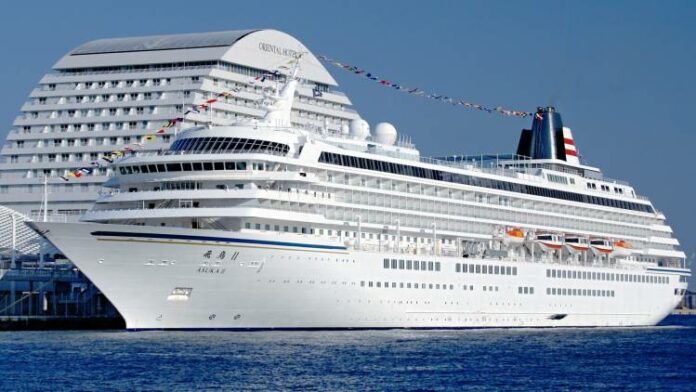
NYK Cruises Co. Ltd., an NYK Group company, was recognized for its 2018 world cruise with the Grand Prix award at the 2018 Cruise of the Year Awards sponsored by the Japan Oceangoing Passenger Ship Association (JOPA), the shipping line said in a press release. 

At an awards ceremony held in Tokyo on December 13, Ichiro Tsukada, state minister of Japan’s Ministry of Land, Infrastructure, Transport and Tourism (MLIT), and JOPA chairman Naohiko Yamaguchi presented a certificate and plaque to NYK Cruises president Fukashi Sakamoto.

The world cruise was held on board the luxury cruise ship Asuka II, operated by NYK Cruises, and was conducted for the first time in three years. This cruise provided guests a 102-day trip from March to July sailing through Asia, the Suez Canal, the Mediterranean, Europe, the Atlantic, North America, the Panama Canal, and the Pacific. Although the cruise had been suspended for three years due to an unstable global situation, over 700 guests participated in this full cruise during a time of unsteady market demand. The cruise was additionally praised for maintaining safe operations by obtaining information beforehand about areas of political instability.

The NYK Group will continue its efforts to offer further safety and creative cruise experiences that best meet the passions of its customers.

Source:portnews