1.9 C
New York
Home Blog Page 1209

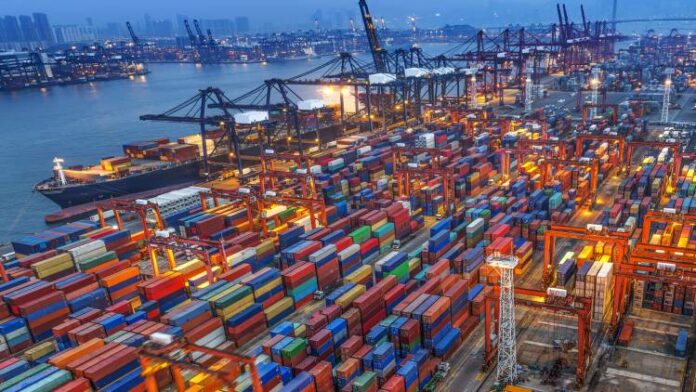
MSC, Port of Valencia test IoT network

0

A pilot project from big data and fleet management specialist is being conducted, aimed at providing better overview of traffic at port for improved operational efficiency. The project is a collaboration of Traxens with the MSC Terminal Valencia, the Port Authority at the Port of Valencia and Fundacion Valenciaport (FVP) using the IoT network. The trial started in September 2018.

Namely, as announced on December 13,  MSC Spain trucks are powered with Traxens' IoT devices, enabling real-time tracking of movement of vehicles. This will help the Ports' authorities to predict and manage potential traffic and truck arrivals at the gates.

Moreover, Traxens has placed a gateway in the MSC Terminal to allow enhanced and secure connectivity. While in the meantime, providing access to its data analytics platform, resulting to improved analytics and reporting capabilities of authorities.

According to Traxens, the pilot trial was successful, so the company aims to expand its solution to other terminals within the port of Valencia. The already existent gateway will be used in the future for testing and improving actions related to smart containers that will come through the area.

Finally, Port of Valencia has already started operations for digitalization by joining a blockchain project aiming to minimize traditional shipping documentation and ease transactions in the global supply chain.

Source:safety4sea

Subsea 7 awarded contract offshore UK

0

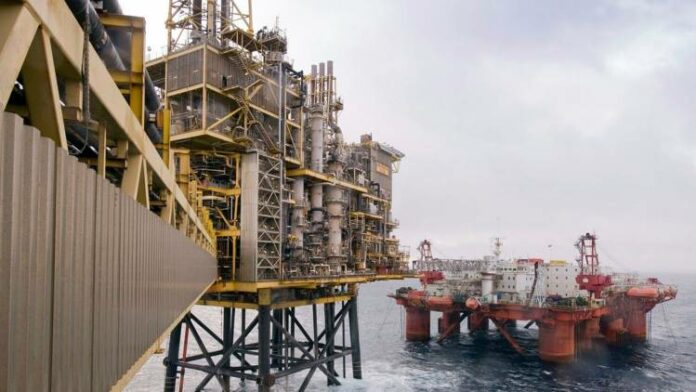
Subsea 7  today announced the award of a sizeable(1) contract by Shell for the Shearwater Fulmar Gas Line (FGL) Re-Plumb Project, located approximately 140 miles east of Aberdeen. 

The engineering, procurement, construction and installation (EPCI) project workscope incorporates a 37km 24” export line, a 14” rigid riser, control jumper, subsea structures and associated subsea tie-ins. Project management, engineering and procurement work has already commenced in Aberdeen, with support from Subsea 7’s office in Glasgow, both in the UK. Offshore activities are scheduled for 2019. 

Jonathan Tame, Vice President UK & Canada, said: “For many years Subsea 7 has been chosen by Shell to provide engineering and project execution expertise in the North Sea. This latest award further demonstrates our ability to design the right engineering solutions that ensures a safe, effective and cost-efficient project delivery.” 

IMO Releases Safety Video

0

A new IMO safety video was launched at the 100th meeting of the Maritime Safety Committee (MSC) earlier this month.

The video highlights the wide spectrum of work the Committee has done over six decades to enhance safety and security at sea, including navigation, cargoes, ship construction, seafarer training, search and rescue and communications.

The meeting saw progress in the regulatory scoping exercise on maritime autonomous surface ships; approval of revised guidelines on fatigue and further updates on work on goal-based standards, polar shipping and safety issues relating to low-sulfur fuel.

Regulatory scoping exercise on Maritime Autonomous Surface Ships

The process of assessing IMO instruments to see how they may apply to ships with varying degrees of autonomy continued during the Maritime Safety Committee (MSC) 100th session. Following testing of the methodology by a correspondence group, the MSC approved the framework and methodology for the regulatory scoping exercise on Maritime Autonomous Surface Ships (MASS).

Once the first step is completed, a second step will be conducted to analyze and determine the most appropriate way of addressing MASS operations, taking into account the human element, technology and operational factors. An intersessional MSC working group is expected to meet in September 2019 to move forward with the process with the aim of completing the regulatory scoping exercise in 2020.

The list of instruments to be covered in the MSC’s scoping exercise for MASS includes those covering safety (SOLAS); collision regulations (COLREG); loading and stability (Load Lines); training of seafarers and fishers (STCW, STCW-F); search and rescue (SAR); tonnage measurement (Tonnage Convention); Safe Containers (CSC); and special trade passenger ship instruments (SPACE STP, STP).

Revised guidelines on fatigue approved

The MSC approved revised Guidelines on fatigue. The IMO has considered the issue for several decades, adopting Assembly resolution A.772(18) on Fatigue factors in manning and safety, in 1993. This was followed by the development of comprehensive Guidance on fatigue mitigation and management (MSC/Circ.1014), which was issued in 2001. The guidelines have been thoroughly reviewed and updated by the Sub-Committee on Human Element, Training and Watchkeeping (HTW 5), taking into account the latest research studies.

Safety of ships in polar waters

The Committee discussed how to move forward with developing possible mandatory or recommendatory measures for ships operating in polar waters which are not currently covered by the Polar Code. A roadmap was agreed, which could see revisions to SOLAS and/or the Polar Code considered for adoption in 2022.

MSC 99 had already instructed the Sub-Committee on Ship Design and Construction (SDC) to consider recommended safety measures for fishing vessels of 24 m in length and over, with a view to alignment with the 2012 Cape Town Agreement; and pleasure yachts above 300 gross tonnage not engaged in trade (in both cases, for those operating in Polar waters). At this session, the Committee considered the wider application of Polar Code chapters 9 (Safety of navigation), 10 (Communication) and 11 (Voyage planning).

Preliminary draft text which would extend the application of the Polar Code to all ships to which SOLAS chapter V (Safety of navigation) applies was agreed, for further consideration. 

The Polar Code is mandatory for certain categories of ships under the SOLAS and MARPOL Conventions. SOLAS chapter V (safety of navigation) in principle applies to all ships on all voyages (with some specific exceptions) while the applicability of SOLAS chapter IV (radiocommunications) also extends to cargo ships of 300 gross tonnage and upwards, as opposed to the general SOLAS application to ships of 500 GT and above. SOLAS does not apply to some specific categories of ships, including cargo ships of less than 500 gross tonnage; pleasure yachts not engaged in trade; ships of war and fishing vessels.

Sulfur 2020 limit – safety issues

The Committee agreed to include in its agenda for MSC 101 a new item to consider the potential need for guidance and advice concerning possible safety issues related to the implementation of the 0.50 percent limit of the sulfur content of fuel oil. At the same time, the Committee endorsed the view that, while fuel safety was a longstanding existing concern which needed to be carefully addressed, this should not affect Member States' commitment to implementing the 2020 sulfur limit from the date of application, January 1, 2020.

Source:maritime-executive

Safebridge Launches myCert: a Digital Maritime Certification Solution

0

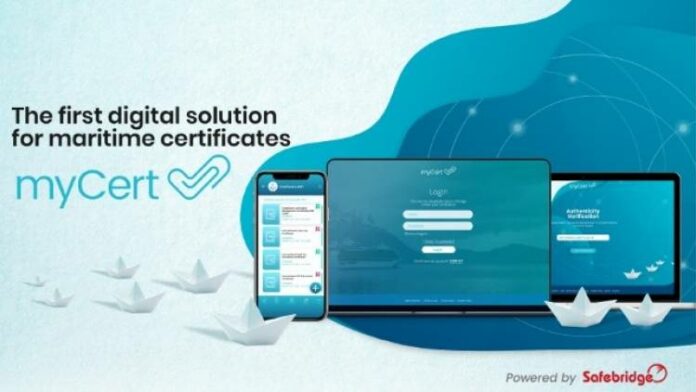
Safebridge marks an absolute premiere in the maritime industry with the launch of the new product line “myCert,” an innovative digital ecosystem which integrates three solutions, providing a complete end-user experience for maritime companies and seafarers alike.

myCert is the result of a perfect blend of innovation, maritime knowledge and forward thinking – the main characteristics of Safebridge's philosophy since the company’s launch. This is a digital platform which acts as a veritable digital ecosystem for all maritime certificates, connecting three main “players” in this field: the companies who issue certificates, the seafarers who hold and need those certificates in their everyday activity and the verifiers who can be virtually anyone wishing to verify the validity of the certificates.

With a new and fresh approach, myCert comes as a solution for professional users or businesses in order to better manage the life cycle of their certificates by having complete control over them from a single platform, totally secured and available 24/7.

“We saw Safebridge’s myCert in action at INTERTANKO’s Seafarers’ Vetting Seminar in the Philippines. Over 1,000 seafarers were in attendance, and the system worked flawlessly. The system ensured that all delegates received their certificate of attendance in a very efficient, fuss-free and timely manner,” states Dr. Phil Belcher, Marine Director, of INTERTANKO.

Key benefits of myCert include:

• automation of the certification process
• reduction of operational costs
• complete control over all maritime certificates from one single platform
• increased trust levels of a certificate (authenticity)

In providing digital solutions for issuers, holders and verifiers, myCert makes the maritime certificate process more efficient and reliable. This means that all energy is channelled in expanding your business or your professional background.

Benefits of the ecosystem offer more control:

• a direct link between issuers and holders translates into a larger degree of control with all documents/certificates involved;
• less errors because in this unique ecosystem an error can be easily corrected without all paperwork involved and without disturbing the flux of documents;
• better communication – the communication between an issuer and a seafarer has the advantage of a clearer and swifter response;
• greater efficiency due to the fact that it makes every entity involved more efficient, from a business point of view to a professional one and consequently all players involved can focus on the development and success of their business.

Going from paper to digital, myCert takes the maritime industry one step closer towards a greener future, thus contributing to the protection of the environment. At the same time, it brings together all involved in the maritime certification process in a fast, reliable and secure way.

Frances Baskerville, Secretary-General of CIRM, the industry body representing the interests of the marine electronics industry globally, said: “CIRM members are always at the forefront of technology development in our worldwide maritime industry. New methods to contribute to safety and security are vital and so CIRM welcomes progressive innovation to help combat further erosion of the environment.”

In the near future, Safebridge also plans to introduce an additional module for myCert, namely the “organiser.” This will allow companies to have a single point application in order to gather, organise and verify the certificates of all their ships and seafarers. The module will allow the company to set up notifications and other useful functions, which will be easily integrated with their internal applications.

In this rapid era of technology, we need to use digitalisation in the midst of our businesses more and more often to achieve the best results. It is precisely from this motif that Safebridge has created and designed myCert, thus expanding the horizons of the maritime certificate industry to a point it has never reached before,” states Captain Ralph Becker – Heins, CEO and Managing Director of Safebridge.

Source:maritime-executive

Canadian Coast Guard Takes Delivery of Icebreaker Captain Molly Kool

0

The Canadian Coast Guard has taken delivery of the first of the three medium icebreakers recently refitted by Chantier Davie.

The delivery of the CCGS Captain Molly Kool is the first such event for a Coast Guard icebreaker in 25 years. The vessel was originally built as the icebreaking anchor handling tug Vidar Viking in 2001. She has two sister ships, Tor Viking and Balder Viking, both of which are expected to enter Canadian Coast Guard service over the next two years.

All three medium icebreakers, recently acquired by the Coast Guard, will undergo refit and conversion work at Chantier Davie in Lévis, Québec, to ensure they comply with Canadian regulatory and Coast Guard operational standards before entering the fleet. The Captain Molly Kool will allow the Coast Guard to provide essential services during the upcoming winter season, while the other two undergo refit. 

CCGS Captain Molly Kool measures 93.7 meters in length, and has a beam of 18 meters. The 18,278 horsepower vessel is equipped with twin propellers and twin rudders, providing a high degree of maneuverability. The ship has a cruising speed of 12 knots and a maximum speed of 16 knots. She can maintain a speed of three knots through ice up to one meter thick and can operate continuously without refueling for approximately 25 days. 

The CCGS Captain Molly Kool’s home port will be in St. John’s, Newfoundland and Labrador, and she will have a crew of 19. 

The namesake of the icebreaker, Captain Myrtle ‘Molly’ Kool, was the first woman in North America to become a master mariner. She was born in 1916 in Alma, New Brunswick. In 1937, she was the first woman in North America to become a licensed ship captain, and in 1939 was awarded her coastal master’s certificate. 

Kool spent most of her childhood aboard her father’s vessel Jean K, where she delivered cargo from ships anchored in deep waters to ports along the Bay of Fundy coastline. Kool was interested in obtaining her marine certifications and applied to the merchant Marine School in Saint John, only to be turned down. Nonetheless, she persevered, and earned her mate’s certificate in 1937. Kool continued to pursue additional certifications, and was awarded her coastal master’s certificate in 1939, from the Merchant Marine Institute, in Yarmouth, Nova Scotia. Her certification enabled the formal addition of the prefix “she” to the  Canada Shipping Act; up to that point, all mariners were referred to as “he.”

Now entitled to operate as a captain in coastal waters, Kool’s father handed her the Jean K, which she captained for the following five years. It was then that Kool built her legacy as a courageous and fearless mariner. She spent years sailing the treacherous waters of the Bay of Fundy, notorious for having the world’s highest tides. Kool dealt with rain, fog and ice as her vessel hauled cargo up and down the East coast, sometimes making it as far south as Boston. Through her hard work, leadership, and determination, Kool earned the respect of her male colleagues, who, at that point, made up the vast majority of the maritime and shipping community.

After her life at sea, Kool moved to Maine, where she married and spent the rest of her life. She died in 2009, and her ashes were scattered over the Bay of Fundy, near her birthplace and where she grew up.

Source:maritime-executive

Eleven Cruise Trends for 2019

0

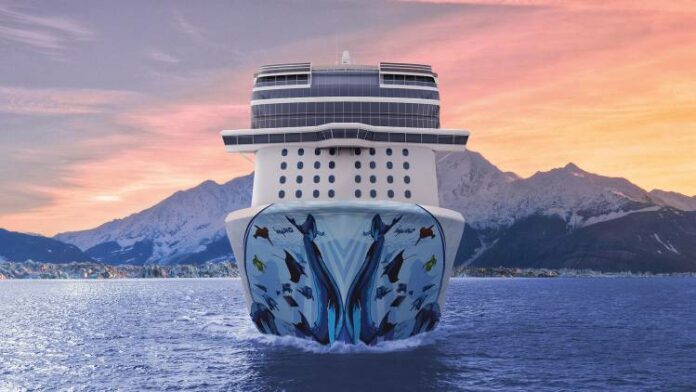
The Cruise Lines International Association (CLIA) has released its 2019 State of the Cruise Industry Outlook report predicting social media and restorative travel as top cruise travel trends in the coming year. 

1. Instagrammable Cruise Travel: Instagram posts are driving interest in travel around the world, so much so that on an average day, there can be close to 351 million posts with the tag #travel. 

2. Total Restoration: Cruise passengers are seeking ways to take a break from daily responsibilities and rejuvenate more than ever before. Cruise lines are responding by offering total wellness in the form of restorative spa experiences, onboard oxygen bars, healthy menu choices for a wide variety of diets and the latest in fitness innovations.

3. Achievement Over Experience: Experiential travel has evolved into achievement travel as cruise passengers are looking for immersive, cultural experiences beyond sightseeing. Bucket lists have become more goal-oriented and cruise lines are meeting these demands. Passengers can conquer Machu Picchu or complete culinary workshops hosted by Le Cordon Bleu chefs.  
    
4. On Board with Smart Tech: Cruise lines have adopted wearable technology for cruise passengers including keychains, necklaces and bracelets in order to provide a highly personalized travel experience while on and off the ship.  
    
5. Conscious Travel: Passengers are wanting to see the world in a conscious, mindful way. The cruise industry is more conscientious than ever, working with local communities to preserve their heritage and implementing innovations that decrease the environmental footprint of cruise travel. The industry is also working with destinations to bring the benefits of tourism to local economies while preserving local cultures, landmarks and environments.  
    
6. Access is the New Luxury: Passengers are setting their sights on destinations that were previously out of reach, some only accessible now by cruise ship. They want to be among the first of their peers to experience destinations such as the Galapagos Islands and Antarctica.  
    
7. Gen Z at Sea: Generation Z is set to become the largest consumer generation in the next two years, outpacing Millennials. Like the generation before, this age bracket prefers authentic experiences over material items and has an even greater wanderlust. The appeal of multiple destinations and unique experiences, such as music festivals at sea, is helping attract this new generation of cruisers.  
    
8. Off-Peak Adventures: The off-peak season is rising in popularity, with passengers looking to escape the cold in a tropical place or embrace the chill in a new destination. Cruising offers a range of experiences during the colder months including excursions to see the Northern Lights, visits to a penguin colony and tours to European Christmas Markets.
    
9. Working Nomads: Combining work with leisure time is on the rise. Straying far from the notion of device-free travel, many modern travelers or “digital nomads” are opting for trips where they can work remotely which cuts down on time off and lost wages. With WiFi, desks and work-friendly cafes, travelers can keep up with work while enjoying a cruise vacation. 
    
10. Female-Centered Cruising: With the number of female travelers growing, many tourism and travel companies are creating female-centered itineraries based on connecting women with other women. Female-centered cruises can create a female empowerment community at sea while allowing travelers to experience the world around them as well as visit famous feminist landmarks.  
    
11. Going Solo: With more Google searches for “solo travel” and “traveling alone” than ever before, traveling alone is rising in popularity. Cruising allows for solo travel without the worry of arranging a ton of details while visiting even the most far-reaching destinations and facilitates connecting with other travelers.

Outlook by The Numbers

The cruise industry is projected to continue to grow throughout 2019 with an estimated 30 million travelers expected to cruise, up six percent from 28.2 million in 2018. Cruise travel continues to grow and contribute to the overall global economy, and more than eight out of 10 CLIA-certified travel agents are expecting to see a rise in cruise sales in the next 12 months.

In the coming year, 18 new ships are on order from CLIA cruise lines. A total of 272 CLIA-member cruise ships are projected to be in operation by June 2019. 

The cruise industry continues to make a positive impact on communities around the globe  by sustaining 1,108,676 jobs equaling $45.6 billion in wages and salaries and $134 billion total output worldwide in 2017.

Source:maritime-executive

Hyundai Heavy Industries Exceeds 2018 Order Target

0

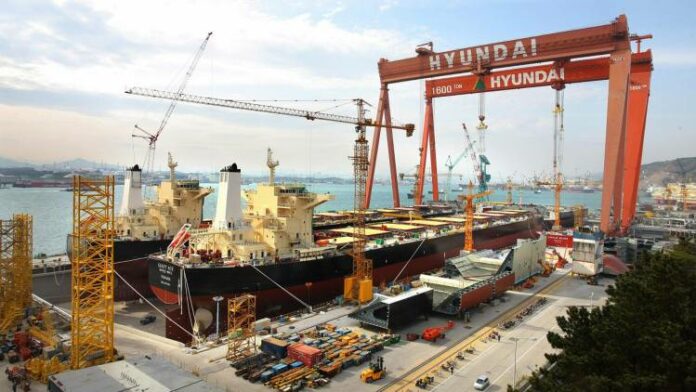
Hyundai Heavy Industries has over-fulfilled its annual target for shipbuilding orders ahead of the 2018 year-end, recently concluding a contract to build two frigates for the South Korean Navy.

The South Korean yard announced the nation’s arms procurement agency Defense Acquisition Program Administration (DAPA) has placed an order valued at around $560 million for two 2,800-ton class frigates. Capable of sailing at a maximum speed of 30 knots with an overall length of 122 meters and an overall beam of 14 meters, the two 2,800-ton vessels will be the 7th and 8th units of Phase II of the Navy’s Future Frigate Program. The yard is currently building the 3rd and 4th frigates and plans to commence construction of the two additional ships in the second half of 2020 for delivery to the Navy by 2023.

Hyundai Heavy Industries is the only shipyard to participate in all three phases of the South Korean Navy’s Future Frigate Program, delivering three 2,300-ton class frigates in Phase I of the program and now working on the basic design process for Phase III.

Earlier this month, the yard received an order to build two 174,000 cbm LNG carriers for an unidentified Asian shipping company.

The yard's year-to-date number of ships on order is 153 valued at $13.3 billion in aggregate, which exceeds the group’s annul target for the shipbuilding sector of $13.2 billion. 2018 orders include 40 gas tankers (25 LNG carriers and 15 LPG carriers), 56 oil tankers, 50 container ships, four bulk carriers, two frigates and a car ferry. 

Hyundai Heavy Industries is currently the world's largest shipyard by sales. The wo other major South Korean shipbuilders, Samsung Heavy Industries and Daewoo Shipbuilding and Marine Engineering (DSME), continue to work towards achieving their yearly targets. DSME recently won an order to build an LNG carrier for Maran Gas Maritime. The yard said it had achieved 85 percent of its $7.3 billion annual target with the order.

Samsung Heavy Industries also recently one an order for an LNG carrier, giving it $5.5 billion in orders this year, about two thirds of its $8.2 billion target. 

Source:maritime-executive

Production Starts at Aasta Hansteen

0

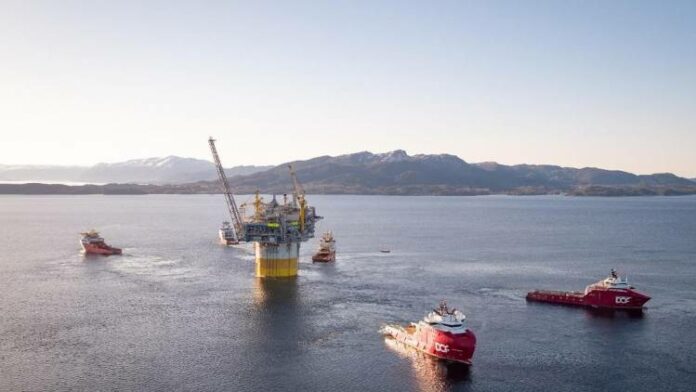
Equinor and its partners started production from the Aasta Hansteen gas field in the Norwegian Sea on December 16. 

Together with the Polarled pipeline, the field opens a new region for gas export to Europe. The project, located in 1,300 meters of water is the deepest field development on the Norwegian continental shelf (NCS), the largest spar platform in the world, and a first on the NCS. 

 Aasta Hansteen is located 300 kilometers (190 miles) west of Sandnessjøen, far from other fields and in an area with harsh weather conditions. The field development concept consists of a floating platform with a vertical cylindrical substructure moored to the seabed (spar platform). 339 meters (1,110 feet) tall, the platform weighs 70,000 tons. When the platform was towed to the field in April, it was the biggest tow on the NCS since Troll A in 1995.

The gas is produced from seven wells in three subsea templates. This is the deepest ever installation of subsea equipment on the NCS.

Both Aasta Hansteen and the 482-kilometer pipeline from the field to Nyhamna has the capacity to accommodate new discoveries.  The first one, Snefrid North, is already under development, and will come on stream towards the end of 2019. The recoverable resources at Aasta Hansteen, including Snefrid North, are estimated at 55.6 billion standard cubic meters (Sm3) of gas and 0.6 million Sm3 of condensate (353 million barrels of oil equivalent).

 Although the substructure and topside structure were built in South Korea Aasta Hansteen has generated big spin-offs for Norwegian supply industry. More than half of the topside equipment packages were produced in Norway, and the subsea equipment is also Norwegian. The subsea templates were built in Sandnessjøen and the suction anchors keeping the gigantic platform in place are produced in Mo i Rana. The platform was hooked up at Stord south of Bergen, which is also where much of the hook up and commissioning work was performed. In the operations phase the field will be operated from Harstad, base services will be delivered from Sandnessjøen, and the helicopter traffic will go from Brønnøysund.

The field has been named after pioneer feminist, social commentator, painter and author Aasta Hansteen. Equinor is undertaking the project with partners Wintershall, OMV and ConocoPhillips.

Source:maritime-executive

BP Gives Green Light For Trinidad, Tobago Gas Projects

0

BP in Trinidad and Tobago gave the go-ahead to two new gas developments, Cassia compression and Matapal, offshore Trinidad, the company said on Dec. 14.

BP will build a new platform, Cassia C, and first gas from the facility is expected in third-quarter 2021.

Matapal will be a three-well subsea tieback to the Juniper platform. With production capacity of 400 million standard cubic feet of gas per day, first gas from Matapal is expected in 2022, BP said in a statement.

Source:epmag

Seanic Relocates UK Base to Facilitate Growth

0

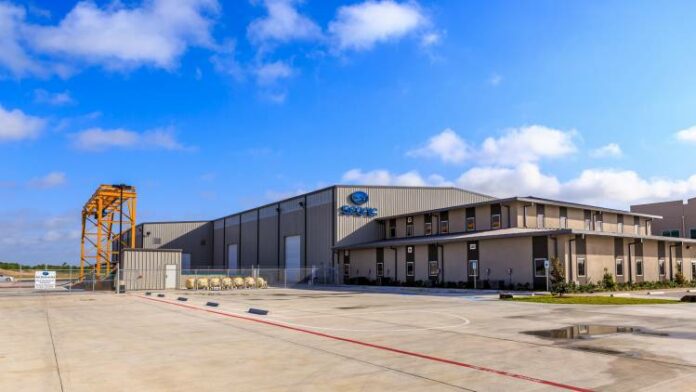
Subsea services company Seanic Ocean Systems, a Centurion company, has moved its UK division into new premises in the ABZ Business Park in Dyce, Aberdeen, following a positive stream of business and sustained growth.

In the last 12 months, the company has seen a 26% increase in utilisation of its decommissioning equipment packages that have supported various clients across multiple campaigns throughout the year.

The new facility provides a larger workshop area and improved storage space to house the company’s ROV tooling, intervention and diver tools, deck and subsea support equipment.

The relocation has seen the company continue to extend its range of decommissioning support, spooling services and rental of specialist subsea packages, that includes diver and ROV tooling to its oil and gas clients.

Tom Ayars, Seanic president, said: “The move places Seanic in a more strategic location, closer to our key clients servicing the North Sea energy industry and reinforces our commitment to providing the most efficient services to help them achieve their project goals."

In the last 6-12 months, we have experienced an upsurge in inspection, maintenance and refurbishment work as companies look to get the most out of their existing equipment. The new facility’s improved workshop space means we can continue to meet these requests while also being in a stronger position to offer an increased range of standard equipment.

Seanic’s fleet management clients can also reap the benefit from the increased space where their equipment is maintained and stored in between campaigns.

As well as our clients, our team has also welcomed the move to the new location. It’s business as usual as we head into 2019 with a strong order book.