1.9 C
New York
Home Blog Page 1208

Salvage Divers Capture Footage of Wrecked Norwegian Frigate

0

The Norwegian military has released detailed video footage of the damage to the frigate Helge Ingstad, which sank last month after colliding with a merchant tanker on the approaches to Bergen, Norway. 

A Norwegian Navy EOD diving unit captured footage from the vessel during a mission to remove missile launchers from her foredeck. All weapons have now been removed from the frigate, and salvors are making preparations to raise her and bring her to the Haakonsvern naval base near Bergen. The heavy lift vessel Rambiz has begun the work of pulling chains beneath the Ingstad's hull, which will be used to hoist her intact from the water so that she may be placed onto a semisubmersible barge for transport. 

"All diving assignments we undertake require detailed planning and thorough preparation. We must be able to solve the assignments we are given, while providing as low a risk as possible," said diving unit leader Bengt Berdal. "Our biggest concern [during this mission] is any increased movement of the vessel."

Over the weekend, the salvage work was delayed due to heavy weather, and the team expects to resume its task as soon as conditions improve. The salvage and dive support vessels involved in the operation have used the pause as an opportunity to put into port at Hanøytangen in order to resupply. Given the delays, the Ingstad will not be raised until after Christmas, but the team hopes to complete the work as soon as it can, given the risk of further damage or movement of the wreck over time. 

A preliminary investigation indicates that the collision was caused by a chain of human errors. In the early hours of November 8, the Ingstad was inbound along the Hjeltefjorden on the approaches to Bergen. She was nearing the Sture oil terminal, where the Aframax tanker Sola TS was in fully laden condition and preparing to depart. The watch on the Ingstad had just changed, and the incoming watch believed that theSola TS' decklights were part of the well-lit terminal. Sola TS left the dock, turned and headed outbound, on a course that put her in a meeting situation with the Ingstad. According to the Accident Investigation Board Norway, the Ingstad's bridge team maintained the mistaken impression that the tanker was a fixed object as range decreased, despite multiple warnings from the Sola TS and the local VTS station. Ingstadmaneuvered at the last minute, but too late to prevent a collision with the Sola TS' bow.

Source:maritime-executive

DP World Unveils Game-Changing Storage Rack for Containers

0

DP World and materials-handling firm AMOVA have signed an agreement to develop a rack-storage system for shipping containers at Jebel Ali Terminal. 

Instead of stacking containers directly on top of each other, the system places each container in an individual compartment within an eleven-story-tall steel rack. This method creates three times the capacity of a conventional container terminal of equivalent size. 

As an added benefit, the rack carries the weight of the upper containers in the stack, so a container towards the bottom can be accessed without restacking all the boxes on top of it first. This means that container moves will be tightly focused on transferring the cargo in and out, not shuffling it within the terminal. DP World anticipates large gains in speed, energy efficiency and safety. It will also boost ability to handle peak loads: the firm expects that the system will shorten the time taken to load and unload mega-ships by as much as 30 percent. This is a key consideration for handling ever-growing ULCVs, which deliver high numbers of containers in short periods of time. 

The storage system was originally developed by AMOVA for storing metal coils weighing up to 50 tons each, in racks as high as 15 stories. While AMOVA is not the only firm to market high bay rack storage designs – similar systems exist for storing palletized cargo, cartons, trays, air cargo containers, and refrigerated goods – it is a specialist in systems for heavy applications, as it started out designing solutions for the metallurgical industry. It is the first company to transfer high bay storage technology to the container port industry. 

“As a world first in our industry we are tremendously excited by its potential and groundbreaking features. Our engagement in new technologies is a major priority and we have become known for seeking ways that transform the way goods are moved across the world," said DP World chairman and CEO Sultan Ahmed Bin Sulayem. 

The first model of the system will be installed at Jebel Ali Terminal 4. DP World expects to complete it and begin its operations in time for the Dubai Expo 2020 world fair. 

Source:maritime-executive

A Phone Call Away

0

The limited ability to provide medical care at sea has been classified as one of the “special risks” for seafarer stress. The authors of a 2015 article published in the Review of Psychology observed that stress resulting from treatment of disease at sea is due, in part, to the fact that medical care on board is administered by someone who is not a medical professional and that treatment options are generally limited.

The uptake of telemedicine in recent years has helped change all that. Expert medical advice at sea is now just a phone call away. “In many instances, the crew's knowledge, alone, that expert medical advice is available 24/7 onboard ship promotes psychological comfort and well-being,” says Larry Jacobson, Managing Director of Future Care, a leading medical management company exclusively serving the worldwide maritime community.

The Telemedicine Advantage

Remote diagnostics also benefits the ship operator. “We calculate that the average cost of a portside medical examination can range between $2,000 and $5,000, depending on a number of variables including landside transportation, visas, launch and agency fees, lost work time and, in some cases, salary – not to mention the actual clinic/medical fees,” Jacobson adds.

“Our data in 2017 for several of our largest clients, derived from Future Care’s telemedical service, Physician Advice at Sea, confirms that between 40 and 50 percent of seafarers were successfully treated onboard ship with the individual crewman’s agreement, thereby avoiding an unnecessary portside exam.”

Jacobson estimates that a fleet of 50 ships will require approximately 250 telemedicine calls per year. “Utilizing our lowest numbers for the cost of a portside examination and lowest percentage of clearance rate onboard ship yields a gross savings of $200,000 for the fleet,” he calculates. “Mind you, this is at the lowest range. Elevating average port costs to $3,000 with a clearance rate of 45 percent shows a gross savings of $337,500.”

Future Care statistics confirm that approximately 20 percent of shoreside examinations result in an unscheduled repatriation of the crewman. “We calculate that the price for an unscheduled repatriation to be between $5,000 and $10,000 when considering the costs incurred for a portside examination plus airfare, lost work time and manning replacement costs. These latter expenses can be even greater when repatriating ship’s officers.”

Future Care was a pioneer in the introduction of telemedical services at sea. “Since those early days,” Jacobson recalls, “we have expanded our capacity to include the option of remote visual consultation with digital instruments. This new advance in service assists our physicians in more accurate remote diagnosis and treatment.”

Software Solutions

A growing range of medical measurements can now be made available to support services ashore through the wonders of technology. Nearly all cruise ships, for example, and a growing number of cargo fleets use SeaCare, a software platform developed by Tritan Software Company specifically for the maritime industry.

Nedko Panayotov, Director of Program Management at Tritan, says clients can manage every aspect of medical operations from anywhere in the world. The system provides one centralized view of medical activities in real-time and allows users to automatically calculate key performance indicators across interactive dashboards.

SeaCare integrates every component of medical operations and management including onboard medical incidents, wellness programs, third-party referrals, compliance reporting, inventory and cost management. The system has ship and shoreside components that are synchronized and the ability to include third parties such as clinics. Seafarers' pre-deployment medical examinations also form part of their integrated medical history.

“A shipping company can follow a person from company to company, so there is never, 'Oh, I lost it. I don't know.' Now, you have a full history of everything that has happened to them,” says Panayotov. X-ray and ECG machines are the most common medical devices that connect to the system, and the resulting images become part of the system's digital record. No paper records are needed.

Communication with public health agencies is such that an email or a phone call just won't cut it anymore,” he adds. “With SeaCare, the documentation on what was done, how it was done and when are all recorded. It's legible, and lawyers do not challenge it as much as pen and paper in court.”

The system includes medical inventory functionality. “As we all know, medical departments onboard ships, especially cruise ships, are not revenue-generating departments. They are there for the well-being of the customers, but the system facilitates some return on investment from savings on either medical inventory management or the supervision of medical referrals,” says Panayotov.

SeaCare has evolved over time and now links to a range of other Tritan systems including the SeaEvent management platform, which supports event reporting, audits, policy and safety management systems.

For commercial shipping and the fishing industry, Tritan has a “light” version of its systems suited to situations where there is just a medical officer and a medical kit on board rather than the hospital services offered on many cruise ships. The functionality is generally similar, however, and includes educational material to support decision-making as well as support for telemedicine using minimal bandwidth.

Planning Ahead

Jon Bloomberg, New York State 911 emergency medical technician and CEO of Core Medical Systems, emphasizes the importance of planning to support onboard decision-making during a medical emergency – even before a phone call for assistance is made: “The essence of emergency medical treatment is planning. Not that you know what will happen – no one knows that – but planning for what might happen. We sell medical kits at many conferences and shows, and at every one someone will come up and say, 'Boy these are great, complete kits, but tell me, what do I really need?' I always say, 'You tell me what will happen to you and I’ll tell you what you need. Otherwise, you need everything.'”

Bloomberg highlights the importance of knowing upfront that certain crew members or passengers have medical conditions. Next comes recognition of the problem, treating it and calling for help. “Being prepared and recognizing that medical problems are unpredictable in both scope and kind goes a long way toward making the situation turn out positively.”

CHIRP Maritime (a charitable trust for the confidential reporting of hazardous incidents) and University College London have released a booklet titled Perception, Decision-Making and Fatigue at Sea designed to help seafarers maintain optimum well-being at sea so that they can deal effectively with emergency situations.

Regardless of the length of voyage, research indicates 61 percent of seafarers feel more tired at the end of the voyage than at the beginning, says CHIRP’s Maritime Director, Captain Jeff Parfitt. Among the booklet's recommendations is that ship operators have procedures in place and available for easy reference to ensure that in emergency situations crew members are able to respond ASAP. Practice makes all the difference, he says.

Mental Health Issues

Seafarers can now undergo training in occupational health and safety while at sea. Sea Health & Welfare and Seagull Maritime have developed a new course, targeting members of the safety committee, to promote health and safety on ships. Sea Health & Welfare offers a wide range of courses, including psychological crisis management, and also provides psychological help for people affected by an incident.

Vivek Menon, Head of the Occupational Health & Safety Department, says the industry has seen a growing range of initiatives for seafarer mental health in particular: “It's a topic that has received a lot of attention. Insurance companies are concerned that they will be getting more cases associated with mental health and have developed packages for psychological care. They are thinking of prevention: Don't fight the fire. Try and prevent the fire in the first place.”

Sometimes this is as simple as just talking to seafarers. “I remember having a chat with a captain where all I had to do was listen to him for 30 minutes, and then he was fine,” Menon says. “He was debriefing after an incident, and at some point I asked him, 'How are you feeling?' The whole conversation then changed to how he was feeling rather than the things that he had to do. It can sometimes be easy to miss that the captain is an individual who may feel something.”

A video call is more personal than just a phone call. “Some people like to see the other person's face, to understand the body language of the person and understand how they really feel,” he adds. “A lot of our psychologists use it as a cornerstone. They need to know the body language of the person as well as what they say.

Remote care does have its limitations. “Technology such as telemedicine can optimize our work and help us be more efficient,” Menon concludes, “but it may not always allow us to see them face-to-face, offer a handshake and then ask, 'How are you?' So technology is very good and important, but at the end of the day I think it's good to realize that people have feelings, and feelings cannot be entirely captured by just technology. We'll get there one day, perhaps, but we have yet to get that far.” – MarEx

Source:maritime-executive

Yamal LNG will build one more natural gas liquefaction facility

0

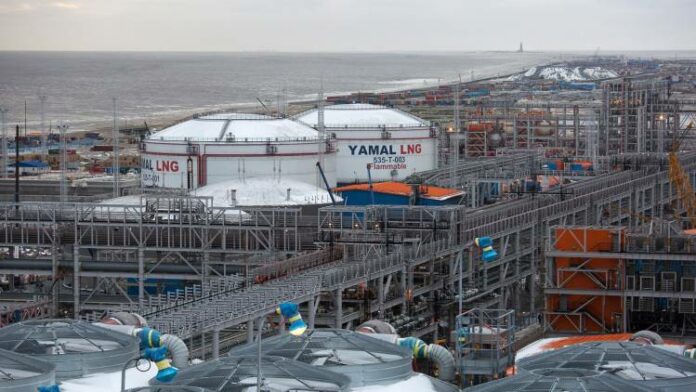
Glavgosexpertiza (Russia’s Main Department of State Expertise) says its experts have considered and approved the project on construction of a new production facility of NOVATEK’s Yamal LNG utilizing the hydrocarbon resources of the South Tambey Field.

Prime Minister Dmitry Medvedev earlier took part in the launching of the third stage of the Yamal LNG plant. The third stage of the plant was launched ahead of schedule and let the company reach its design capacity of 16.5 mmtpa. 

The new facility with annual capacity of 1 million tonnes will be technologically connected with Yamal LNG.

Construction of LNG plants in the Arctic is highly topical amid rapid development of production worldwide and intensified competition in the market. Natural conditions in the region ensure low cost of production which ensures competitive advantages for Russian manufacturers as compared with suppliers form other regions of the world.

Source:portnewws

‘Record year’ for UK offshore

0

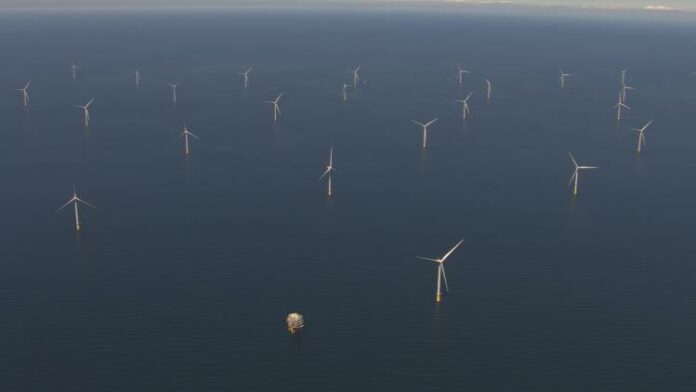
The UK installed more than 2GW of new offshore wind capacity in 2018, a record-breaking volume, according to RenewableUK.

R-UK said eight new offshore wind farms were opened this year adding 2121MW of new capacity, which is almost double the previous record of 1154MW set in 2012.

It added that the achievement was reached with the addition of just 18% more turbines than were installed in 2012 – 367 machines compared with 309.

“Since 2012, the average capacity of an offshore turbine has grown over 50% from 3.7MW to 5.8MW this year,” R-UK said.

New projects in 2018 included the 659MW Walney 3 (pictured), 573MW Race Bank and 400MW Rampion developments, it said.

R-UK executive director Emma Pinchbeck said: “We’re thrilled that we’ve absolutely smashed previous records and installed more new offshore wind power stations than ever before."

This is just the beginning of the great shift to renewables. By 2030, offshore wind could be generating more than a third of the UK’s entire electricity needs, with 30GW up and running. The industry would attract £48bn in investment by the end of the next decade and employ 27,000 people in highly-skilled jobs.

Offshore wind has brought the UK jobs, lower bills and renewable energy. It’s offering even more to the UK in the anticipated offshore wind sector deal, which the government has said it wants to finalise by Christmas.

Source:renews

Sabella keeps fit at French tidal

0

French renewables developer Sabella is partnering with QOS Energy to improve the performance monitoring of the 1MW Ushant tidal project off the coast of Brittany.

The D10 turbine, which is immersed in 55 metres under the sea, is using QOS Energy's data intelligence platform to identify, assess and anticipate potential failures.

Sabella chief executive Francois Daviau said: “Operating and maintaining a utility-scale tidal turbine at such depth is particularly challenging, and data collection and analysis plays a vital role in doing so successfully."

QOS Energy’s data intelligence platform enables our O&M team to visualise critical KPIs such as water pressure, temperature, swell energy prediction, rotor speed or torque compared to power produced.

We need this cutting-edge monitoring capability to be able to fully understand performance, and effectively control potential failures.

QOS Energy chief technology officer Jean-Yves Bellet said: “QOS Energy strongly believes that tidal energy will play an important part of the future clean energy mix, so we are very pleased to innovate with a pioneering company such as Sabella and make progress in the important field of tidal O&M."

We believe that effective plant monitoring and optimisation will be instrumental in bringing this emerging technology from the margin to the mainstream.

Source:renews

Qatar Buys Eni’s Mexican Oil Stakes

0

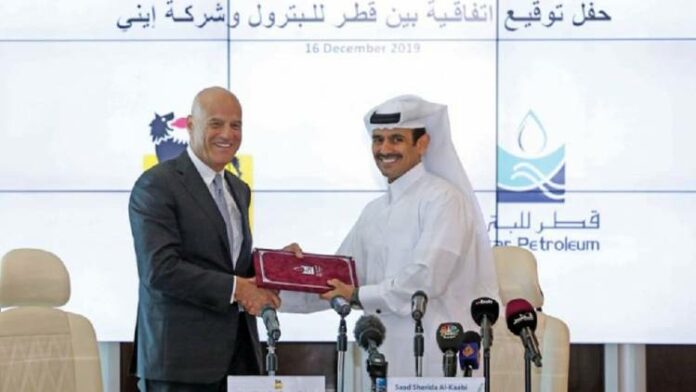
Qatar Petroleum (QP) signed an agreement with Italy’s Eni SpA to acquire a 35% stake in three offshore oil Fields in Mexico.

The agreement cover the Amoca, Mizton, and Tecoalli offshore oil fields, which lie in Area 1 in Mexico’s Campeche Bay, said a press statement from the Arab country's government-owned energy company.

The agreement is subject to customary regulatory approvals by the government of Mexico. Following such approval, both Eni and Qatar Petroleum will jointly hold 100% interest in the Area 1 production sharing contract.

Commenting on this agreement, Saad Sherida Al-Kaabi, Minister of State for Energy Affairs, President & CEO of Qatar Petroleum, said: “We are pleased to sign this agreement, with our valued partner, Eni, to participate in the development and production of oil fields in Mexico. This agreement marks another milestone for Qatar Petroleum as it strengthens its international footprint and expands its presence in Mexico.

H.E. Mr. Al-Kaabi added: “Qatar Petroleum is pleased to enhance its fruitful cooperation and partnerships with a major energy player like Eni. We are also excited about participating in this development in Mexico’s Campeche Bay, and with first oil production expected by mid-2019, we look forward to collaborating with Eni to ramp up production to around 90,000 barrels of oil per day by 2021.”

The National Hydrocarbon Commission of Mexico approved the phased development plan for Area 1 allowing for early production to start by mid- 2019 through a wellhead platform in the Mizton field and a multiphase pipeline for treatment at an existing Pemex facility.

The full field production is expected to be achieved in 2021 through a floating production, storage, and offloading facility with a treatment capacity of 90,000 barrels of oil per day. Two additional platforms will be installed on the Amoca field and the Tecoalli field. Area 1 is estimated to hold 2.1 Billion barrels of oil equivalent, 90% of which is oil.

This is the second presence for Qatar Petroleum in Mexico. At the end of January 2018, Qatar Petroleum won exploration rights in 5 offshore blocks in the Perdido and Campeche basins as part of a consortium comprising Shell and Eni respectively.

In line with its growth plans, this opportunity represents another step in implementing Qatar Petroleum’s strategy to expand its international footprint, and to pursue Latin America as an important core area for its upstream activities.

Qatar Petroleum’s international upstream footprint has been expanding recently in Brazil, Mexico, Argentina, Cyprus, Congo, South Africa, Mozambique and the Sultanate of Oman.

Minister Al-Kaabi concluded by saying: “These expansions go hand in hand with our previous announcements to develop and increase our natural gas production from 77 million tons per year to 110 million tons in the coming years; and to raise our production capability from 4.8 million barrels oil equivalent per day to 6.5 million barrels during the next decade.”

Source:marinelink

Gard: Recommendations on how to manage cyber risk

0

The third edition of the industry cyber risk management guidelines, 'Guidelines on Cyber Security Onboard Ships', highlights the requirement to incorporate cyber risks in the ship’s safety management system. The edition provides guidance for dealing with the cyber risks to the ship arising from parties in the maritime supply chain.

Namely, IMO has given, to shipowners and managers, until the 1st of January 2019 to take into action the measures to manage cyber risk into the vessel's SMS. According to Gard P&I Club, cyber risk is a major challenge maritime industry is still facing. Although some steps have been made, there is still room for improvement.

In addition, shipowners should be responsible on managing cyber risks and conducting continuous operations to have positive results. Training and awareness of appropriate company policies and procedures may provide an effective response to cyber incidents amongst other steps to confront any cyber risks.

On the occasion of the release of the 'Guidelines on Cyber Security Onboard Ships' report that was published in the early days of December 2018, Jarle Fosen has highlighted the key recommendations on how to respond to cyber risks:

#1 Focus on policies, procedures and risk assessments

Companies should take into consideration the risks arising not only from the use of IT equipment but also from OT equipment onboard ships and establish appropriate safeguards against cyber incidents involving either of these.

The company's plans for cyber risk management should align with the existent security and safety plan in the ISPS and ISM Codes. Requirements similar to training, operations and maintenance of critical cyber systems should also be included in specific documentation on-board.

According to IMO's MSC resolution on Maritime Cyber Risk Management an approved safety management system ought to include cyber risk management in accordance with the objectives and requirements of the ISM Code, no later than the first annual verification of a company’s Document of Compliance after 1 January 2021.

All parties managing a vessel have to be aware of their responsibilities, on alignment of realistic expectations and agree on specific instructions the manager requires. Also, such an agreement should take into consideration additional applicable legislation such as the EU General Data Protection Regulation (GDPR) or specific cyber regulations in other coastal states.

Moreover, any agreements concerning this kind of responsibilities have to be written and formal.

Companies should also cover service providers’ physical security and cyber risk management processes in supplier agreements and contracts. Coordinating the vessel's port is a difficult task globally and locally.

#2 Ensure that system design and configuration are safe and fully understood and followed

Anyone performing cyber security tasks should acknowledge that the aim of the procedures is to prevent unauthorised access and not simplify to satisfy the regulators.

Experiences from the shipping industry have shown that successful cyber attacks can result in a significant loss of services.

The technology-growth brings challenges and vulnerabilities to the maritime industry, especially if there are unsecured networks and free access to the internet. Gard recommends that companies should thoroughly understand the ship’s IT and OT systems and how these systems connect and integrate ashore, including public authorities, marine terminals and stevedores. This requires an understanding of all computer based systems onboard and how safety, operations, and business can be compromised by a cyber incident.

What's more, several IT and OT systems are easy-to-access remotely. These can be referred to as 'third-party-systems', where the contractor controls the systems from a remote location and can be both two-way data flow or upload-only.

For instance, as Jarle Fosen stated, the systems and work stations with remote control, access or configuration functions could have:

  • bridge and engine room computers and work stations on the ship’s administrative network;
  • cargo such as containers with reefer temperature control systems or specialised cargo that are tracked remotely;
  • stability decision support systems;
  • hull stress monitoring systems;
  • navigational systems including Electronic Navigation Chart (ENC) Voyage Data Recorder (VDR), dynamic positioning systems (DP)
  • cargo handling and stowage, engine, and cargo management and load planning systems;
  • safety and security networks, such as CCTV (closed circuit television);
  • specialised systems such as drilling operations, blow out preventers, subsea installation systems;
  • Emergency Shut Down (ESD) for gas tankers, submarine cable installation and repair.

Moreover, some usual cyber vulnerabilities are:

  • obsolete and unsupported operating systems;
  • expired or missing antivirus software and protection from malware;
  • inadequate security configurations and best practices, including ineffective network management and the use of default administrator accounts and passwords;
  • shipboard computer networks lacking boundary protection measures and segmentation of networks;
  • safety critical equipment or systems always connected to the shore side;
  • inadequate access controls for third parties including contractors and service providers.

#3 Provide proper onboard awareness and training

Until now, the weakest factor when it comes to cyber security is the human. It is of a big importance that seafarers are properly trained to help them identify and report cyber incidents.

Onboard personnel have a crucial role in protecting IT and OT systems but can also be careless. Training and awareness should be tailored to the appropriate seniority of onboard personnel including the master, officers and crew.

Source:safety4sea

Hurtigruten set to choose shipyard for LNG/liquid biogas conversions

0

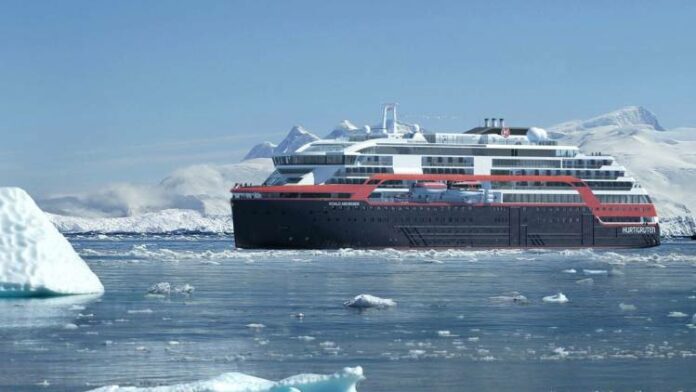
A shipyard in Germany or Scandinavia is likely to be chosen within the next few weeks by Norwegian coastal freight and passenger ferry operator, Hurtigruten, as it embarks on a major environmental upgrade of seven existing vessels to run on LNG and liquid biogas (LBG).

Tor Geir Engebretsen, coo and senior vice president of maritime operations for Hurtigruten, has confirmed that the 1997-built MS Nordnorge will be the first of six ships to have its engine converted from conventional diesels to Rolls-Royce Bergen engines fuelled by LNG. She will be docked during the fourth quarter of 2019, with the other three-month conversions undertaken between then and 2021.

The engines will also be capable of running on LBG derived from fish waste which can reduce carbon emissions by 60% compared with LNG. Rolls-Royce will also supply batteries and energy storage systems for the vessels, as well as power management systems. Fuel tanks, to be located on the ships’ tanktops, will be supplied by an undisclosed third party.

Engebretsen named the other five ships as the Kong Harald (1993), Nordkapp (1996), Nordlys (1994), Polarlys (1996) and Richard With (1993). A seventh vessel, the 1983-built Vesterålen will have her diesel engine upgraded to meet Tier III NOx emission requirements. Hurtigruten is understood to have options for similar conversions on three other vessels.

Biogas is currently about twice the price of LNG, Engebretsen revealed, but this is because demand is limited, volumes are small, and outlets are limited. A large taker such as Hurtigruten could transform this situation, however, with biogas available at various locations on the Norwegian coast between Bergen in the south west and Kirkenes in the north along the route where the ships operate. As the price falls and supplies become more readily available, Hurtigruten will use more LBG compared with LNG, thereby reducing emissions further.

The vessel upgrades are receiving financial support from the country’s NOx Fund although the total cost of the conversions has not been revealed as final shipyard negotiations are still in progress. However, Engebretsen said that the payback period makes sense.

Source:seatrade-maritime

Total contracts Solstad Offshore CSV for field support work offshore Congo

0

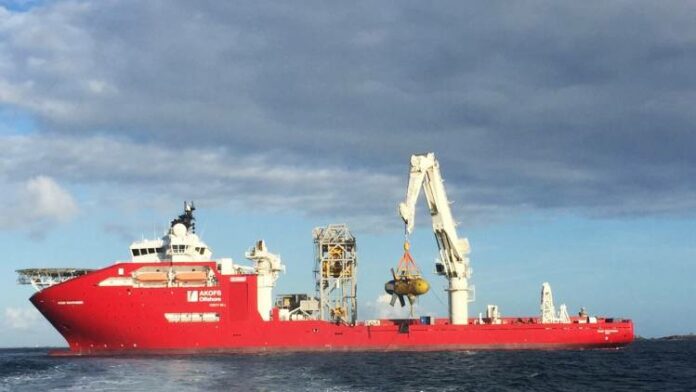
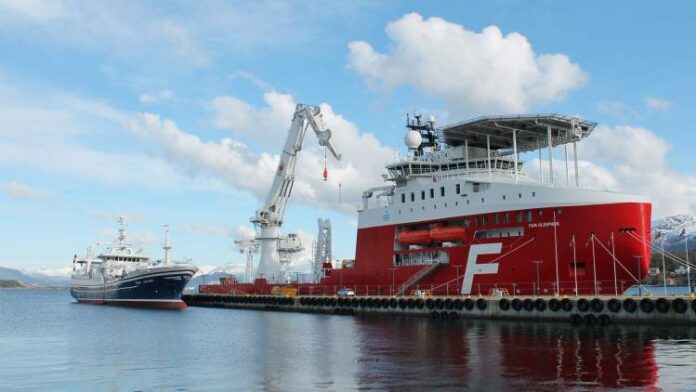
Solstad Offshore’s construction support vessel (CSV) Far Sleipnir has been contracted for at least two years by Total Exploration & Production Congo.

Under the terms of the contract, which also includes Solstad Offshore’s local partner Petro Services, Far Sleipnir will act as a field-support vessel equipped with ROV systems, providing inspection, maintenance and repair; subsea umbilicals, risers and flowlines; subsea intervention; and drilling support to Total’s operations offshore Congo-Brazzaville.

The vessel was already chartered by Total to operate in the same area in January 2017. Along with the two-year firm period, the contract includes four six-month options, giving a potential duration of four years.

Built in 2015 by Vard Langsten, Far Sleipnir measures 142.5 m in length by 25 m in breadth and has a dwt of 9,200. It has cargo deck space of 1,800 m2 and can accommodate up to 130 people. As well as a 7.2 m by 7.2 m moonpool, it has a 5.6 m by 4.0 m moonpool specifically for ROV deployment.

Lifting capacity comes from a main crane auxiliary winch with a safe working load (SWL) of 350 tonnes, a main crane with a SWL of 150 tonnes and two deck cranes with a safe working load of 3 tonnes apiece. The vessel has a BHP of 22,549 and is fitted with three 3,548-BHP bow thrusters as well as a 2,682-BHP azimuthing thruster also mounted in the bow.

Source:osjonline