3.2 C
New York
Home Blog Page 1207

Berlin urged to champion sector coupling

0

Two of Germany's biggest energy industry lobby groups have called on politicians to establish a policy framework for linking electricity production to other energy sectors, such as natural gas.

So-called sector coupling would optimise the use of renewable energy sources, such as wind and solar, they said in a new report.

The document was produced as part of a joint investigation by energy industry association BDEW and gas counterpart DVGW.

It cited a claim by the German Energy Agency that sector coupling could inject up to €600bn into the German economy.

A technical linkage of electricity, heat, transport and industrial processes would be key for Germany to achieve its climate goals, the report concluded.

The two organisations demanded Berlin clearly commit to further gas production and establish regulations to support infrastructure development.

The report comes as corporations ramp up calls for the German government to tender for extra offshore wind capacity specifically tied to hydrogen production.

Earlier this month, Shell, Siemens and TenneT jointly commissioned a study that found 900MW of power-to-gas projects driven by offshore wind could be built between 2026 and 2030.

Source:renews

Windcarrier swoops on Seafox jack-up

0

Fred Olsen Windcarrier is to take a 51% ownership stake in jack-up vessel Seafox 5 from Seafox International.

The deal will see the vessel join Fred Olsen Windcarrier's transport and installation fleet – Brave Tern and Bold Tern – for work in the offshore wind sector, with its first job on the 497MW Hohe See project in the German North Sea next year.

Singapore-based Keppel Offshore and Marine indirectly owns the remaining 49% of the vessel.

Seafox 5 is a 151-metre long multi-purpose, four-legged, self-propelled DP2 jack-up, with a 1200-tonne crane and accommodation for 150 people.

It was built in 2012 and is capable of operating in water depths up to 65 metres, Fred Olsen Windcarrier said.

Fred Olsen Ocean chief executive Even Larsen said: “We very much look forward to welcoming Seafox 5 to the Fred Olsen Windcarrier fleet. Seafox 5 is a highly capable vessel well suited to operate in the deepest waters and towards the most challenging offshore wind farms emerging in Europe, Asia and the US."

To us, this marks an important investment and the vessel will be a perfect supplement to our current fleet. We believe in offshore wind and this acquisition further strengthens our position in the growing global offshore wind market.

For the Seafox 5 we look forward to partner up with Keppel Offshore and Marine, a highly reputable player within offshore marine solutions.

Source:renews

Shipbuilding: Hurtigruten Hybrid Construction Forges Ahead

0

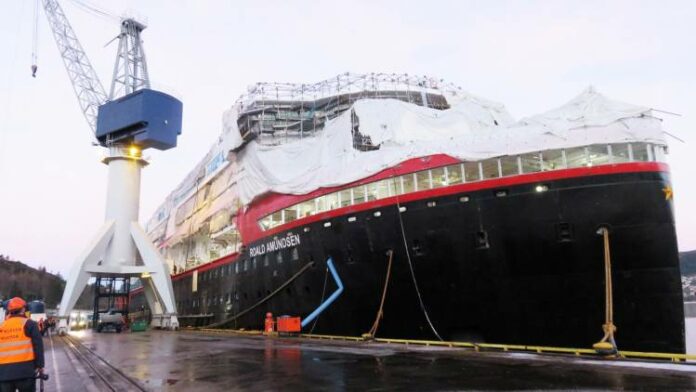
Norwegian company Hurtigruten, the world’s largest expedition cruise operator, is continuing to push the boundaries when it comes to green travel with its order for three hybrid-powered vessels nearing completion, the first ship being due for delivery in May 2019.

Two of these revolutionary ships are currently under construction at the Kleven Yard in Ulsteinvik, Norway, the MS Roald Amundsen and its sister ship, the MS Fritjof Nansen, both of which are custom-designed to cope with some of the most extreme conditions seen on our planet, each having a specially-designed, ice-strengthened hull. According to Hurtigruten CEO, Dan Skjeldam, these are the greenest, most advanced cruise ships the world has ever seen – “ships that will stand out.”

Among the new amenities to be featured on the vessels are substantially larger battery packs to make expedition voyages even more sustainable. This is in line with the company’s policy of investing heavily in green technology, the next step being to power its cruise vessels with liquefied biogas (LBG), a fossil-free renewable gas produced from dead fish and other organic waste. “What others see as a problem, we see as a resource and a solution,” said Skjeldam. “By introducing biogas as fuel for cruise ships, Hurtigruten will be the first cruise company to power ships with fossil-free fuel.

Renewable biogas is considered to be the most eco-friendly fuel currently available and is already used in other modes of transportation, especially in buses. Northern Europe and, in particular, Norway, which has large fishery and forestry industries producing a steady supply of organic waste material, has a major opportunity to become a world leader in biogas production and Hurtigruten plans to operate at least six of its ships using biogas and batteries, combined with liquefied natural gas (LNG) by 2021.

Hurtigruten offers voyages to more than 200 destinations in more than 30 countries from the Arctic to Antarctica throughout the waters of Norway, Greenland, Svalbard, Iceland, Europe, South America, Central America, North America and Arctic Canada.

Source:marinelink.

SNE field development phase 1 commences feed activities

0

Woodside advises that the Rufisque Offshore, Sangomar Offshore and Sangomar Deep Offshore (RSSD) joint venture1 has agreed to commence front-end engineering design (FEED) activities following the award of the subsea FEED contract to Subsea Integration Alliance2 for the SNE Field Development-Phase 1 (SNE development) offshore Senegal. Further FEED contracts are targeted to be awarded in early 2019.

 The FEED work involves undertaking activities required to finalise the costs and technical definition for the proposed development to enable a final investment decision, targeted for mid-2019.

Woodside CEO Peter Coleman said the decision to commence FEED activities was a significant step towards the development of Senegal’s first oil project.

We plan to progress the SNE development towards the earliest possible commercialisation of the discovered resources. Completing FEED activities will be a key enabler of a final investment decision.

We are also excited to be moving forward on the SNE development as it is a key pillar of Horizon Two of our growth strategy.

As part of FEED activities, the RSSD joint venture will continue working with the Government of Senegal, local communities and our contractors to realise the potential opportunities and benefits from this nationally significant development,” he said.

Commencing FEED activities follows approval by the Senegalese Minister of Petroleum and Energies of Woodside assuming the role of operator, and the RSSD joint venture’s submission of the SNE Field Development and Exploitation Plan to the Government of Senegal.

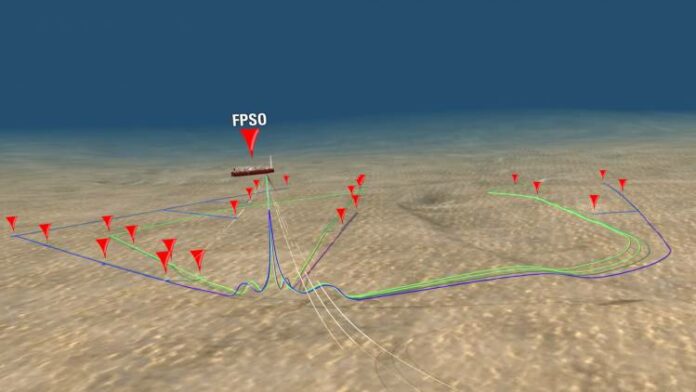
The SNE development concept is a stand-alone floating production storage and offloading vessel (FPSO) facility with supporting subsea infrastructure. It will be designed to allow subsequent SNE development phases, including options for gas export to shore and for future subsea tiebacks from other reservoirs and fields.

Phase 1 of the development will target an estimated 230 MMbbl of oil resources (P50 gross) from the lower, less complex reservoirs and an initial phase in the upper reservoirs. The FPSO is expected to have a capacity of around 100,000 bbl/day, with first oil production targeted in 2022.

In parallel to the commencement of FEED activities, the RSSD joint venture continues to progress project financing and the Environmental and Social Impact Assessment.

Port of Duqm and Shell Oman to build bunkering facilities at Omani port

0

Oman-based Port of Duqm Company (PDC) and Shell Oman Marketing Company have inked an agreement to develop bunkering facilities at the port.

The agreement will see bunkering terminals provide different grades of marine fuels and lubricants as well as other ancillary facilities to vessels calling at Duqm port, according to PDC, a 50-50 joint venture between Oman and Port of Antwerp Consortium.

Duqm port has a commercial quay capable of handling heavy lift project cargo, general cargo, dry bulk and containers, supported by a deep draught of 18 metres.

Dr Mohammed Mahmood Al Balushi, ceo of Shell Oman, said: “Due to the strategic and geopolitical location of the port on the international shipping lines, it is hoisted in the coming years to transform into a regional hub attracting large investments and projects while driving the diversification of the sultanate’s [Oman] economy and enhancing its global competitiveness.”

Reggy Vermeulen, chief executive of PDC, said the new agreement with Shell Oman underlines the ambition of PDC to become a future bunker hub serving the entire region.

“With new global bunker regulations coming into effect as from 2020, Port of Duqm plans to take full advantage of its prime location as well as the availability of the right fuel specs and offer prime bunker services accordingly,” Vermeulen noted.

Source:seatrade-maritime

MSC 100: New guidelines for goal-based ship construction standards

0

IMO MSC 100 completed its 100th session on 7 December. Among its busy agenda, MSC 100 analyzed goal-based standards and a new safety level approach for bulkers and oil tankers.

During previous sessions, the Goal-based ship construction standards for bulkers and oil tankers (GBS) were adopted, as well the initial verification of 12 Recognized Organizations.

Now, MSC 100 confirmed that the information submitted regarding the maintenance of verification by those ROs are complying with the Standards. This regards all IACS member recognized organizations, except for DNV-GL, which would be subject to a re-verification audit of its rules.

In addition, the MSC after considering the initial verification audit report of a further recognized organization, Türk Loydu, confirmed that the information it has provided show that its ship construction rules are complying with the Goal-based Standards as well.

Moreover, based on the experience in conducting GBS audits, the need to update the procedural requirements guiding the audits was highlighted. For this reason, MSC 100 adopted Revised guidelines for verification of conformity with goal-based ship construction standards for bulk carriers and oil tankers. These will come into effect one year after adoption (1 January 2020).

Continuing, the Committee approved Interim Guidelines for development and application of the IMO goal-based standards safety level approach.

Finally, the MSC considered a request from the Sub-Committee on Ship Systems and Equipment (SSE) for advice from the Committee regarding difficulties on drafting goal-based regulations for onboard lifting appliances and anchor handling winches (OLAW). In this regard, the MSC agreed to change the Generic guidelines for developing IMO goal-based standards (MSC.1/Circ.1394/Rev.1), in order to help their application by the bodies of the Organization. What is more, the Committee invited Member States and international organizations to submit proposals on this matter to MSC 101.

Source:safety4sea

Partners test new technology for monitoring emissions

0

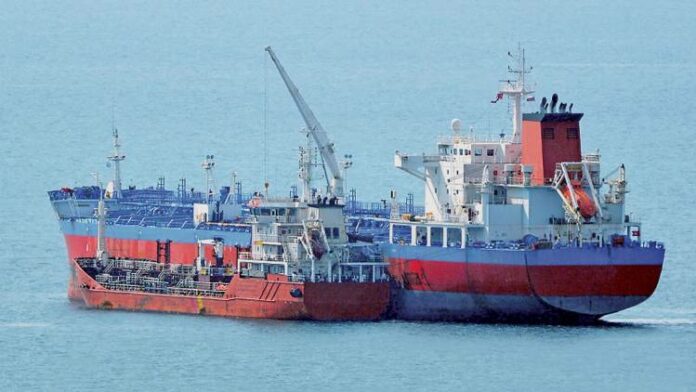
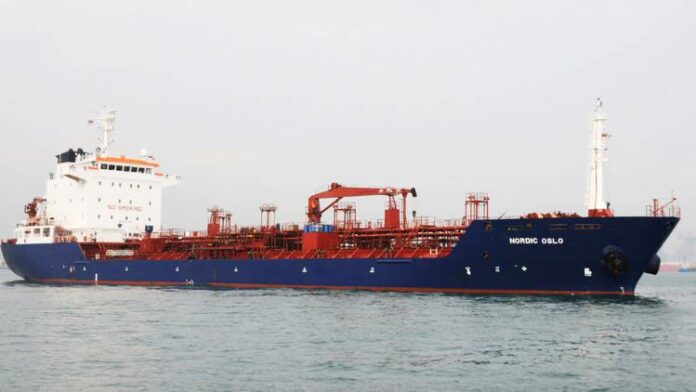
Nordic Tankers, Dania Ship Management and Danfoss IXA are collaborating to test new technology for monitoring emissions. Namely, a sensor equipment aspires to help ship owners prove compliance with the IMO’s requirements for sulphur emissions.

The sensor equipment from Danfoss IXA attempts to enable ship owners to  prove compliance with the IMO’s requirements for sulphur emissions. The sensor technology is installed on the chemical tanker Nordic Mari, owned by Nordic Tankers with Dania Ship Management as trusted manager.

In the beginning of the test period, the durability of the sensor was challenged by the very toxic and harsh environment in which it was placed, but these problems have been solved, informed Carsten Brix Ostenfeldt, CEO, Dania Ship Management.

What is more, the sensor can document how much the ships are emitting, while this data will be sent ashore. For the future, the technology aims to compare the readings onboard Nordic Mari with other external readings, such as the sensor fitted on the Great Belt Bridge in Denmark. The latter sensor is fitted to ensure compliance with Danish and global legislation.

Additionally, the sensor enables the monitor of engines performance, in order to enhance combustion and reduce fuel costs.

Source:safety4sea

Trelleborg launches its latest positioning technology

0

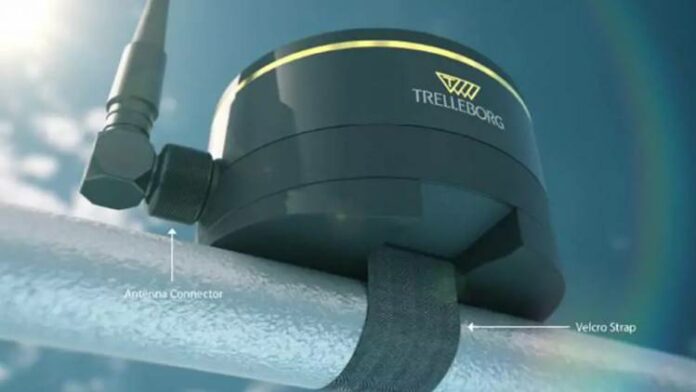
Trelleborg’s marine systems division has added to its SafePilot range for pilots and ports with the launch of SafePilot CAT MAX, a replacement for its SafePilot CAT III system for use in heading and positioning applications.

The dual antenna CAT MAX system consists of heading and positioning units which can communicate with each other and the pilot’s display via Wi-Fi, and includes an integrated six-axis gyro/motion sensor offering independent rate of turn, roll, and pitch data.

The system has been specifically designed for use in applications including the piloting of ultra large container vessels and LNG ships in confined waters and offshore operations.

“Piloting requires the safest, most efficient and reliable technology. It demands exceptional performance, ease of operation and high position accuracy to facilitate optimum approach, berthing and departure,” said Richard Hepworth, president of Trelleborg’s marine systems operation.

“The launch of the SafePilot CAT MAX is the latest example of our long-standing commitment to continually exploring ways in which we can further strengthen our navigation and piloting offering to ensure it delivers exactly that, and then some, in even the most demanding applications.

The system offers a speed accuracy down to 1 cm/s and a heading accuracy down to 0.01°, with built-in UHF radio to facilitate data exchange between relevant parties.

Source:thedigitalship

Autonomous vessel tech company raises $10m

0

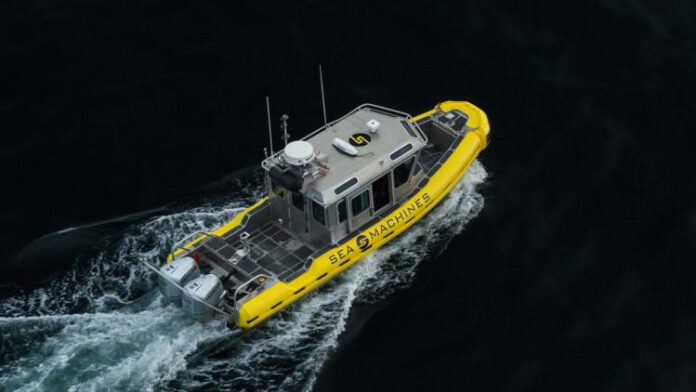
Boston-based autonomous vessel technology company Sea Machines Robotics has closed a $10 million fundraising round, bringing the total funding raised by the company to $12.5 million.

Sea Machines says it will use the funds to expand the sales team supporting its recently released line of products, grow its R&D and engineering teams, and roll out new product feature sets. 

“We are creating the technology that propels the future of the marine industries. This investment enables us to double down on our commitment to building advanced command and control products that make the industry more capable, productive and profitable,” said Michael Johnson, founder and CEO, Sea Machines.

“This backing is another signal that Sea Machines is the unquestioned leader in the space and is playing an integral role in the revolution of marine and maritime operations driven by technology.

The funding round included backing from venture capital firms Accomplice VC and Eniac Ventures, with participation from Toyota AI Ventures; Brunswick Corp., through investment partner TechNexus Venture Collaborative; NextGen VP; Geekdom Fund; Launch Capital; LDV Capital and others.

“At Toyota AI Ventures, we believe that autonomous mobility can help improve people's lives and create new capabilities – whether on land, in the air or at sea,” said Jim Adler, founding managing director, Toyota AI Ventures.

Sea Machines’ autonomous technology and advanced perception systems can reduce costs, improve efficiency and enhance safety in the multi-billion dollar commercial shipping industry. This marks our first investment in the maritime industry, and we’re excited to embark on this journey with Sea Machines.”

Sea Machines is currently developing perception and navigation assistance technology for a range of vessel types, including container ships. In the first quarter, the company says it will initiate testing of its systems on board one of A.P. Moller-Maersk’s new-build ice-class container ships.

Source:thedigitalship

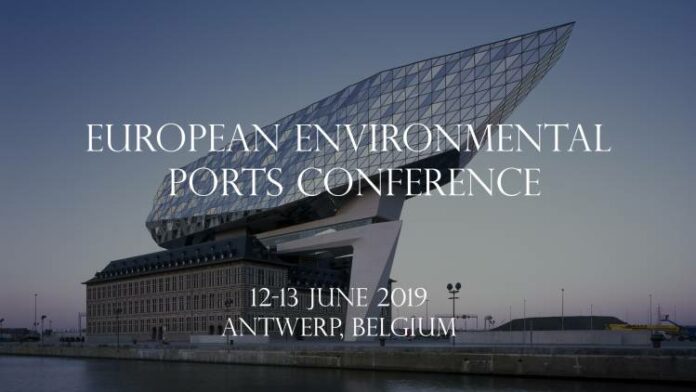
Antwerp, Belgium will host the 3rd European Environmental Ports Conference on 12-13 June 2019

0

June, 2019 will mark the arrival ACI’s third European Environmental Ports Conference. The event will bring together senior representatives from the global port community and shipping companies, as well as environmental policy-makers, academic experts, consultants, and technology providers, to tackle the most pressing topics of the maritime industry.

Given the increasing focus on environmental regulations from the IMO and policy makers in the maritime sector, there is a growing responsibility and requirement of ports to reduce their environmental impact; now is a crucial time to share best practices and explore new technologies and methodologies in order to advance daily operations of a port with minimal ecological consequences.

On the 12th and 13th of June 2019, this two-day event will provide informative presentations on the very latest challenges, solutions and developments in reducing emissions, pollution and energy consumption, as well as discussing the possibilities of industrial collaboration and a more sustainable future.

Key Topics Include

  • The Ten Biggest Concerns of the Ports Industry
  • Keeping up to Date With and Anticipating Changes to Environmental Legislation
  • Ports Impacting Air Quality and the Technological Developments to Bring Lasting Solution
  • International Trade and Alliances following the 2019 European Elections
  • Improving Water Quality with the Maritime Strategy and Water Framework Directive
  • Port, Shipping and City Interaction and Collaboration for Sustainable Economies and Improved Relations
  • Ship-Owners and their Role Towards an Environmentally Green Future
  • LNG and its role as a transitional fuel and what constitutes as a long term solution