3.2 C
New York
Home Blog Page 1206

Best practices to manage cyber risk

0

While the maritime industry tries to keep up with the new technological trends, it becomes reliant on cyber systems and connectivity of Operational Technology (OT) with Information Technology (IT), it faces new challenges. Cyber crimes are increasing at an unprecedented rate and cyber disruption cause far-reaching consequences. The maritime industry must focus now on protecting human life, maritime assets, and the marine environment from cyber-related incidents.

Namely, the Coast Guard American Waterway Members (AWO) Cyber Risk Management Quality Action Team recommends companies to take measures to mitigate cyber risks and move into risk assessment and management processes, including its Safety Management System.

According to AWO, the basic risk assessment guidelines are:

#1 Identify and characterize the computer system: Focusing on its functions, the users of the system, and the internal or external use of the system.

#2 Identify Risks: The unauthorized access to the computer system and when, misuse of information stored in the computer system, loss of data and the disruption of service.

#3 Determine Risk Impact: Acknowledge how a cyber incident could affect the company or the vessel operations.

#4 Determine Risk Probability: The possibilities of an incident to occur.

#5 Assess Risk Rating: Risk Probability X Impact of Occurrence = Risk Rating

#6 Determine & Implement Security Controls: Administrative controls (policies and procedures), technical controls (firewalls, anti-virus software, data access permissions, etc.), and user training.

#7 Monitor: Continue to monitor the security controls for effectiveness and re-evaluate risk when changes are made to the system

Finally, the Coast Guard has adopted the National Institute of Standards and Technology (NIST) Cybersecurity Framework as the foundation for its guidance to other segments of the maritime industry on cyber risk management.  The base of the NIST Framework is five concurrent and continuous functions which provide a high-level, strategic view of the lifecycle of managing cyber risk:

  • Identify physical and software assets, people, data and risks;
  • Protect assets by training users and mitigating risk;
  • Detect cyber incidents;
  • Respond with defined response processes;
  • Recover assets or systems affected by cyber incidents.

You may see more information herebelow: Read

Source:safety4sea

Maersk introduces Value Protect, an extended liability solution

0

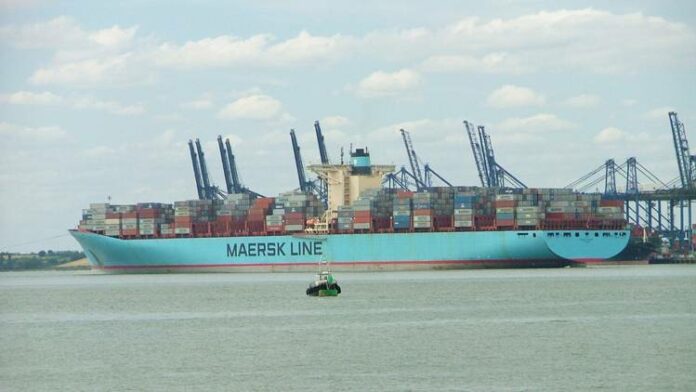
International laws as well as the terms and conditions defined in the Bill of Lading govern the transport of goods across the world. Here, a good part of the risk of cargo losses or damages sits with the consignor. With Value Protect, Maersk now offers customers a new solution to protect their cargo.

Maersk is expanding its commercial offering and introduces Value Protect, an extended liability solution. It offers customers an alternative to cargo insurance, increasing their chance of receiving full compensation in case of cargo damage in transit.

Valid while the cargo is in the care and custody of Maersk, Value Protect covers cargo loss or damage in cases such as fire, accidents due to danger of the sea, theft, natural disasters, cyber incidents, cargo damages caused by delay and contributions in General Average all of which would be excluded under the conventional terms for carriage.

We are very pleased to introduce this new solution to our customers. We take care of every container we transport. Yet, some events might be outside of our control, such as extreme weather or perils of the sea that may result in cargo loss or damage,” says Klaus Rud Sejling, Head of Logistics and Services at Maersk.

“International conventions limit carriers’ liability and set potential pay-out limits. By purchasing Value Protect our customers will have peace of mind, so that even if an unpredictable event should happen, they can rest assured knowing their business is protected,” continues Klaus Rud Sejling.

Marine cargo insurance protects cargo owners from the known risk of transports; however, roughly 30% of the cargo that moves on the ocean is uninsured. For some cargo owners, it can be quite complicated, time consuming and expensive to apply and con-tract for all shipments.

We want to offer our customers smart end-to-end solutions, simplifying their supply chains. When we asked them about their insurance experiences many told us they would like to have more simple solutions to cover their logistics risk. Value Protect is our answer to this,” says Maia Parlagashvili, Global Insurance Product Manager at Maersk.

Value Protect can act as a substitute or as supplement to regular cargo insurance. With no additional paperwork created, customers shipping with Maersk simply select a package that suits their needs best at a fixed price and will then be part of the customer’s standard shipping invoice.

Value Protect can be purchased for commodities shipped in dry containers as well as for selected commodities shipped in Reefer containers. The solution is already available in several countries across the globe and will be gradually rolled out worldwide over the coming six months.

Source: Maersk


MV Visborg Sets New Benchmark In Danish Design

0

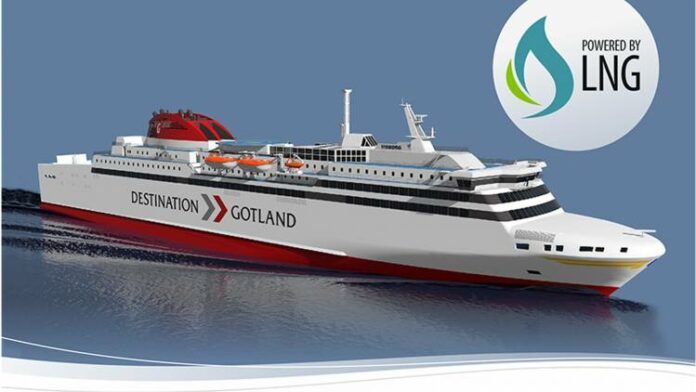
The most powerful of its kind, MV VISBORG marks a new era for the Scandinavian-Asian collaboration between designers OSK, owners Rederiaktiebolaget Gotland, and builders Guangzhou Shipyard International.

Following the official naming ceremony for MV Visborg on 8 December 2018, the newbuilding was delivered from GSI on 14.12.2018 to Rederiaktiebolaget Gotland. She is the first vessel in a series of two intended to ply the waters between Gotland’s largest city Visby and the ports of Nynaeshamn and Oscarshamn in mainland Sweden.

OSK Group has played a significant role in the development and design of the powerful dual fuel RoPax ferry. OSK-ShipTech has had a dual role being consulting naval architects for the owner during concept and contract designs and for the yard for parts of basic naval architectural- and interior designs as well as exterior design.

This vessel represents more than four years of very hard work and also the strategic development of OSK. We have been involved in many details of this vessel ensuring an energy optimised vessel with high-standard interiors and at the same time assisting GSI setting new standards in Chinese shipbuilding,” says Anders Ørgård, CCO of OSK Group. He continues: “Parallel to the building of Gotland’s VISBORG and THJELVAR we have established a joint venture together with GSI. The JV SinoDane (Guangzhou SinoDane Ship Design Co. Ltd.) was created to ensure high-quality RoPax tonnage based on Danish design and international standards.

New energy and emission standards are also applied to VISBORG. The 200-meter long vessel has a deadweight capacity of approx. 4,800 tonnes, room for about 1650 passengers and 1750 trailer lane meters. And, despite a 1200-ton larger displacement that Gotlandsbolaget’s existing two vessels (MS Visby and MS Gotland, delivered by GSI in 2003) the design team on the new LNG-ferry has ensured significant reduction on fuel consumption as well as CO2, NOx and SOx emissions. VISBORG will have a service speed of 28.5 knots.

Sister vessel MV THJELVAR is expected to make her first trials in the beginning of 2019 and expected delivery during the summer of 2019.


USNS Comfort’s Humanitarian Mission to South America

0

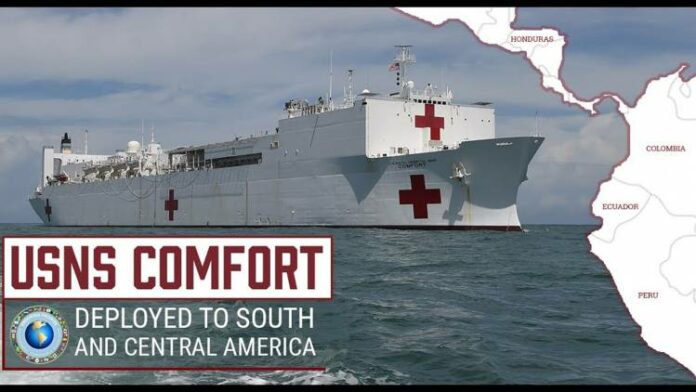
USNS Comfort has finished another deployment to the Western Hemisphere as part of the Enduring Promise initiative. The U.S. hospital ship’s latest tour took it to Colombia, Ecuador, Honduras, and Peru where it provided free medical assistance to thousands of individuals in need. This is an example of medical diplomacy at work and a great initiative to improve U.S.-Latin American relations at a time when more cohesion among governments in the Western Hemisphere is needed.

Current Deployment

Comfort is a large vessel, with a length of 894 feet and a beam of 105 feet, the same as its sister ship, USNS Mercy – the two are converted San Clemente-class super tankers. According to the U.S. Navy, each platform “contain[s] 12 fully-equipped operating rooms, a 1,000 bed hospital facility, digital radiological services, a medical laboratory, a pharmacy, an optometry lab, a CAT-scan and two oxygen producing plants,” along with helicopter decks. Hence, the vessel is able to provide for vast numbers of patients simultaneously with different services. The vessel’s most recent tour, the sixth time that it has been deployed to the region, lasted 11 weeks.

Comfort was well-received by the local populations. For example, the vessel was in the city of Esmeraldas, Ecuador, from 22-26 October. According to the Ecuadorian Ministry of Defense the medical staff attended between 500-750 per day, while a Southern Command press release stated that “Comfort has treated more than 4,000 patients, including nearly 2,500 medical patients, 1,100 optometry patients, 450 dental patients, and performed 81 surgeries.” An Ecuadorian ministry press release explained “The arrival of the vessel is part of the strengthening of defense relations between Ecuador and the USA.”

Comfort then traveled to Paita, in northern Peru, where it treated over 5,000 patients, according to the Peruvian government. The U.S. hospital ship also donated wheelchairs and medical supplies. The Peruvian government noted that this is the third time thatComfort has visited Peru, in 2011 it provided medical assistance to 7,352 patients, and in 2007, it aided 9,223 Peruvian citizens.

The vessel’s stops in Colombia and Honduras had similarly positive results. In Colombia, the U.S. hospital ship docked in Turbo (Antioquia) and then Riohacha (La Guajira), with the local government estimating that some 7,400 patients were treated by Comfort’s medical staff. As a final point, it is worth noting that the citizens of these nations were not the only ones to receive treatment aboard Comfort. Case in point, while in Colombia medical personnel also helped Venezuelan migrants who have settled in Riohacha as they flee the political and socio-economic crisis in their homeland.

Discussion 

Enduring Promise is an example of a medical diplomacy initiative that helps promote a positive image of the U.S. In this case, the people that were helped by Comfort, along with their families and other loved ones, will likely now have a more positive view of the U.S. and its military due to the free and professional medical services they received. An indigenous person from the Wayuu ethnic community in Colombia described Comfort’s visit as a “blessing from God” as it helped vulnerable communities, peasants, and Venezuelan migrants, according to Colombia’s daily El Nacional. Even more, governments also get a load taken off their shoulders, as Comfort provided services that local medical services could not offer, or were too financially costly for families to afford. For the U.S. and its partners, this was a win-win situation.

One important fact to mention is that Comfort visited Ecuador. A few years ago, when former President Rafael Correa was in power, this trip would have been unthinkable, as the former South American leader was known for his anti-U.S. sentiments. He famously expelled the U.S. military from its base in Manta, in 2009, and he was a close ally of the late-Venezuelan leader Hugo Chavez.

Nevertheless, President Lenin Moreno has carried out a complete turnaround to Ecuador’s foreign policy by reaching out to the U.S. In recent months, the Ecuadorian Esmeraldas-class corvette BAE Los Ríos participated in the U.S.-sponsored UNITAS multinational exercise in Colombia, personnel from the U.S. Naval Small Craft Instruction and Technical Training School visited the South American country, and Defense Minister Oswaldo Jarrin has visited the headquarters of U.S. Southern Command. Comfort’s visit, thus, is the proverbial cherry on top of the cake of improving bilateral relations.

As for Honduras, the visit is likewise significant as a caravan of Central American migrants, mostly Hondurans, is attempting to enter the U.S. as they escape poverty and violence in their homeland. Comfort’s visit to the Central American state is an example of SOUTHCOM and the U.S. Navy providing humanitarian aid to Hondurans in need, irrespective of the rhetoric coming out of Washington lately. Hence, it is refreshing to read SOUTHCOM’s 25 October communique, which explains that “the embarked medical team will provide care on board and at land-based medical sites, helping to relieve pressure on national medical systems caused partly by an increase in cross-border migrants. The deployment reflects the United States’ enduring promise of friendship, partnership and solidarity with the Americas.

China’s Peace Ark 

As a caveat to this analysis, it is necessary to mention China’s hospital ship, Peace Ark. In a previous CIMSEC commentary, “The Significance of U.S. and Chinese Hospital Ship Deployments to Latin America,” the author discussed how both Washington and Beijing utilize their hospital vessels as diplomatic tools in order to improve their image in countries that said ships visit during their humanitarian tours. As it turns out, both ships would be deployedsimultaneously to the Western Hemisphere. While Comfort visited the aforementioned nations, Peace Ark visited Antigua and Barbuda, Dominica, the Dominican Republic, Grenada, and Venezuela. Even more, on 15 November the Ecuadorian Ministry of Defense announced that the vessel had docked in Guayaquil to provide medical assistance to as many as 3,200 patients.

While governments are free to decide which vessels from foreign powers can enter their ports, it is impossible to avoid the irony that the hospital vessels of two nations that continue to be at odds with each other, from trade wars to incidents in Asian waters, are back-to-back welcomed in the territory of third-party states. As a result, Ecuadorians living in the Esmeraldas and Guayaquil regions enjoyed free medical services from two rival powers, while Quito maintains good relations with both nations.

Final Thoughts 

Medical diplomacy is an effective way to improve bilateral ties between the U.S. and its Latin American allies. Comfort’s visit to four Latin American nations, Colombia, Ecuador, Honduras, and Peru will improve the U.S. image at the grassroot level, as the citizens of these nations that received free and professional medical service will know that, irrespective of the current rhetoric coming out of Washington, U.S. medical personnel are still there to help those in need.

The views expressed in this article are those of the author alone and do not necessarily reflect those of any institutions with which the author is associated.

Source:maritime-executive

Abducted Boxship Crewmembers Released by Nigerian Pirates

0

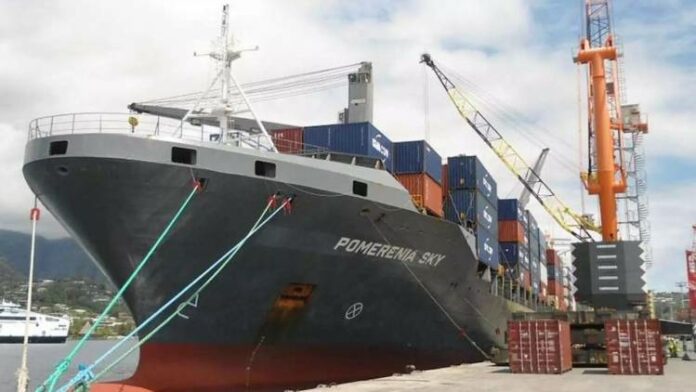
Eight Polish crewmembers from the container ship Pomerania Sky have been released by their captors, two months after they were kidnapped off the coast of Nigeria. 

Poland's foreign ministry thanked the shipowner and its partners for "their professional handling of this difficult matter." It also expressed gratitude to the Nigerian government. 

"From the very beginning, the matter was dealt with by the interministerial team headed by the deputy minister of foreign affairs, and we are glad that the release took place before Christmas," said the ministry in a statement. "We would like to remind you that it was the fifth kidnapping of Poles in the Gulf of Guinea since 2013. We appeal to Polish seafarers to check that the shipowner has adequate insurance before starting work on a ship in a dangerous region of the world."

On October 27, pirates abducted 11 crewmembers from the container ship Pomerania Sky as she was headed for the port of Onne, Nigeria. Those abducted included eight from Poland, two Filipinos and one Ukrainian national. Nine crew members remained on board the vessel and brought her safely into port. 

Pirate attacks are common in the Gulf of Guinea, and the area accounted for about one third of all piracy incidents in the first nine months of 2018, according to the IMB ICC. Just days after the attack on the Pomerania Sky, nine pirates in a speedboat approached an unnamed LNG carrier about 30 nm off Bonny, Nigeria, and opened fire. The master put on more speed and evaded the attackers, who eventually broke off and left the scene. 

Source:maritime-executive
Port of Newcastle continues modernization of its bulk terminal

0

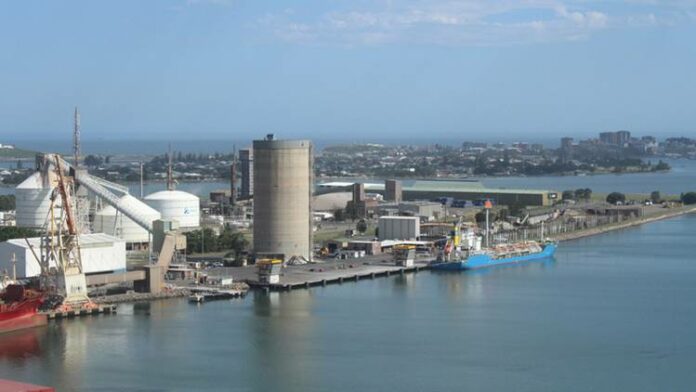
Port of Newcastle has marked an important milestone in the development of the Newcastle Bulk Terminal. The dismantling of the old ship unloaders is now complete, with bulk cargo hoppers now in place to provide continuity of trade while the new ship unloader and conveyor system is constructed, the port said in its news release. 

The old ship unloaders at the Kooragang 2 berth have been a feature of the Walsh Point precinct since 1968. The two rail mounted ship unloaders were established at what was then known as 'Rotten Row' to handle dry bulk products including fertiliser, rock phosphatic, ores and meals. Kooragang 2 and 3 berths remain the busiest and most diverse common user berths in the port, continuing to handle a diverse range of dry bulk and liquid bulk commodities.

In June 2018, Port of Newcastle announced it was investing $33 million into a new ship unloader, including state-of-the-art crane, conveyor infrastructure and an electrical substation incorporating the latest in safety and environmental compliance features.

Port of Newcastle's Executive Manager Marine & Operations, Keith Wilks, said the replacement of the old ship unloaders was driven by the Port's strong commitment to working with its customers and anticipating their future needs.

Our customers have requested more capacity to grow their cargo volumes and the new unloader will have a capacity of 1,000 tonne per hour, a significant increase from the current average rates of 230 tonnes per hour.

"We have also implemented a new service model to improve environmental performance and ensure regulatory compliance. Our approach is to embed a more consistent, streamlined approach to environmental performance at the Terminal, whilst at the same time driving efficiency and maximising trade growth," Keith said.

The Port of Newcastle's principle contractor Kerman Contracting will deliver the overall project with design and construction of the new crane unloader by their partner Tenova Takraf. The new crane unloader will be constructed in Vietnam and is due to arrive in the Port in early 2020.


ESVAGT and Wind Power LAB developed new service concept improving wind turbine inspections

0

ESVAGT and Wind Power LAB have developed offshore WTG Blade Assessment in their joint venture EWPL Ocean; a new service concept for inspecting wind turbines that will both reduce weather risk, increase the analysis process and improve inspections, ESVAGT said in a press release.

Digitisation and streamlining are central elements in offshore wind. Thanks to WTG Blade Assessment, we are taking a considerable step in industrialising inspections of offshore wind turbines, says Anders Røpke, CEO at EWPL Ocean.

Better on all parameters

EWPL Ocean combines ESVAGT’s competences in operating vessels and drones with Wind Power LAB’s knowledge about offshore turbines and AI (Artificial Intelligence). This results in a long line of advantages, says Søren Karas, CCO at ESVAGT and Chairman of the Board at EWPL Ocean:

Nowadays, inspecting turbine blades is costly, laborious, slow and imprecise. We are ameliorating all aspects, he declares.

Turbine blade inspections are currently done via camera from the turbine tower foundation, via drone from a CTV, or by a photographer from a helicopter. All three solutions require decent weather and costly specialists:

‘It is often decided to inspect during the summer, when the weather risk is at its lowest. The attached disadvantage is that once the recordings have been analysed, summer is over – and it is then unavoidable to have to wait until the following summer before being able to repair the damages, and by that time, they might well be aggravated’, says Søren Karas.

One stop service supplier

EWPL Ocean turns inspections upside down already from the previous winter season – a time of year usually characterized by very few inspections due to weather conditions. This is however no obstacle.

Through our experience and other activities in the North Sea, we can create synergies with our oil & gas business to deliver both vessels and drones, which absorbs the weather risk and considerably heightens the quality of the inspection, says Søren Karas.

From ESVAGT’s vessels, trained drone pilots photograph offshore WTG blades during off season well ahead of summer, where reparations will be possible. After just 24 hours, the customer receives the first assessment of the necessary service, and after a week, Wind Power LAB’s specialists will have verified and thoroughly analysed the needed repairs. Substantially faster and more accurately than analyses offered today. The analyses can be performed at 3 different levels, enabling each customer to choose the wanted level of details in the reports.

Through trial cases, we have already observed that we identify the scope of the blade damages more precisely than previously possible, describes Anders Røpke:

We offer a much more flexible and accurate inspection with a subsequent analysis; offered at the optimal time – at a much more affordable price, he says.

The concept has already attracted attention among farm owners, turbine manufacturers, insurance companies and investors.

Accurate inspections are a prerequisite for taking quick action, thereby delivering an optimal service which can extend the farm’s lifetime. It is a unique concept that helps wind farm owners and operators in line with an increasing industrialisation, says Søren Karas.

ESVAGT is a dedicated provider of safety and support at sea and a market leader within offshore wind solutions. 

We support the offshore Oil & Gas industries with a wide range of specialized services: Standby, Emergency Response and Rescue Vessels (ERRV), Oil spill response, Firefighting, Tanker assists, Rig moves, Supply services and Interfield transfer of cargo and personnel.

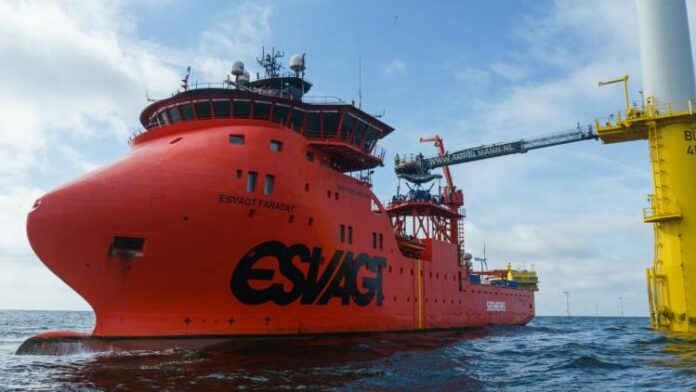
We service offshore wind farms and have a fleet of dedicated Service Operation Vessels (SOV), which ESVAGT pioneered in 2010. The SOVs provide accommodation for technicians, spare time facilities, offices and conference room, storage for small turbine parts, workshops, etc. The SOV offers flexible personnel and equipment transfer capabilities by either Walk-to-Work gangway system or Safe Transfer Boats.

ESVAGT was founded in 1981 and has a fleet of more than 40 vessels and approximately 900 employees on- and offshore.

CNOOC Signs Agreements with Nine International Oil Companies

0

China's National Offshore Oil Corporation (CNOOC) has signed Strategic Cooperation Agreements with nine international oil companies including Chevron, ConocoPhillips, Equinor, Husky, KUFPEC, Roc Oil, Shell, SK Innovation and TOTAL. The move comes as the nation celebrates 40 years since its opening-up.

The agreements facilitate oil and gas developments in two areas in the Pearl River Mouth Basin offshore China. Area A is approximately 15,300 square kilometers, with a water depth of 80-120 meters and only open for the deep layers below Enping Formation of Paleogene. Area B is approximately 48,700 square kilometers, with a water depth of 500-3,000 meters and open for all the layers.

CNOOC has signed more than 200 PSCs since its inception in the early 1980s, even as it has increasingly relied on its own resources to tap deep-water projects in Chinese waters — most recently the giant Lingshui 17-2 gas field in the South China Sea.

Wood Mackenzie's research director Andrew Harwood, said: "The two Strategic Cooperation areas are understood to be prospective for ultra-deepwater, high pressure/high temperature, or low porosity/low permeability reservoirs.

The international oil companies all have existing E&P operations in the country, and the agreements further demonstrate their commitment to involvement in China's energy sector. Should these Strategic Cooperation Agreements progress into full exploration contracts, CNOOC will retain operatorship.  

CNOOC has set its sights on raising gas reserves by 50 percent by 2025 and developing further its deepwater expertise, says Harwood, and these agreements will help the company achieve its targets and hone its technical skillset. The company has promised to increase spending and raise output to enhance the nation's energy security. It has already entered into over 220 oil contracts with 81 international oil companies from 21 countries and regions in the past 40 years. These international agreements have significantly boosted China's offshore oil exploration and development.

"Globally, Wood Mackenzie expects exploration budgets to remain steady in 2019. But with stronger prices, lower costs and a greater focus on commerciality, the exploration sector is now more resilient than ever, and is well positioned to generate positive full-cycle returns at oil prices of $50/barrel or even lower."

40th Anniversary 

This week, China's President Xi Jinping attended a celebration for the 40th anniversary of the country’s reform and opening-up in Beijing saying: “The practice of reform and opening-up over the past 40 years has shown that openness brings progress, while seclusion leads to backwardness.”

Over the past 40 years, China has recorded an average annual GDP growth rate of around 9.5 percent. This contributed over 30 percent to global economic growth and lifted more than 740 million people out of poverty, Xi said.

He pledged to promote more openness amid ongoing economic globalization and wants to focus on jointly building the Belt and Road with other nations.

Source:maritime-executive

Global OTEC Resources unveils floating OTEC concept

0

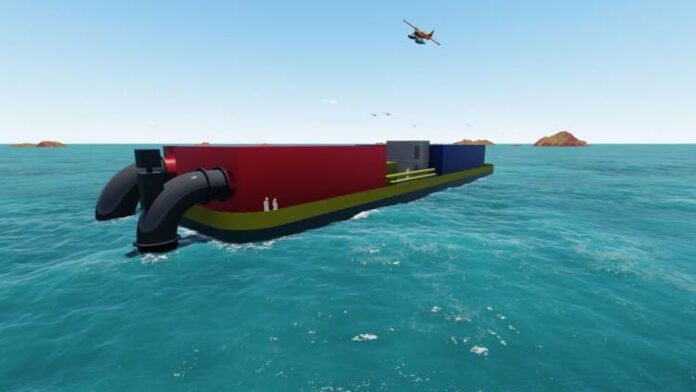
Newquay-based Global OTEC Resources has received a £140,000 grant to help develop the company’s concept for using ocean thermal energy conversion (OTEC).

OTEC is a technology for converting some of the energy that the tropical oceans absorb from the sun, first into electricity and then into fuels.

The grant has been awarded by Marine-i, an innovative collaboration focusing on Cornwall’s marine sector which is part-funded by the European Regional Development Fund. The technology will especially be developed for “offgrid” resorts in the Maldives and Caribbean.

Dan Grech, managing director of Global OTEC Resources, said: “We are working with a number of luxury resorts to introduce ocean thermal energy conversion. Other forms of renewable energy such as wind and solar have not been proven as viable for meeting the energy demand of these resorts."

Consequently, most are currently burning thousands of litres of diesel daily (which has the disadvantage of high carbon emissions as well as volatile costs) so there is strong interest in looking at an alternative form of renewable energy – our new concept meets their needs.

“The next stage is to design a fully costed business model over the next six months. We are expecting to be ready to build our first ocean thermal energy systems at resorts in the Maldives within two years.”

Matt Hodson, operations director at Marine Hub Cornwall, said: “Global OTEC Resources is an example of the new wave of marine technology businesses now being attracted to Cornwall."

“The company is dynamic and ambitious, with a clear view of the global market it plans to target. Marine-i is delighted to help Global OTEC Resources move their business to the next stage and exploit worldwide markets.”

Global OTEC Resources will work with technology partners DWR Offshore and Skentel to deliver the project.

Richard Argall, lead OTEC engineer, said the company has a “flexible and modern approach” to commercialising OTEC.

He added: “I’ve been involved in several projects in the last decade and a half with others who have tried valiantly to get huge OTEC developments off the ground."

“This project takes a sensible approach de-risking the technology, starting with small scale niche applications like remote island communities and that gives it a stronger chance of success.”

Rheinmetall transfers nautical training facility to German Navy

0

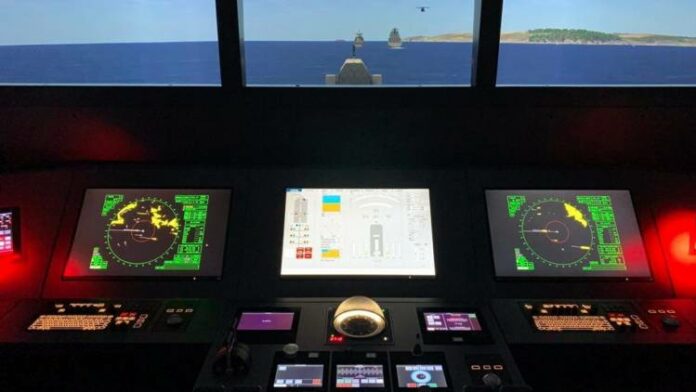
Ordered almost exactly three years ago, the system – known as the “Ausbildungsausstattung Nautische Schiffsführung”, or AANS – will be used for training all German Navy cadets, all future watch officers, and for preparing bridge personnel for nautical operations.

The capability spectrum ranges from basic navigation and nautical training through to crew resource management, e.g. for helping bridge teams prepare for operations.The AANS includes two large and four small bridge simulators, six trainer stations, an auditorium for post-operation briefings as well as additional infrastructure for planning exercises and administrating and updating the database.

Every surface combatant now in the German inventory – from minesweepers to supply ships – is modelled in the AANS. This applies not only to the physical depiction of various ships and boats, but to their exact performance characteristics. In addition, numerous German and NATO maritime training areas are replicated, as are current and potential areas of operation.

For over forty years, Rheinmetall has numbered among the world’s foremost developers and manufacturers of simulation technology. The Group’s product spectrum here ranges from computer-supported learning to systems for training the crews of ground vehicles, aircraft and ships, right through to major training areas where entire formations can engage in tactical exercises using their original equipment.