3.2 C
New York
Home Blog Page 1205

Maersk and MSC Overhaul Asia-Europe Service Rotations

0

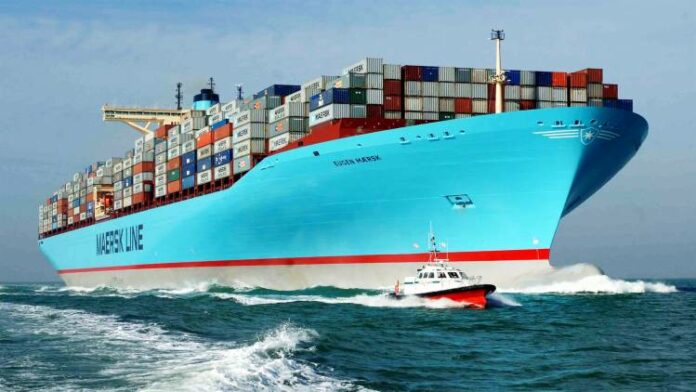
Maersk and its 2M alliance partner MSC are overhauling their Asia-Europe routes, adding six ULCVs, dropping eight port calls and implementing slow-steaming on ten separate service strings.

According to the partners, the change is intended to address problems with schedule reliability brought on by a combination of external factors. "Port congestion and unfavorable weather conditions have resulted in delays. We are now progressing on the improvements made earlier in 2018 to further enhance our schedule reliability across our Asia-Europe Network," Maersk said in a statement.

The new schedules build in longer buffer periods for these contingencies, allowing longer port calls and slower speeds while still meeting the official timeline for the rotation. “We can only assume that container terminal congestion at the main ports of the trade will continue to worsen, leading us to anticipate and incorporate longer time buffers in the schedule, in terms of port stays and speed at sea,” MSC said in a statement. The rollout of the new network is planned for early March 2019, subject to future updates.

The speed reduction on the core Asia-Europe trade lane also raises the possibility of fuel savings, even though more vessels will be added to the rotation. Fuel consumption falls rapidly as a vessel slows, and small downward speed adjustments produce outsize changes – an important consideration, since fuel costs are the largest single operating expense for a modern container vessel. Maersk pioneered "slow steaming" as a cost-reduction measure, and it has had enough success with the policy that it has altered the bow shape of several of its ships to permanently optimize them for lower speeds.  

Bunker costs will rise further in 2020, when the IMO's new 0.5 percent fuel sulfur content cap takes effect. MSC has already announced a new bunker surcharge to address the expected increase in its costs. 

Source:maritime-executive

U.S. Provides Maritime Security for Papua New Guinea Summit

0

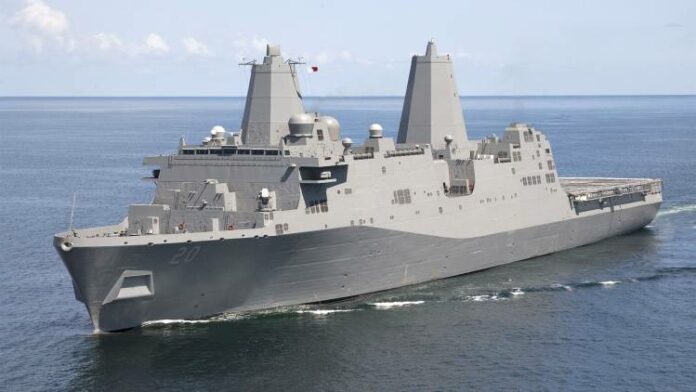
U.S. Coast Guard servicemembers recently completed loading six small boats and accompanying equipment onboard the USS Green Bay (LPD-20) in Townsville, Australia for transport back to the United States.

The loadout follows the Coast Guard’s recent deployment to Port Moresby, Papua New Guinea (PNG) where 94 Coast Guard personnel logged more than 2,000-underway hours providing round-the-clock maritime security during the 2018 Asian Pacific Economic Cooperation (APEC) Economic Leaders Week, Nov. 12-18. The high-profile summit was attended by leaders and senior officials from 21 nations, including Vice President Mike Pence representing the United States.

A first-of-its kind Memorandum of Understanding signed by U.S. Ambassador Catherine Ebert-Gray and PNG Police Commissioner Gary Baki provided temporary authority for the Coast Guard to deploy small boats and specialized members as part of an adaptive force package (ADF) that provided port security, waterside protection, and anti-terrorism capabilities prior to and during the summit.

Operating under the control of the U.S. Indo-Pacific Command, the ADF worked in cooperation with PNG’s Joint Security Task Force and the Australian Defense Forces.

The ADF was led by Port Security Unit (PSU) 305, based in Fort Eustis, Virginia, and included reserve and active duty service members from PSU 301 based in Cape Cod, Massachusetts, PSU 308 based in Kiln, Mississippi, an PSU 313 based in Everett, Washington, along with Maritime Safety and Security Team (MSST) Honolulu, MSST Seattle, MSST San Francisco, and MSST Los Angeles/Long Beach.

As a global leader in maritime law enforcement and port security, the U.S. Coast Guard was proud to work with the PNG Joint Security Task Force and our Pacific partners to ensure safety and security throughout the APEC Economic Leaders Week,” said Cmdr. Michael McCarthy, commanding officer of Port Security Unit 305.

The deployed service members and their international partners conducted waterway security at three separate maritime restricted areas around Port Moresby including waterways surrounding the APEC Haus, the main venue during the summit, and several cruise ships which served as lodging for global leaders and dignitaries during the summit.

Throughout the deployment the ADF operated from the Royal Australian Navy’s HMAS Adelaide (L01), a 757-ft long Australian Amphibious Assault Ship equipped with a well deck that allowed for launching and recovering the Coast Guard’s six 32-foot Transportable Port Security Boats.

Coast Guard personnel participated with their international partners in a Remembrance Day Ceremony Nov. 11 commemorating the 100th Anniversary of WWI on the Adelaide’s helicopter landing deck.

The APEC security mission is one of several recent joint operations conducted by the Coast Guard in the Western Pacific. In August, the service participated in the 17th annual Southeast Asia Cooperation and Training exercise, which brought together service members from navies and coast guards from nine nations to focus on increasing maritime domain awareness through collaborative and coordinated information sharing.

The Coast Guard is also engaged in the Oceania Maritime Security Initiative, with law enforcement detachments deployed on supporting U.S. Naval vessels such as the USS Shoup (DDG-86), assisting Pacific nations with protecting their exclusive economic zones and combating illegal, unreported and unregulated fishing.

The United States is a Pacific nation,” said Vice Admiral Linda Fagan, Commander, Coast Guard Pacific Area. “We have deep and long-standing ties with our partners in the region, and more importantly, we share a strong commitment to a free and open Pacific, governed by a rules-based international system that promotes peace, security, and shared prosperity.

Source:maritime-executive

Legislation Grants Rosatom Control of the Russian Arctic

0

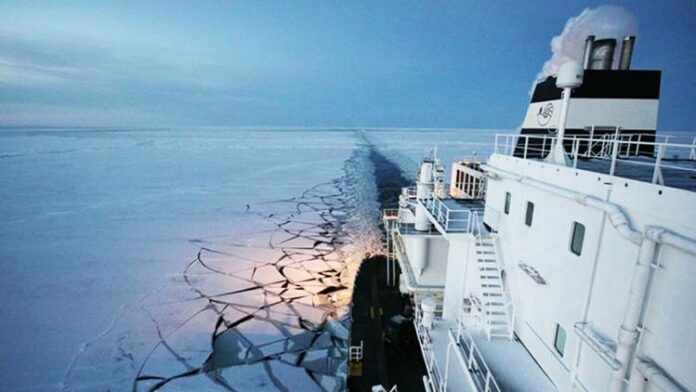
Russia’s state nuclear corporation Rosatom, has been granted control over the Arctic Northern Sea Route, advancing its aim of becoming the sole operator on what Moscow says – and many other nations believe – is one of the world’s biggest emerging trade routes.

But the environmental consequences of such a move are enormous. On top of eroding already retreating ice levels in the Arctic – contributing to worldwide seal level rises and the ability of the planet to shield itself from solar radiation – most shipping through the planet’s north would be geared toward bringing new carbon intensive fuels to market.

For months, the power handoff to Rosatom has been talked of as if it had already been accomplished. The bill granting the transfer, which surfaced last November, was said to be favored by President Vladimir Putin. But it wasn’t until last week that the Russian Parliament passed legislation crafted largely by Rosatom itself into law.

Now it’s official. The nuclear monolith, which operates Russia’s nuclear icebreaker fleet, will have full authority over infrastructure, access, security and shipping in the northern waterway as it seeks to open the Arctic for commercial navigation on a year round basis – cutting in half, according to Moscow, sailing times between Europe and Asia.

Russia’s Ministry of Transport, which seemed nearly alone in its opposition to the bill, will maintain its earlier administrative role over the route, but will be answerable to Rosatom as it issues permits to sail thorough it.

The Northern Sea Route runs the some 6,000 kilometers between northern Norway and the Bering Strait, and, until recently, has remained largely impassable during all but summer months. But unusually high temperatures over the past decade have caused the Arctic ice sheet to shrink by some 13 percent, according to data from NASA.

Far from being alarmed by these developments– like the rest of the world – Putin has gone on record numerous times to tout the benefits of climate change and its potential to increase shipping and hydrocarbon exploration in a region that used to be pristine frozen wilderness.

And his administration is making enormous bets on the success of that plan. At a recent meeting in Sabetta, a burgeoning natural gas port on the Arctic’s Yamal Peninsula, Russia’s natural resources minister, Dmitry Kobylkin, pledged nearly $200 billion in investment for Arctic infrastructure over the next five years – only a fraction of it coming from the Russian state budget. The rest, he said, would come from private investment.

Putin himself has not so much suggested as demanded that shipping through the Arctic increase. In May, he issued a government decree stating that cargo passing through the northern corridor must go up from its present volumes of about 18 million tons a year to 80 million tons by 2024.

To facilitate that, Maxim Kulinko, the deputy head of Rosatom’s new Northern Sea Route directorate, told the Financial Times newspaper that the state nuclear monopoly will function something like a ride-hailing service, dispatching its nuclear icebreakers as needed.

We want to be like Yandex taxi for icebreakers,” he told the paper, referring to the Russian analogue to Uber or Lyft. “There should be icebreakers all along the route for anyone to call up and get it to accompany a ship – when the line works regularly, that’s when you have year round shipment.”

To do that, Russia is revamping its aging fleet of nuclear icebreakers. The hulls of three have already been floated: The Ural, the Arktika, and the Sibir, the latter two of which are named for older icebreakers they will replace, and each of which will cost about $1 billion a piece. Moscow has also claimed it will build the Leader class of icebreakers – a slick, space-age vessel that’s even bigger and more expensive than those.

In the meantime, other national shipping companies have been testing the water for themselves. In August, the Danish shipping giant Maersk sent one of its container ships from the Far Eastern Russian port of Vladivostok to St Petersburg without icebreaker assistance. China’s state owned shipping company COSCO has likewise participated in some 30 trial trips of its own. The government in Beijing has been impressed, and since 2013 it has poured millions into port and gas recovery infrastructure in the Arctic.

But Russia is keen to keep the region to itself. Moscow has been steadily revamping many of its mothballed military bases in the Arctic, and, in 2015 laid claim before the UN to the North Pole itself.

But with more authority should come more responsibility. So far neither Rosatom nor other Russian authorities have offered anything in the way of an environmental plan for the Arctic amid the fever speculations about a Northern Sea Route boom. One hopes they won’t forget about it entirely.

Source:maritime-executive

Gulf Marine ends year with banking woes

0

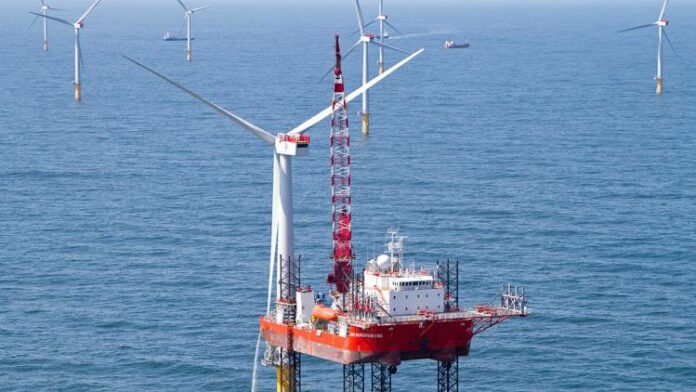
Jack-up operator Gulf Marine Services expects to be “in breach of certain banking covenants” at the end of 2018 due to a delay in signing recently awarded contracts.

The company said the contracts will be inked next year, but warned it will continue to struggle financially in the near-term due to low rates for vessels.

“A recovery in day rates in the industry continues to be deferred due to a number of factors including current oversupply of vessels across the industry against tender demand, exacerbated by extended contract award delays and volatile oil prices,” GMS said.

The company is in talks with its banking syndicate to address the covenant breach.

GMS does not expect a recovery in its trading performance in 2019, in spite of improving calendar day utilisation levels across its fleet to an expected 70% for this year from 58% in 2017.

The company said it is uncertain when day rates will recover beyond 2019 and it is working with banks to establish an appropriate long-term capital structure for the business.

“The board will consider all available options to reinforce the balance sheet,” GMS said.

GMS pointed to a strong pipeline of tenders in the Middle East that should eventually lead to an increase in charter rates and said its young fleet makes it “well-placed to capitalise on a market recovery when it does materialise”.

Source:renews

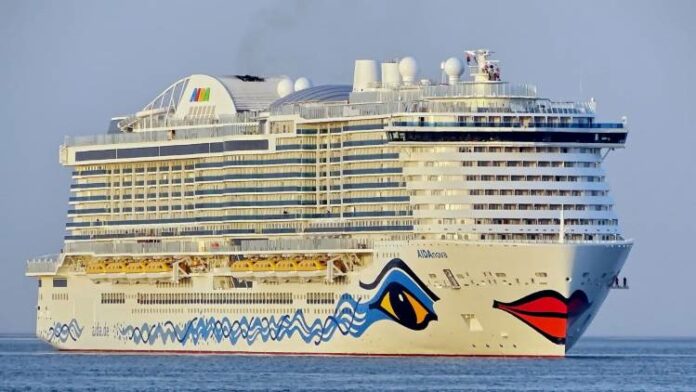
Top cruise ship 2018: AIDAnova

0

"Green Cruising” with AIDA Cruises: Biggest AIDA Cruise Ship operates environmentally.

337 meters long, 42 meters wide, 8.8 meters draft, 183,900 GT, four main engines transferring in total 62 MW on two PODs: These are the most important particulars of AIDAnova, the latest Meyer Werft-built cruise ship for AIDA Cruises.

During the laying of the keel Carnival Corp. announced that it was going to build a total of seven new cruise ships which can “in port and at sea” operate with natural gas/methane.

The seven new builds will be built at yards of the Meyer Group in Papenburg, Germany, as well as at its Turku, Finland plant for the brands of the Carnival Cruise Line, AIDA, Costa Crociere and P&O Cruises delivered betwee 2018 and 2022.
With this, Meyer Werft has the largest order backlog for natural gas driven cruise vessels.

AIDAnova marks the launch of the Helios-Class series. According to AIDA the vessel is the largest ever builtin Germany with a capacity for more than 6,000 passengers in around 2,600 cabins in 20 different cabin categories spread on 20 decks.

AIDA Cruises will be the worldwide first cruising company to operate their new Helios-Class ships “up to 100% with natural gas.”
Prerequisite are dual-fuel engines which can be operated with natural gas /methane.

Zeppelin Power Systems provided for the AIDAnova a complete solution with Caterpillar/MaK DF engines. It consists of:

— four 16 cyl MaK DF engines of type M46DF, in vee-configuration, each 15,440 kW at 514 rpm. In total 61.760 kW.
— two emergency gensets of type CAT 3516 C-HD, each 2.095 kW at 1,800 rpm
— the complete LNG processing plant.

Each engine fulfills the IMO III exhaust limit values in gas mode.

The MaK M46DF engines are operating in gas mode according to the Otto principle, which means that the engines need a pilot ignition system to ignite the gas/air mixture in the combustion chamber. This ignition system is a Common Rail system which injects a small amount of MDO fuel.

Three LNG tanks feature in total 3.550 cu. m. LNG and ensure a secure fuel supply for the engines. The three tanks are an in-house development and self-build from Neptun-Werft. The tanks are located in an 120 x 42 meter, four deck-high hull-module. Two of the tanks feature each a length of 35 meters with a diameter of around eight meters and have a content of each 1,500 cu. m. The third tank features a length of 28 meters with a diameter of 5 meters and a capacity of 550 cu. m.

With this amount of LNG the AIDAnova will be able to operate, depending of their speed, 10 to 14 days up to the next bunkering.

AIDAnova main particulars:
Ships name  AIDAnova
Yard  Meyer Werft Papenburg
In service  November 2018
Launching  August 31, 2018
Length  337 m
Width  42 m
Depth  8.8 m
Gross tonnage  183,900
Engine power  61,760 kW
Drive power  37,000 kW
Fuel  LNG/MDO
Speed  17 kn
Decks  20
Cabins  2,626 (21 different categories) 31 suites; 1,655 balcony cabins; 198 cabins with sea view; 312 inner cabins
Restaurants  17
Bars  23
Crew  1,400

(AIDAnova was a Great Ship of 2018 as published in the December 2018 edition of Maritime Reporter & Engineering News)

Positive outlook for LNG Shipping

0

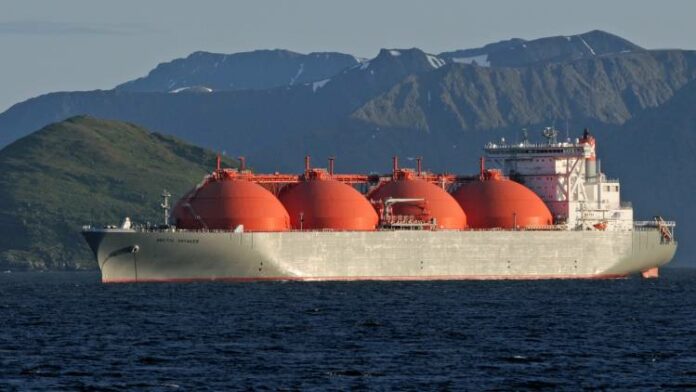
The LNG shipping market is expected to enjoy a positive foreseeable outlook with demand on the rise on the back of a global thirst for cleaner fuels and spot rates touching multi-year highs in the last quarter of 2018.

Supported by healthy LNG demand and supply fundamentals and limited vessel availability in the spot market, we expect the LNG freight market in 2019 to remain strong and that trend to continue into 2020,” said Evangelos Dimopoulos, senior LNG analyst at Braemar ACM Shipbroking.

The market, however, has likely peaked for now though the longer term prospects are still promising, according to Court Smith, trade analyst at VesselsValue.

A warm winter so far in China has depressed some of the immediate demand, and tonne miles have nudged downwards,” Smith noted.

This year the LNG trade is expected to grow by 10% compared to 2017, reaching 320m tonnes by the end of the year, according to Braemar. The rising LNG trade growth in 2018 reflects ongoing infrastructure expansion with a total of 32m tonnes coming online this year mainly in the US, Australia and Russia.

Growth of LNG trade should remain strong, increasing by a further 8% during 2019 reaching 345m tonnes. Approximately 33m tonnes of liquefaction capacity is expected to come online in 2019. With the destination clause removed from the LNG contracts, meaning that cargoes can be re-routed and re-exported, we expect LNG trade to become more spot based and the LNG market more liquid in the coming years,” Dimopoulos said.

For the next three years up until 2021, VesselsValue estimates a total of 91mtpa of new LNG production capacity to start up.

Out of this, close to 50mtpa of the new production is out of the US, which is expected to increase average sailing distances. On the demand side, shipbroker reports show that the current orderbook for LNG vessels above 100,000 cu m, excluding FSRU and FLNG, counts 93 vessels of which 37 are potentially available for contract,” Smith said.

“However, the LNG production scheduled to start up during the three-year period will most likely require more vessels than the current available tonnage and orderbook during periods of high ton-mile demand,” Smith added.

Braemar data shows that the LNG carrier fleet expanded rapidly in 2018, as 547 vessels with a combined 85m cu m capacity are expected to be on water by the end of the year, representing a 9% growth in carrying capacity.

Dimopoulos said: “Contracting has also picked up during 2018 with 57 newbuild orders taking place, and attracting new players coming into the market. Forty nine vessels are expected to enter the market in 2019 with a combined carrying capacity of 7.8m cu m. Fleet growth is expected to be slightly slower than global liquefaction capacity growth next year. In recent years fleet growth has remained dominated by the largest vessels of 165,000-plus cu m.”

Source:seatrade-maritime

Atlantis tidal duo make Scottish splash

0

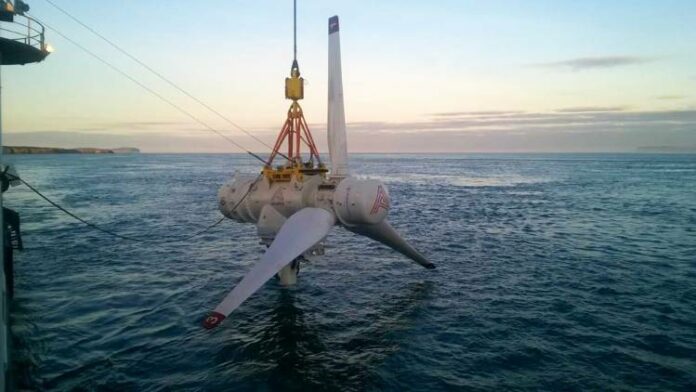
Simec Atlantis Energy has redeployed a pair of tidal turbines following modifications at its 6MW MeyGen array in the Pentland Firth off northern Scotland.

The developer hired the Swire Seabed Stringray vessel to install its AR1500 1.5MW machine and a single Andritz Hydro Mk1 unit, also rated at 1.5MW.

All four turbines are connected to the grid, the company said in a statement.

In a related development, Atlantis has concluded the sale of its remaining 50% interest in Atlantis Operations (Canada) Limited to Irish developer DP Energy for C$400,000.

Following completion, AOCL will be renamed to become Rio Fundo Operations Canada.

Atlantis said the sale would enable DP to “take a more integrated approach to the AOCL berth alongside its pre-existing wholly owned berth at the FORCE facility.”

Source:renews

Ocean Installer is awarded Johan Castberg c and Tow Out scope

0

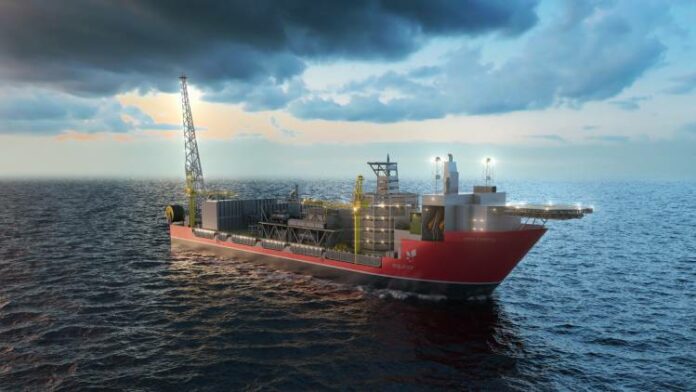
Equinor and Ocean Installer have signed a contract that covers the FPSO mooring installation, tow out and hook-up of the Johan Castberg FPSO in the Barents Sea.

Johan Castberg is one of the largest subsea field developments on the Norwegian continental shelf. The project includes Skrugard, Havis and Drivis, which lies about 240 kilometers from Hammerfest and about 100 kilometers north of Snøhvit. The water depth is between 360 and 405 meters. Ocean Installer’s new scope is extensive and will be carried out in combination with the Marine Operations contract Ocean Installer was awarded in February 2018.

"This is Ocean Installer’s first FPSO tow out and we sincerely appreciate the trust Equinor shows in our mooring capabilities by awarding us yet another large scope. This award is another significant step towards Ocean Installer's goal of providing full field development solutions for our customers, "says Olav Haugland, CEO of Ocean Installer.

Ocean Installer will start engineering work immediately and the project will continue until the floating production storage and offloading (FPSO) unit begins to produce in 2022. The offshore mooring pre-installation work will be carried out in 2020. The FPSO tow out and hook-up scope will be executed in 2022 and will be supported by Global Maritime. Ocean Installer’s existing Marine Operations project covers scope to be carried out in all offshore seasons from 2019-2022.


DSME wins another order for LNG carrier, gaining 90% of its 2018 target

0

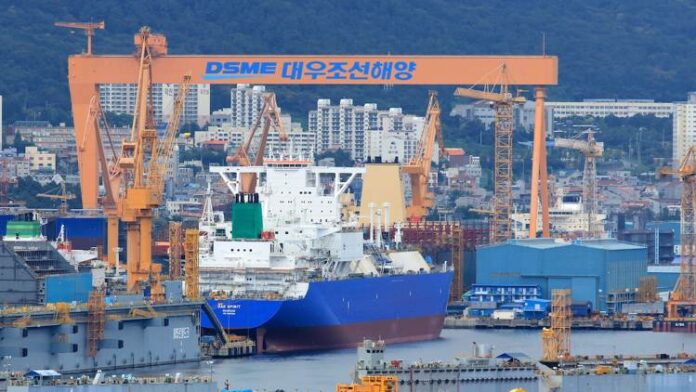
Daewoo Shipbuilding & Marine Engineering (DSME) has won an additional order for a LNG carrier, achieving 90 percent of its 2018 target.

The company announced on Dec. 18 that it has won an order for a LNG carrier from a ship owner in Oceania. The ship will be built at Okpo Shipyard in Geoje to be delivered by the first half of 2021.

The big-size LNG carrier will be equipped with the DSME’s latest technologies, including natural gas propulsion engine, reliquefaction system and fuel saving devices. This will lower the ship’s gas evaporation rate and increase the operational efficiency.

There are 17 LNG carriers that the company won this year. This is the third highest winning order in history, following 37 in 2014 and 19 in 2004.

We have achieved 90% of our goal in just four years since we achieved the goal in 2014. We will do our best to gain the target,” said a DEME official.

DSME has won orders worth $6.58 billion this year for a total of 45 ships, including 17 LNG carriers, 16 super-sized crude oil carriers, seven large container ships and five special vessels. It refers to 90 percent of the 2018 target of $7.3 billion.

Source:hellenicshippingnews

IBIA defines the new regulatory BDN to be launched in 2019

0

IBIA reminds the industry that new regulatory requirements under MARPOL Annex VI, regarding the information to be included in the bunker delivery note (BDN), will enter into force on 1 January 2019. That is why, IBIA provides practical advice and dispel some of the misunderstandings regarding the responsibility of suppliers.

Namely, IBIA provides the text of the new Appendix V, 'Information to be included in the bunker delivery note' that consists of Name and IMO Number of receiving ship, Port, Date of commencement of delivery, Name, address and telephone number of marine fuel oil supplier, Product name(s), Quantity in metric tonnes, Density at 15°C (kg/m3) Sulphur content (% m/m).

The announcement signed by the fuel oil supplier's representative should address that the fuel oil supplied agrees with regulation 18.3 of this Annex and does not surpass

  • the limit value given by regulation 14.1 of this Annex;
  • the limit value given by regulation 14.4 of this Annex;
  • the purchaser’s specified limit value, as completed by the fuel oil supplier’s representative and on the basis of purchaser’s notification that the fuel oil is intended to be used:

This declaration shall be completed by the fuel oil supplier’s representative by marking the applicable box(es) with a cross (x).

Moreover, IBIA highlighted that as there was no tick box against the two sub-clauses, the third tick box only requires that the sulphur value specified by the purchaser is entered. There is no requirement for validation by the supplier on the BDN as to which method of compliance is used by the ship.

The regulation requires bunker suppliers, if asked to provide fuel exceeding the sulphur limit in Regulation 14.1 to a ship, to do so only on the basis of receiving a notification from the buyer that the fuel is intended to be used compliantly.

Finally, policing of ship compliance is up to port state control officers. If they check the BDN and it shows that the ship has purchased fuel with sulphur above 0.50% after 1 Jan 2020, they should immediately ask for the ship’s IAPP supplement detailing if it has an equivalent arrangement approved in accordance with regulation 4.1 which allows the ship to use  fuel with sulphur above 0.50%.

Source:safety4sea