3.2 C
New York
Home Blog Page 1204

Rotterdam port to widen green shipping discount from 2019

0

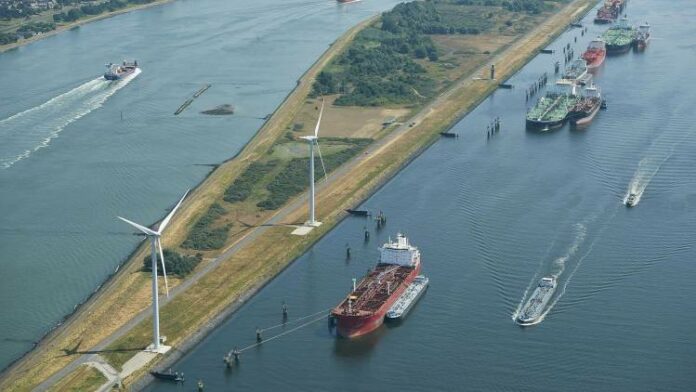
Rotterdam port will widen its Green Award discount starting 2019 to encourage safe and green shipping in the liquid bulk segment, the Port of Rotterdam Authority announced.

From 2019 onwards, certified chemical tankers and sea-going vessels with a cargo capacity of less than 20,000 dwt may also make use of the scheme. At present, the scheme applies to vessels with capacity of 20,000 dwt and above.

The Green Award is a certificate issued to vessels and shipping companies that have made investments to improve their environmental performance. The Port of Rotterdam Authority rewards vessels that have a Green Award certificate with discounts on port dues.

The port authority is also making the port dues process more customer-friendly for shipping lines. The billing process will be more complete, quicker and more transparent. The changes to the billing of seaport, buoy and dolphin dues, together with waste charges, will be implemented first.

In addition, in 2019 we shall launch the modernisation of our inland shipping system to increase the ease of use,” Port of Rotterdam Authority stated.

Meanwhile, Rotterdam port tariffs are set to increase by 1% in 2019 in order to increase the port’s competitive position among the surrounding seaports.

The port authority pointed out that it will adopt specific measures, such as transhipment discounts for containers, to strengthen Rotterdam's position as a container hub and the port tariffs for tankers carrying crude oil will be set at 1.5% below the general increase.

“This means the difference between port tariffs for sea-going vessels carrying mineral oil products will be further reduced compared to those charged by surrounding seaports. The inland shipping dues will rise by 1% per year for the next three years,” it said.

Source:seatrade-maritime
MHI Vestas confirms Borssele 5 gig

0

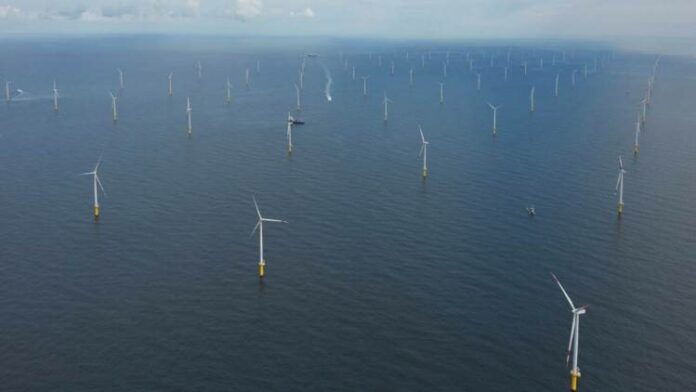
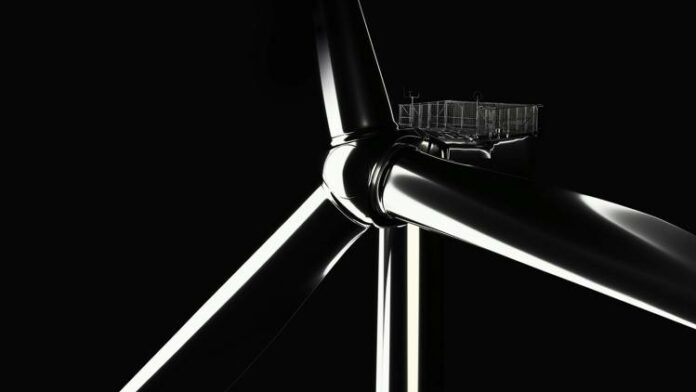
MHI Vestas has confirmed a turbine order with the Two Towers consortium for the 19MW Borssele 5 offshore wind farm off the coast of the Netherlands.

Two V164-9.5MW machines will be supplied to the project, which has been designated as an innovation test site for various offshore wind technologies.

Installation 20km off the coast of Zeeland is slated for 2020, MHI Vestas said.

MHI Vestas chief technology officer Torben Hvid Larsen said: “We are extremely proud that the Netherlands will be home to our next test project."

“Borssele V confirms once again that MHI Vestas is committed to continuous learning and collaborating with industry partners on innovations that will advance our collective knowledge and propel our industry forward.”

The project will connect the monopile foundations and associated transition pieces using new ‘slip joint’ technology, developed in collaboration with Van Oord.

A new eco-design scour protection system will also be tested to determine the effect on the maritime environment.

This will include creating reef systems, including oyster reefs, which will help promote a healthy and diverse marine ecosystem, MHI Vestas said.

The Two Towers consortium comprises Van Oord, Investri Offshore and Green Giraffe.

Source:renews

BP, Sonangol sanction subsea tieback to Angola FPSO

0

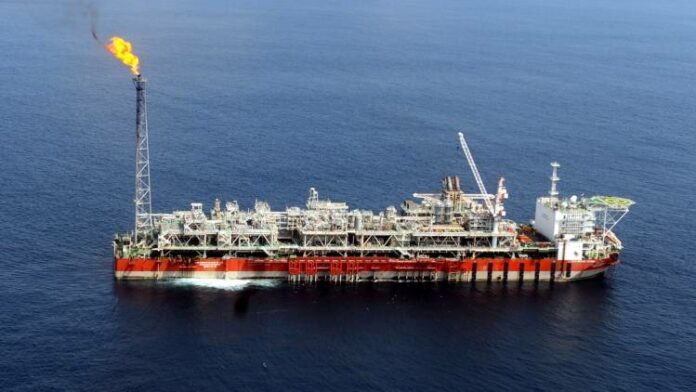
BP and Sonangol have decided to develop the Platina field in block 18 offshore Angola via a subsea tieback to the FPSO Greater Plutonio.

They also agreed to extend the production license for the BP-operated Greater Plutonio project to 2032, with Sonangol taking an 8% interest in the block.

This will be the second phase of development in the block, with Greater Plutonio starting up in 2007. It will also be BP’s first new operated project in Angola since PSVM in block 31 entered production in 2013.

Platina, discovered in 1999 in around 1,300 m (4,265 ft) of water, should deliver first oil in late 2021/early 2022. BP anticipates a final investment decision during 2Q 2019.

The license extension will enable later life production from the Greater Plutonio fields, the company added, in addition to future output expected from Platina.

BP and Sonangol also signed a memorandum of understanding to progress discussions on further exploration in blocks 31 and 18; to enter discussions for blocks 46 and 47; and to explore options in block 18/15.

Source:offshore-mag

Equinor expands Polish offshore horizons

0

Equinor has exercised an option to acquire a 50 % interest in the Baltyk 1 offshore wind farm in Poland from Polenergia.

The Norwegian energy giant said the two companies will form a 50:50 joint venture to develop the up to 1560MW project.

Development of Baltyk 1 is in the early stages and the partners will “further mature” the project towards a future auction and final investment decision.

Equinor will manage preparations for construction, as well as the building of the project and operations.

The Baltyk 1 site is located in the Baltic Sea about 81km from the port of Leba in water depths of 25-35 metres.

Equinor senior vice president for strategy and business development in New energy solutions Jens Okland said: “We are very pleased to further deepen our presence in Poland and to work with Polenergia, which is an experienced energy company with an in-depth knowledge of the Polish energy market."

“This acquisition strengthens our presence in the Baltic Sea area giving opportunities for scale and synergies in a longer perspective.”

Equinor added that the latest deal is a follow-up to an agreement between the two companies which came into force in May 2018, when the Norwegians acquired 50% stakes in Baltyk 2 and Baltyk 3.

Source:renews

Watch: Launch of first LNG-fueled ferry to operate in English Channel

0

Brittany Ferries’ new LNG-fueled cruise ferry 'Honfleur' was launched to the water for the first time at a traditional ceremony at the FSG shipyard in Flensburg, Germany. The vessels is expected to act as an environmental pioneer on the English Channel, as it will be the first ship on the Channel to be powered by LNG, when it enters service in summer 2019.

The launch is the third milestone in the construction of Honfleur, following cutting of the first steel in March, and laying of the keel in August.

Honfleur introduces new terms of sustainability on its route. The ship’s hull has been hydro-dynamically optimised; this combined with gas-electric propulsion machinery will reduce energy consumption while improving onboard comfort and minimising vibration and noise levels.

Over the coming weeks and months, two ‘mega blocks’ currently en route by barge from shipyards in Poland will be hoisted into position by giant cranes, and the ferry’s interiors will be installed. Then, the ship will complete a series of sea trials allowing every system on board to be rigorously tested, before the first passengers board the vessel on the Portsmouth to Caen/Ouistreham route in summer 2019. The route is highly popular carrying around 1 million passengers, 300,000 cars and 100,000 freight units each year.

"It’s a statement of our commitment to fleet renewal and long-term, sustainable development. And it will be the first of three new ships to be delivered post-Brexit, all part of a €450m investment programme to make Brittany Ferries fit for the future,"…said Jean-Marc Roué, Brittany Ferries’ president on the occasion of the launch.

Source:safety4sea

Shell awards Shearwater gas pipeline EPCI contract to Subsea 7

0

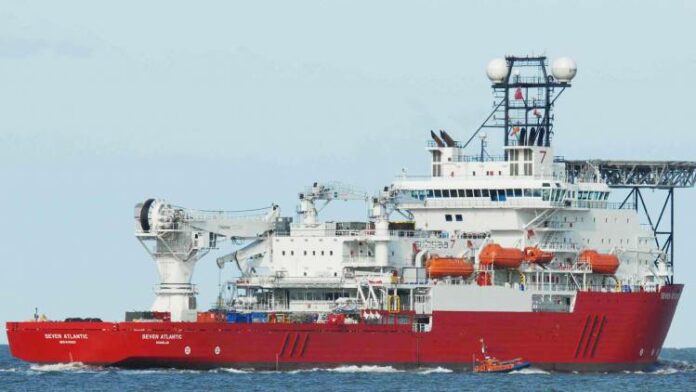
Subsea 7 has been awarded a contract by Shell for the Shearwater Fulmar Gas Line Re-Plumb Project in the UK North Sea.

The engineering, procurement, construction and installation contract will take place approximately 140 miles east of Aberdeen.

Under the work scope of the contract, Subsea 7 will install a 37-km, 25-inch export line, a 14-inch rigid riser, control jumper, subsea structures and associated subsea tie-ins.

No value was disclosed for the project but Subsea 7 described it as “sizeable”, defining this as being between US$50M and US$150M.

Subsea 7’s UK and Canada vice president Jonathan Tame said: “For many years Subsea 7 has been chosen by Shell to provide engineering and project execution expertise in the North Sea. This latest award further demonstrates our ability to design the right engineering solutions that ensure a safe, effective and cost-efficient project delivery.”

Shell announced on 10 December that together with partners Esso Exploration and Production and Arco it had made a final investment decision on a Shearwater gas infrastructure hub in the central North Sea. The modification to the Shearwater platform will allow wet gas to flow into the Shell Esso Gas and Associated Liquids pipeline.

Shell’s vice president for upstream in the UK Steve Phimister said: “This is part of our strategy to grow our gas production from around the Shearwater platform and it underscores Shell’s commitment to maximising the economic recovery of oil and gas from the North Sea.

Discovered in 1988, the field in which Shearwater operates was first developed in 2000 and is jointly owned by operator Shell (28%), ExxonMobil (44.5%) and BP (27.5%).

Source:osjonline

OSVs find new opportunity in reconfigured energy industry

0

A new generation of subsea equipment is tackling a structural cost issue and giving rise to new opportunities for the OSV fleet, writes Maritime Strategies International's Gregory Brown

Subsea is one of the most complex areas in the exploration and production sector. In waters up to 3,000 metres deep, production infrastructure must withstand reservoir pressures in excess of 10,000psi and drilling temperatures well north of 150 degrees Celsius.

As oil companies have sought to push developments further offshore and into deeper waters, infrastructure has grown in size and complexity. Larger physical footprints have led to higher prices, contributing to a structural cost issue that increasingly looks misaligned to a newly capital-constrained and returns-focussed industry.

Amidst a prolonged and painful downturn, the industry continues to face unrelenting price pressure but has attempted to reclaim profitability by rethinking how offshore reserves are developed. The change has brought about a new generation of subsea hardware which in-turn is set to create a new opportunity for the OSV fleet.

Using smaller, more fit-for-purpose installation assets marks a line in the sand for the offshore industry. Over the course of the last three decades, offshore field developments have been designed with extra redundancy, higher cost and greater weight. The next generation of technology has facilitated the same end result in far smaller packages with no loss of functionality. The mantra of 'bigger is better' appears to be confined to the legacy of last cycle’s excesses, and we envisage a market where more is done with less.

For the traditional subsea supply chain, this shift represents a material threat. Manufacturing patterns and shifts will have to change as the market moves towards engineered-to-ordered solutions. With modules built from a catalogue rather than the bespoke solutions of today, total engineering requirement will fall and using more standardised components, a far greater level of automation could be introduced to the manufacturing process.

With lead times shortened, time to market will be dramatically reduced and so vessel schedule optimisation will be increasingly important. Industry consensus and our own forecasts suggest that outside of greenfield work in the likes of Guyana and large-scale LNG projects off East Africa, the subsea market will be characterised by a greater number of small-scale tieback projects for the foreseeable future.

With that being the case, we see a significant opportunity for the OSV fleet. With subsea infrastructure now routinely designed to weigh less than 100 tonnes, assets such as multipurpose supply vessels and anchor-handling tug supply vessels could play a larger role in the installation process. For owners, this could open new revenue generating opportunities while oil companies stand to benefit from structurally lower costs of chartering OSVs versus heavy construction assets. We do still see a market for the enabling assets, but their deployment looks increasingly marginalised.

In a market where exploration drilling looks set for only a gradual recovery, the OSV fleet will have to capture new demand in order to return to higher levels of utilisation. The subsea installation market represents one such new revenue stream that has hitherto been serviced by only a fraction of the fleet.

Source:osjonline

IMO’s simulation exercises to improve port security

0

IMO and the Organization of American States Inter American Committee Against Terrorism (OAS-CICTE) jointly delivered pilot simulation exercises during a workshop on port and maritime security, which was held in Panama City, on December 13 and 14.

Simulation exercises have been established as training and quality assurance tools, which assist countries and port authorities to prepare for a wide range of potential threats and security situations.

A workshop regarding interactive port facilities and port security officers took place in Panama City, Panama, on 13-14 December, and presented a series of possible scenarios which were deliberately varied, from the easiest problems to solve, to others that may require greater participation and analysis to reach a solution.

Needs, possibilities and opportunities were discussed by the participants in order to improve collaboration between them and other responsible actors for port and maritime security in Panama, both at the port level as well as at the national level.

The workshop resulted improved capacity for better prevention and response. Analysis and evaluation of results will be carried out to inform future strategies, with recommendations summarised in a final report, shared with the Panama Maritime Authority and all ports in the country.

This activity will assist member states in the development of the capacities of their Port Facility Security Officers (PFSOs) for the application and enforcement of local legislation in relation to the different threats or situations related to maritime and port security that the PFSOs face daily in ports where they develop their activities. This aims to promote the course in other Member States of the Organization of American States (OAS), through a collaboration between CICTE and Inter-American Committee on Ports (CIP) of the OAS and IMO.

Source:safety4sea

South Korean Government to trial blockchain for container shipping

0

Two South Korean government ministries are exploring blockchain’s potential to bring new efficiencies to marine logistics to handle container shipping and make it efficient.

As announced on December 18, the country’s Ministry of Science, ICT and Future Planning and the Ministry of Oceans and Fisheries have began a blockchain pilot project to acknowledge if the technology can help the nation handle its container shipping and make it more efficient.

According to Coindesk, the trial will be launched this month and will take place at the major port of Busan the year following.

The project aspires to reach transparency between shipping parties and enable real-time sharing of information and enhance import and export operations.

The blockchain project consists of six pilots as announced by the South Korean government. The rest of the five fields of the project cover livestock supply chain management, customs clearance, online voting, real-estate transactions and cross-border e-document distribution.

In 2019, the government may double the number of blockchain pilots in the public sector.

Finally,  if the trial is successful, both ministries wish to expand the blockchain technology to other ports in the country.

Source:safety4sea

CLIA Sets 2030 Carbon Emissions Target

0

The Cruise Lines International Association (CLIA) has announced its commitment to reduce the rate of carbon emissions across the industry fleet by 40 percent by 2030.

Progress toward the 40 percent target will be measured against a 2008 fleet baseline, and emissions rates will be calculated based on the fleet’s total carbon emissions, total ship berths and total distance traveled. CLIA plans to report annually on the industry’s progress toward the commitment.

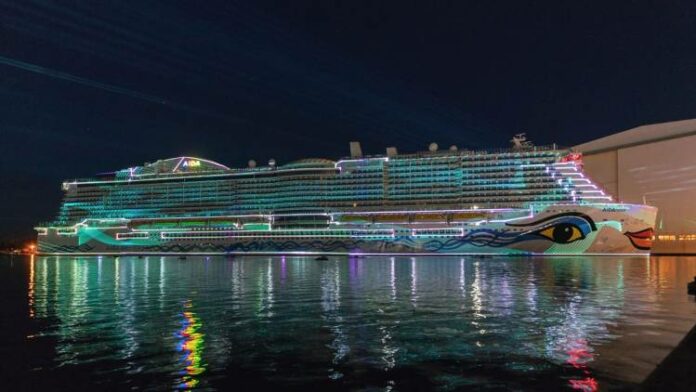
The reduction will be fueled by technologies for energy efficiency in ship design and propulsion. The industry’s first LNG-powered ship AIDAnova launched last week, and some 25 such ships could be operating by 2025. While LNG ships principally address pollution, there is a corresponding benefit for carbon emissions reduction.  

The global cruise industry has invested billions of dollars in new technologies and cleaner fuels to reduce ships’ emissions and in the design and development of lower emissions and higher energy efficiency cruise ships. The December 2018 Cruise Industry Sustainability Guide states that cruise lines will also implement Ship Energy Management Plans for route planning and maintenance to reduce fuel consumption and emissions.

As part of a broad focus on sustainability, CLIA members have agreed to develop training programs which raise the level of environmental awareness of both crew and passengers. 

“Today’s announcement is a tribute to cross-industry collaboration and a shared commitment to environmental sustainability,” said Arnold Donald, Global CLIA Chairman and President & CEO of Carnival Corporation & PLC. “We aspire to the IMO’s vision of a carbon-free shipping industry by the end of the century. Our commitment to a 40 percent reduction in the rate of emissions by 2030 is a strong first step toward realizing that vision.

However, the announcement has been criticized. “While this sounds like a huge step in the right direction, it will likely prove virtually meaningless, as the reductions are intensity reductions, not absolute reductions,” said international environmental organization Stand.earth. For example, between 2013 and 2015, the cruise sector reported an intensity reduction of six percent, while the absolute emissions from the sector — the amount of greenhouse gases actually emitted — increased by six percent. According to CLIA, carbon emissions will be calculated based on total carbon emissions, the number of people the ship can host — called available lower berth — and distance traveled. That means the more the sector expands its fleets, and the farther these ships travel, the more climate-damaging pollution it can release while still reporting decreasing emissions, says Stand.earth.

Source:maritime-executive