4 C
New York
Home Blog Page 1202

NHV awarded offshore contract by Ørsted

0

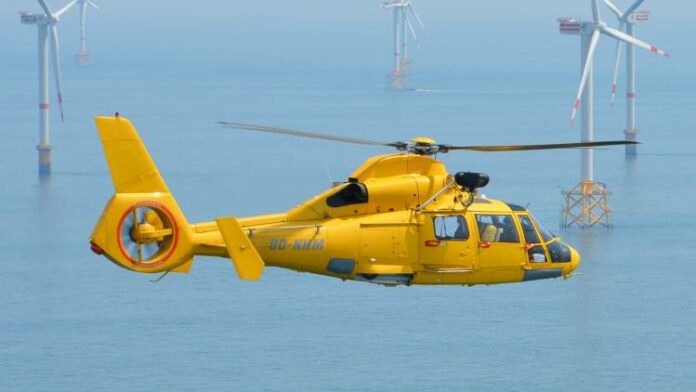
The NHV Group on December 18 was awarded a new contract from Ørsted to provide helicopter services in support of the Borssele 1+2 Offshore Wind farm. The operations are expected to start in May 2020. Flights will depart from NHV’s base in Zeeland to the Borssele Wind Farm, located 23 kilometres from Westkapelle in front of the Dutch coast, the Group said in a press release.

NHV will support this project utilizing the H145 aircraft, the latest Airbus Helicopter 4-tonne-class twin-engine rotorcraft. With its high hoisting and hover performance and small footprint, the H145 can operate in performance class 1 conditions, while its compact airframe can manoeuvre in the confined environments of offshore wind farms.

When built in 2020, the approximately 100 wind offshore wind turbines will supply renewable energy equivalent to the annual power consumption of one million Dutch households. Borssele 1 and 2 together comprise 128.3 km2 with a capacity of 752 MW.

NHV’s base manager Bram De Backer commented: “We look forward to working with Ørsted and we are delighted to be part of this prestigious project. The strong relationships between Orsted and NHV have now resulted into a tailor made service that will guarantee the safe and timely realization of the Borssele project.”

This contract also fits in NHV’s long-term strategy to broaden its range of services to the energy market and grow the renewables service alongside the oil and gas service. Earlier this year, the NHV Group also started supporting the construction of Offshore Wind farms out of Aberdeen and Ostend.

Source:portnews

Overland Express

0

Trucking dominates the business of moving boxes to and from container ports and has a big advantage: A truck can go virtually anywhere there’s a road. However, its flexibility comes with a price. Truck drayage is the least fuel-efficient method to move a container. Over long distances, it’s usually the most expensive. When combined with other modes of transportation in an intermodal network, on the other hand, it can be very cost-effective.

In the most common form of intermodal transport, the shipper uses a stretch of rail travel between the seaborne and truck-borne segments. At the port, the container is loaded onto a rail car and travels most of the distance to the customer's warehouse. Upon arrival at the rail terminal nearest the destination, it’s lifted onto a trailer chassis for the “last mile” dray. Intermodal can be cheaper than over-the-road trucking for distances over about 500 miles, giving it the advantage on long-haul routes.

In the U.S., intermodal has taken on special urgency due to changes in the trucking industry itself. American trucking companies today face a trifecta of structural challenges: a driver shortage that’s led to staffing problems and rising wages; strictly enforced hours-of-service limits for drivers; and the expansion of e-commerce, which has created soaring demand. Taken together, these factors have led to rising rates for truck transport, giving rail a wider advantage.

Serving Inland Markets

Since it offers cost advantages, an onsite intermodal rail facility makes a seaport more competitive for shipments to inland destinations. Rail can be cost-effective enough to open up markets on the other side of the continent, as the large U.S. West Coast ports well know. Despite the new, all-water route via the Expanded Panama Canal, the West Coast still handles the largest share of America's imported containers, thanks in part to its intermodal connections to the heartland.

The Port of Prince Rupert, British Columbia provides an extreme example of this long-distance model. Prince Rupert is located on the northern stretch of the Inside Passage, and there are few consumers in its own backyard. Virtually all of its imported containers travel by rail to Canada's interior and the U.S. Midwest, thousands of miles away.

The rapidly growing connector is driven by a combination of geography and efficiency. On a Great Circle sailing, Prince Rupert is closer than its competitors to Northeast Asia and benefits from a fast, affordable intermodal service across the Rockies. Shipping through Prince Rupert can shave days (and dollars) off the route from Shanghai to Chicago.

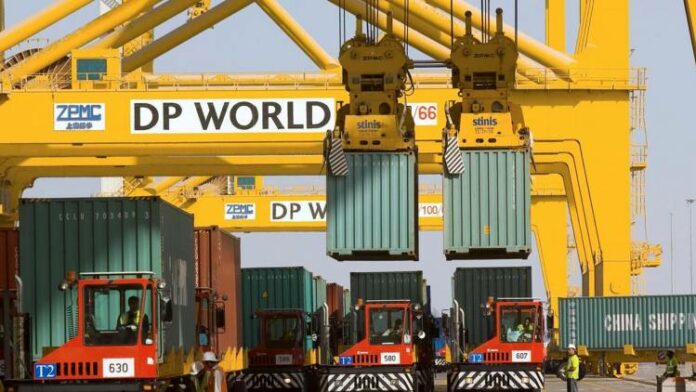
It’s a successful strategy. With 26 percent growth in container volumes in 2017, Prince Rupert is the fastest-growing port for trans-Pacific trade in North America and keeps expanding to handle the additional volume. At full buildout, its DP World-operated container terminal will have a capacity of 2.7 million TEUs with plenty of room to expand. On the land side, rail operator CN (Canadian National) is investing billions in track and service improvements to keep traffic flowing through western Canada.

Regional Networks

Florida's biggest container ports benefit from a rail system tailored to their needs – the Florida East Coast Railway (FEC), which runs between Miami and Jacksonville. All its trains are dual-powered by diesel or clean-burning LNG, and 80 percent of its business is dedicated to intermodal freight.

Thanks to recent public and private investments, FEC now operates an on-dock rail service at PortMiami and an intermodal terminal at Port Everglades. With onsite access to rail and a connection in Jacksonville to CSX and Norfolk Southern, these ports can reach two-thirds of the U.S. population within four days. “The state’s investment in on-port and intermodal facilities has shown that Florida can provide a cost-efficient way to bring in goods and transport them to the southeastern United States,” says Jessie Werner, Vice President of Public Affairs for the Florida Ports Council.

Ever since Port Everglades opened its intermodal rail terminal in 2014, its container volumes have grown. The business is driven by trade with Latin America and the Caribbean, and imported cargoes center on those nations' products, notably apparel and perishable goods. It’s among the largest ports in the nation for refrigerated cargo, and the rail terminal gives its reefer customers an intermodal option for northbound shipments.

FEC's new owner, Grupo Mexico, plans to capitalize on the reefer market. "We've been advised by Grupo Mexico that one of their key desires is to increase participation in the refrigerated sector,” states Jim Pyburn, the port's Director of Business Development. “They're planning to invest millions of dollars in refrigerated rail cars and other specialized equipment for FEC. Port Everglades is already the fifth-largest reefer port in the U.S., and Grupo Mexico's investment is likely to move our services further up the rankings."

Port Tampa Bay, on Florida's Gulf Coast, has a direct connection to the Class I railroad CSX. Working together with energy firm Kinder Morgan and CSX, the port built a large rail terminal to handle long “unit trains” for shipping ethanol. Its construction also gave Tampa Bay the first unit-train-capable, on-dock intermodal terminal in Florida.

Tampa Bay's container cargoes have historically been a small part of its business, but the segment has grown since the port purchased new gantry cranes in 2016. Now it’s ready to attract even more container services, ranging from the regional feeder vessels that serve Mexico's Gulf Coast all the way up to the megaships arriving via the Expanded Panama Canal. Tampa's fast, onsite intermodal connection with the rest of the Southeast is an additional selling point for potential customers.

Transcontinental Connections

Halfway around the world, in China, intermodal rail carries only a small percentage of domestic containerized freight. China's rail network is extensive and well-developed. But intermodal facilities are limited, and few of China's giant container ports are equipped with on-dock or on-terminal rail facilities. For example, the nearest rail terminal to Shanghai's new megaport, Yangshan, is on the far side of a 20-mile-long sea bridge.

Despite these challenges, intermodal volumes in China are poised to grow. Beijing is encouraging Chinese manufacturers and shippers to move away from truck transport to reduce pollution from diesel exhaust, especially during the smog-prone winter months. Its Ministry of Ecology and Environment recently announced a push to increase rail freight capacity by 30 percent over the next two years to meet this mandate.

The Port of Nansha, located across the Pearl River Delta from Shenzhen and Hong Kong, is among the first Chinese ports to fully integrate intermodal into its development. When completed in 2020, the Guangzhou Nansha On-Dock Railway will be the first of its kind in South China. Its 50-mile rail link will connect the port with Guangzhou manufacturers, the national railway network and the New Eurasian Land Bridge, an increasingly popular rail route from China to Europe. For a small number of westbound, high-value cargoes, the trans-Eurasian rail service is a good “middle option” between ocean shipping and air freight.

Once Nansha finishes its intermodal facility, the interconnections could open up novel possibilities. According to John Painter, President & CEO of Guangzhou Port America, one major footwear importer is thinking about shipping Vietnamese-made goods by sea to Nansha, then loading the containers onto rail cars and moving them overland to Europe.

The extra land-side connections will further support Nansha's ocean freight business, which is growing eight to ten percent annually. Nansha is rapidly moving up the ranks of the world's busiest container ports, buoyed by regional changes. 

"When Hong Kong grew more congested in the 1990s, many businesses moved out to the Shenzhen area,” says Painter. “Now that Shenzhen has become crowded too, many of those businesses are migrating out to the western side of the Pearl River Delta where costs are lower. Strategically, we are well-positioned to absorb these companies' cargoes, and with our on-dock rail capabilities we will help connect the hinterlands as manufacturing continues to push inland.

Nansha's value proposition is simple. Producers on the west side of the delta can keep trucking their containers to the Port of Shenzhen, two hours away, or they can use the Port of Nansha, which is closer and less costly to reach. According to Painter, many U.S. retailers save 30-50 percent on their Guangzhou-origin drays when they switch to Nansha, helping the port generate rapid growth in cargo to North America.

The shift is reflected in the numbers. Today, Nansha has nearly 100 container services and 15 million TEUs of annual volume with busy routes to Europe, Asia and Africa. The port has four services to the U.S. West Coast, and Painter says the market is ready for an East Coast call by early next year.

A Green Solution

The container freight market is highly competitive, both for seaports and shipping companies, and small cost differences add up quickly when multiplied over thousands – or millions – of container moves. For ports with the right infrastructure, intermodal rail can change the equation for shippers and attract new business even if the final destination is far inland. 

And since rail emits much less CO2 per mile than trucking, intermodal is a straightforward way to reduce the carbon intensity of door-to-door shipping. As the industry looks for ways to meet ambitious emissions reduction targets, every extra contribution helps. – MarEx 

Source:maritime-executive

Carrier USS Stennis Uses 3D Printing to Repair Satcom Terminal

0

The crew of the carrier USS John C. Stennis recently deployed a 3D printer to make an underway repair to their commercial satcom antenna. The rotary joint on the ship's Commercial Broadband System Program (CBSP) failed, which could have brought down the carrier's internet connection – a key consideration for a warship on an overseas military deployment. 

We spent two to three weeks troubleshooting,” said Lt. j.g. Tyler Grimm, the division officer for Stennis' exterior comms maintenance department. “Finally we honed in on the rotary joint. My initial thinking was to get a metal plate manufactured and bolt it into place. We got together with repair division, and [Stennis’ chief engineer] came up with a more sophisticated way using 3D printing to manufacture a solution.

Grimm made a design for a replacement part, which the team used as a model for a 3D printed piece. The entire process was done in less than in a day, from idea to implementation, allowing the ship to keep operating at full capacity without waiting weeks or months for a spare part. 

“Additive manufacturing adds a new, extremely capable tool that gives us the ability to return systems to operations, even if only temporarily," said Capt. Jason Bridges, the Navy's lead for 3D printing technologies.  "This example of fixing the CBSP antenna aboard Stennis demonstrates this potential of additive manufacturing to enhance a ship’s combat endurance, an ability that will rapidly expand as the Navy fields additive manufacturing capability in the fleet over the next couple of years.” 

High op-tempo 

USS Stennis is in no position to stop for repairs: she is currently deployed in the Arabian Sea and Persian Gulf, operating primarily in support of the air campaign over Afghanistan. U.S. airstrike missions have intensified as Taliban militants exert ever-increasing pressure on Afghan security forces: the UN asserts that the count of civilian casualties from airstrikes over the first nine months of 2018 was higher than the amount in any full year since it began keeping records in 2009. 

Over the course of 2018, the U.S.-supported government in Kabul has been losing territory to the Taliban insurgency. About 25,000 Afghan government security personnel have died in the conflict since 2014, when U.S. combat operations formally ended; about 2,400 U.S. servicemembers have lost their lives since the war began in 2001, and 20,300 more have been wounded. At 17 years, the war is the longest-running in American history, and independent analysts assess that the Taliban now contests or controls about 60 percent of the country. This week, the Trump administration announced plans to withdraw about half of the 14,000 American servicemembers from Afghanistan, along with all 2,000 military personnel from Syria.

Source:maritime-executive

UAE introducing classification restriction for vessels from 25 flag states

0

The UAE is introducing a new classification requirement for vessels from 25 flag states calling or anchoring in its waters from 1 January 2019.

A circular from the Federal Transport Authority (FTA) of the UAE said that vessels from 25 flag states calling at UAE ports or anchoring in its waters up to its EEZ would be required to either be classed with an IACS classification society or the UAE classification society Tasneef.

The new regulation impacts owners mainly flagged with smaller, open registries and comes into force from 1 January.

The London P&I Club said in a circular, “It is reported that the aim of the new regulation is to try to ensure that all tonnage trading in UAE waters is compliant with accepted safety and quality standards.”

The 25 flag states affected are: Albania, Belize, Cook Islands, North Korea, Sao Tome and Principe, Tonga, Congo, Cambodia, Georgia, Sierra Leone, Equatorial Guinea, Vanuatu, Maldives, Mauritius, Republic of Moldova, Palau, Honduras, Costa Rica, Ghana, Saint Vincent and Grenadines, Saint Kitts and Nevis, Bolivia, Togo, Tanzania and Comoros.

Source:seatrade-maritime

Ships: Deciphering the Autonomous Vessel Debate

0

Confusion reigns in the ongoing debate on autonomous and remotely operated vessels.  Before constructive dialogs can take place, the parameters of the discussion need to be agreed upon. Bottom line: in order to understand each other, we need to be speaking the same language.

There are two recent publications that I strongly advise all maritime professionals review, as they offer valuable guidance and insight into this rapidly developing segment of the Marine Transportation Industry.  

The first is a study prepared by HSBA Hamburg School of Business Administration for the International Chamber of Shipping. The paper, which was published in October of 2018, focuses on the potential social and practical consequences of autonomous shipping and digitalization on seafarers.

The second is a DNV GL Class guideline — DNVGL-CG-0264. Edition September 2018; Autonomous and remotely operated ships, which provides guidance for:

1) Safe implementation of novel technologies in the application of autonomous and/or remotely controlled vessel functions;

2) Recommended work process to obtain approval of novel concepts challenging existing statutory regulations and/or classification rules.

The overall intention of the DNV paper is to provide a framework to ensure that the application of such novel concepts and technologies result in a safety level equivalent to– or better than — conventional vessel operations.

From Marine Insurance and Loss Control standpoints both of these publications provide important guidance and raise valuable points of discussion. They provide different viewpoints of how to evaluate and address these new technologies into existing operations, and more importantly how to interface with the current tasks, duties and responsibilities of current shipboard crews.

The DNV GL Guideline addresses the Build and Integrate Phase, while the ICS Study addresses the current status of Autonomous Shipping by acknowledging that all means of transportation are undergoing accelerated development toward automation and automated movements.  One key issue the ICS Study addressed is the need to understand that “autonomy” is not necessarily “unmanned”; however we will see more autonomous operations aboard a ship. A key to understanding this is to review the Lloyds Register “ShipRight” Procedure guidance, particularly the six Autonomy Levels (AL 1 to AL 6). In brief, these range from AL 1 with “On-board Decision Support with all actions taken by human operator, but decision support toll can present options.” To AL 6 with “Fully autonomous with unsupervised operation.” This is just a starting point, and there are other definitions in use.

In addition, the IMO is developing its own definitions and methodology to review degrees of autonomy.   Meanwhile, the DNV GL guideline provides a list of “Potential Minimum Risk Conditions” as well as a “List of Potential Autoremote Functions”.  Both of these lists are important because they serve to highlight the vast array of scenarios and functions that are at play, especially for emergency operations.

While these two documents may appear to be quite dissimilar, combined they do a very good job of capturing both the near-term and long-term challenges that Marine Insurers, and our assureds, are facing. How do we implement this new technology in a way that maximizes the benefits while minimizing the risks? At the same time, how do we both effectively utilize our existing shipboard manpower and continue to attract trained and motivated crews in the future?

The ICS Study addresses a crucial point on human capital that was raised recently in the 2018 AGCS Safety and Shipping Review:
The most frequent source of errors and cause for accidents are reported to be human failures. However, it would be trivial to assume that the human element is about failure. Countless safe voyages and avoided accidents are due to the positive contribution of humans. Humans on board enable ships to sail, they are not a problem. It must also be considered that autonomy will never completely remove “human error” as it will purely be shifting it to other areas such as the shore based controllers and the hard¬ware and software designers. Some could argue this may result in a potential increasing likelihood of human error as these people would have considerably less maritime experience making them potentially more risk prone.  

Human capital is better invested to enhance productivity by interpreting data, avoiding repetitive tasks and reducing the impacts of human error on productivity.

When shipboard systems are evaluated for potential implantation of this new technology they should be subject to a standardized evaluation, qualification and approval process. This will take both time and money.  In the meantime, global commerce shows no sign of slowing down and goods will continue to move in the traditional manner. However, these traditional manners of shipping will also be undergoing change, albeit at a slower pace.

One key area where we see tremendous immediate potential is the use of a networked environment between vessels. In this environment, we can utilize the data from a Voyage Data Recorder (VDR) of a vessel that has successfully completed a Northern Sea Route transit to other vessels that are planning the same voyage. It is now commonplace for investigators to utilize VDRs in accident investigations. Isn’t it time we start utilizing data from voyages that are successful?

Moving forward, all sectors of marine transportation will face economic pressures from a myriad of factors. Be it environmental change or business pressures from the rise of non-classical shipowners, all aspects of marine operations will need to adjust to new data centric business models; this will include both shipboard and shore side operations.  Given all these drivers of change, it is inevitable that the job description of the future seafarer will change, but it is unlikely that the job will cease to exist.  

At Allianz Global Corporate & Specialty, our team is working with our assureds to both understand the potential long term changes and impacts that Autonomous Shipping could have on their operations as well as staying focused on the present and continually evaluating how emerging  technologies can be integrated into current shipboard operations with minimal disruptions.  A key to understanding the current landscape is to understand that this will not be an all or nothing approach. We will see hybrid approaches to marine operations that will both address vessel safety and fit within global regulations. From an insurance standpoint, our goal is to help ensure safe and efficient vessel operations both now and in the future.

Source:marinelink

Russian Novatek, Italian SACE in LNG Pact

0

Russian gas giant Novatek and SACE SIMEST, the Italian export credit company part of CDP Group, have finalized an agreement on strategic cooperation in the liquefied natural gas (LNG) projects, including Arctic LNG 2.

"PAO Novatek and SACE signed a Memorandum on Strategic Cooperation in relation to the Company's current and future LNG projects. The parties agreed to develop long-term cooperation on the Arctic LNG 2 project and potential new LNG projects involving Italian suppliers and engineering companies," said a statement from Novatek.

“We successfully cooperated with SACE in the financing of our Yamal LNG project” noted Novatek’s Chairman of the Management Board Leonid Mikhelson.

Today’s signing of our Memorandum with SACE creates new opportunities for mutually beneficial cooperation with Italian businesses on our future LNG projects. We welcome the interest of international export credit agencies to participate in the financing of our Arctic LNG projects,” Leonid added.

Alessandro Decio, CEO of SACE, stated: “We are very keen to strengthen our partnership with Novatek, one of the key players in natural gas sector worldwide. The agreement will disclose huge opportunities for Italian companies operating in Oil & Gas, a key sector for our exports where Italian technology and know- how is well recognized globally. I hope this will be a step towards a win-win and long-term relationship with Novatek, especially looking forward to the Arctic LNG 2 project. It will also strengthen our commitment to the Russian market, traditionally strategic both for us and Italian companies”.

SACE SIMEST and Novatek have already cooperated successfully in previous years: in 2016, SACE guaranteed a EUR 400 million loan to finance the construction of the Yamal LNG liquefaction plant in Russia, owned by Novatek, China's CNODC group, Total, and the Silk Road Fund.

The Arctic LNG 2 project envisages constructing three LNG trains at 6.6 million tons per annum each, using gravity-based structure (GBS) platforms. The Project is based on the hydrocarbon resources of the Utrenneye field.

As of 1 December 2018, the Utrenneye field’s reserves under the Russian reserves classification totaled 1,978 billion cubic meters of natural gas and 105 million tons of liquids. OOO Arctic LNG 2 owns an LNG export license.

Source:marinelink

ExxonMobil Drops USD 25 bln Canadian LNG Project

0

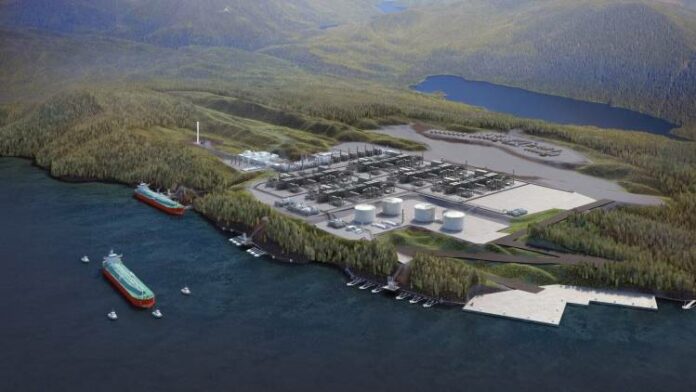
U.S. oil major Exxon Mobil Corp. has withdrawn its environmental assessment application for a $25-billion LNG export facility on the B.C. coast it proposed in 2015. No reasons given for withdrawing from environmental review process.

“After careful review, ExxonMobil Canada and Imperial Oil Resources have withdrawn the WCC LNG project from the B.C. Environmental Assessment process,” a notice on WCC LNG website says. It also says that its websie will only be available until the end of 2018.

WCC LNG is a proposed project to develop and operate a liquefied natural gas (LNG) export facility at Tuck Inlet in Prince Rupert, British Columbia.

According to a Reuters report, the decision to pare its LNG project portfolio follows the go-ahead of a giant Royal Dutch Shell-led project in British Columbia, and Exxon’s focus on LNG projects in Asia, the Middle East and the United States.

The apparent shelving of the project is a blow to the West Coast liquefied natural gas export industry which at one time featured about 20 proposals, but has resulted in only one firm commitment to build, said Canadaian Press.

The project had been proposed by Exxon and its Canadian partner, Imperial Oil Ltd., for Tuck Inlet in the Prince Rupert area on B.C.’s north coast.

According to the project website, it was planned to have an initial capacity of up to 15 million metric tonnes of LNG per year for shipment to international markets, with the potential to expand to approximately 30 million tonnes per year.

Global LNG demand is expected to double to 550 million tonnes per annum (mtpa) by 2030, as countries like China move away from coal to cleaner fuels. The top import market for LNG is northeast Asia.

Source:marinelink

Lamprell bags $200m windfarm fabrication project from GeoSea

0

UAE-shipyard Lamprell has bagged a $200m windfarm jacket foundation fabrication contract from GeoSea.

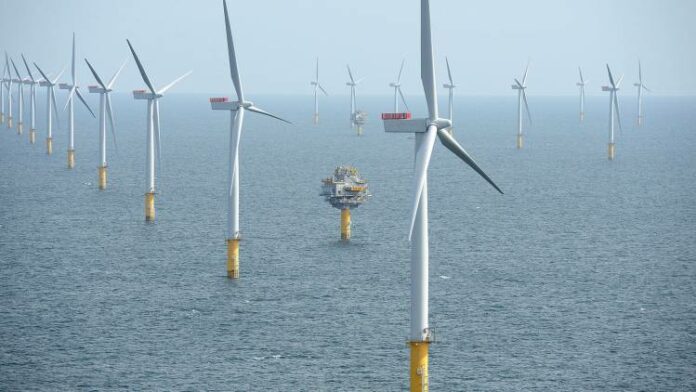
Lamprell has been contracted by GeoSea Procurement and Shipping to fabricate 45 out 100 jacket foundations for the Moray East offshore wind farm in the North Sea. The yard will also fabricate three jackets for the offshore substations also being installed for use on the project.

The contract worth in excess of $200m will be carried out at Lamprell's Hamriyah and Sharjah yards in the UAE and work is expected to commence in Q2 2019.

"We are proud to have been selected to be part of the large scale Moray East wind farm project. The contract award manifests our commitment to the fast growing renewables industry which, despite the recent challenges, remains a core strategic focus for Lamprell,” said Christopher MacDonald ceo of Lamprell.

“Over the past 18 months we have upskilled our workforce and enhanced our systems and processes in order to enable us to deliver projects in the renewables segment safely, cost effectively and to a high standard.

The Moray East offshore windfarm project is a 295 km sq, 950MW project which is located off the north eastern coast of Scotland and which will be developed and operated by Moray Offshore Windfarm (East) with GeoSea as a contractor.

Source:seatrade-maritime

Year in Review: Timeline of smart shipping developments in 2018

0

Year 2018 is running out and the whole shipping industry is already shaping the agenda of 2019. It’s that time of the year again.

January 2018

Rolls-Royce opens autonomous ship research centre in Finland

The new Research & Development Centre for Autonomous Ships includes a Remote and Autonomous Experience Space aimed at showcasing the autonomous ship technologies  that Rolls-Royce has already introduced, as well as those in the development stage.

February 2018

The city of Dubai gets its own cryptocurrency

The new cryptocurrency, called emCash, runs on its own blockchain and is designed for various financial transactions. emCash uses the latest blockchain technology and works as part of payment system called emWallet. The digital currency has varied advantages – faster processing, improved delivery time, less complexity and cost, to name a few. The city also has a shared platform, called Blockchain-as -a -Service.

China builds Asia’s first autonomous ship test area

China initiated construction of Asia’s first testing facility for autonomous vessels in Zhuhai, Guangdong province, Saturday. The Wanshan Marine Test Field is a 225 square nautical mile zone, where operators can test autonomous steering and obstacle avoidance. The test field is the largest in the world.

March 2018

Shipping cryptocurrency sees first transaction

Hong Kong-based blockchain firm 300cubits announced successful completion of the first trial shipment in its smart contract deployed on the Ethereum blockchain. The shipment consists of two 40-foot high cube container boxes going from Malaysia to Brazil.

EU approves Maersk, IBM blockchain venture

The European Commission approved, under the EU Merger Regulation, the proposed creation of a joint venture between IBM and Maersk. The joint venture focused on providing secure methods for conducting global trade using blockchain technology.

April 2018

World’s biggest automated container terminal opens in Shanghai

China’s new fully-automated port terminal opened in Shanghai Yangshan Deep Water Port, becoming the world’s biggest automated container terminal, boosting the country’s efforts to be at the forefront of global trade. The terminal is able to move 6.3 million TEUs a year, while the whole port can handle more than 40 million.

May 2018

EU GDPR becomes effective

On May 25th the EU GDPR came into force requiring all not only maritime industry but all organizations in the EU, as well as those that deal with data related to EU residents,  to comply with new data privacy laws.

Robot performed inspections on Gulf of Mexico oil platform

At BP’s Thunder Horse oil platform in the Gulf of Mexico, a robot called Maggie performed the dangerous job of inspection by using magnetic tracks to move through the pipes connecting the oil facility to the sea floor. Maggie by using magnetic crawlers, moves through rigs, platforms, and pipelines leveraging ultrasonic test devices and high-definition cameras.

June 2018

EU Parliament approves new rules for drones’ operation

On June 12th of 2018, MEPs approved an agreement between Council and Parliament negotiators in November 2017, to ensure a common level of safety for drones

August 2018

MOL introduces virtual reality in ship visits

MOL announced the introduction of the Vessel View VR, a virtual reality system that enables virtual ship visits. Vessel View VR provides access to information that until now has been limited in conventional ship visits. The virtual ship visit is to be used into the car carrier ‘Beluga Ace’.

September 2018

US's President Donald Trump signs America's National Cyber Strategy.

America’s National Cyber Strategy stated that it will use all available means to keep America safe from cyber threats, while it mentions that cyber security in the maritime sector is of particular concern.

Cosco, Navis launch digital Center of Excellence

The Center of Excellence aims at enabling CSP to implement the projects themselves, reducing the time to deliver services. The CoE will also be able to transfer tasks that are currently executed onsite in projects, to be performed remotely.

EMSA launches new marine casualty information platform

The new European Marine Casualty Information Platform, EMCIP, went live on 3 September following 18 months of development and testing. The newly developed system offers enhanced reporting tools which have been implemented through internet technologies.

October 2018

First International Maritime Cyber Centre of Excellence opens in Singapore

Finnish technology group Wärtsilä announced the opening of an International Maritime Cyber Centre of Excellence (IMCCE) in Singapore, on 16 October2018. The IMCCE is the first of its type for the marine industry, founded by Wärtsilä and Templar Executives, to provide a focal point for the industry to help drive the cyber awareness and response to cyber incidents. The IMCCE consists of a Maritime Cyber Emergency Response Team (MCERT) and a cyber academy.

EU publishes draft report on European Maritime Single Window

On 15 October, the European Parliament’s Committee on Transport and Tourism published the draft report on the Commission’s proposal for a Regulation creating a European Maritime Single Window environment, which came out on 17 May. The report focused on the harmonisation of data elements and data sets and supported the cooperation between customs and maritime authorities at both national and Union level.

November 2018

Kongsberg, KPMG launch cyber security partnership

Kongsberg and KPMG collaborated to advance cyber security solutions for the industry's operations. In the future, the partners expect the industry to adopt new digital solutions, which would have a major impact on operations and current business models in the maritime sector.

Ocean Alliance, Yang Ming collaborate for blockchain platform

On November 6, nine leading ocean carriers and terminal operators signed a Memorandum of Understanding (MoU) to form a consortium to develop the Global Shipping Business Network (GSBN), an open digital platform based on distributed ledger technology. The participants include ocean carriers CMA CGM, COSCO SHIPPING Lines, Evergreen Marine, OOCL, and Yang Ming.

ISO issues first set of global standards for drones

The voluntary standards, which resulted from a three-year work, include operational requirements for drones, on safety and security, flying "etiquette" around no-fly zones, geo-fencing technology that can impede flights in restricted areas, flight logging requirements, as well as training and maintenance standards.

December 2018

3rd version of the 'Guidelines on Cyber Security onboard Ships” is out

The new edition provided more information to assist shipping companies conduct proper risk assessments and include measures in their safety management systems to protect ships from cyber-incidents. Specifically, a new dedicated annex provided measures that all companies should consider implementing to address cyber risk management in an approved SMS.

Source:safety4sea

SEACOR Marine forms new JV in Brazil to acquire UP Offshore

0

SEACOR Marine Holdings Inc. announced the acquisition of UP Offshore (Bahamas) Ltd. (“UP Offshore”) by a new joint venture company that is 49% owned by a subsidiary of SEACOR Marine and 51% owned by a subsidiary of Proyectos Globales de Energía y Servicios CME, S.A. de C.V. (“CME”).

UP Offshore is a leading provider of offshore support vessel services to the energy industry in Brazil, the largest regional market in Latin America. Of UP Offshore’s 14 vessel fleet, 12 vessels are located in Brazil and registered under the Brazilian flag. Nine are platform supply vessels, four are ROV support vessels and one is an offshore terminal vessel.

The equity of UP Offshore was acquired for nominal consideration and its debt was refinanced with approximately $95 million of new indebtedness composed of:

 $70 million in the form of a new six-year debt facility provided by UP Offshore’s existing lenders. The new facility is non-recourse to SEACOR Marine and CME or any of their respective subsidiaries;

 A $15 million loan to UP Offshore from Mantenimiento Express Marítimo, S.A.P.I. de C.V.  an existing joint venture in Mexico between affiliates of SEACOR Marine and CME. This loan will be used to fund capital expenditures on two vessels in the UP Offshore fleet that have been awarded firm contracts of employment in Brazil. Except under certain limited circumstances, this loan is senior to the new bank facility in right of payment; and

 A $10 million loan from the new joint venture company of SEACOR Marine and CME to fund working capital requirements of UP Offshore. This loan is subordinate to the new bank debt facility and will be funded with an approximate $5.0 million capital contribution from subsidiaries of each of SEACOR Marine and CME.

DNB Markets, Inc. acted as advisor to MEXMAR in this transaction. Clarksons Platou Securities AS acted as advisor to UP Offshore.

SEACOR Marine provides global marine and support transportation services to offshore oil and natural gas and windfarm facilities worldwide. SEACOR Marine and its joint ventures operate a diverse fleet of offshore support and specialty vessels that deliver cargo and personnel to offshore installations; handle anchors and mooring equipment required to tether rigs to the seabed; tow rigs and assist in placing them on location and moving them between regions; provide construction, well workover and decommissioning support; and carry and launch equipment used underwater in drilling and well installation, maintenance and repair. Additionally, SEACOR Marine’s vessels provide accommodations for technicians and specialists, safety support and emergency response services.

Source:portnews