4 C
New York
Home Blog Page 1201

EU legislators reach solid agreement on the new Directive on Port Reception Facilities for the delivery of waste from ships

0

Last week, representatives from the Presidency of the European Council, the European Parliament and the European Commission reached a provisional agreement on the proposal for the new Directive on Port Reception facilities.

“This agreement is an important step towards the further safeguarding of the marine environment, the working space of our shipping industry” says Martin Dorsman, Secretary General of the European Community of Shipowners’ Associations, ECSA. “By facilitating all ships to deliver their waste to adequate port reception facilities ashore, the EU is showcasing how we can halt the generation of marine litter. This contributes towards the United Nationals Sustainable Development Goals to prevent and significantly reduce marine pollution of all kinds.” Notwithstanding the majority of ocean pollution is originating from land-based sources, the European shipping industry is committed to do its part.

ECSA supports the polluter pays principle in return for the safe and environmentally sound management of the ship generated waste. Ships will be allowed to deliver all garbage when paying a fixed waste fee, without port-specific limitations towards the volumes delivered. This will guarantee that ports keep investing in efficient port reception facilities, which are to be supported by transparent cost recovery systems.

Although the Directive mainly focuses on European ports and ships entering those, the EU legislators clearly recognise the importance of ensuring smooth operation of maritime traffic between EU and non-EU ports. This through including appropriate references to the on-going work at the International Maritime Organisation, IMO. It is very timely to further align the EU legislation with the International Convention for the Prevention of Pollution from Ships (MARPOL), which has been amended since the current directive was adopted in 2000.

Furthermore ECSA welcomes the mandatory provision that reduced fees need to be developed for ships engaged in short sea shipping trade. Mr. Dorsman adds: ”It is through measures like these, that EU legislators can improve the position of short sea vessels on the spot market, as previously stated in the Athens and the Valetta Declaration”. In addition, the waste fee will need to be reduced as well for those vessels designed and operated to minimise waste.

“We are looking forward now to take up the work again which started many years ago in the port reception facilities subgroup of the European Sustainable Shipping Forum ESSF and are eager to continue the good cooperation with the NGOs, the EU ports, the EU legislators and the Member States in a new expert working group”, emphasises Mr. Dorsman. The exchange of experience is enshrined in the new Directive. This is a clear and positive signal and invitation to all stakeholders to keep working together in order to protect marine species and to support people who depend on oceans, whether be it for employment, resources or leisure.

Source: ECSA
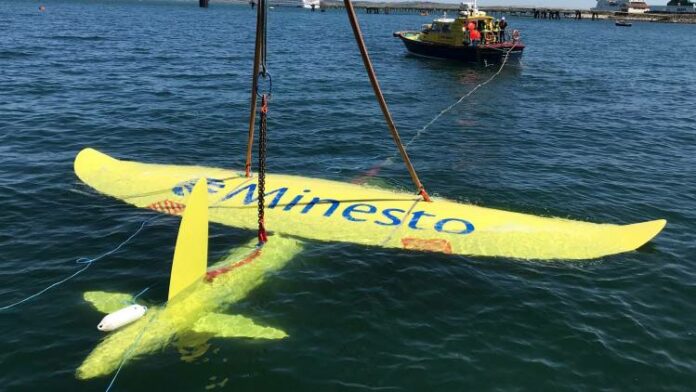
Minesto fishes for €11.2m Welsh tidal grant

0

Minesto is close to securing a more than €11m Welsh European Funding Office grant to progress its Holyhead Deep tidal project off Anglesey.

The Swedish developer has entered into formal planning with the Welsh government for a second stage of public funding for the next phase of the Holyhead Deep tidal kite scheme.

The scope of the European Regional Development Fund grant request, first reported by , includes continuous operation of Minesto’s 500kW DG500 tidal kite converter commissioned off Anglesey in the autumn.

The €11.2m grant, expected to be finalised by April, would also be used to install an additional utility-scale device at the Holyhead Deep site plus upgrade and optimise its tidal kite design.

“Our ambition is to continue build on our world-class organisation and asset base in Holyhead, to industrialise our unique technology in North Wales”, said Minesto chief executive Martin Edlund.

WEFO chief executive Peter Ryland added: “We welcome Minesto’s bid for EU funding in support of the next phase of the project and to working with Minesto to bring that bid to the point of funding approval as quickly as possible”.

Minesto was awarded a €13m grant by WEFO in May 2015 to install the first DG500 machine at Holyhead Deep.

Bladt wins Kriegers Flak TPs job

0

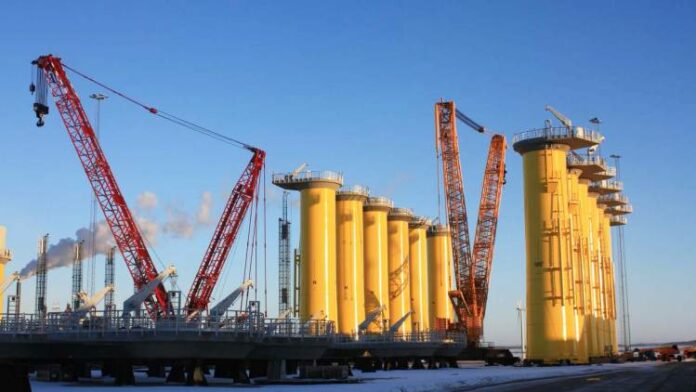
Bladt Industries is to fabricate 72 transition pieces for Vattenfall's over 600MW Krieges Flak offshore wind farm off the Danish coast.

Production is set to start in July next year and take about 12 months to complete and deliver.

The work will be carried out at Bladt's Aalborg facility in Denmark.

The transition pieces will have a diameter of up to 6.4 metres, a length of 16 metres and a weight of 160 tonnes, the company said.

Bladt head of commercial and sales, wind and energy Lars Bender said: “We value our cooperation with Vattenfall highly, and we are very pleased to be working with Vattenfall on the Kriegers Flak project."

We look forward to being part of making this project a success for all parties.

Source:renews

Fincantieri Bay Shipbuilding Delivers Kirby ATB

0

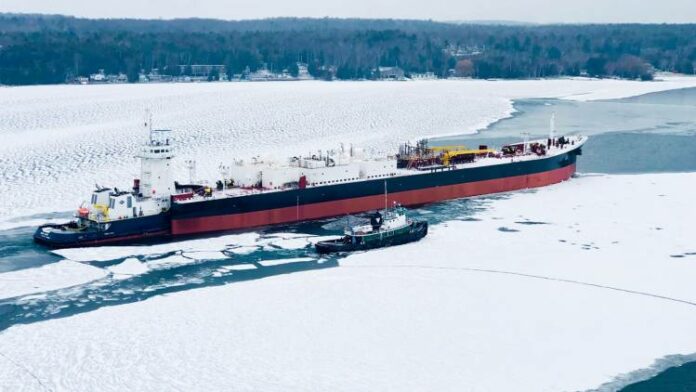
Fincantieri Bay Shipbuilding delivered an Articulated Tug Barge Unit (ATB) to Kirby Corporation. 

This is the third 155,000 barrel ATB it has built for Kirby in the past three years," said Kirby CEO David Grzebinski. "This new Jones Act-compliant ATB unit will allow us to continue our commitment to provide efficient and reliable customer service.”

The 8,000-hp, 12-knot tug Ronnie Murph measures 130 x 42 with a 23-ft. depth and a 19-ft. draft.

The barge, KIRBY 155-03, is measures 521 x 72 ft., with a depth of 41 ft. and a 155,000-barrel capacity.

Source:marinelink

Collision liability and autonomous ships

0

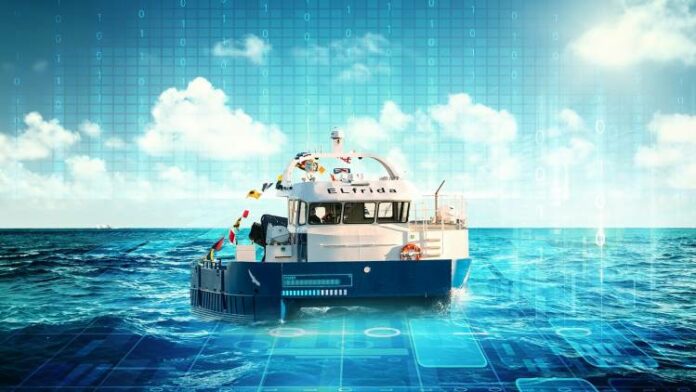
As autonomous shipping is gaining more and more ground, it is contended that the present fault-based collision liability regimes of most jurisdictions do not sufficiently cater for the situations that may arise, highlights Lina Wiedenbach, Lawyer at Arnecke Sibeth Dabelstein, IUMI Professional Partner, who noted that the traditional means of establishing fault will be affected by how the human actions or omissions will move further away from the collision in time and space. This is expected to give rise to complex questions of causation, as well as to affect the statutory rules serving as guidance for correct action.

Namely, the wording of the 1910 Collision Convention assumes that fault can either be found among the vessels themselves or not at all, Mrs. Wiedenbach notes, and the latter cases have traditionally been referred to as events outside of the ship.

"The wording of the convention does not cater for the situation that the collision was caused by the fault of a third-party contractor in relation to work undertaken to one of the ships, despite the fact that in such a situation, the cause must be said to rather lie “within” that ship than outside of it. At the same time, in relation to autonomous shipping, third party contractors, such as software or internet providers, are expected to play an increasingly important role for the safety and security of the ship."

For example, without human involvement in the navigation, a breach of the rather straightforward “do's” or “don'ts” of COLREG can no longer serve as indication for negligence in navigation. Rather, one must look at negligence in management of the ship with guidance in the more generally worded international and national objectives and principles. This arguably increases the courts’ leeway to affirm or reject fault in the individual case.

According to Mrs. Wiedenbach, it is also unclear if a national court faced with a collision caused by the fault of such a contractor would apply Art. 4 of the convention by analogy. The provision deals with the situation that both vessels are at fault but that the respective degree cannot be established. The result is a 50/50 liability split.

"Alternatively, the court may instead draw an analogy to Art. 2, dealing with the situation that no vessel was at fault. In such a case each vessel has to carry its own damage. A third viable option is that the court would consider the situation to fall outside of the scope of the convention all together and apply instead to other national rules. The difference may be substantial."

In essence, it is contended that the current fault-based collision liability regime applied to autonomous ships does not preserve the unification and foresee ability that the 1910 Collision Convention was once drafted to guarantee.

Source:safety4sea

Seismic vessels complete tandem drydocking at Damen Shipyard

0

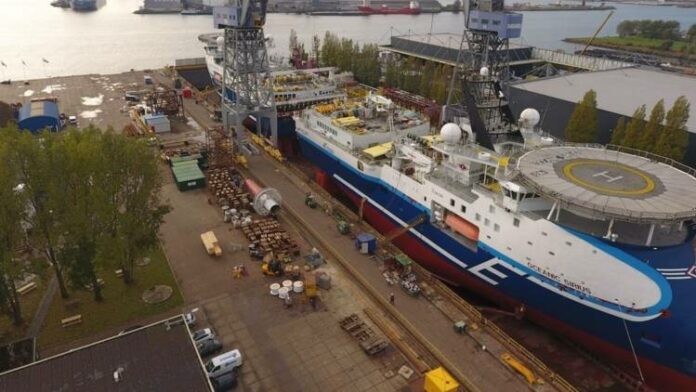
Sister-vessels, Oceanic Sirius and Oceanic Vega have completed a round-the-clock, 10-day maintenance programme at Damen Shiprepair Amsterdam (DSAm). For eight of those days the two 106-metre vessels were in the yard’s 250-metre drydock no.4 in a tandem arrangement, to maximise the efficient use of resources.

Namely, the major reason of the vessels' visit was to have a series of repairs and upgrade their hulls by having them cleaned and repainted.

Moreover, the upgrade of the vessels includes maintenance on the propeller nozzles and, by tenting the area around the propellers, DSAm was able to undertake the work without interrupting or delaying the paintworks.

As a result, minimum time was spent in the yard. The two vessels departed DSAm on the 4th November.

CGG Eidesvik Ship Management AS, a longstanding Damen client was responsible for the work that was happening to both vessels.

Finally, according to Damen's press release, both of seismic vessels are state-of-the arts and belong to CGG Eidesvik Ship Management AS, a partnership between Eidesvik Offshore and CGG. The builder is Ulstein Verft in Norway.

Source:safety4sea

MOL takes part in demonstration test using aerial drones

0

Mitsui O.S.K. Lines, Ltd. announced on December 20 that it participated in a demonstration test of ship class survey using aerial drones to inspect an MOL-operated coal carrier in service. The test reassured the benefits of using drones to monitor rust, corrosion, and the presence of cracks.

Specifically, the demonstration test included a simulated ship inspection inside the cargo hold and ballast tank using video shot from an aerial drone.

According to MOL, ClassNK has previously conducted visual inspections while ship management companies handle maintenance and inspection works by assembling scaffolds during dry docking.

The use of drone is expected to enhance the operational safety and efficiency of a vessel. Drones will enable work that needs to be done at great heights and in dangerous environments.

Finally, MOL participated in the demonstration test along with Nippon Kaiji Kyokai, Hitachi Systems, Ltd. and Mitsui Co., Ltd.

Source:safety4sea

Port of Rotterdam doubles contribution to GDP of Netherlands

0

The Rotterdam effect – Impact of Mainport Rotterdam on the Dutch economy’ is a study conducted by Erasmus University Rotterdam (EUR), commissioned by the Port Authority of Rotterdam which indicates that €45.6 billion or 6.2% of the added value of the Netherlands is due to the Port of Rotterdam.

The new findings imply that the Port of Rotterdam contributes twice as much to the gross domestic product than previously calculated.

Traditionally, when determining the economic significance of the port, only direct employment and added value were measured, including the so-called backwards indirect effects. These backwards effects are the added value that is a result of port companies purchasing elsewhere in the Dutch economy.

Nevertheless, the study by the EUR also reveals the forwards indirect effects of the Port of Rotterdam. Forwards indirect effects are economic activities that are made possible in the Netherlands due to the presence of the Port of Rotterdam, such as re-export via logistics and distribution.

Furthermore, the report identifies that the future earning capacity of the port is healthy, certainly in the context of digitisation and energy transition, with strong growth possibilities for the maritime manufacturing industry and maritime business services in Rotterdam.

"This scientific research is evidence of the tremendous significance of the Port of Rotterdam for the growth of the Dutch economy. The report also demonstrates the robust growth opportunities of the port’s future earning capacity."…Allard Castelein, Port of Rotterdam Authority CEO stated in the announcement of the report.

Source:safety4sea

VIDEO: BP sanctions Greater Tortue Ahmeyim project

0

Oil major BP and its partners have announced that the Final Investment Decision (FID) for Phase 1 of the cross-border Greater Tortue Ahmeyim development has been agreed.

The Tortue/Ahmeyim field development is located in the C-8 block off the shore of Mauritania and the Saint-Louis Profond block offshore Senegal.

BP said on Friday that the decision was made following agreement between the Mauritanian and Senegalese governments and partners BP, Kosmos Energy, and National Oil Companies Petrosen and SMHPM.

Achieving sanction for the ground-breaking Greater Tortue Ahmeyim development, and at such a fast pace, is testament to the dynamic partnership working together to bring this innovative project onstream and establish a new deepwater gas value chain,” said Bernard Looney, BP’s Upstream chief executive.

“It represents the beginning of a multi-phase project that is expected to deliver LNG revenues and gas to Africa and beyond for decades to come. We see this as the start of a new chapter for Africa’s energy story and are honoured to work alongside our partners and the governments of Mauritania and Senegal.”

The Greater Tortue Ahmeyim project will produce gas from an ultra-deepwater subsea system and mid-water floating production, storage and offloading (FPSO) vessel, which will process the gas, removing heavier hydrocarbon components. The gas will then be transferred to a floating liquefied natural gas (FLNG) facility at an innovative nearshore hub located on the Mauritania and Senegal maritime border.

The FLNG facility is designed to provide circa 2.5 million tonnes of LNG per annum on average, with the total gas resources in the field estimated to be around 15 trillion cubic feet. The project, the first major gas project to reach FID in the basin, is planned to provide LNG for global export as well as making gas available for domestic use in both Mauritania and Senegal.

Emma Delaney, BP’s regional president for West Africa, added: “We’re committed to working with the two nations to make this development a success for both countries, the local communities who live near the project and the investor partners. We see a great deal of potential in the wider basin and Phase 1 of the Greater Tortue Ahmeyim project is the first step in unlocking that for the future.

The parties will continue to finalize agreements and obtain final regulatory and contract approvals, following which Phase 1 of the development will move into a detailed design and construction phase, with award of engineering, procurement, construction and installation (EPCI) contracts.

Project execution activities are expected to start in 1Q 2019. First gas for the project is expected in 2022. Following a competitive process involving all partners, BP Gas Marketing has been selected as the sole buyer for the investor partners’ LNG offtake for Tortue Phase 1.

Andrew G. Inglis, Kosmos Energy chairman and chief executive officer, said: “For Kosmos, Greater Tortue Ahmeyim is another example of a world-class discovery being moved to project sanction on an accelerated timeline, ensuring early delivery of cashflow to the project partners and the governments of Mauritania and Senegal. With BP as operator, we have a partner with the experience and expertise to move the project through the development phase to production in the first half of 2022.”

It is worth mentioning that BP earlier this week gave Golar LNG a Limited Notice to Proceed related to the provision of a Floating Liquefaction Vessel (FLNG) for the Greater Tortue Ahmeyim field development.


Semisub Takes on Severe List During Heavy Weather off India

0

The Indian Navy has delivered a salvage response team to the Oil and Natural Gas Corporation-chartered drill rig Olinda Star, which took on a heavy list during Cyclone Phethai last week. 

At the request of ONGC, the Indian Navy airlifted 13 salvors onto the semisubmersible platform on Friday. INS Chetlat, a water-jet propelled fast attack craft, assisted in the operation. A previous attempt to board the rig with a commercially-operated boat launch proved unsuccessful. 

The Star is stationed off the coast of Kakinada, India, in the Bay of Bengal. Cyclone Phethai arrived off Andhra Pradesh on Monday, bringing heavy rains and wind gusts of up to 65 knots. ONGC evacuated 111 workers from the platform on the 14th and 15th, in advance of the storm. Photos taken after the storm revealed that the rig had taken on a serious list.

"The rig, which weathered the strong cyclone, is being brought to complete normalcy," ONGC said in an update. "All resources including experts mobilised well in time. [The] Indian Navy provided magnificent support to take experts to the rig.

The Olinda Star is a 35-year-old midwater rig owned by Brazilian firm QGOG. It is capable of water depths of up to 3,600 feet, and it is operating on a three-year contract on a day rate of about $130,000. State-owned ONGC is in the practice of hiring older rigs at lower day rates, according to Hindu Business Line: in the company's chartered-in jack-up fleet, the average age is nearly 40 years. 

Source:maritime-executive