4 C
New York
Home Blog Page 1200

Nichols Brothers to Build Two High-Speed Ferries for Kitsap Transit

0

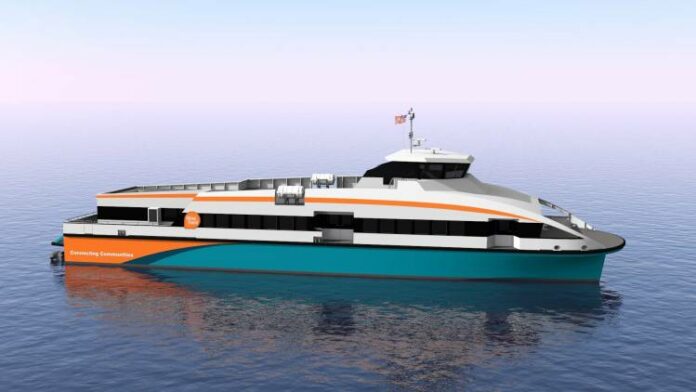
The Northwest's boat builders Nichols Brothers Boat Builders (NBBB) has won a design and build contract to build two new high-speed passenger-only ferries for Kitsap Transit with an option for a third.

The Kitsap County, Washington public transit agency launched a new fast-ferry service in July 2017 between Bremerton and downtown Seattle with plans to add service connecting Kingston and Southworth to Seattle.

Earlier this year, Kitsap Transit purchased the “Finest,” a 350-passenger high-speed catamaran from New York Waterways and shipped it to Puget Sound.

Following a refurbishment at NBBB, Finest started its inaugural run between Kingston and downtown Seattle the day after Thanksgiving on the busiest shopping day of the year. The new service has met with great reviews opening up a completely new marine highway between downtown Seattle and Kingston.

The new passenger-only ferries that Nichols Bros. won a contract for will support Kitsap’s plans to further expand the Kingston service and add service to Southworth in 2020.

The two 140’ x 37’ x 12’ aluminum high-speed catamarans will be built to USCG subchapter K regulations and will each carry 250 passengers and 26 bicycles, a must for Seattle commuters. The catamarans were designed by BMT Nigel Geeto optimize for loading and unloading of passengers as well as in-route time.

The vessels can load passengers and bikes through a two-station loading area on the sides, or alternatively through divided passenger/bike lanes from the bow. The vessels will have a maximum speed of 37 knots and cruise speed of 35 knots at full load.

The Ferries will be among the first vessels to feature a selective catalytic reduction (SCR) exhaust aftertreatment system powered by two MTU Tier IV 16V400M65L main engines each putting out 3435 HP @ 1,800rpm, through ZF 9050 gears, turning Kamewa S71-4 waterjets, reaching 35 knots at full load.

Additionally an active ride control is being installed, supplied by Naiad; the interceptor system will ensure a smooth, comfortable ride.

Particular attention has been paid to passenger comfort. An air conditioning system will keep the passenger cabin cool in the summer and warm in the winter. In addition, the vessels are designed to reduce cabin noise by minimizing the overlap of the passenger and engine compartments and utilizing the latest thinking in U.S. Coast Guard approved noise attenuation materials.

We really appreciate the opportunity to work with Kitsap Transit on the development and implementation of this new transportation system networking the Olympic Peninsula with Seattle,” said Gavin Higgins, NBBB’s CEO. “Using Puget Sound as a water highway to reduce the Seattle metro traffic congestion and expand housing market with very reasonable travel times is a great model for the other counties around Seattle to follow.”

NBBB has built over 50 high-speed catamarans and pioneered the design and development of the high speed passenger ferries in the early 1980s to the United States.

Source:marinelink

BP Sanctions Africa’s Deepest Offshore LNG Project

0

BP and its partners have given the green light for the development of a large gas project offshore Mauritania and Senegal, a first for the two West African nations.

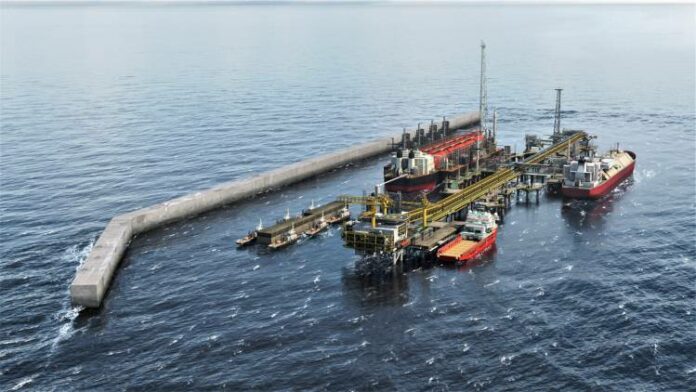
The Greater Tortue Ahmeyim development, Africa’s deepest at 2 km below the sea’s surface, will consist of a complex floating vessel with a plant to super-chill natural gas into liquid, BP said in a statement.

This is the second major LNG project to get the go-ahead this year as energy companies bet on a sharp rise in gas demand, with Royal Dutch Shell also deciding to press on with the development of a plant in western Canada.

The Tortue floating LNG facility will produce 2.5 million tonnes of LNG per year. The field holds total gas resources estimated at around 15 trillion cubic feet.

Work on the project will begin in first-quarter 2019, and first gas is expected to be produced in 2022.

The Tortue go-ahead was given after the governments of Mauritania and Senegal reached an agreement over the sharing of production from the development.

Source:BP

Shipping Industry Urges European Commission To Extend Consortia Block Exemption Regulation

0

Four trade associations representing the international liner shipping industry today submitted comments to the European Commission supporting extension of the EU consortia block exemption regulation (“BER”) for an additional five years beyond its current 2020 expiration date.

The papers were submitted in the public consultation being held by the Commission’s Directorate-General for Competition (DG COMP) by the World Shipping Council (WSC), the European Community Shipowners’ Associations (ECSA), the International Chamber of Shipping (ICS), and the Asian Shipowners’ Association (ASA). The industry comments address a wide range of legal and economic issues, but emphasize several key points:

  • Vessel sharing arrangements are a fundamental part of the structure of the global liner shipping transportation network.
  • The consortia BER has since 1995 provided transparent and practical legal guidance to vessel sharing arrangements for international liner shipping services operating from and to EU ports.
  • Despite recent mergers in the liner industry, the industry remains unconcentrated and highly competitive, with freight rates at half of their levels twenty years ago.
  • In addition to supporting operational efficiency and broader service offerings, the BER helps carriers reduce air emissions and greenhouse gases through higher utilization of vessel space.

John Butler, President and CEO of the World Shipping Council, summarized the industry’s position this way: “The bottom line is that the BER has worked very well for almost 25 years. It sets out clear rules that can be practically applied without the need for extensive legal analysis. This means that carriers can focus on seeking the most efficient transportation solutions without the cost and delay associated with legal self-assessment for these routine operational arrangements.”

Martin Dorsman, Secretary General of ECSA, noted recent developments in the industry but also observed that the BER remains fit for purpose: “A lot has changed in our industry in the past five years, but the fact is that there is still fierce competition among carriers. The purely operational agreements covered by the BER foster competition by lowering barriers to entry and enabling carriers to compete on more routes.

Guy Platten, Secretary General of ICS, commented on the relationship between the BER and the ambitious greenhouse gas reduction targets established by the International Maritime Organization and supported by the EU: “A factor that is new in this review of the BER is the fact that the IMO has now set concrete goals for greenhouse gas emissions reductions for the international shipping industry. We will need to use every available tool to increase efficiency, and the BER supports vessel sharing that is a key tool for the liner sector to reduce its fuel burn and therefore reduce its emissions.

Captain Ang Chin Eng, Secretary General of the Asian Shipowners’ Association, urged the Commission to maintain the BER as an important basis for international legal uniformity: “Many Asian economies/countries have legal regimes that treat liner shipping consortia in the same competitive manner as the EU. It is in the interest of international trade that policies and laws are aligned globally at both ends of the trade route which will provide clear guidance for international shipping.”

Source:ics-shipping

Pioneering Spirit started pipelay of Nord Stream 2 in Finland

0

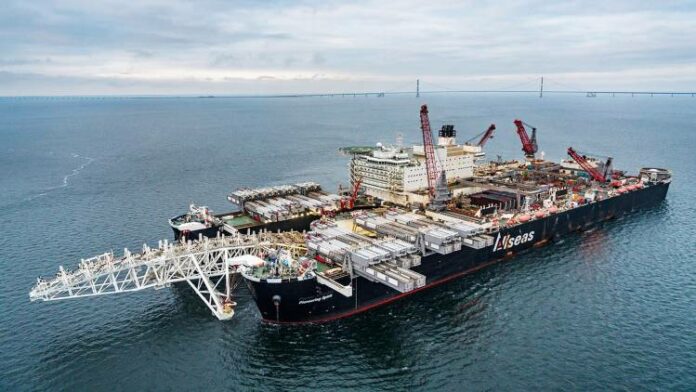
Dynamically positioned pipelay vessel Pioneering Spirit has joined Nord Stream 2’s construction fleet and started pipelay works in the Finnish Exclusive Economic Zone (EEZ) last night. Nord Stream 2 says she will continue installation of the natural gas pipeline following pipelay vessel Solitaire, which started construction in Finland in September. Solitaire has moved to the southern part of the Swedish EEZ, where it will start construction of the 510-kilometre section there for the next few months.

Pioneering Spirit, operated by Allseas, is 382 metres long and 124 metres wide, and hosts an international crew of 570, whereas Solitaire is 300 metres long and 41 metres wide with a 420-strong crew. The pipelay vessels are supported by a survey vessel, which will monitor the pipelay process and ensure that the pipeline is installed at its correct position along the agreed route on the seabed. Pipe joints will be supplied to the pipelay vessels around the clock from the project’s nearest logistics hub in Hanko, Finland and Karlshamn, Sweden respectively, to reduce the environmental footprint. 

The Nord Stream 2 project is proceeding according to plan and on schedule. It has received permits in four out of the five countries through whose waters the twin pipelines will pass. Since then, works have been carried out according to the national permits in Sweden, Finland, Germany and Russia. Construction works at the Russian and German landfalls are ongoing, and pipelay vessel Audacia finished its work in German waters yesterday. Already approximately 370 kilometres of pipeline have been laid so far.

Source:portnews

Arctic LNG 2 signs agreement on design and construction of GBS

0

PAO NOVATEK announced that its next LNG project, Arctic LNG 2, has signed an agreement on the design and construction of gravity-based structures (GBS). The Russian company SAREN, a joint venture of Renaissance Heavy Industries Russia (RHI Russia B.V.) and SAIPEM S.p.A, will perform the work. The agreement provides for the design and construction of three GBS platforms for the Project’s natural gas liquefaction trains.

The scope of work under the contract includes management, design, supply of materials and equipment, construction of three GBS structures at the NOVATEK-Murmansk plant, as well as commissioning and preparation for operations, including towing and installation of the GBS structures.

The signing of the design and construction agreement is an important step in creating the first LNG production facility in Russia on gravity-based structure platforms using our unique LNG construction center in the Murmansk region.” noted Leonid Mikhelson, NOVATEK’s Chairman of the Management Board. “Our partners have extensive experience in the design and construction of offshore facilities, including GBS structures, which will contribute to the successful launch of our new Arctic LNG 2 project.”

The Arctic LNG 2 project envisages constructing three LNG trains at 6.6 million tons per annum each, using gravity-based structure (GBS) platforms. The Project is based on the hydrocarbon resources of the Utrenneye field. As of 1 December 2018, the Utrenneye field’s reserves under the Russian reserves classification totaled 1,978 billion cubic meters of natural gas and 105 million tons of liquids. OOO Arctic LNG 2 owns an LNG export license.

PAO NOVATEK is one of the largest independent natural gas producers in Russia, and in 2017, entered the global gas market by successfully launching the Yamal LNG project. Founded in 1994, the Company is engaged in the exploration, production, processing and marketing of natural gas and liquid hydrocarbons. The Company’s upstream activities are concentrated mainly in the prolific Yamal-Nenets Autonomous Region, which is the world’s largest natural gas producing area and accounts for approximately 80% of Russia’s natural gas production and approximately 15% of the world’s gas production. NOVATEK is a public joint stock company established under the laws of the Russian Federation. The Company’s shares are listed in Russia on Moscow Exchange (MOEX) and the London Stock Exchange (LSE) under the ticker symbol “NVTK”.

Source:portnews

Polarcus secures 4D project in the Far East

0

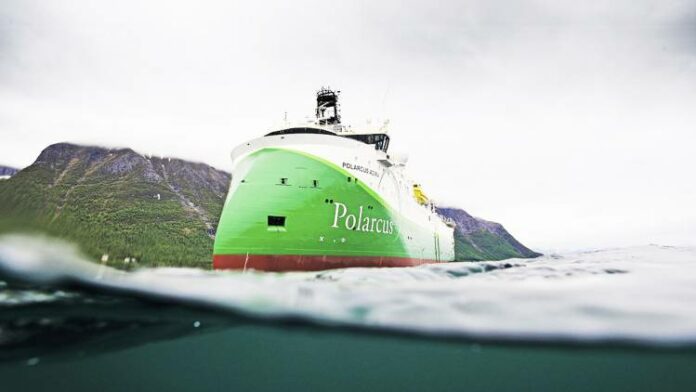
Polarcus Limited is pleased to announce that certain Polarcus subsidiaries have entered into a memorandum of agreement with Sovcomflot GEO, to provide 4D marine seismic acquisition services in the Far East for a major E&P company.

The program requires two Polarcus ICE-1A class vessels and will commence in Q2 2019 running for approximately 3 months, a total of 6 vessel months.

Contractual arrangements and associated third party approvals are expected to be finalized before end January, 2019.

About Polarcus

Polarcus (OSE: PLCS) is an innovative marine geophysical company with a pioneering environmental agenda, delivering high-end towed streamer data acquisition and imaging services from Pole to Pole. Polarcus operates a fleet of high performance 3D seismic vessels incorporating leading-edge maritime technologies for improved safety and efficiency. Polarcus offers contract seismic surveys and multi-client projects with advanced onboard processing solutions and employs approximately 350 professionals worldwide. The Company's principal office is in Dubai, United Arab Emirates. For more information.


Molten Metal Energy Storage For Future Maritime Propulsion

0

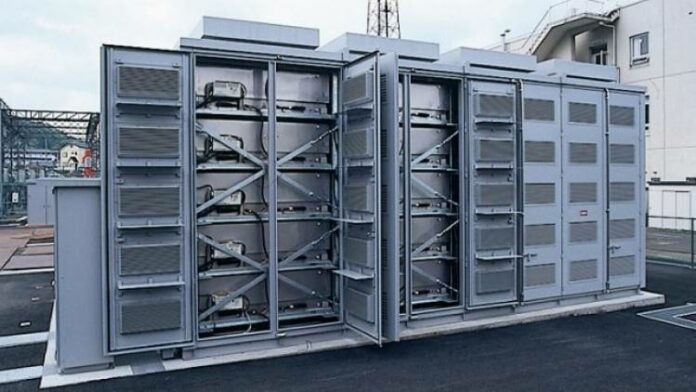
The comparatively short sailing distances encountered along navigable inland waterways combined with stops at navigation locks enhances the attractiveness of using battery propulsion technology. While the popular electrochemical batteries involve lithium technology and chemical acid technology, other competing batteries operate at elevated temperatures, offer extended service lives utilize involve molten metal energy storage. 

Introduction

While electrochemical batteries form the basis of modern mobile rechargeable energy storage technology, thermal energy storage once formed the basis of mobile propulsive energy storage. During the era of coal-fired steam railway propulsion, some short-distance steam locomotives and even some boats operated on stored thermal energy. Saturated water was held at high pressure of 250 psia to 1,000 psia at temperature well in excess of the normal boiling point at sea-level atmospheric pressure, at over 200oC. When the throttle was opened, the drop in pressure inside the storage system resulted in some of the heated water flashing into steam.

Some of the very early short-distance submarines built in America were powered by flash steam that was expanded in cylinders to either drive a propeller or in railway traction, drive railway wheels. Flash steam propulsion proved to be very reliable and incurred very low operating costs. During 1924, efforts in Denmark resulted in the development of molten metal thermal energy storage involving sodium hydroxide to store heat at 300oC and intended to produce steam. In this modern era, solar-thermal power plants include molten metal thermal energy storage to generate electric power after sunset.

Modern High Temperature Energy Storage

During this modern era, there are two very distinctively different approaches to high temperature energy storage. One proven technology involves heat-of-fusion thermal storage that is being utilized at solar thermal power plants. During daytime while the power plant generates electric power for the power grid, part of the power plant directs concentrated solar thermal energy into high-temperature, heat-of-fusion thermal energy storage. Low cost thermal energy storage involves mixtures of naturally occurring sodium nitrate and potassium nitrate. High-performance molten mixtures include sodium fluoride and sodium hydroxide, or lithium fluoride and lithium hydroxide that can produce superheated steam.

The alternative high-temperature energy storage technology involves electrochemical activity, with the molten sodium-sulfate battery involving a separator to enable controlled electrochemical interaction between molten sulfur and molten sodium. Molten sodium-sulfate technology has been applied to stationary, grid-scale electrical energy storage applications. However, there have been incidents where sodium-sulfate batteries have ignited into flames. The performance of the separator technology is of critical importance to the performance and longevity of grid-scale molten metal batteries. Researchers at MIT working under Professor Donald Sadoway have achieved significant breakthroughs in developing durable separator technology for long-life molten metal battery applications.

Battery Longevity and Cost

Acid based electrochemical battery technologies involve elevated initial and replacement cost with limited usable life expectancy. By comparison, thermal energy storage technology offers greatly extended useble life expectancies and lower long-term costs. The original flash-steam energy storage technology incurred low-cost and greatly extended service life despite tens of thousands of repeated deep-cycle recharges and discharges. Likewise, heat-of-fusion thermal energy storage also offers usable service life expectancies measured in decades, enduring almost infinite deep-cycle recharge and discharge cycles combined with low long-term costs. Molten metal electrochemical energy storage also offers the potential of greatly extended service life at competitive long-term costs.

Stationary Versus Mobile Applications

Both flash-steam and heat-of-fusion thermal energy storage technologies have been used in both stationary and mobile applications. Flash-steam technology delivered reliable performance at low-cost in railway shunting service, with alternative applications in short-distance maritime applications such as tug-boat service. Modern high-performance heat-of-fusion technology involves mixtures of sodium hydroxide and sodium fluoride (295oC). A mixture of lithium hydroxide and lithium fluoride offers storage of over 1100 KJ/Kg at 427oC. While the sodium mixture can provide the heat of vaporization to convert liquid water into saturated steam, the lithium mixture can superheat the steam for efficient expansion in engines.

While molten metal electrochemical storage is intended for stationary applications, there may be scope to adapt the technology for operation along the gentle waters of navigable inland waterways. While researchers believe that the technology may be unsuitable for automotive applications, the technology may be suitable for gentle operation along inland waterways. In stationary applications at some earthquake prone geographic locations, there would be a need for flexible mounting of the battery technology, to compensate for the dynamic shocks and jolts caused by earthquakes. The same mounting technology may be suitable for operation along inland waterways.

Inland Waterway Service

The improved separator technology developed by Sadoway at MIT promises to greatly increase usable life expectancy of molten metal batteries for up to 15 years, greatly reducing battery replacement cost incurred every three to four years. Along some waterways, fully charged batteries would likely partially discharge moving a barge or tow of barges between navigation locks, where partial recharge may either be possible or be available. Short distances of overhead trolley cables could allow for initial acceleration from navigation locks, reducing deep-cycle demand on batteries that could blend in to provide propulsion as the vessel assemble reaches cruising speed.

On the basis of competitive cost and usable life expectancy, molten metal electrochemical batteries that feature improved separator technology become a viable alternative to lithium-based electrochemical storage batteries in both stationary application as well as mobile application along inland waterways. Viable sources of electric power for battery recharge include wind power, solar photovoltaic power, hydroelectric power and ocean kinetic power conversion. Thermal power stations at coastal locations could provide scheduled thermal recharges to tugs utilizing heat-of-fusion thermal storage technology, making them cost competitive with electrochemical battery technology that would also have to obtain energy recharge from thermal power stations.

Batteries in Ocean Sailing

Batteries capable of operating in railway shunting service need to continually endure severe jolts. Compressed air energy storage and flash-steam thermal energy storage batteries are well proven in operating environments that involve severe jolts and would be capable of providing short-distance propulsion through severe wave conditions. Compressed air over water energy storage should prove as rugged in severe conditions. Solid state electrochemical batteries that are well secured to the vessel superstructure and include both solid state electrodes as well as solid state electrolyte would likely withstand the rigors of sailing through severe wave conditions. 

Many decades ago, heat-of-fusion thermal energy storage technology was tested in railway propulsion and was capable of withstanding severe jolts. Precedent suggests that there may be scope to adapt modern heat-of-fusion storage technology to ocean going maritime propulsive applications. A large tank of molten sodium mixture to produce saturated steam and a small tank of molten lithium mixture to generate superheated heat could provide many hours of cost competitive propulsive energy, with increasing vessel size extending its operating range to several hundred miles. The suitability of using molten metal electrochemical batteries in ocean sailing is unknown.

Conclusions

While molten metal electrochemical batteries have been developed for stationary grid-storage applications, there may be scope to adapt the technology as energy storage for maritime propulsion along the gentle waters of navigable inland waterways.

Maritime application could accommodate the weight, volume, insulation requirements and energy density of 1MWhr per 1,000 cubic feet of molten metal electrical batteries.

Advances in separator technology undertaken at MIT in the U.S. promises to greatly increase usable service life and decrease the long-term cost of molten metal electrochemical batteries, making the technology competitive with lithium technology.

Heat-of-fusion thermal storage technology would also likely find application in maritime propulsion and especially near coastal thermal power stations. 

Source:maritime-executive

HII Awarded More Than $930 Million to Build Two More National Security Cutters

0

Huntington Ingalls Industries Ingalls Shipbuilding division has received two fixed-price incentive contracts from the U.S. Coast Guard to build two additional National Security Cutters for the U.S. Coast Guard. The contract values for the a 10th and 11th ships in the program are $468.75 million for NSC 10 and $462.13 million for NSC 11.

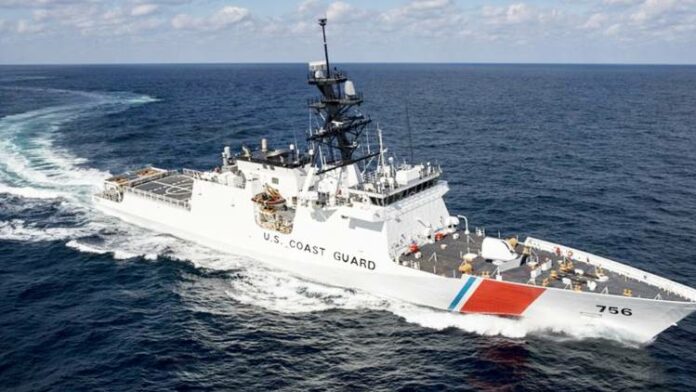
Ingalls Shipbuilding's seventh U.S. Coast Guard National Security Cutter, Kimball (WMSL 756), during sea trials in the Gulf of Mexico.

“This additional funding for two NSCs is a great accomplishment on which to end the year,” said Ingalls Shipbuilding President Brian Cuccias. “The outstanding work being done by skilled men and women of Ingalls, as well as the recognition by Congress and the U.S. Coast Guard as to the important contributions these ships make to our nation’s defense, are the reason for this success. These ships provide capable assets that our Coast Guard customer uses to perform essential homeland security missions, and we look forward to delivering two more quality NSCs to help with this important work.”

Ingalls has delivered seven NSCs, the flagships of the Coast Guard’s cutter fleet, designed to replace the 12 Hamilton-class high-endurance cutters that entered service in the 1960s. The seventh ship, Kimball (WMSL 756), will be commissioned in Hawaii on Jan. 19.

Both the eighth ship, Midgett (WMSL 757), and the ninth, Stone (WMSL 758), are currently under construction at Ingalls. Midgett is scheduled for its first set of sea trials in the first quarter of 2019. Stone is scheduled to launch in 2019. NSCs are 418 feet long with a 54-foot beam and displace 4,500 tons with a full load. They have a top speed of 28 knots, a range of 12,000 miles, an endurance of 60 days and a crew of 120.

The Legend-class NSC is capable of meeting all maritime security mission needs required of the high-endurance cutter. The cutter includes an aft launch and recovery area for two rigid hull inflatable boats and a flight deck to accommodate a range of manned and unmanned rotary wing aircraft. It is the largest and most technologically advanced class of cutter in the U.S. Coast Guard, with robust capabilities for maritime homeland security, law enforcement, marine safety, environmental protection and national defense missions. This class of cutters plays an important role in enhancing the Coast Guard’s operational readiness, capacity and effectiveness at a time when the demand for their services has never been greater.

Subsea 7 wins SURF contract for Manuel in the Gulf of Mexico

0

BP has awarded Subsea 7 S.A. the SURF (subsea umbilicals, risers, and flowlines) contract for the Manuel project in the US Gulf of Mexico.

Project execution will be delivered by Subsea Integration Alliance (SIA), which is a partnership between Subsea 7 and OneSubsea, a Schlumberger company, to provide BP with a fully integrated solution. 

The Manuel project comprises a two-well development tieback to the Na Kika semisubmersible production platform, working at water depths of up to 1,900 m (6,234 ft).

The project’s SURF workscope includes engineering, procurement, construction, and installation (EPCI) of an electrically heat traced flowline (EHTF) and a steel catenary riser and all associated subsea structures as well as front-end engineering and design (FEED). Offshore operations are due to start in 4Q 2019. 

Early engagement between SIA and BP has enabled the project to be the first in the US to use Subsea 7’s EHTF technology, which enables cost-effective longer tieback solutions, the company said. 

Craig Broussard, Subsea 7 vice president for the Gulf of Mexico, said: “The award of the Manuel project is a clear demonstration of the power of collaboration between all stakeholders. Together with our SIA partner, OneSubsea, and the BP team, we have produced an optimized solution that will see the deployment of EHTF technology. This has enabled us to reduce the total cost of the project, while in parallel accelerating the first oil target date to just 24 months from discovery."

“SIA has been able to deliver this accelerated schedule by removing critical path challenges through early engagement, on both SPS and SURF scopes of work. This has ultimately allowed us to achieve a solution that creates sustainable value for all parties despite a challenging cost environment.”

Source:offshore-mag

Eni deploys wave power system in the Adriatic Sea

0

Ocean Power Technologies Inc.’s PowerBuoy has been deployed in the Adriatic Sea to advance Eni’s R&D MaREnergy project.

This project aims to develop, deploy, and demonstrate suitability of wave energy renewable technologies in oil and gas operations.

The OPT PowerBuoy will be used in the Adriatic Sea to advance Eni’s research and development of proprietary integrated subsea technology systems to allow future applications for remotely controlled field developments powered by wave energy, environmental monitoring and offshore asset inspection using AUVs. The system will be used to demonstrate subsea battery charging, which eventually may be used to provide a standalone charging station and communications platform that would enable the long-term remote operation of AUVs.

The PB3 PowerBuoy is a power and communication platform for remote offshore applications such as autonomous vehicle charging, meteorological and ocean data collection, subsea equipment powering, and well monitoring for offshore oil and gas operations. It supports a suite of end user selectable mission critical payloads while extending their range of operation, lowering their operational costs, and enabling real-time data transfer and decision making.

The agreement between OPT and Eni provides for a minimum 24-month contract that includes an 18-month PB3 PowerBuoy lease and associated project management. OPT will also provide deployment support, remote data collection and monitoring. At the end of the initial 18-month lease, and upon meeting technical metrics, Eni will have the option to either extend the lease for an additional 18 months or purchase the system.

Source:offshore-mag