3.9 C
New York
Home Blog Page 1199

Venezuelan Navy Interferes with Exxon Seismic Campaign

0

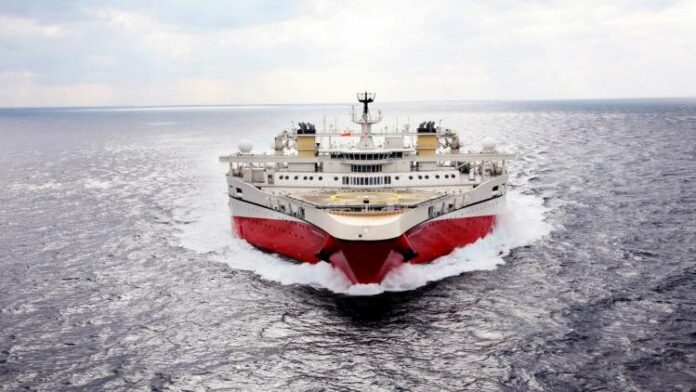
Venezuela's navy has forced ExxonMobil to pause its exploration program in a contested area of the Stabroek Block offshore Guyana. PGS, the operator of Exxon-chartered seismic vessel Ramform Tethys, said Sunday that Venezuelan military vessels approached the ship over the weekend, forcing her to alter course. 

Guyana protested the intervention as a violation of "the sovereignty and territorial integrity of our country" and an "illegal, aggressive and hostile act." For its part, Venezuela claimed that the Tethys was operating in an area covered by "Venezuelan sovereignty" and that its navy had acted within international norms. 

The United States, which does not favor the Venezuelan government of President Nicolas Maduro, protested the action. In a response, the U.S. State Department emphasized Guyana's right to explore for oil in its EEZ. 

The new region offers strong potential for Exxon, which has already found five billion barrels of oil in the Stabroek formation. The 10,000-square-mile lease area lies about 100 nm offshore Guyana. Exxon is the operator and holds a 45 percent interest in the block, with a 30 percent stake for Hess and 25 percent for CNOOC. 

Last year, Exxon and Hess made a final investment decision on the first phase of development for the Stabroek Block's Liza field, one of the largest oil discoveries of the past decade. The Liza Phase 1 development includes a subsea production system and an FPSO designed to produce up to 120,000 barrels of oil per day. Production is expected to begin by 2020, less than five years after discovery of the field. Ultimately Liza will develop about 450 million barrels of oil.

While promising for Exxon and for Guyana, the Stabroek formation overlaps with longstanding Venezuelan claims. Since the end of the colonial period, Venezuela has claimed a wide strip of Guyana west of the Essequibo River. The shoreline portion of this territory would imply a Venezuelan EEZ, which could include a portion of the Stabroek Block. Venezuela has called on Exxon to postpone drilling and production in the lease area until the 50-year border dispute is settled. 

Source:maritime-executive
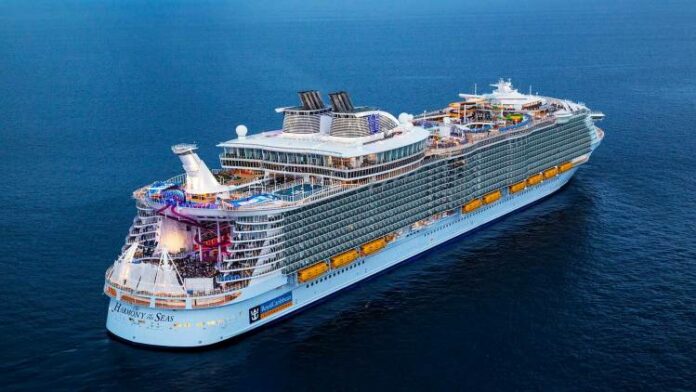
Royal Caribbean looks to Optimarin for global compliance

0

Royal Caribbean International, one of the world’s leading cruise ship operators, has chosen Optimarin to provide its USCG compliant Optimarin Ballast System (OBS) for  three flagship vessels. The Norwegian – based ballast water  treatment (BWT)  specialist  has now retrofit ted its market proven technology on  Independence of the  Seas and Mariner of the Seas , with installation on Grandeur of the Seas set for Q1  2019.

An agreement of this nature with a world renowned operator is  very  special,”  comments Optimarin CEO Tore Andersen. Royal Caribbean leads the cruise market in terms of passenger experience, vessels, service standards, and environmental  performance, and these three ships are some of the ‘stars’ of their growing global  fleet. The fact Optimarin has been selected provides not only an endorsement of our  simple, reliable and market proven UV – based technology, but also demonstrates that  world leaders turn to us when it comes to ensuring total global compliance. We have  always been a regulatory frontrunner , since our very foundation in 1994, and were  the first manufacturer to achieve full USCG approval  in December 2016. 

Optimarin has now sold  approximately 700 OBS units, with more than 500 installed  and operational, of which approximately 250 are retrofits.  Alongside full IMO and USCG compliance, OBS has certification from a  comprehensive range of classification organizations, including ABS, BV, DNV – GL, LR &  MLIT Japan. Current customers include Fednav, GulfMark, Hapag Lloyd, Matson  Navigation, McDermott, MOL, Ardmore, Seatruck, Technip, and the Royal  Netherlands Navy, amongst others.

Source:portnews

Head of Chinese Sub Research Institute Under Investigation

0

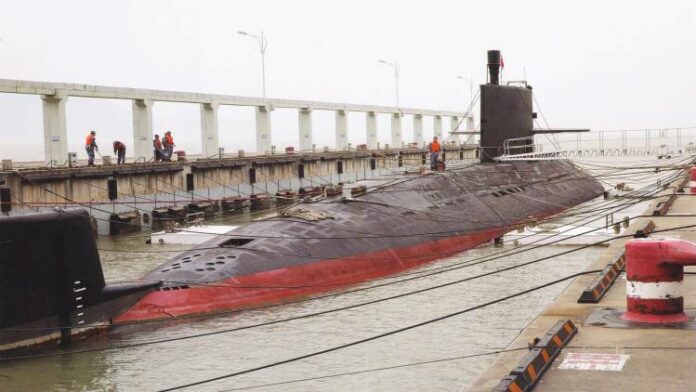
Just weeks after the general manager of China Shipbuilding Industry Corporation (CSIC) was expelled from the Chinese Communist Party, the giant shipbuilder lost the head of one of its leading research divisions to the same fate. The senior director of CSIC's 718 Research Institute, Bu Jianjie, is under formal investigation for allegedly obtaining Canadian citizenship without authorization, among other charges, and has been removed from the party. 

The 718 Research Institute is focused on the development of naval submarine systems, and its areas of activity include nuclear power, hydrogen production, sensitive instrumentation and specialty gases. Bu specialized in  air-independent propulsion, the ultra-quiet power systems that can surpass nuclear subs for stealthiness. He now stands accused of violating organizational discipline; obtaining Canadian citizenship in violation of regulations; failing to report personal matters; corruption; embezzling public funds; and taking advantage of his job to gain benefits for other entities in exchange for bribes.

Two regional anti-corruption bodies, the Hebei Provincial Commission for Discipline Inspection and the province's Supervisory Commission, investigated Bu's activities. He has been expelled from the Chinese Communist Party, his retirement benefits will be cancelled, and his case will be transferred to the Hebei Provincial People's Procuratorate for prosecution and "the confiscation of illicit assets."

"As a senior Party official, he has lost his ideals and faith and had a strong desire for money," the investigators said in a statement. "Especially after the 18th National Congress of the Communist Party of China, [Bu] was still involved with corruption crimes." The 18th National Congress was held in November 2012.

Bu, 64, is a graduate of Harbin's College of Shipbuilding Engineering, and he was a well-regarded defense scientist in China. He spent time at two universities in Canada as a visiting scholar in 1996. 

Source:maritime-executive

Video: DG500 – The Launch of a World’s First Subsea Kite

0

As we look back on 2018, we see a year when the world really woke up to climate change and the fact that the time for talk is over and the time for action is now. Over the last year, we have seen an increasing understanding from key stakeholders and decision-makers that for a sustainable global energy transition, we need more renewable energy sources that can supply predictable and cost-effective electricity to the growing world population.

We also see a year where Minesto has made substantial progress to make sure that our unique ocean energy technology becomes a key component in the global clean energy transition.

In 2018, Minesto scaled up its patented concept for generating green electricity from low-flow tidal streams and ocean currents. Off the coast of Holyhead, North Wales we installed, commissioned and verified the Deep Green technology for the first time with a commercial-scale unit.

To acknowledge that, we have today published a film that not only showcases the great job performed by the Minesto team over the course of the year, but also how it all started and why Minesto's technology is a needed complement in a future sustainable energy system.

Orsted charges UK battery

0

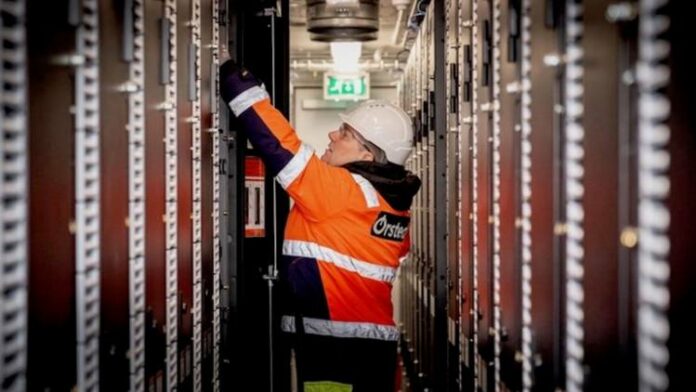
Orsted has brought online the 20MW Carnegie Road energy storage project at Liverpool in England, its first standalone battery plant.

Carnegie Road comprises three containers and an associated power conversion system, all of which has been supplied by NEC.

The project will be used to help keep the UK electricity network stable by providing flexible response to grid-needs, Orsted said.

“One of the key actions in keeping the UK’s electricity grid balanced and stable is ensuring that the amount of electricity generated matches the amount of electricity used at any given moment,” it said.

Orsted UK managing director Matthew Wright said: “We have a vision to create a world that runs entirely on green energy, and that means we will need more than just clean energy generation."

That’s why we’re investing in energy storage systems like Carnegie Road, to accelerate the transition to a smarter, low carbon grid.

Batteries, and other innovative storage technologies will form a critical part of an integrated green energy system required to ensure we keep the lights on without harming our planet

Orsted lead on energy storage projects in the UK Bridgit Hartland-Johnson said: “Our electricity consumption pattern is changing, and is becoming less predictable as we use more electronic devices and electrify our transport system."

The way we generate electricity is also changing as we add more low carbon sources from wind and solar to the grid.

These changes mean that the way we balance and operate the grid, also need to adapt to become more agile and flexible.

The combination of storage and renewable energy means we can now deliver infrastructure that enhances grid operations and ultimately delivers much better value for us as consumers.

Source:renews

MOL uses algorithm to improve collision avoidance

0

MOL announced that MOL Techno-Trade, the National Maritime Research Institute (NMRI), and Tokyo University of Marine Science and Technology (TUMSAT) carried out an assessment and feasibility study on advanced navigation support systems, using the NMRI-owned ship handling risk simulator.

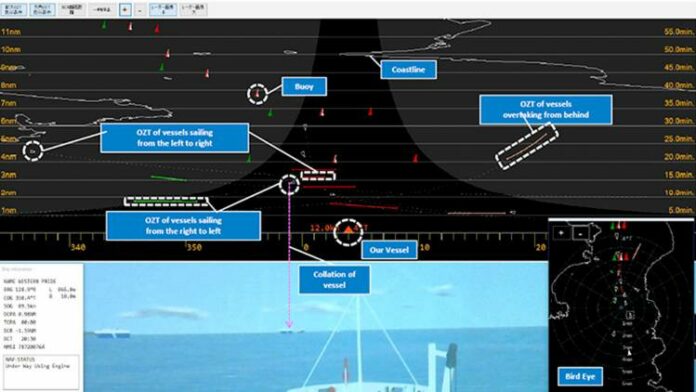
On watch-keeping, mariners must be able to see an object and judge if it poses a risk. If it does, the vessel must take some action to avoid the risk, such as veering, slow steaming, and so on. The "Obstacle Zone by Target" (OZT) algorithm supports mariners' ability to spot objects and determine whether they are potential risks.

Conventional collision avoidance is a highly skilled process. By using the navigation support system incorporating OZT, the vessel collision avoidance algorithm, a vessel can find an area where it can navigate safely. In addition, the system's bridge view display enables mariners to determine the positions of nearby vessels and decide which ones present risks.

MOL is currently researching augmented reality (AR) technology, which overlaps displays of information from the Automatic Identification System (AIS) and radar, camera images from the bridge, and advanced navigation support systems, with the long-range goal of autonomous sailing and automatic collision prevention utilizing OZT.

The company has also advanced with better support of safe operation and reduction of its environmental impact, as set out in the ISHIN NEXT-MOL SMART SHIP PROJECT. This project started in November 2016, and aims to leverage the knowledge and know-how gained through the development process for various ship types, with the adoption of Internet of Things (IoT) to enhance safe operation and reduce vessels' environmental impact.

Source:safety4sea

DOE Streamlines LNG Export Requirements

0

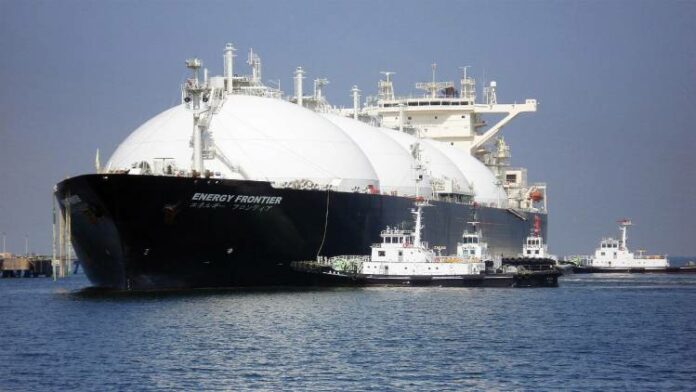
The U.S. Department of Energy (DOE) would now only require U.S. LNG exporters to report the country or countries of LNG deliveries, not country of end-use, to satisfy the DOE’s destination reporting requirement.

Further, DOE announced additional efforts to streamline the reporting requirements for LNG export supply sales and contracts.

With the United States now being the world’s top producer of oil and natural gas, it is imperative that U.S. LNG companies have all the tools they need to get their American product into the international market,” said U.S. Secretary of Energy Rick Perry.

By streamlining the destination reporting requirements, the Department of Energy is taking an important deregulatory step forward in order to better provide reliable U.S. LNG to our friends and allies abroad,” Rick added.

Increasing U.S. LNG exports to the world market brings great benefits to Americans here at home and our allies abroad from cleaner air to increased job growth and energy security,” said Assistant Secretary for Fossil Energy Steven Winberg.

Right now, the U.S. is growing its position as a global leader in LNG exports and is projected to be the third largest in the world behind Australia and Qatar by the end of 2019. Today’s action is another way the Trump Administration is working to advance American energy dominance,” he added.

The policy change will address the reporting of LNG delivery destinations and the types of supply and sales agreements LNG exporters must file with DOE.  Currently, DOE requires some LNG export authorization holders to report the final country of end-use for LNG exports, which can differ from the country receiving the initial physical delivery of LNG.  

Given the complexity of some LNG export transactions, and the challenges associated with tracking LNG exports all the way to their point of end-use, DOE is indicating via a new policy statement that reporting the country or countries of LNG deliveries (not country of end-use) will satisfy the destination reporting requirement. With this change in reporting requirements, LNG exporters are still required to continue the current ban on LNG exports to sanctioned countries.

Additionally, DOE is seeking to clarify via a proposed interpretative rule which types of supply and sales contract agreements need to be reported and when they must be filed. Per DOE’s current regulations, it is required of all long-term LNG export authorization holders to report all long-term, greater than two years, supply and sales contracts. This proposed interpretive rule is open for public comment for 30 days.

Since exports of U.S. LNG began from the lower 48-states in 2016, over 1.7 trillion cubic feet of U.S. natural gas has been exported.  To date, the Department of Energy has approved 23.05 Bcf/d of long-term exports of natural gas to any country in the world not prohibited by U.S. law or policy.  

There are currently three large-scale LNG export projects in operation, Sabine Pass, Dominion Cove Point, and Corpus Christi, which have a combined operating export capacity of approximately 4 Bcf/d.  Three additional large-scale export are under construction.  There are also a dozen large-scale export projects under review that would provide over 20 billion cubic feet per day of additional export capacity, if approved and constructed.

Source:marinelink

BIMCO adopts STM-clause to facilitate just-in-time port calls

0

On November 13, BIMCO adopted a STM-clause to facilitate just-in-time port calls in commercial contracts. The clause aims to contractually share benefits enabled by STM.

Often charter parties allocate risks in a way that creates a conflict between economic and environmental efficiency. To address this issue, STM and BIMCO were working to encourage the exchange of information under the STM concept while also permitting parties to agree on a contractual arrangement.

The work lasted more than a year and the result was announced at the meeting of the Documentary Committee of BIMCO November 13. This was a new STM clause with appropriate Explanatory Notes, which is available for incorporation in BIMCO standard contracts.

The Sea Traffic Management Clause for Voyage Charter Parties enables a contractual arrangement on implementation of STM and helps charter parties agree on how to split benefits coming from better speed when port calls are better synchronized.

Grant Hunter, Head of Contracts & Clauses at BIMCO, stated on this matter:"The environmental aspects of shipping become more and more relevant for the actors in the industry. This will affect the operational mindset of us all. The IMO climate goal is helping to push us in that direction. The new STM clause can assist actors becoming more climate friendly through optimized arrivals."

Source:safety4sea

Lamprell Wins USD 200 mln Windfarm Offshore Project from GeoSea

0

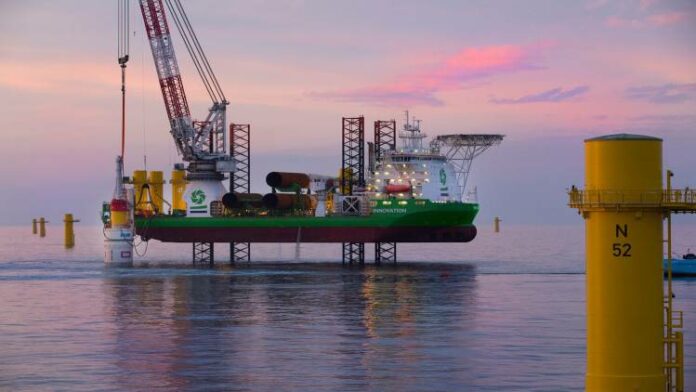
Lamprell announced that it has been selected by GeoSea Procurement & Shipping Luxembourg SA, a wholly owned subsidiairy of GeoSea NV, the lead engineering, procurement, construction and installation contractor on the Moray East offshore wind farm, to fabricate jacket foundations for the project.

Lamprell, the provider of fabrication, engineering and contracting services to the offshore energy industry, said it will fabricate 45 out of approximately 100 jacket foundations required for the wind farm, plus three jackets for the offshore substations also being installed for use on the project.

Total project value is in excess of USD200 million. All fabrication work will be performed in Lamprell's Hamriyah and Sharjah yards in the UAE and is expected to commence in Q2 2019.

Lamprell will deliver the jackets to GeoSea from its deep water quayside in the Hamriyah port where GeoSea will transport the jackets to the offshore windfarm field in the North Sea.

The Moray East offshore windfarm project is a 295 km2, 950MW project which is located off the north eastern coast of Scotland and which will be developed and operated by Moray Offshore Windfarm (East) Ltd, GeoSea's client. The wind farm is expected to provide cost effective power for 950,000 UK homes.

Christopher McDonald, CEO, Lamprell, said: "We are proud to have been selected to be part of the large scale Moray East wind farm project. The contract award manifests our commitment to the fast growing renewables industry which, despite the recent challenges, remains a core strategic focus for Lamprell."

"Over the past 18 months we have upskilled our workforce and enhanced our systems and processes in order to enable us to deliver projects in the renewables segment safely, cost effectively and to a high standard. We look forward to working with GeoSea over the months to come," Christopher added.
 

Source:marinelink

US Set To Extend Sanctions Waiver For Iraq To Import Iranian Gas

0

The United States has reached an agreement in principle with Iraq to extend for 90 days an exemption to sanctions against Iran, allowing Baghdad to keep importing Iranian gas that is critical for Iraqi power production.

The extension was reached on Dec. 20, when a previous 45-day waiver was due to expire, during a visit to Washington by an Iraqi delegation, according to two Iraqi officials with direct knowledge of the negotiations.

A senior Iraqi government official and a central bank official told Reuters that talks were continuing on Friday to finalise details, including how to pay Iran for energy imports, two sources said.

The administration of President Donald Trump has said Iraq should not pay Iran in U.S. dollars or euros. A team from Iraq's central bank joined the delegation to find a solution.

Washington initially granted Iraq a 45-day waiver for Iranian gas when it reimposed sanctions on Nov. 5, after months of negotiations.

Iraq relies heavily on Iranian gas to feed its power stations, importing roughly 1.5 billion standard cubic feet per day via pipelines in the south and east.

Iraqi officials have said they need about two years to find an alternative source.

Source:epmag