3.9 C
New York
Home Blog Page 1198

Rosetti Marino Withdraws from Heerema Deal

0

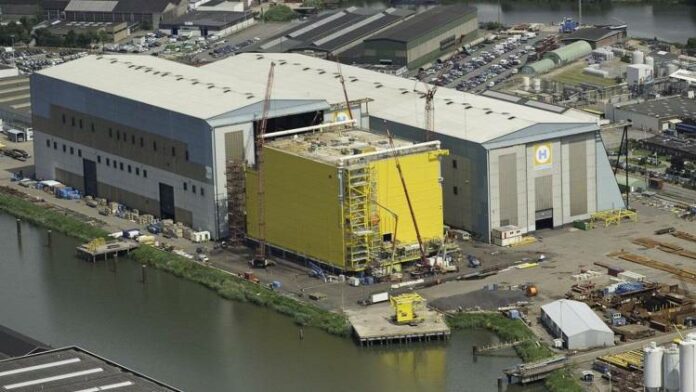
Italy's Rosetti Marino has withdrawn its offer to buy Heerema Fabrication Group’s (HFG) Zwijndrecht facility in the Netherlands, with HFG confirming the yard is to close.

Rosetti Marino and HFG entered into a letter of intent on the 16th of November with the aim to sell to Rosetti Marino the HFG activities at the yard in Zwijndrecht, The Netherlands.

Both companies have worked closely together and in good mutual cooperation to investigate the viability of this proposed sale.

Rosetti Marino, after careful consideration of the risks and opportunities, has concluded that this acquisition did not meet its requirements due to adverse market conditions and the uncertainty for future prospects for the Zwijndrecht yard.

CEO Oscar Guerra said: “Rosetti Marino regrets that our interest in the proposed sale could not happen due to external factors beyond our control”.  

The management of HFG meanwhile has informed staff at the Zwijndrecht yard about the intended yard closure and will request advice from Works Council of HFG Nederland. HFG is committed to support the eighty employees who are being made redundant as a result of this closure. CEO Koos-Jan van Brouwershaven said: “We will continue to provide every support we can offer in this very difficult period.”  

HFG will continue construction operations at its locations in Vlissingen and Opole (Poland).  

Source:marinelink
Bath Iron Works Wins Contract for Fifth DDG 51 Destroyer

0

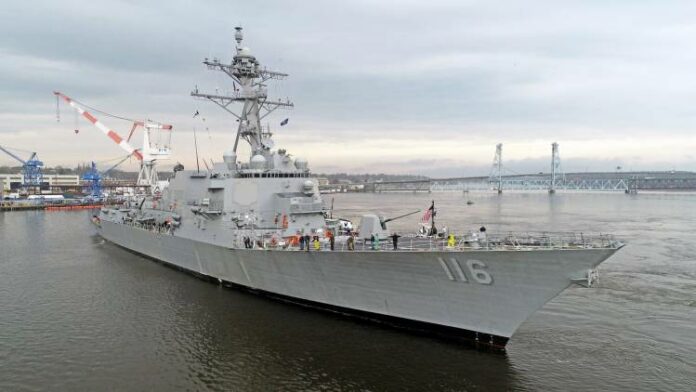
The U.S. Navy has awarded General Dynamics Bath Iron Works a contract to build a fifth DDG 51 destroyer as part of the multi-year award announced in September. General Dynamics Bath Iron Works is a business unit of General Dynamics.

In the most recent multi-year competition, BIW was awarded four ships. The Navy held a separate competition for an option ship as part of its commitment to growing the fleet. The Arleigh Burke class destroyer will be funded in the Fiscal Year 2019 budget.

“Bath Iron Works is privileged to continue producing state-of-the-art surface combatants for the longest running naval shipbuilding program in our nation’s history,” said Dirk Lesko, President of Bath Iron Works. “This award demonstrates the vital role the DDG 51 plays in the security posture of the United States and the confidence the Navy has in our shipyard to produce these important assets.”

There are currently five DDG 51 destroyers in production at Bath Iron Works: Daniel Inouye (DDG 118), Carl M. Levin (DDG 120), John Basilone (DDG 122), Harvey C. Barnum (DDG 124) and Patrick Gallagher (DDG 127). The shipyard’s backlog includes Louis H. Wilson Jr. (DDG 126) and the five ships that are part of the multi-year contract awarded this fall.  BIW also is building the third Zumwalt-class destroyer, Lyndon B. Johnson (DDG-1002).

Source:marinelink

MHI Vestas Wins Borssele V Innovation Site

0

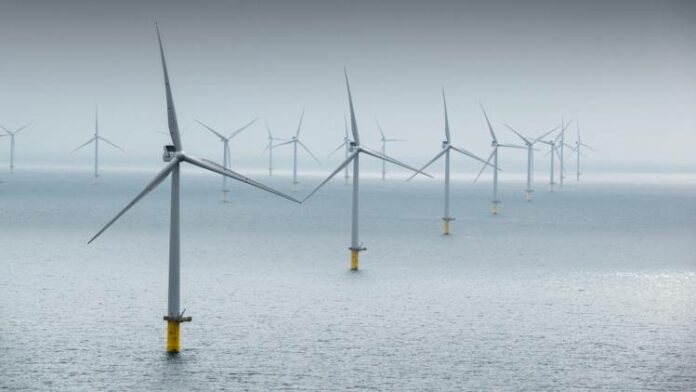
The next offshore wind innovation site in the Netherlands willfeature two V164-9.5 MW turbines from MHI Vestas, the 5th Dutch offshore wind park for the wind turbine supplier.

MHI Vestas Offshore Wind, in signing a firm order with Two Towers Consortium for the Borssele V Offshore Wind Farm, will supply two V164-9.5 MW turbines for the project. The 19 MW project has been designated as an innovation site that will test various innovations in and around the turbines.

We are extremely proud that the Netherlands will be home to our next test project,” said MHI Vestas Chief Technology Officer, Torben Hvid Larsen. “Borssele V confirms once again that MHI Vestas is committed to continuous learning and collaborating with industry partners on innovations that will advance our collective knowledge and propel our industry forward.”

The two-turbine project, slated for installation in 2020, will implement several innovations to improve environmental standards and contribute to the renewable energy transition in the Netherlands: To connect the monopile and transition piece, the innovative ‘slip joint’ technology will be applied. This technology, developed in collaboration with Van Oord, has two major advantages: it is maintenance-free, and it reduces installation time, which could result in significant cost savings.

Also, revolutionary eco-designs for scour protection will be tested to determine the effect on the maritime environment. Part of the innovation is the use of scour protection in creating reef systems, including oyster reefs, which will help promote a healthy and diverse marine ecosystem.

Borssele V will be located 20km off the coast of Zeeland and within site III of the Borssele Wind Farm zone and will provide clean energy for 25,000 households.

The project will be the 5th offshore wind park in the Netherlands for MHI Vestas, which will have an install base of 218 turbines and 1.1 GW in Dutch waters at the completion of the project.

Source:marinelink

Blockchain, AI as new tools to protect high seas

0

Technologies as Artificial Intelligence and Blockchain could help monitor the high seas aiming the preservation of the biological diversity of the world’s oceans, according to Reuters. Diplomats began negotiations, on September, on a legally binding treaty to protect oceans.

Namely, the meeting that was conducted at the United Nations in New York, aspires to have reached to an agreement by 2020.

The proposed treaty focuses on the 'high seas' – an area beyond the 200-mile Exclusive Economic Zone that extends from each country’s coastline into the ocean, as established by the 1982 U.N. Convention on the Law of the Sea.

Concerning high seas, there are no officially recognised rules stating who and where can fish. That's why, illegal, unreported and unregulated fishing estimated to cost $23.5 billion a year.

In addition, high seas should be protected since they make up the nearly two-thirds of the world’s ocean in areas beyond national jurisdiction.

Dominic Waughray, head of the World Economic Forum’s Center for Global Public Goods, addressed that technologies as blockchain and artificial intelligence could help enforce the new treaty by tracking fishing on the high seas and identifying illegal behavior.

As Reuters stated, WWF's Conservation Group in the Pacific, makes fishermen tag fish with a scannable code that is uploaded to a blockchain ledger, so businesses and customers can confirm the source of any given tuna for sale at a retailer.

This will result to customers be aware of the ill-gotten catch concerning fish.

Moreover, Dominic Waughray noted that "We know we need it for a healthy ocean, but because nobody owns it … we have a real problem."

Since there is no official regulation on fishing, groups of countries have negotiated specific, unofficial regulations for sections of international waters, like rules governing tuna fishing in the Pacific or fish stocks in the Atlantic between Greenland and Europe.

However, experts support that the existing regulations aren't enough to manage ecosystems in international waters.

Liz Karan, senior manager for the high seas at the Pew Charitable Trusts, a non-profit organisation stated that without a global deal there isn't much to accomplish in protecting oceans.

She, then, highlighted that "nearly 10 years after north Atlantic island Bermuda spearheaded an effort to encourage collective management of the Sargasso Sea and protect its eel-rich seagrass, there are no binding measures in place."

Also, small Pacific island nations, such as Kiribati, Nauru, and the Solomon Islands, experience the most negative affects of the existing system because there are gaps for large-scale international fishing vessels to come in.

Source:safety4sea

Samskip Takes Lead In Initiative To Develop Autonomous, Zero-Emissions Container Ships

0

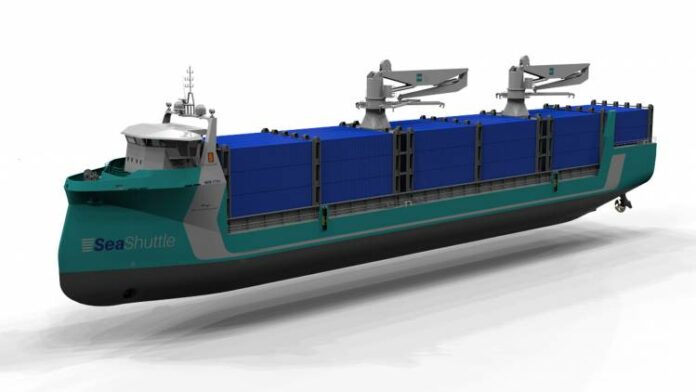
Europe’s largest multimodal operator has been named lead partner in ‘Seashuttle’, a project seeking to bring emissions-free, autonomous container ships to market that also operate at a profit.

The announcement coincides with the award of €6 million of Norwegian government money to Project SeaShuttle to take forward development of two all-electric ships slated to connect Poland, Swedish west coast ports and the Oslo fjord. The vessels will draw on state-of-the-art hydrogen fuel cells for their propulsion power.Seashuttle is one of six initiatives included in ‘PILOT-E’, a €100 million-plus scheme involving the Research Council, Innovation Norway and Enova, aiming to bring solutions for the climate-neutral industries of the future to market more quickly. Seashuttle funding came from four Norwegian ministries (Food and Fishing; Climate and Environment; Petroleum and Energy; and Transport and Communications).

“Samskip is delighted to take the lead in the project to develop next-generation sustainable shortsea shipping,” says Are Grathen, MD Samskip Norway. “What distinguishes this project and will be key to its success is the combination of fuel and technology that will make it cost competitive with existing solutions. With our trusted project partners, we are convinced that such ambitions are realistic.”

Aspirations for sustainability are best encouraged by door-to-door services that provided cost-effective and scalable competition with truck-ferry options, feeding into a pan-European distribution network, he says. Automation of key shipboard activities would also bring cost savings. “Exporters increasingly seek lower and even zero emissions transport solutions, but they need to be assured on reliability, frequency, efficiency and cost-effectiveness.”

Once operational, there is no reason why zero emissions ships should not target the 2,000 truckloads passing through Norwegian ports every day, he adds.

Other Seashuttle partners include logistics consultant FlowChange, technology group Kongsberg Maritime, hydrogen integrator HYON and Massterly, a Kongsberg Maritime/Wilhelmsen venture developing autonomous vessel solutions.

“Green shipping is a sector where Norway can be world leader in new and green technology,” says Anita Krohn Traaseth, CEO, Innovation Norway. “The conversion is underway, for example with many electric ferries. This year’s PILOT-E awards show that there are exciting plans to make shipping more environmentally friendly.”


Höegh LNG To Provide FSRU To AGL’s Crib Point LNG Project

0

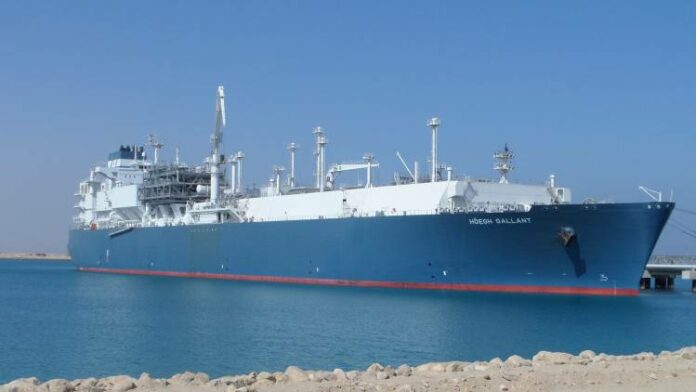
Höegh LNG Holdings Ltd.announced that it has entered into a time charter party with AGL Shipping Pty Ltd, a wholly owned subsidiary of AGL Energy Ltd., for the provision of a floating storage and regasification unit to facilitate its proposed Gas Import Jetty project at Crib Point, Victoria, Australia that is targeting startup in 2020 – 2021.

The charter is for a period of 10 years and remains conditional on the board of directors of AGL Energy Ltd. taking a final investment decision in relation to the project and receipt by the charterer of key environmental project approvals. The FSRU assigned to the project is expected to generate annual EBITDA of between USD 29 million and USD 31 million depending on planned technical modifications that may be specified by AGL before project start-up.

Höegh LNG’s President and Chief Executive Officer, Sveinung J. S. Støhle, said in a comment: “We are delighted to have been awarded the contract with AGL for their new LNG import project in Victoria, Australia. Our modern FSRU solutions offer our clients the quickest, most cost-efficient and most flexible method of connecting a new market to global LNG trade. Höegh LNG looks forward to delivering its best-in-class floating import infrastructure to highly credible counterparts in the high-potential Australian LNG market.

Source:marineinsight

The CMA CGM Group has taken delivery of its first LNG-powered vessel through its subsidiary Containerships

0

The CMA CGM Group, a worldwide leading shipping group, is pleased to announce its subsidiary Containerships, an expert in Intra-Europe which it acquired in October, took delivery on December 12th of its first container ship powered by liquefied natural gas (LNG), the CONTAINERSHIPS NORD.

With Containerships, the CMA CGM Group reasserts its ambition for LNG

The 1,400-TEU (Twenty-foot Equivalent Unit) CONTAINERSHIPS NORD is the first of an order for four LNG-powered container ships. The following vessels are scheduled to be delivered in the first half of 2019.

The CONTAINERSHIPS NORD will first join CMA CGM’s NEW DUNKRUS service between Morocco and Northern Europe, before making its first LNG bunkering in Rotterdam. It will then join CMA CGM’s French-Baltic Line before entering service on Containerships’ Baltic loop upon delivery of the next two vessels.

Containerships also has a fleet of LNG-powered trucks, thereby enabling the CMA CGM Group to offer LNG throughout the transport cycle.

CMA CGM, a pioneer of the energy transition of the maritime transport industry

CMA CGM is fully committed to the protection of the environment and to the energy transition and is asserting its role as an industry leader in this regard. The Group announced in November 2017 a global innovation by deciding to power its nine future 22,000-TEU container ships with LNG. The use of LNG represents a real technological breakthrough that allows for 99% less sulphur and fine particles emissions, 85% less nitrogen oxide emissions and 25% less CO2 emissions compared to heavy fuel oil.

Source:CMA CGM

UN chief asks for a ‘good’ use of technology

0

Although technology is developing at an unprecedented rate, it poses threats to the human element as stated by António Guterres, the Secretary-General of the UN. He highlighted that blockchain or gene testing are amongst the technological innovations that are commonly used.

Namely, during the Web Summit that took place in Lisbon, Spain, the Secretary-General addressed that technology is providing plenty of advantages providing cures for disease, fighting hunger, boosting economic development and growth globally, and effectively addressing world problems. As he stated, 90% of the existent technology was created the last two years.

In addition to the benefits, the World Food Programme (WFP) is using blockchain to track payments to aid recipients and the High Commissioner for Refugees is using biotechnologies in identification, to support and protect refugees.

Moreover, according to Gutteres, because machines can easily cause the loss of a human life, they should be banned by international law.

Mr. Guterres highlighted that the world is not ready for the social impact of the 'fourth industrial revolution', which although includes more job opportunities, it also results to job redundancy causing unemployment and social disruption.

Moreover, he stated that technology is imbalanced and unequal, so he proposed that the 2030 Agenda and Sustainable Development Goals (SDGs)  to help reverse inequality as the UN’s blueprint.

When asked about artificial intelligence, he noted that machines are doing more work with better results in comparison to the human element, such as  medical diagnosis and police surveillance. What's more the Secretary-General noted that the weaponization of artificial intelligence is a serious danger.

He continue stating that a better education and a new generation of safety nets are not enough to address this challenge.

Finally, because technology is developing in a fast pace, new platforms are in need of creation so that various groups can cooperate to discuss and agree on protocols and other mechanisms that allow for cyberspace, the internet and AI 'to be essentially a force for good'.

Source;safety4sea

Air-Defense Destroyer HMS Dragon Seizes $100M in Hashish

0

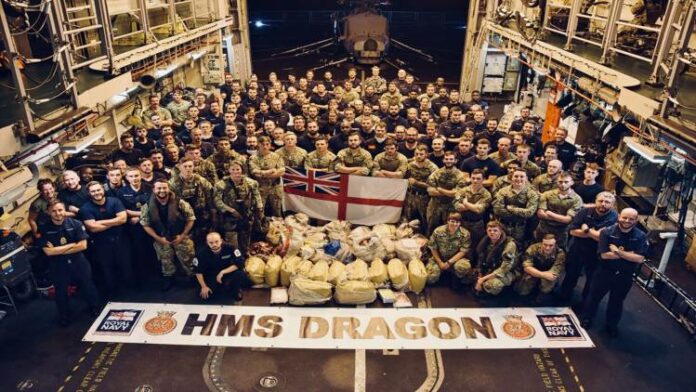
The Royal Navy warship HMS Dragon has seized and destroyed ten tonnes of hash worth nearly $100 million in a record-breaking drug bust in the Persian Gulf.

In a productive 48-hour window, the Type 45 destroyer intercepted two dhows carrying a haul of illicit drugs on the notorious drug smuggling route known as the "Hash Highway."

It marks the biggest seizure of illegal narcotics ever recorded in the history of the Combined Maritime Forces, the multinational organization in charge of policing this stretch of sea.

These are the third and fourth smuggling-dhow busts for the futuristic $1.3 billion air defense destroyer in the space of a month, taking the total quantity of drugs seized to 13.3 tonnes during the first three months of the ship’s deployment. 

“Seizing four hauls of this magnitude is a remarkable achievement and represents a significant dent in the pockets of criminals who seek to put these drugs onto our streets," said UK Defence Secretary Gavin Williamson. "The global narcotics network is a scourge that we are absolutely committed to tackling, as part of our commitment to security in the Gulf and across the world."

Dragon’s sailors and Royal Marines launched fast boats to halt the two dhows in two separate missions over a demanding two-day period. After barding and searching the boats, the servicemembers removed hundreds of sacks of narcotics worth more than $95 million.

Source:maritime-executive

Delo signs contract with Damen for its 6 th ASD Tug 2310

0

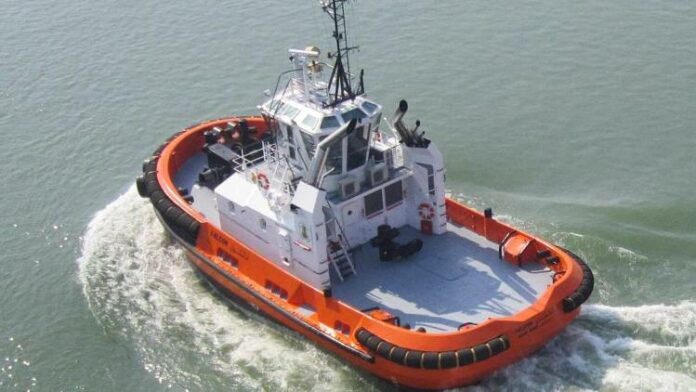
On 12 December 2018, Service Company Delo, part of DeloPorts – subsidiary company of the Delo Group, signed a contract with Damen Shipyards Group, for the delivery of an ASD Tug 2310. This vessel will be the sixth ASD Tug 2310 bought by Delo from DAMEN and will proudly bear the name Delovoy-6.

Delo says delivery of the 6 th vessel is scheduled for the start of 2021. Total investments in the tug boat fleet of SC Delo will exceed 31 mln euro of own and borrowed funds.

The new tug will be used for towing, mooring, firefighting and a wide range of additional harbour tasks at the grain and container terminals owned by DeloPorts at the port of Novorossiysk on the Black Sea.  Because of its compact size and its bollard pull of 50 tonnes the ASD Tug 2310 is the ideal tool to work at the terminals.

Currently the Delovoy-04 and Delovoy-05 are on their way from the building yard in China to the Black Sea with delivery scheduled for the end of this month. On arrival the vessels will begin operations immediately.

Delo Group is one of the largest private transportation and logistics companies in Russia with port assets in the Azov-Black Sea, Baltic and Far Eastern basins. It is also a major rail and multimodal supplier of containerized cargo delivery services.

The relationship between Delo Group and DAMEN started two years ago in 2016, but in this short period of time the companies have become good partners. On the premises of another Delo Group subsidiary, Aleksino Port Marina Shipyard in Novorossiysk, DAMEN has established a Service Hub that allows it to deliver quick and professional services for DAMEN customers in the Black Sea and eastern Mediterranean region.

Source:portnews