3.9 C
New York
Home Blog Page 1197

Shell Starts Production At World’s Largest FLNG Platform

0

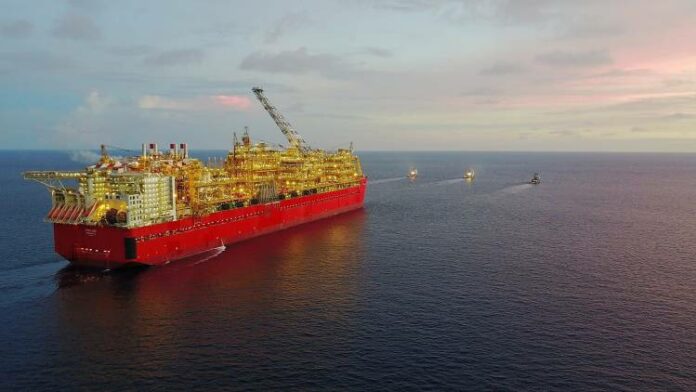
Royal Dutch Shell Plc said Dec. 26 it has begun output at its Prelude FLNG facility in Australia, the world's largest floating production structure and the last of a wave of eight LNG projects built in the country over the last decade.

Though the project started up later and cost more than originally estimated, it is expected to further cement Australia's lead as the world's biggest LNG exporter, after the country took the crown in November.

In a statement, Shell said wells have now been opened at the Prelude facility, located 475 km (295 miles) north-northeast of Broome in Western Australia. This means Prelude has now entered start-up and ramp-up, the initial phase of production where gas and condensate—which is an ultra-light form of crude oil—is produced and moved through the facility.

Prelude is expected to have an annual LNG production capacity of 3.6 million tonnes, 1.3 million tonnes a year of condensate and 400,000 tonnes a year of liquefied petroleum gas (LPG).

Shell did not immediately respond to a Reuters query on when first LNG will be exported from the facility, but analysts estimate exports to start by early next year, with condensates likely to start first.

"First LNG cargo is still several weeks assuming all proceeds as planned, but the timing of first cargo and pace of ramp-up is still subject to technical risk," said Saul Kavonic, energy analyst at Credit Suisse in Sydney.

"Given Prelude's novelty, geographic conditions and challenges, it may be subject to greater risk to timeline from wellhead production to first cargo than an average LNG project," he said. "We expect Shell to seek to get it done right, rather than rush things."

Source:epmag

Yang Ming Launches Two 14,000 TEU Ultra Large Container Vessels

0

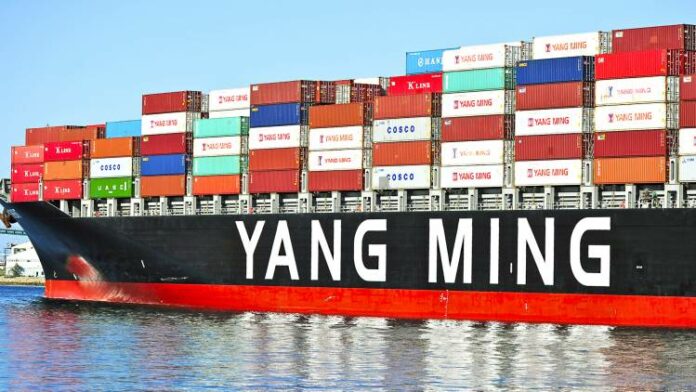
Two new 14,000 TEU full-container vessels built for Yang Ming Marine Transport Corp. (Yang Ming) by Imabari Shipbuilding Co., Ltd., Japan, were named as YM Wonderland and YM Wisdom respectively at a ceremony held on 21st December, 2018. Yang Ming Chairman Bronson Hsieh, and National Ocean Taiwan University President Chang Ching Fong, were invited to the naming ceremony. Ms. Sun Lan Tien, wife of Mr. Chang Ching Fong and Ms. Wu Li Fen, wife of Yang Ming Shipping Europe GmbH Managing Director Hsu Shih Feng, were also invited to officiate the naming of the new vessels at Imabari Saijo Shipyard.

YM Wonderland and YM Wisdom are the second and the third of five 14,000 TEU full-container vessels Yang Ming chartered from Shoei Kisen Kaisha, Ltd. They are sister vessels of YM Wellbeing which was delivered to Yang Ming this October. This type of ship is designed with a nominal capacity of 14,220 TEU and is equipped with 1,000 reefer plugs. Its LOA (Length Over All) is 366.44 meters, beam 51.2 meters, summer draft 15.524 meters. The vessel can cruise at a speed up to 23 knots.

As one of Taiwan’s three leading shipping companies, and a global major container liner, Yang Ming has endeavored to efficiently expand its service coverage, calling for the addition of ten 2,800 TEU new container vessels and the charter of ten 11,000 TEU new-built vessels this year to attain a strengthened position in the industry. Yang Ming has strategically striven to make it more competitive in response to the challenge posted by the fast-changing shipping market. The addition of these new ships will enable Yang Ming to provide customers with more and better services.

YM Wonderland and YM Wisdom will be delivered to Yang Ming in February 2019 and deployed to THE Alliance Asia-Europe service. With the deployment, Yang Ming will become more competitive thanks to the wider network and more efficient delivery services.

2018 Highlights: Major cyber attacks reported in maritime industry

0

While increased automation and artificial intelligence seem to open new routes for shipping, vulnerability of systems is another area of concern shipping has to encounter. In mid-2017, the industry was shaken by a major cyber-attack against Maersk, the world’s largest container shipping company, which led the sector to adopt a new look at cyber security issues. 2018 validated this trend as cyber incidents continued affecting operators, ports, and shipbuilders.

Cyber-attack hits Cosco’s operations in US

The highlight of the year was a cyber breach affecting Cosco's operations in the US Port of Long Beach, on 24 July, which affected the giant’s ­­daily operations. The company’s network broke down, and some electronic communications were not available as a result. However, operations outside the US were not affected, while, less than a week later, its network applications were totally recovered.

Ports experience serious cyber security incidents

Meanwhile, two major international ports, in Spain and the US, fell victim to cyber-attacks within the span of a week. On 20 September, the Port of Barcelona reported a cyber attack, which however did not disrupt any ship movements, but ‘affected only internal IT systems’.

Only five days later, on 25 September, the US Port of San Diego experienced a serious cyber disruption at its IT systems, which made the port employees to work in ‘limited functionality’. It is still unclear if the two incidents were related.

More recently, in late October, Australian defense shipbuilder Austal, which constructs ships for the Royal Australian Navy, the US Navy and the Royal Navy of Oman, became the latest widely-known company to be hit by a cyber breach at its data management systems, with hackers demanding money from the company in return for stolen data. However, the impact was not major.

Except for these separate incidents, it has been reported that earlier in 2018, a criminal gang in Nigeria targeting the global maritime industry had been running multiple “business email compromise” scams for hundreds of thousands of dollars. The group calling themselves “Gold Galleon” had been sending messages to infiltrate payments within shipping companies. Among the victims was a South-Korean and a Japanese shipping company.

Reflecting the need of a more enhanced cyber protection, the EU set in force the GDPR regulation in May 2018, which updates and upgrades current data protection legislation by requiring businesses who deal with EU citizens -and shipping organizations included- to be transparent about how they use their data.

Source:safety4sea

UK Hydrographic Office participates to autonomous navigation research

0

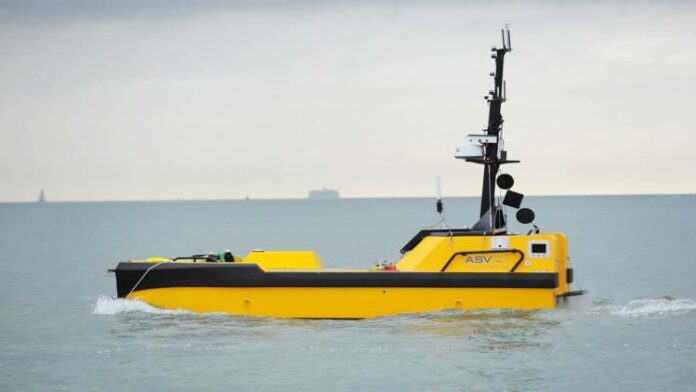
The UK Hydrographic Office (UKHO) has contributed to a new UK government-funded study on navigational requirements for autonomous maritime vessels to identify the future data requirements for autonomous shipping, and explore how navigational and wider geospatial data can be used to enable the safe navigation of smart and unmanned autonomous vessels.

Namely, the partnership is between UKHO, L3 ASV and the Maritime and Coastguard Agency (MCA).

The study began by exploring the features already existent navigational data and charts in terms of what they comprise, their structure and how they are updated.

Then, it examined a way on how these data could be repurposed to develop a ‘Smart Chart’ system, which will combine data such as radio signals, regulations, tides and foundation navigational data, that can be interpreted by a computer without the use of an onboard crew.

Moreover, Mark Casey, Head of Research, Innovation and Integration at the UKHO noted that the marine geospatial data combine bathymetry depicting the seafloor to the speed and direction of the tides, supports navigation across our oceans.

Nusrat Ghani, UK Shipping Minister, addressed that technology will keep on altering the UK’s world-leading maritime sector through the years. As he stated, technologies such as Smart Charts and Smart Shipping will enhance maritime industry.

As Ghani noted, technology and innovation are a key part of the Maritime 2050 initiative, which will set a vision for the growth and success of the Scottish maritime sector over the next 30 years.

Finally, Dan Hook, Senior Director of Business Development, L3 ASV, commented that the existing navigational data and charts belong to the past. In the future, many vessels will navigate without the help of the human element and charts will be read by computers.

Source:safety4sea

The Snam, Enagás, Fluxys consortium completes acquisition of 66% of DESFA

0

The consortium consisting of Snam (60%), Enagás (20%) and Fluxys (20%) has completed the acquisition of a 66% stake in DESFA, the national operator in the natural gas infrastructure sector, from the Hellenic Republic Asset Development Fund (HRADF) and Hellenic Petroleum for a consideration equal to € 535 million, Fluxys says in a press release. The consortium, which was awarded the tender for the DESFA privatization in April 2018, made the acquisition through Senfluga Energy Infrastructure Holdings. The consortium has obtained a >10-year non-recourse acquisition financing corresponding to approximately 65% of the enterprise value.

DESFA owns and operates, under a regulated regime, a high pressure transport network of about 1,500 km, as well as a regasification terminal at Revithoussa. Greece, an important crossroads for diversification of supplies and the opening of new natural gas routes in Europe, has further development potential as a hub in South-East Europe.

Thanks to the support of Snam, Enagás and Fluxys – three major European infrastructure companies which are committed to the creation of the Energy Union – DESFA will be able to fully exploit its strategic position in the Mediterranean, which will contribute to the country’s growth. The consortium will also promote natural gas innovation in Greece, will foster the introduction of renewables gasses such as biomethane in order to create a sustainable energy system, and will make an active contribution to the reduction of the country’s emission of both harmful pollutants and greenhouse gasses.

Source:portnews

MAN Energy Solutions opens a new service workshop in Senegal

0

MAN Energy Solutions strengthens its local footprint in West Africa with a new service workshop for the energy, industry, oil and gas sector, the company said in a press release.

On November 8, 2018, the facility in Dakar, Senegal, was inaugurated by Per Rud, Vice-President, MAN PrimeServ in the presence of Abdou Abasse Fofana, Managing Director of MAN Energy Solutions Senegal, Mr Stefan Roken, Ambassador of the Republic of Germany, representatives of local authorities and Head of leading Senegalese companies.

MAN Energy Solutions already plays an important part in the production of electricity in Senegal where it has equipped the Tobene power plant with MAN 48/60 engines. Thanks to these engines, MAN Energy Solutions covers 15% of the energy needs of the Senegalese population.

One of the main objectives of the local entity created by MAN Energy Solutions is to offer privileged services to major customers such as SENELEC, Tobene Power, Ciments du Sahel, ship-owners and other industrialists in the region. In addition, the service center will be able to reach out to neighboring countries, thus offering services to all West African countries.

The MAN Energy Solutions Senegal team consists of 21 employees, including 7 technicians. Dakar thus becomes MAN Energy Solutions' main service site for this area. This new installation, equipped with the latest technologies to carry out complex repairs, includes a balancer, valve and seat rectification, de-icer, engine performance control and thus makes it possible to offer preventive and curative maintenance services on all types of engines. This workshop will also support the promotion of retrofit turbocharger in an area where the potential is real.


Adolfo Utor Reveals Baleària’s Plans for Expansion

0

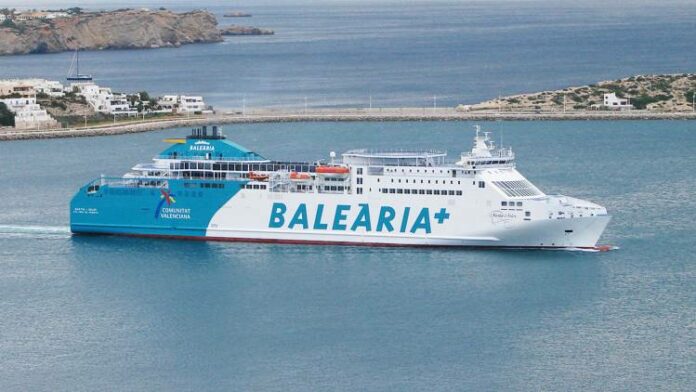
Adolfo Utor is the President and main shareholder of Baleària, Spain’s leading shipping company in the transport of passengers and cargo between the Balearic Islands and the Iberian Peninsula.

Baleària are one of the largest operators in the Strait of Gibraltar connecting Ceuta, Melilla and the Canary Islands with the ports of the Peninsula. Internationally, Baleària have an ambitious expansion plan, with operations extending to Morocco, Algeria, U.S. and the Caribbean. 

Utor talks about the company's distinctive culture and his plans for further success:

What are the key factors of your success?

This is, without a doubt, our own and distinct culture. A culture based on innovation, on people, on values and on the continuous commitment to adapt to change. We consider ourselves dynamic, responsible with corporate citizenship, with obligations and rights that defend inclusion, the environment and sustainable growth. We know and work so that all our efforts respond harmoniously to our stakeholders, customers, workers, suppliers, shareholders and the society of which we are a part.

Our success is a result of our own convictions, in the clarity with which we approach our transcendent mission each day and our ability to adapt to change by being innovative.

What are your main objectives for Baleària?

Baleària has two main objectives; firstly, respond to our stakeholders’ expectations by ensuring competitiveness; secondly, to fulfill our transcendent mission in a sustainable way: unite territories by sea and facilitate free trade, the mobility of people, goods, knowledge and culture, and thereby contribute to the progress and welfare of citizens of the territories in which we operate. 

Therefore, our objectives are to deploy a fleet that is increasingly eco-efficient and to provide excellent services to our customers, generating resources to continue doing what we like the most, building ships and opening new lines.

We are one of the pioneering shipping companies worldwide in the use of LNG applied to maritime transport. We have been promoting it for over six years now. We are currently building two ferries powered by this clean energy with an investment in excess of €200M, engine re-fitting six ferries in our fleet and commissioning the first gas generator on board a passenger ferry. In addition, we have strategic alliances with other companies that also work in this area, namely Naturgy, Wärtsilä and Rolls-Royce.

It is one of Baleària’s strategic goals to grow the group’s business by focusing on and expanding in foreign markets. Passengers coming from the North African lines – where we have an ambitious expansion plan, both in Morocco and in Algeria – have increased by 17 percent over the last year.

We also work on the implementation of social responsibility policies that allow us to contribute to the development of the territories where we operate. In this respect, we have reinforced our commitment to sustainability by adopting the United Nations Sustainable Development Goals to continue innovating and generating wealth in favor of people and the environment.

How is Baleària different from the competition?

Our competitiveness is based on innovation and high capacity to adapt to new market demands, such as the quality of services and action on sustainability and the environment.

We have a clear desire for continuity, we work thinking long term – we appreciate and look after of our image and reputation as a reference for great value. We believe and comply with our Code of Business Conduct and Ethics, which encompasses social responsibility actions carried out in part through the Baleària Foundation dedicated to culture, environment and solidarity. 

We are dedicated to maritime transport. If it grows sustainably, our company will also do so. Our commitment to the well-being of society and the environment is absolute and unconditional. It is our duty to do this together. 

We consider our main strength to be the degree of commitment and cohesion displayed by our teams, attributes that result in our ability to be competitive.  

Which of your services are most in demand?

The most mature market is that of the Balearic Islands; it is more stable and more predictable. On the other hand, the routes covering the Strait of Gibraltar are more volatile and subject to many changes depending on the season, partly due to the entry and exit of operators and in part by the strong interventionism of public administrations on both sides of the Strait. Regarding the Caribbean, despite being an emerging market, it has great potential for growth and is in the process of development. We also have a wide margin to increase market share and achieve stability with reference to new routes in the last two years – Melilla (Spain), Nador (Morocco) and Mostaganem (Algeria).

Finally, we are looking forward to our partnership with Fred. Olsen Express on the new routes between the Iberian Peninsula and the Canary Islands.

What would you highlight about these services?

We have increased our presence in the Port of Valencia; we are the first operator in terms of the volume transported of passengers, vehicles in regime of passage and ro/ro cargo, as well as number of annual port calls. In addition to the daily connections to Ibiza and Mallorca, we added the route to Mostaganem (Algeria) in 2016 – service provided with four weekly calls. 

The Strait of Gibraltar is an area of significant importance for the company due to the traffic volume of the Ceuta and Tangier lines from Algeciras, where we are also the leading shipping line in passenger and vehicle numbers. 

What the main challenges facing the maritime sector and in particular the movement of passengers?

Governments should pay more attention to the maritime transport sector and the strategic importance of having large local operators that will promote business. In order to achieve this, it is essential to obtain a more competitive Special Registry; specifically regarding the hiring of 50 percent foreign seafarers. We would like to see these procedures simplified and without limitations, or the possibility of certification of recognized companies in the processing of flag certificates, as happens in most countries with important fleets.

These two measures would align the Spanish Registry to the rest of the European registers and would facilitate the growth of our fleet and generate wealth and employment for our territory.

On the other hand, passenger transport by sea has great potential for growth: it is all about improving the quality of ships and services, increase their frequencies and incorporating all the innovations that are available with new technology. 

Excellent, frequent, comfortable, entertaining and punctual services. For short distances the maritime alternative is the best alternative.

What new markets do you plan to explore in the next five years?

We currently operate in five countries (Spain, Morocco, Algeria, U.S. and the Bahamas), and we all have an interest in expanding our services. Between the U.S. and the Bahamas, for example, we operate with the island of Grand Bahama, but we are studying adding new connections with other Bahamian islands. We are also assessing different projects in the Caribbean region; Puerto Rico and the Dominican Republic. 

Additionally, we are interested in being able to expand services in Europe with new ports in North Africa. We are also focusing on the “Motorways of the Sea” concept promoted by European institutions, a space of growth with a lot of projection.

Source:maritime-executive

CHIRP Maritime: In 2018, We Have Seen a Continuance of Fatalities

0

As 2018 draws to a close, it is time for us here at CHIRP Maritime to reflect upon this years’ maritime events as reported in the worldwide media: events that in our view have highlighted safety at sea or more to the point, the lack of it. The decades pass, and we see a monotonous recurrence of the same theme. In some cases, such as the operation of enclosed lifeboats, the situation has failed to show improvement.

We have seen the continuance of fatalities within enclosed spaces; vessel collisions resulting in catastrophic outcome; official government investigations that fail to identify root cause and prefer to apportion blame to the human element; ferry casualties continue to rise, and the fishing industry remains the most dangerous commercial occupation on the planet.

So where is all this taking us? Is there a purpose and a position for CHIRP Maritime in the international maritime context, where sophisticated SMS policies and universal IMO approved legislation exists? We would argue there has never been a more important requirement for CHIRP Maritime to exist. 

Why now? Because there is clearly something going wrong. The maritime world has moved on, ignorance and lack of knowledge have been replaced by enlightenment through research and hard statistics. Yet incidents continue to occur with knowledge, and complicity and that cannot be acceptable.

So what have been our discussion points for 2018? 

In January we commented on a serious lifeboat incident on a cruise ship which resulted in considerable feedback, clearly highlighting the concerns of seafarers everywhere. The vessel was in port at the time of the incident. The incident involved the lifeboat falling to the sea with five personnel on board resulting in one hospitalization. 

Our comment at the time: “If serious incidents are occurring on well maintained, high profile vessels such as this cruise ship, these questions have to be asked: What events are occurring on other merchant vessels? What is the real picture of lifeboat incidents? How many seafarers are being killed or seriously injured? These complex enclosed lifeboats appear to be killing more people than they are saving.

The publication of the official report in 2018 on the loss of the U.S. container vessel El Faro on October 1, 2015 left much to be desired. The thorough investigation and extensive report detailing the causes and recommendations to the various bodies focused the blame on the Master as the principle cause of the loss. But CHIRP would seek to identify the root cause that led the Master to misinterpret the information available to him and his perception of the risk. The final report gave 81 findings and 53 recommendations. Many of the recommendations were directed to the U.S. Coast Guard, class, the IMO, maritime schools and the company SMS. Blaming an individual will not in itself resolve the issue but in fact will detract from identifying and confronting the root cause.

Our comment at the time: Why was a 40 year vessel permitted to be at sea with no substantial modifications to her safety integrity being authorized by flag and class (or for that matter the vessel managers)? Ample opportunity existed for an upgrade during her 2005-06 conversion from a Ro/Ro to a Ro/Con. Quote from the report “The Coast Guard did not consider the modification a major conversion.” Why was the vessel approved as “seaworthy” for 40 years? For those who think the answer is “It was a Jones Act vessel,” the Jones Act does not circumvent the inherent safety management of the vessel.

Fishing safety is a perennial issue covering many aspects. Global fishing fatalities are estimated at some 24,000 per year. CHIRP Maritime welcomed the 2018 global safety initiative from the Lloyd's Register Foundation to look at fishing safety in the developing world. Their report particularly focused on areas of high incidence namely: Philippines, Indonesia and Bangladesh. 

Other issues have come to light in the developed world fishing sectors such as the widespread abuse of recreational drugs with resultant incidents including fatalities. Most disturbingly, recent evidence from official sources suggests there is widespread abuse of labor now termed modern slavery. However, the fishing industry remains a challenging area to engage with.

In January, we witnessed the dreadful aftermath of the Sanchi collision resulting in the total loss of the vessel and crew of 32. The tanker was carrying 136,000 tons of condensate, an ultra-light crude, and was ablaze after colliding with a Chinese bulk ship the CF Crystal spewing cargo into the sea. Of the 32 crew members originally missing from the Sanchi, one body was recovered. 

CHIRP Maritime was disappointed that many articles focused on the threat of environmental damage, the conflict of insurance compensation claims and even the purchase of a replacement cargo – What about the crew? For those of you with tanker experience, you may choose to question the operational effectiveness of the inert gas system. For those of us with an insight in to the reality, our thoughts lay with the family and crew of the Sanchi.

As we close this year, we looked at the loss of life in enclosed spaces – will it never end? Lessons learned 40 years ago have been unlearned. Why? And so we looked at the root cause, training or rather lack of it, and investment. It’s all very well having STCW and SOLAS conventions, but clearly paper is not saving lives. Actions not words are what matters. 

However, we choose to finish on a positive note. It is our opinion that the international maritime industry leads the world (including aviation) on the global initiative to clean up our environment. We have waste separation systems, ballast water management, oil/water discharge and emission controls.  There are environment exclusion zones and anchoring prohibitions, a Polar Code and fishing restrictions. Whilst there is still much to do on this long voyage, the international maritime community has embraced this initiative and is playing its part.

This editorial contains only a small sample of major maritime incidents that have occurred across the globe. Seafaring is and will always be the application of common sense combined with knowledge. Seafaring is a hazardous occupation that requires control, but isolating the seafarer to the world of automation and button pushing does not remove the seafarer from the reality of the sea. Outside of the warm, cosy high-tech control room, the sea is as it’s always been – wild and dangerous. It takes skill, knowledge, experience and dedication to safely operate in this environment.

As we move in to 2019, CHIRP Maritime remains the world’s foremost maritime confidential reporting program and continues to receive increasing acknowledgment from those who share a common objective. We will continue to reach out across the globe and challenge those who need to be challenged, and we will remain the voice of the global mariner. 

Source:maritime-executive

The Force Awakens

0

In a remote corner of the developing world, a third-party logistics (3PL) driver accepts the terms of a digital smart contract through a mobile app on his smart phone to pick up a refrigerated container of perishable flowers. Upon pickup, the driver scans QR codes on the documentation and a container connected to Internet of Things (IoT)-related sensor data – temperature, pallet-tracking, returnable packaging – thus accepting transfer of custody. The event is time-stamped with a network confirmation as the documentation is verified by artificial intelligence for authenticity.

While in transit, the app is continuously running in the background, providing real-time geographic, routing and sensor data to the network. For providing this additional data the 3PL is incentivized through micro-rewards (payments) intended to enhance traceability and continually improve route-planning and other delivery methods.

Upon arrival at the port, the transfer process is repeated, and a blockchain-enabled digital chain-of-custody record and an electronic proof-of-delivery (ePOD) are generated. Provided the terms of the smart contract are met (location, timing, container temperature), the self-executing smart contract immediately triggers the creation of an invoice and release of payment.

Disruptive Technology

Futuristic pulp fiction, you say? Nope. In fact, a similar proof-of-concept event has already been historically recorded on a blockchain, forever, having recently been conducted on the OEL Enterprise Architecture involving OEL Alliance members OpenPort and Acudeen’s AssetChain. The OEL Alliance is part of the OEL Foundation, a nonprofit organization providing governance and resources for the development of the Open Enterprise Logistics blockchain ecosystem.

“Business as usual” has been disrupted.

In this example, an invoice was verified and bought at a competitive rate – without the need to interact with the seller’s payer – thus demonstrating how an irrefutable and immutable digital audit trail can enhance liquidity and cash flow while reducing both counterparty risk and intermediaries. The new ecosystem facilitates orders, letters of credit, bills of lading and delivery receipts with more efficiency and transparency than current methods.

Max Ward, Founder & CEO of OpenPort and the OEL Foundation, says, “We are fundamentally changing the way B2B trade is conducted. We provide real-time confirmation of exactly what has been delivered so that payment can occur and use trust to lower the cost of that payment. This changes the cost of capital and makes logistics work the way it should.”

The recently held Crypto-Event Blockchain INDO 2018 conference in Jakarta, Indonesia provided a well-organized introduction to the blossoming sector and to forward-leaning organizations like FloraChain. Its CEO, Brian Kanda, described how his company’s use of IoT and blockchain drastically reduces layers within the supply chain such as verification of source, quality (e.g., organic or use of pesticides) and delivery (including streamlining of customs clearance). This, in turn, fosters significant reductions in the cost of goods, highly competitive price points and increased consumer confidence.

The Fourth Industrial Revolution

A force has awakened again. Do you feel it? Civilization is comprised of revolutionary advances: steam power, then electricity and assembly lines, then computers or “bicycles for the mind,” as Steve Jobs eloquently said.

Prepare now for the exponential growth of efficiencies and a value-creation society building decentralized networks that use distributed ledger technologies like blockchains and cryptocurrencies.

For reference, the Genoans in the 1400s were credited with helping take humanity out of the Dark Ages and ushering in the Renaissance that was accelerated by a revolution in global trade largely attributed to the introduction of “double-entry” (credits & debits) accounting. Thanks to today’s blockchain, we now have a “triple-entry” accounting system that records a time-stamp or network confirmation and has profound implications – the elimination of double-spending, for one.

Arguably, the whole notion of writing was created for the purpose of recording transactions, and the actual concept of a “blockchain” has been around since discovering that the first scrolls of papyrus were used as ledgers. Each ledger could be considered a “block” of information, and when sequentially arranged (“1 of x,” “2 of x,” etc.) they formed a “chain.”

Voila, a “blockchain”!

Fast-forward a few thousand years and today it’s done electronically. Instead of one central and private controller of documents – capable of manipulating or silencing entirely – we can now cryptographically, simultaneously and autonomously distribute an identical record on a public, permission-less (anyone can participate), peer-to-peer network.

In order for transactions to be approved on the network, they must concurrently be agreed upon through an automated, mathematical algorithm consensus protocol by all participating members, who maintain the same record or “node.” The record now becomes “immutable,”verifiable” and “tamper-resistant” or “tamper-proof.”

As each recorded event on the blockchain is assigned a digital fingerprint or “hash,” any modification to the original entry will alter the hash and thus become automatically noticeable by the network and rejected if not aligned with predetermined, consensus-driven rules. The system itself serves as the regulatory compliance or governance protocol.

Enter the “Age of Blockchain”!

For reference, companies like Samsung and IBM saw the writing on the wall with IBM investing upwards of $200 million in developing technologies and partnering with major players like Maersk. Even banks, despite all the negative rhetoric, are investing fortunes in partnerships with companies like Ripple and have recognized that implementing blockchain technology could reduce infrastructure costs by $20 billion per year, as reported by Santander InnoVentures.

Financial institutions will experience gains through attractive features such as “near-instantaneous clearing and settlement, transaction irreversibility, elimination of double-spending, reduced margins of error and open verification by the community of network users.” In addition, former Goldman Sachs trader and billionaire investor Mike Novogratz predicts that cryptocurrencies (the market force driving the sector) will eventually reach $20 trillion.

Foolproof Protocol

Andreas Antonopoulos, the notable coder, entrepreneur and author of Mastering BitcoinMastering Ethereum and The Internet of Money, Vols. I & II, explains that “decentralization” or the removal of custody from a single player or cartel is an essential principle of blockchain, providing censorship resistance and immutability.

A decentralized, distributed database that stores all transactions that occurred on it and can also be accurately and independently verified by anyone in order to arrive at a consensus will dramatically improve industry safety factors. The advantages of an open, public ledger are that you can record the digital signature/fingerprint/certification and not necessarily the private confidential data itself in such a way that actors cannot modify the data without its being noticed.

For example, an aircraft inspector records a deficiency (like a fracture) that could cost an airline a lot of money or embarrassment. It’s then recorded on paper or, worse, a database that can be later modified or removed without a trace. At present there is no way to protect the integrity of that information.

With blockchain, that inspection record or report is placed on an internal, private database and given a digital fingerprint or hash, then placed on an immutable, public blockchain. The report may later disappear, but the digital fingerprint will not, and that will have to be explained. If the report is altered, so too will the fingerprint, which will be detectable as it provides proof of the existence of a record along with a specific point in time.

This protocol has significant application across any process that requires a trusted, verifiable record of activities that have happened such as transfer of custody/ownership, engineering records, and maintenance or vessel logs. The current method involves using a trusted institution, certified professional or recognized organization to provide trust, confidentiality and enforcement through legal or other penalties.

Antonopoulos argues that these same outcomes can ultimately be achieved much more efficiently through a blockchain rather than corruptible or politically motivated institutions with the added advantage of being openly verifiable without permission from anyone.

Don’t Miss Out!

Antonopoulos cautions to not underestimate this technology as most people did the power of the Internet in the early 1990s. As the saying goes, “When the tide goes out, those who are not prepared will be exposed.” Disruption can ruin your entire business model, and many companies are reluctant to change.

Contrary to mainstream thinking that this new technology is unregulated, it’s really quite the opposite. These systems apply the strictest of rules under highly deterministic and predictable models that are regulated through mathematics. In the future, industry will be regulated not just by institutions and committees but by algorithms and mathematics.

The new technology will gradually out-regulate the regulators and, in many cases, make them obsolete because the new system offers more certainty. Antonopoulos explains that “the opposite of authoritarianism is not chaos, but autonomy.”

For those confused about the specifics, don’t worry. We’ve all been using the mind-blowingly complex Internet-routing process for decades. You don’t have to understand the system internals of blockchain to have it work for you.

Source:maritime-executive

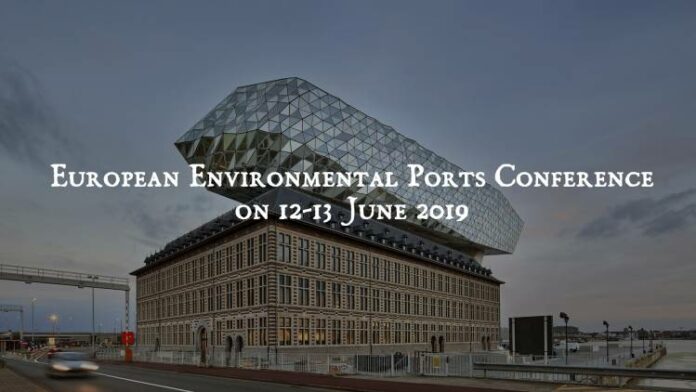
Antwerp, Belgium will host the 3rd European Environmental Ports Conference on 12-13 June 2019

0

June, 2019 will mark the arrival ACI’s third European Environmental Ports Conference. The event will bring together senior representatives from the global port community and shipping companies, as well as environmental policy-makers, academic experts, consultants, and technology providers, to tackle the most pressing topics of the maritime industry.

Given the increasing focus on environmental regulations from the IMO and policy makers in the maritime sector, there is a growing responsibility and requirement of ports to reduce their environmental impact; now is a crucial time to share best practices and explore new technologies and methodologies in order to advance daily operations of a port with minimal ecological consequences.

On the 12th and 13th of June 2019, this two-day event will provide informative presentations on the very latest challenges, solutions and developments in reducing emissions, pollution and energy consumption, as well as discussing the possibilities of industrial collaboration and a more sustainable future.

Key Topics Include

  • The Ten Biggest Concerns of the Ports Industry
  • Keeping up to Date With and Anticipating Changes to Environmental Legislation
  • Ports Impacting Air Quality and the Technological Developments to Bring Lasting Solution
  • International Trade and Alliances following the 2019 European Elections
  • Improving Water Quality with the Maritime Strategy and Water Framework Directive
  • Port, Shipping and City Interaction and Collaboration for Sustainable Economies and Improved Relations
  • Ship-Owners and their Role Towards an Environmentally Green Future
  • LNG and its role as a transitional fuel and what constitutes as a long term solution