3.9 C
New York
Home Blog Page 1196

Captured Ukrainian Sailors Lose Court Appeal

0

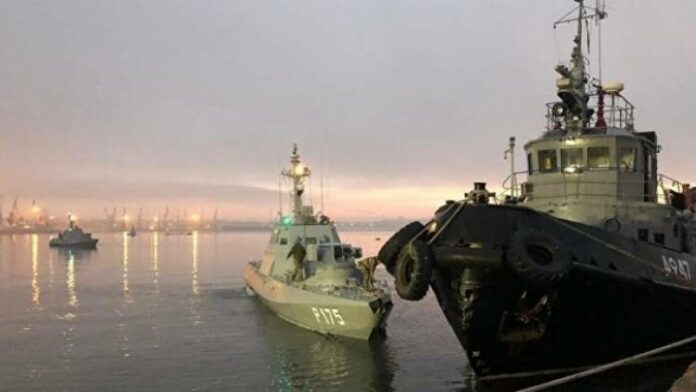
An appeals court in Russian-occupied Crimea has decided that five Ukrainian Navy sailors captured by Russian forces in late November will not be released. Their imprisonment will continue until January 24, according to RIA Novosti. 19 of their shipmates also remain in captivity, and have already exhausted the appeals process.

On November 25, Russian forces blocked three Ukrainian naval vessels from crossing under the Kerch Strait Bridge, then fired upon, rammed and boarded them as they retreated south into the Black Sea. Russian border guards took all 24 crewmembers from the vessels into custody, including three who were injured in the exchange and required hospital treatment. The detainees have since been moved out of Crimea and taken to two detention centers near Moscow. 

The Ukrainian servicemembers stand accused of an "illegal border crossing" and face up to six years' imprisonment if convicted. The international community does not recognize a Russian maritime "border" in or near Kerch Strait; in addition to the freedom of navigation protections afforded by UNCLOS, Ukrainian access to the Sea of Azov is separately guaranteed by a bilateral treaty with Moscow. 

The European Union has called on Russia to release the captives and return custody of the naval vessels to Ukraine, but has not moved to strengthen sanctions or impose other penalties over the altercation. 

Preparing for conflict

Russia annexed Crimea from Ukraine by force in 2014, and in May, it completed a new bridge to connect the Russian mainland to the peninsula. The Kerch Strait bridge provides Russian forces with the means to resupply military assets in occupied Crimea, and it also creates a narrow choke point for Ukrainian merchant shipping between the Black Sea and the Sea of Azov. Russian border control forces have implemented an extensive inspection process for merchant vessels passing under the bridge, leading to complaints from Ukraine and the United States about Russian interference with freedom of navigation. 

"There's a war going on, initiated by Russia . . . and this war is raging at sea too, since 2014," said Vice Admiral Andriy Tarasov, chief of Ukraine's naval staff, speaking to Kyiv Post on Saturday. "If we face an act of aggression, we will be ready to have different rules, particularly regarding the use of weapons, if we are forced to do so, and if we are fully entitled by international and Ukrainian law."

UK and U.S. pledge new support

The Royal Navy recently deployed the intelligence ship HMS Echo to the Black Sea to participate in drills with the Ukrainian Navy. UK defense secretary Gavin Williamson visited the Echo while she was in port in Odessa, and he expressed support for Ukraine in the face of "continued illegal acts of aggression against its sovereignty."

Williamson added that the UK will be offering support and mentoring to the Ukrainian Navy by deploying training teams from the Royal Navy, Royal Marines and the Army in January and March. Since 2015, British personnel have trained over 9,500 servicemembers of the Ukrainian armed forces.

Separately, the U.S. State Department pledged Friday that it will provide the Ukrainian Navy with $10 million in funding to improve its capabilities. "The United States calls on Russia to immediately return to Ukraine the seized vessels and detained Ukrainian crews, to keep the Kerch Strait and the Sea of Azov open to ships transiting to and from Ukrainian ports, and to respect Ukraine’s sovereignty and territorial integrity," said the State Department in a statement. 

Source:maritime-executive

Finding More Ways to Capitalize on Digitalization

0

The adoption of “smart” technology – for both equipment and systems – will escalate across the maritime sector in 2019, even if the verifiable benefits of the projects that start this year will take longer to emerge.

The transition to smart will continue to be driven by vendor leadership and advances in the data sciences that support immediate, data driven, condition-based performance assessments of shipping and offshore assets.

Rather than think of “smart” as individual pieces of technology, for maritime applications it is instructive to think in terms of functionality. At this stage, smart is effectively data collection, management and analysis, which is used to make better decisions.

Shipowners already have a lot of smart-enabling technology on their vessels; the challenge for 2019 will be to find more ways to capitalize on this increase in digitalization. 

Whether from vendor equipment, the digital capability of which is growing each day, or the ships themselves, the data being generated will increasingly be used to the operator’s advantage, potentially reducing operating expenses, improving operational performance and increasing safety.

As the regulators move towards demanding better sustainability from our industry, leading owners are already building the robust data infrastructures required to support compliance with future regulations.

The coming years will see an escalating transition from calendar-based to condition-based operational strategies and will continue to escalate in line with the industry adoption of smart functionality as that technology matures. While monitoring the condition of an operational asset is not a new concept – the technology that enables it has existed in various forms for at least 40 years – recent advances in data analytics applied to operational data are supporting a more comprehensive understanding of the asset.

The same data sets that are used to assess an asset’s health – (is it still mechanically or structurally sound?) – are now being combined with performance metrics such as fuel efficiency. This data is also being used to improve decision-making for fleet operations by identifying emerging risks and, ultimately, it will improve aspects such as vessel availability and scheduling flexibility.

Central to this new functionality is the ability to detect the statistical anomalies that identify sub-optimal performance and the early onset of the conditions that lead to component/system failures and poor performance. These early warnings can help to reduce operating costs and maximize the lifecycles of an asset and its components.

In many respects, marine engine manufacturers have led the way to the smart era: they have been putting client data in the cloud to assess health and performance for years, using physics-based models. They are now augmenting that with machine learning, applying approaches that offer a deeper understanding of performance and health.

Today’s onboard equipment has hundreds of sensors that collect information on temperatures, pressures, vibration levels, fluid consumption, etc. Combined with high-speed connectivity, these allow large quantities of data to be continuously generated and assessed. 

As ship operators build the data infrastructure to capture and analyze information and gain unprecedented visibility into the causes of operational inefficiency and failure, designs will begin to evolve.

Traditionally, the way marine equipment is used has stayed true to the original intent of the design. However, the operational insights brought by advances in data analytics already have many manufacturers predicting significant shifts in component usage, operating conditions and operator skills.

Already we are seeing a shift in the corporate maritime skill sets of leading organizations. The traditional mix of civil and mechanical engineers and naval architects is being blended with systems engineers, cyber engineers, risk engineers, data analysts and computer scientists.

ABS has helped shipowners to build the foundations required to function in the smart era of shipping by releasing our Guidance Notes on Smart Function Implementation. 

Smart functions were broadly grouped into categories such as structural health, machinery, operational performance, asset efficiency management and crew augmentation, key areas of ship functionality.

Shipowners were encouraged to develop high-level goals outlining what they wanted to accomplish; functional requirements covering an operational concept supporting those goals are then run through a risk framework to apply the criteria to assess them against.

Once the framework is set up for the entire asset, the smart functionality is examined through a validation/verification scheme that is bespoke to that system or equipment. The qualified “smart” functionality is then put on board the asset to leverage benefits for the operator, as well as to assist in optimizing the class survey process.

In 2019, ABS will take that industry support a step further by offering smart notations for machinery and structural health, as well as criteria for “smart” vendor recognition, including how to integrate their equipment or solutions on board the assets.

The adoption of smart technology is destined to escalate across the maritime industries in the coming years. But that doesn’t mean the benefits will become immediately visible from a return-on-investment perspective.

Source:maritime-executive

The Digital Deck

0

Machinery manufacturers are demonstrating that reducing the shipping industry's carbon emissions is not just a mandate for engine makers.

At SMM 2018, Michel van Roozendaal, President of cargo and load-handling company MacGregor, a subsidiary of Helsinki-based Cargotec, commented on the IMO's ambition to reduce shipping's greenhouse gases by 50 percent by 2050. “How can you achieve that?” he asked. “Ships are already quite efficient. If you switch to LNG, perhaps it will be a little bit cleaner, but it doesn't necessarily give a large reduction in greenhouse gas emissions. If you go electric, there is not necessarily a recharging point for your ship in the middle of a voyage. That is simply a reality.

His answer: MacGregor and its Singapore-based sister companies, Kalmar and Hiab, are focused on reducing inefficiencies and waste like idle time waiting in port. “This has the potential to reduce a shipment's overall greenhouse gas footprint,” he says. “We think about the cargo's overall transit time from door to door, not just its time on board a ship. Autonomous vessels can be a part of reducing that waste too, and we are very engaged in this effort. If you have an autonomous vessel but need a crewmember to operate the crane, you still have to make space on board for that individual. To be fully autonomous, these ships will also have to have autonomous sub-systems.

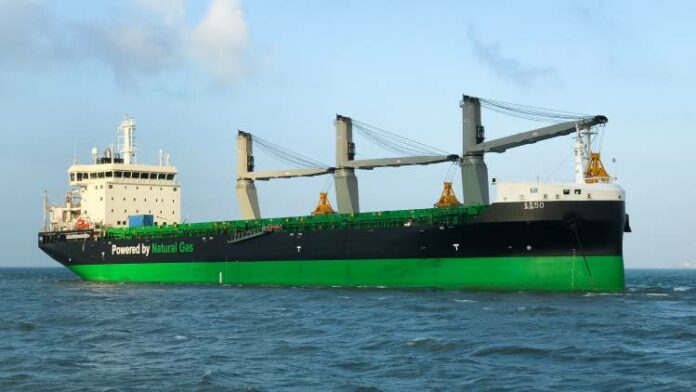
To this end MacGregor, together with ESL Shipping Oy, is developing and testing the world's first autonomous discharging cranes equipped with self-learning capabilities. The cranes will be fitted on ESL’s two new LNG-powered Handysize bulk carriers, Viikki and Haaga.

A number of features maximize efficiency. Each crane pre-calculates suggested routes to optimize paths, ensure pendulum-free motion and minimize total discharge time. The crane’s topographic software creates a map above each cargo hold to find optimal lifting points and calculates which shore-side hopper to use, depending on capacity.

The “grab” is controlled by an intelligent, self-learning algorithm that automatically adjusts to ensure that the bucket is filled to an optimum level and not overloaded. The auto-grip software readjusts lifting parameters when material properties change, automatically adjusting between cargoes. The software essentially mimics a crane driver’s desk and can be located on the ship’s bridge or anywhere that the system operator has a view of the crane position and the topographic cargo map.

Safety advances are a key benefit of autonomously discharging bulk cranes, says MacGregor. Speed and crane movement are continuously monitored to ensure cargo is moved without causing pendulation. However, if this does occur, it’s automatically corrected by the cranes’ anti-pendulation system. Numerous sensors also compensate for a vessel’s change in list and trim during operations, so a stable discharge point is continuously maintained.

The realization of autonomous vessels will be a journey, says van Roozendaal, not an overnight achievement. Running concurrently, the company's framework for developing intelligent systems is called MacGregor Smart, a program that involves building digital features into MacGregor equipment. By the end of the year, all new relevant equipment will be configured to offer connectivity capabilities ready to be activated if a customer requests it.

Balancing the Load

Norwegian company Kolberg Caspary Lautom is also acting on cargo crane efficiency. The company has launched a gyro-based stabilization device called YawSTOP to enable rotation-free and rotation-controlled lifting and loading of cargo by cranes. While heave-compensated cranes adjust for wave and roll, rotation control of suspended cargo is frequently handled by vessel or harbor crew with taglines attached to the corners of the load – a highly inefficient method.

“We have conducted analyses which show that YawSTOP reduces time usage for lifting operations by up to 45 percent and costs for each lifting operation by up to 50 percent,” says Thor Jegard, Chairman and main owner of Kolberg Caspary Lautom. “As the solution enables you to control unwanted rotation of the cargo, you can complete more lifts in a shorter space of time as well as increase your operating window by working during weather conditions that previously were defined as too challenging. This increases both productivity and predictability.

TTS Marine has introduced an intelligent control block for windlasses, designed to prevent severe damage to the motor related to anchor heaving under heavy weather conditions, during which the anchor chain often exceeds the intended safe load of the windlass. This leads to motor damage, chain loss and downtime. The newly-designed TTS Intelligent Control Block automatically adjusts when overload is detected and protects the motor from damage. It’s available for all new TTS windlasses and as an upgrade for existing TTS windlasses.

TTS Syncrolift targets efficiency gains during drydocking with its FastDocking™ equipment suite, which reduces docking time and increases dock capacity. The suite includes automated bilge support arms that eliminate the need for customized blocking of ships, thus saving on man-hours, materials and lead-time. The in-haul system guides the vessel safely into the dock while the positioning system centers the vessel over the blocking arrangement. A mechanized propeller puller eliminates the need for the welding of brackets to the ship and reduces or eliminates the use of cranes and scaffolding.

Among the early users of this new technology are Harstad Mekaniske Verksted in Norway, De Haas Rotterdam in Holland and Zamil Offshore in Saudi Arabia.

ACE World Companies is building transfer cars for Huntington Ingalls Shipbuilding’s facility in the U.S. These 168-ton capacity, four-point, self-propelled translation jacking cars are placed under ships during final assembly and used to transport the ship to dry dock to be launched. There is a need for more cars as ship size increases, and the company expects additional demand over the next few years from the building of new battle ships.

Smith Berger Marine's remote-controlled Shark Jaws for on-deck chain and wire rope handling provide enhanced safety for the crew. The Shark Jaws take advantage of PLC technology for easier installation with less electrical wiring. The company has just supplied Shark Jaws, tow pins and stern rollers to nine new tugs built by Edison Chouest Offshore.

Young Brothers recently took delivery of Kapena Jack Young, the first of four new ocean-going tugs from Conrad Shipyards. All four are fitted with Smith Berger Shark Jaws, tow pins and stern rollers. These tugs have a partially open stern with the gear mounted flush to the deck. This design features four pins and two hooks to accommodate the rare event when two tow lines would be deployed at once.

Remote Monitoring

Markey Machinery is boosting efficiency by offering its Remote Access service that provides real-time equipment support including troubleshooting and adjustments to performance. Benefits include quicker response times and lower costs compared to traditional onsite services. Markey currently supports several winch end-users in the U.S., Australia, Mexico and on most of the world’s oceans.

As long as a Markey winch was supplied within the last five years or so, Remote Access can be retrofitted easily through connection to a laptop pre-loaded with the proper software. In most cases, several vessels operating within a single port can be serviced through the same laptop.

Markey has also developed the Markey Model DESMW-14-20 Electric Combination Winch/Windlass for tug bows with short fore-aft dimensions. The winch incorporates a line drum and an anchor chain wildcat in a unique design to keep the footprint small. Most of the winch’s drive components and the 20HP electric motor are situated below deck, providing a minimal on-deck envelope. The first two machines are currently in production at Markey’s manufacturing facility in Seattle.

Liebherr-MCCtec Rostock GmbH has extended its ram luffing knuckle boom crane series with a new compact, lightweight model. As maximizing space on deck is an increasingly important issue in the offshore sector, Liebherr developed the new RL-K 2600 with a small tail swing radius of less than three meters. The crane has a lifting capacity of up to 50 tons to support both offshore supply and maintenance work. By equipping the crane with either a hook or a riser/gripper, the RL-K can also be used for pipe-handling tasks.

The crane is suited for both fixed platforms as well as vessels such as drill ships. In keeping with smart technology developments across the industry, the crane can be equipped with a newly developed path control system, designed to optimize crane movements in confined spaces.

The Digital Revolution

In the past, the maritime industry has been a very mechanical business, driven by applications using hydraulic systems. More recently, the trend has been toward the electrification of equipment, and this has opened up the possibility of automation. It’s been an evolutionary process.

Source:maritime-executive

Building Resilience

0

A recent story in Wired, a popular technology magazine, makes for uncomfortable reading for any employee at AP Møller Maersk, the Danish shipping conglomerate. The article lays bare, and in detail, the impact the ransomware attack had on the company last year. But the story should also act as a wake-up call for many other actors in the maritime industry, a sector that experts are almost yelling at it to make itself more cyber-resilient.

According to a recent report backed by IBM, the average cost of a data breach is now $3.86 million, up 6.4 percent from last year. The same report, the result of a study by the Ponemon Institute, a U.S.-based business consultancy, found that the likelihood of a company that had been the victim of an attack suffering a second hack is 30 percent.

The report covered all industry sectors – transportation and, in particular, the shipping industry, were not singled out – but experts such as Max Bobys, Vice President of HudsonCyber, point out that shipping really does need to “up its game.” It’s up to all companies to really begin to gain more awareness of cyber risks, something that is increasingly called cyber resilience or cyber hygiene.

What should also be alarming about the study, which was based on a range of industries that – unlike shipping – have been reacting to cyber threats for years, is the finding that it takes more than half a year on average to identify or notice a breach or incident, and then an additional 69 days to contain it.

Threat Vectors

A data breach is one type of cyber threat and so is ransomware, where a company’s systems are shut down by a virus until a ransom is paid. The latter is what happened to Maersk and COSCO. These attacks on two of the biggest shipowners in the container industry were perceived and often reported as hacks, but they were not. To some extent and according to the experts, they were accidental.

“They were actually collateral damage from nation-state attacks,” says Ken Munro of Pen Test Partners in the U.K., adding that in this respect they were accidents. “I believe the aggressors in the Maersk case did not fully consider that the companies they were attacking were, in many cases, international companies with links across the world.”

Munro is an ethical or “white hat” hacker. The bad guys are the “black hats” and those in the middle, like kids who hack into company websites just to see if they can but do not try and take anything, are “grey hats.”

Munro has been in the cyber business for about 25 years. You name it, he can likely get into it. He worked through the dotcom boom when financial institutions saw the potential, and risks, of unprotected data platforms. He enjoys demonstrating the ease with which he can gain access to a ship’s satcom system if shipowners and communications firms have failed to set up suitable safeguards.

So if the incidents with Maersk and COSCO were accidental, the question becomes: What happens when attacks are deliberate? According to Munro, shipping is now a clear target for criminals who can easily pay hackers enough to cause disruption.

Code of Silence

Munro points out that the maritime industry is hampered by a continued reluctance to talk about any breaches. Nearly all his company’s clients have had some sort of incident or other, he says, and some think cyber security is all about just fitting a new firewall or new detection system.

It’s more than that. Cyber resilience is all about having the right attitude and awareness and – given the huge financial implications like the business loss for Maersk and the stock price impact on Sony, which suffered multiple breaches – the issue needs to be addressed from the board level down and not just from the IT department.

A hacker can be very sophisticated and gain access in many different ways. Once inside, he can find ways to move around a business, either by phishing or using connected systems. This also means accessing shipboard systems after gaining entry through a vulnerability elsewhere in an enterprise.

Munro points to other vulnerabilities and says owners need to make sure that any system suppliers, even satellite communications companies, need to demonstrate cyber securities. He points to the ability to gain the IP address of absolutely any connected device.

A website called Shodan started a few years ago and has grown to become a catalogue of connected devices – the so-called “Internet of Things.” But it’s not only a list of available webcams, refrigerators or other household devices. There are also commercial systems. And as shipping has become connected, satellite systems, AIS services and other maritime connectivity tools are also there to be found.

The availability of much more affordable satcoms has become a game changer,” says Munro.

And how hard is it for a skilled hacker to gain access? “We have seen examples of kids affecting positioning of ships,” Munro says, “but some of the ways to do this may be technically complex at first to find the vulnerabilities. But once found and documented, anyone can use them.

Building Resilience

Shipowners and technology firms that cater to them need to build up a cyber-resilient posture, which means doing a number of things across an organization. As HudsonAnalytix founder and CEO Cynthia Hudson points out, change does not come automatically or easily. But other industries have done it, so it’s not impossible.

Change will come slowly and will require a collaborative effort on behalf of shipowners and ports, shippers and manufacturers of systems that are deployed. But all need to talk more openly about the risks and about previous attacks in order to share experiences. Hudson says the general guidance that organizations such as IACS and BIMCO have issued is a good start on the path to building up resiliency, but that there’s a lot more that owners should be doing to reduce risks.

Even small and medium-size enterprises need to recount past experiences and be prepared to talk about common standards. Anne-Grete Ellingsen, CEO of a south Norwegian cluster organization called GCE NODE, says companies in the region are advancing technical systems for monitoring, automation and data-sharing in the oil and gas and maritime fields.

One core development has been the creation of a common data carrier standard, known as OPC universal architecture. As long as major OEMs accept these and do not try and build their own information networks, there’s a better chance of building systems that are secure, says Ellingsen. But she also points to the reluctance of companies to be open about their experiences with attempted hacks or other attacks.

CL 380

Another technique in enabling companies to up their game in cyber resilience is to engage more with the insurance industry. A policy clause in business insurance, CL 380, exempts cyberattacks from cover.

Hudson points out that there are some insurance covers for cyber risk, but generally the insurance companies lack an understanding of the risk. Because of ambiguity or a lack of information, they shy away from cover.

There have been some calls for clauses such as CL 380 to be cut from policies as systems are now available to help give a fuller cyber oversight. Naval Dome is one such company. At the recent Cape Town annual conference of the International Union of Marine Insurance, CEO Itai Sela said the insurance industry needs to change what he calls an archaic clause.

While he was of course alluding to his own company’s product as an example of how technology for the maritime sector has advanced, he also pointed to the general advancement of autonomous and machine learning technologies that will change the way ships are operated. New risks will be created that need to have policies and systems in place to help mitigate them.

But while Naval Dome is calling for a change to a clause that is 15 years old and applied long before ships became connected extensions of the office and the transport and logistics chain, there are already some P&I clubs and insurers that are addressing the issue.

The Norwegian Hull Club, for example, says it already has cyber insurance that it believes is the first of its kind with a two-level approach. It has a policy providing both (a) cover for incidents that would otherwise not be recoverable due to the CL 380 exclusion and (b) a loss prevention and operational intelligence service focusing on the BIMCO guidelines, a general recognition by the customer of cyber awareness, and the club’s own cyber loss prevention assistance and cyber response.

Source:maritime-executive

Nexans has successfully completed the installation of four interconnector cables for 2018

0

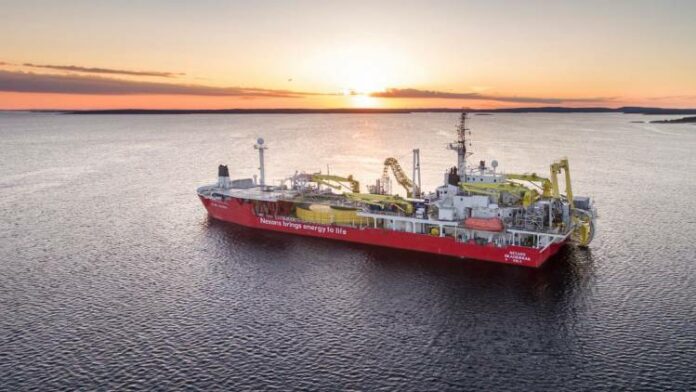
In October 2018, Nexans has successfully completed the installation of the first four cables of NordLink, the power connection between Norway and Germany.

The NordLink project is an important step towards the development of climate-friendly energy market of the future. A collaboration between Statnett,  TenneT and the German promotional bank KfW, the 1400 MW interconnector will connect the Norwegian and German electricity markets to allow the two countries to exchange renewable energy. For instance, it will be possible to export surplus wind and solar power produced in Germany to Norway. At the same time, Norway will be able to export its surplus hydroelectric power to Germany.

In the framework of the 500-million-euro contract awarded to the Group in 2015, Nexans is designing, manufacturing and installing six 525 kV mass-impregnated (MI) high voltage direct current (HVDC) interconnector cables with a total length of around 700 km.

While a part of these cables is still being manufactured in Nexans Norway plant in Halden, Nexans has already manufactured and installed two thirds of the interconnection length. The cables are installed with the advanced cable-laying vessel C/S Nexans Skagerrak and trenched using the Nexans Capjet system. The last two cables are currently being manufactured in Halden and will be installed according to the planning in 2019.

The NordLink interconnector project adds to the long and proven track record that Nexans has with submarine HV cable interconnectors. Other projects recently completed by Nexans include the 100 km cross-linked polyethylene (XLPE) 230kV Malta-Sicily interconnector and the Montenegro-Italy 393 km 500kV MI interconnector. In addition to those, Nexans has also been chosen to manufacture 500 km 525kV MI HVDC cables for the North Sea Link interconnector between Norway and the UK.

Exxon Mobil: Drilling Continues Offshore Guyana

0

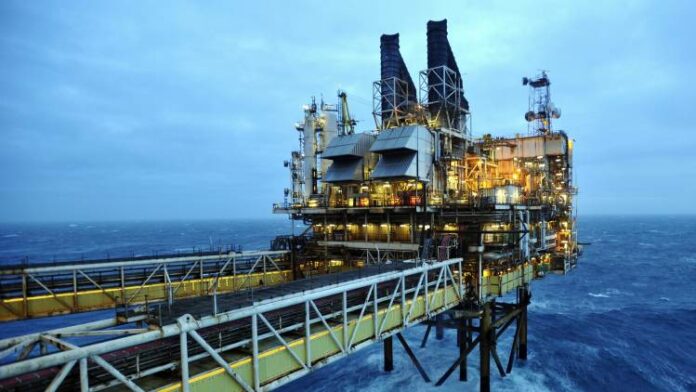
Exxon Mobil Corp said on Wednesday its oil drilling and development activities offshore Guyana were unaffected despite neighboring Venezuela's navy stopping two seismic survey vessels the company had hired.

The closest of 10 oil finds Exxon has made off Guyana's coast is 110 kilometers (68 miles) away from the northwest part of the Stabroek block, where the navy halted seismic data collection on Saturday, the company said. Each country's government says the incident took place in its territorial waters.

"Exploration and development drilling is continuing in the southeast area of the Stabroek Block," the company said in a statement. Exxon did not say whether the two vessels, owned by Norway's Petroleum Geo-Services, planned to continue their survey or return to the area where the incident occurred.

Guyana's foreign minister said the government is "in discussion" with Exxon on next steps.

A century-long territorial dispute between the neighboring South American countries has flared up after Exxon announced the discovery of more than 5 billion barrels of oil and gas offshore Guyana. 

Source:marinelink

DNV GL promotes use of drones in survey work

0

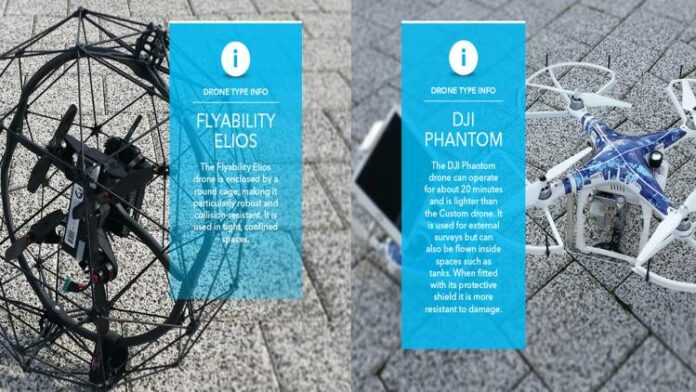
Unmanned drones can bring great advantages when used responsibly – unlike last week’s incident near London Gatwick where they led to 36-hour shutdown of flights – DNV GL officials highlighted at a special pre-Christmas briefing on the Benefits of Digitalization hosted jointly with Hapag Lloyd and HHLA in Hamburg.

The event took place at the pre-opening of the premises of high-tech start-up VRHQ, the company which developed the drone used by DNV GL and aims to become “the lighthouse for VR (Virtual Reality) and Augmented Reality in Europe.”

DNV GL was the first classification society to accredit a survey by the use of drones, in June 2016, and is now further exploring how to use the technology to save time and cost for shipowners. It has already rolled out drone surveys through five of its major service hubs across the world – Gdynia, Dubai, Singapore, Shanghai and Houston – with further expansion planned in 2019.

Drones can avoid the need for surveyors to enter tanks or scale great heights, explained DNV GL officials, thereby improving safety and efficiency, in some cases removing the need to erect staging inside ship compartments which can cause damage to coatings.

Recent R&D has also confirmed that thickness measurements can be carried out through the use of a drone equipped with an ultrasound probe prodding the surface in question.

Also, traditionally a visual verification has required the surveyor to be on board but in some cases that might not be necessary in the future with use of new technology such as VR, increased connectivity and digital tools, says DNV GL.

The use of drones, VR and other remote hull survey tools leads to a reduced cost level and less interruptions of ship operations,” concluded the classification society, “the enrichment of data allowing the gain of new insights and enhanced safety management.”

Hamburg terminal operator HHLA highlighted how it was also using drones for inspection work, for example of quay walls and SPS cranes, and site security. It also plans to use them for the exchange of urgent documents and spare parts, and is evaluating how they might be useful for empty container (spare part) logistics.

Source:seatrade-maritime

Hunan Xiangchuan Shipbuilding sets up yard and repair base in Zhoushan

0

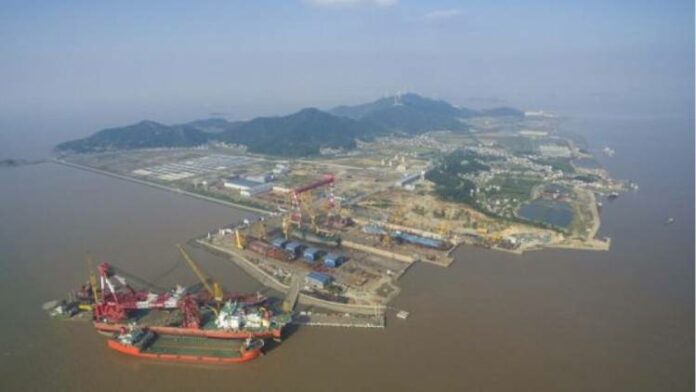
China’s Hunan Xiangchuan Shipbuilding Industry has set up a new shipyard and repair base in Zhoushan, Zhejiang province to expand its footprint locally.

Xiangchuan Shipbuilding had already built over 100 ships for the city of Zhoushan and Zhejiang province. The shipbuilding and repair base in Zhoushou will allow the company to better service the regional market, said Xu Ju Lin, general manager of Xiangchuan Shipbuilding. The company aims to optimise its products structure and develop new types of environmentally-friendly vessels.

Zhoushan is one of the top shipbuilding and repair centers in China. Its annual shipbuilding capacity is over 10m dwt.

The state-owned Hunan Xiangchuan Shipbuilding Industry, previously known as ChangSha Shipbuilding, was established in 1950. Key products of the company include high-speed passenger ships, roro vessels, maritime patrol ships and coast guard ships.

Source:seatrade-maritime

Cargo vessel sinks on collision with CMA CGM boxship

0

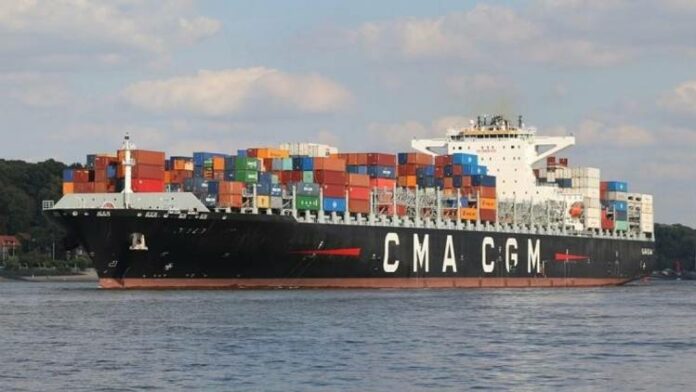
 Chinese general cargo vessel sank in the waters south of Hong Kong after it collided with a 9,415-teu CMA CGM boxship in the early hours of Monday, news reports said.

The collision between French boxship CMA CGM Norma and China-flagged Yusheng366 happened on 24 December at around 4am local time, the local Chinese media reported.

China’s Guangdong Maritime Safety Administration said all the crew from Yusheng366 were rescued as they abandoned ship, while CMA CGM Norma suffered minor damages.

The Chinese administration said there was no ocean pollution, and issued alerts to nearby vessels to avoid the collision area.

It was reported that CMA CGM Norma had sailed to a nearby anchorage for inspections. The boxship was enroute from Nansha port to Singapore when the accident happened.

Source:seatrade-maritime

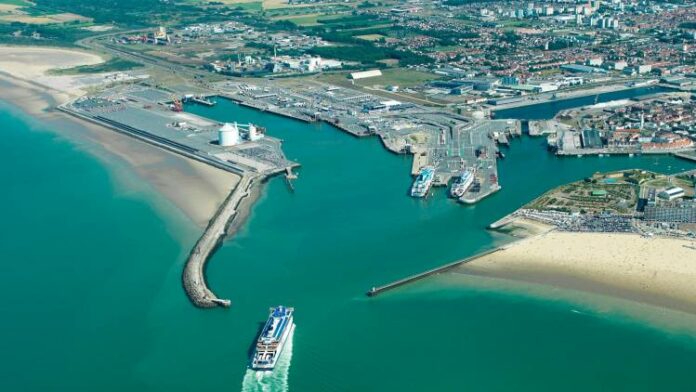
France’s Brexit nightmare: Calais port faces 17 Mile tailbacks in no-deal Brexit

0

But other European ports claim the French could have an advantage and face LESS checks on lorries leaving for the UK as part of a key Anglo-French treaty. Two minutes of extra checks on vehicles would spark huge jams on approaching motorways into Calais, French officials believe. And there are even fears migrants could attempt to board UK-bound lorries backed up on motorways into the French port.

This month, Emmanuel Macron’s government unveiled its plans to handle a no-deal Brexit.

Customs and immigration officials have held crunch talks on how to handle extra checks frontier at the ports and Channel tunnel access points, according to The Times.

A ‘Fastpass’ system for lorries departing Calais for England would allow hauliers to complete customs documents online before arriving at the port.

Jean-Marc Puissesseau, chief of the Calais port authority, said: “There is a risk that we will have to stack lorries on the motorway, but we are doing our upmost to avoid that.”

But Xavier Bertrand, chairman of the Hauts-de-France region, which includes Calais, Boulogne and Dunkirk, believes two minutes of extra paperwork for each lorry crossing would spark 17-mile queues at both Calais and Dover.

Speaking in July, Mr Bertand said: “If there are delays of two minutes there will be queues of 27km on both sides – that’s 54km [34 miles]."

Even at the moment you see queues of 1km to the tunnel – and that is where there are no checks. Imagine what it will be like with checks.

“We need to pressurise the French parliament and President Macron of the need to talk to the UK directly.”

Meanwhile, other European ports believe they are “Brexit proof” against possible traffic chaos in the event of a no-deal.

But Belgian and Dutch ferry hubs believe Calais has an unfair advantage after signing a treaty with the UK to allow streamlined customs’ checks.

The Le Bouquet accord would allow goods travelling from Calais to Britain to be checked only once.

But lorries leaving Dutch ports would need to be checked twice, with fears Calais is receiving preferential treatment.

Annika Hult, trade director of Stena Line, which operates from near Europe’s biggest port Rotterdam, has urged the EU to act

She said: “We want to ensure that there is no preferential treatment.”

Rotterdam handles 467 million tonnes of food each year and is the man entry hub for non-EU goods, but could try to wrestle business away from Calais after a no-deal Brexit.

One EU diplomat said: ”Competition is already cut-throat.

“After a Brexit no deal it could become beggar thy neighbour and the EU will be keeping an eye on what both the Dutch and French are up to.”

Source:hellenicshippingnews