4.2 C
New York
Home Blog Page 1195

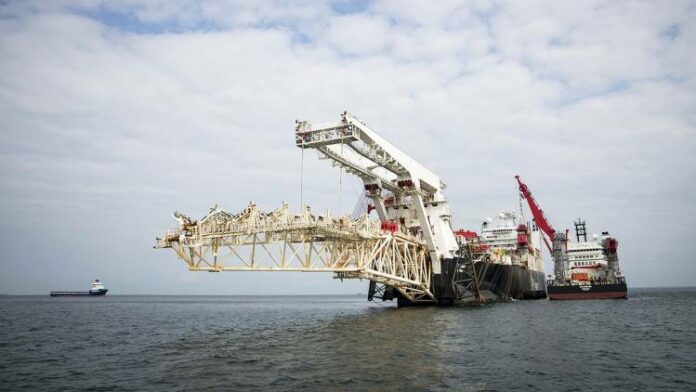
Allseas vessels at work in two Nord Stream 2 offshore zones

0

Allseas’ Pioneering Spirit has started pipelay operations for the Nord Stream 2 gas pipeline project in the Finnish Exclusive Economic Zone (EEZ).

It will continue installation of the stretch of pipeline laid by sister vessel Solitaire, which started working offshore Finland in September.

The Solitaire has transferred to the southern part of the Swedish EEZ, where it will work on construction of the 510-km (317-mi) section there for the next few months.

Both pipelayers are supported by a survey vessel, which will monitor pipelay and ensure that the line is installed at its correct position on the seafloor along the agreed route.

Pipe joints will be supplied around the clock from logistics hub in Hanko, Finland and Karlshamn, Sweden.

Currently Nord Stream 2 has received permits in four out of the five countries where offshore pipelay is due to take place.

Construction is also ongoing at the Russian and German landfalls are ongoing, and Allseas’ Audacia recently finished its program in German waters. To date around 370 km (230 mi) of pipeline have been laid.

Source:offshore-mag

Great Ships 2018: BP’s British Partner

0

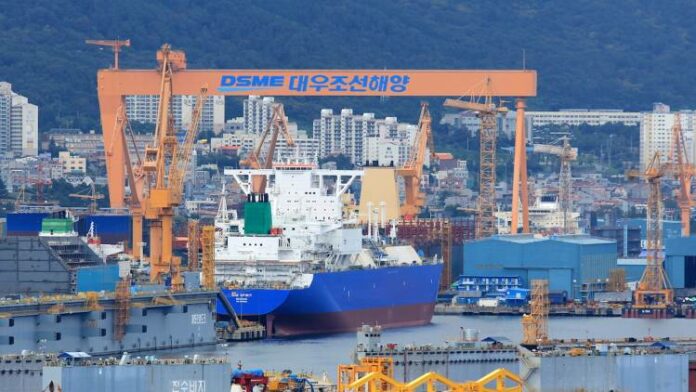
BP Shipping took delivery of British Partner, the first of a half dozen new 173,400 cu. m. capacity liquefied natural gas (LNG) carriers to be delivered through 2018 and 2019 from the DSME shipyard in South Korea.  BP Shipping, which launched a fleet rejuvenation program in 2016 that includes 32 new vessels for delivery over a three-year period, said the six new Partnership class ships will increase its ability to transport LNG in emerging new markets, such as Pakistan, Jordan, Egypt and Bangladesh, in addition to established markets, such as India, China, the U.S. and Australia.

British Partner and the five other 295-m ordered in October 2017 are bigger, more powerful and have a larger carrying capacity than the predecessor vessels they are replacing. BP adds they’re also more efficient and, therefore, more environmentally-friendly and cost-effective, with greater flexibility in terms of the places where they can operate.

Each of the new Partnership vessels is fitted with two M-type, electronically-controlled, gas-injection (ME-GI) propulsion systems and a full reliquefaction system (FRS) designed by DSME.  The slow speed tri-fuel engines, each of which has its own shaft, propeller and rudder, use compressed boil-off gas from cargo tanks as fuel.

While older LNG carriers use boil-off gas to power either steam turbine or dual fuel/diesel electric engines, the Partnership vessels have a five-stage compressor that raises the pressure of the gas from just above atmospheric pressure to 300bar to be sent to the engines for fuel or to the reliquefaction system.

When the reliqufaction plant is in use, up to 70 percent of the gas discharged from the compressor is cooled to a temperature where it returns to liquid form and pumped back to the cargo tanks. BP says these features add to an easy-to-operate system, which burns less cargo gas than its predecessors and improves fuel efficiency by around 25 percent.

The vessels also feature significant improvements in hull design, which improve speed and maneuverability, an exhaust gas recirculation system that reduces nitrogen oxide emissions and a gas combustion system to minimize the potential for releasing methane to the atmosphere.

For waste management, engine room sludges and waste water are processed to minimize the use of the incinerator and galley waste passes through a macerator and shredder, producing slurry that is retained in a tank until it can be safely discharged. Dry waste is treated with shredders, glass crushers and a compactor for baling and landing ashore minimizing ship discharges.

Also, to minimize the threat of piracy, the crew accommodation and engine room structures are designed and built to make it extremely difficult for potential attackers to gain access. Some of the measures adopted include the removal of external means of access to the ship’s bridge and other decks and the provision of metal shutters to external windows.

The new Partnership class tankers have been built big enough to take advantage of the 2016 Panama Canal enlargement – a major global transit route for LNG – their design, technology and environmental improvements mean they are also far more nimble than their Trader and Gem class predecessors. This means they will be able to load and discharge cargoes at a far wider range of LNG ports and floating facilities worldwide, including those that are just coming on line.

Source:marinelink

Petrobras, Total deliver subsurface breakthroughs

0

Petrobras and Total have signed new documents concerning the strategic partnership they announced in January 2017.

To date they have signed transactions that have led to a payment of $1.95 billion to Petrobras early this year.

This is in addition to $400 million that Petrobras can trigger concerning part of its investment in the Iara area fields in the presalt Santos basin, and $150 million as contingent payments.

As for the partnership’s technology co-operations, the duo has so far developed AI-related techniques to identify geological faults, leading to efficiency gains; and new processes and tools to locate the potentially most productive areas in low-permeability reservoirs, with direct applications on fields such as Sururu (in the Iara concession).  

Petrobras has also sold rights to Total in the Lapa field in the presalt Santos basin for $50 million.

Pending approval by the Brazilian authorities, Total, as operator, will hold a 45% interest alongside Shell (30%) and Repsol-Sinopec (25%), in the surrounding block BM-S-9.

Currently Lapa is producing around 30,000 b/d of oil.

Source:offshore-mag

Gazprom affirms plan for LNG bunkering

0

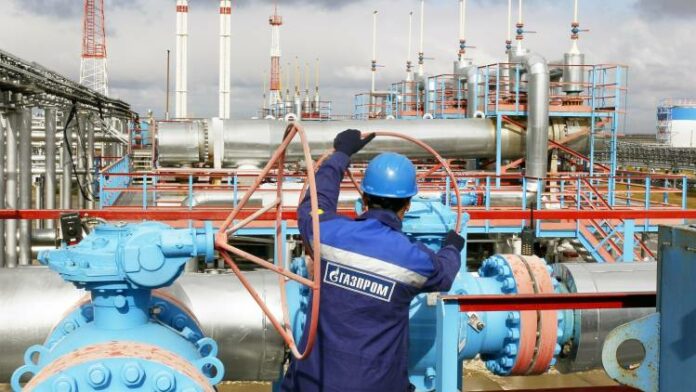
Russian oil firm Gazprom has affirmed plans to continue creating infrastructure for producing and marketing LNG as a marine fuel, following the group’s internal review on the prospects of the LNG bunkering market.

The Gazprom board of directors completed a review on the outlook of the LNG bunkering market earlier this week, and confirmed the company’s commitment to the sector.

“Gazprom continues to build the LNG production, storage and shipment complex near the Portovaya compressor station. It is planned to use the plant’s output to, inter alia, bunker marine vessels in Russia. The core process equipment of the complex is being assembled at the moment,” a group statement said.

“Meanwhile, construction of an onshore LNG storage tank and berthing facilities is underway. The complex is slated to come onstream in 2019. In addition, Gazprom is exploring the possibilities of building plants in the area of the Black Sea and in Russia’s Far East.

Gazpromneft Marine Bunker, the Gazprom’s single operator for selling LNG to end consumers in the bunkering market, is currently working on a project for an LNG bunkering vessel.

“Today, only four vessels of this kind exist worldwide, along with eleven small-scale gas carriers some of which are fitted out for LNG bunkering,” Gazprom noted.

The increased use of LNG as a bunker fuel was triggered by the IMO Marpol Convention. From 2020, a global 0.5% sulphur cap will be enforced.

“This measure is expected to significantly decrease the use of fuel oil and increase the consumption of LNG as a fuel meeting all of the environmental requirements set by Marpol,” Gazprom said.

Source:seatrade-maritime

Swiss batteries achieve global charge

0

Swiss company Leclanche has completed energy storage projects around the world with a combined capacity of over 100 megawatt-hours.

The projects include a solar integration facility for EPFL and Romande Energy in Switzerland, a micro-grid for integrating wind and solar for Graciolica in Portugal and a storage plant in Ontario, Canada, for NRStor Monarch.

Leclanche has also completed utility grid-tied frequency regulation and ancillary services in Canada, Germany, the Netherlands and the US.

Leclanche chief executive Anil Srivastava said: “As we go into 2019, we are delighted to announce this important milestone and to highlight to our employees, partners and other stakeholders that Leclanche’s opportunity is now."

The growth in demand for Leclanche’s stationary storage solutions to accelerate the integration of renewables into our grid, and the demand for our grid to EV storage solutions promise to make 2019 an important year for the company.

We are particularly excited that our energy storage solutions have helped to clean up Graciosa’s energy supply by integrating over 70% renewable energy into the island’s grid.

“This project is a testament that we can reduce our dependence on dirty fuels, in this case diesel, and substantially increase the integration of renewables into the electricity supply today.”

Graciolica director Dom Hughes said: “Completing the Graciolica project has required patient investors and the collective efforts of a large team of highly talented engineers from around the world, including from our customer, EDA, and our own team on site."

“Tractebel coordinated the project in 2018 working with Greensmith Energy as the provider of hybrid microgrid technology and solution, and Leclanche who supplied the battery system.”

Source:renews

NYK vessel ships first plant condensate from INPEX-operated Ichthys LNG Project

0

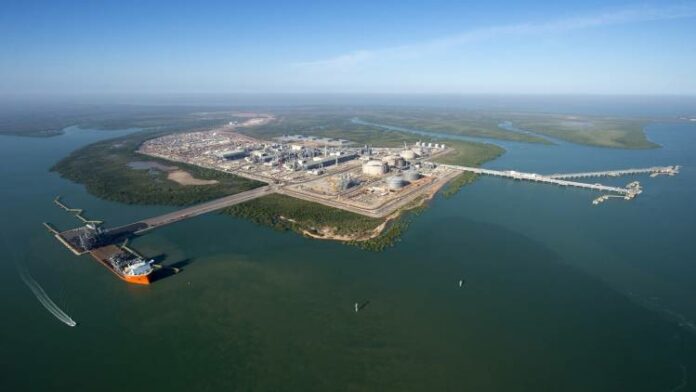
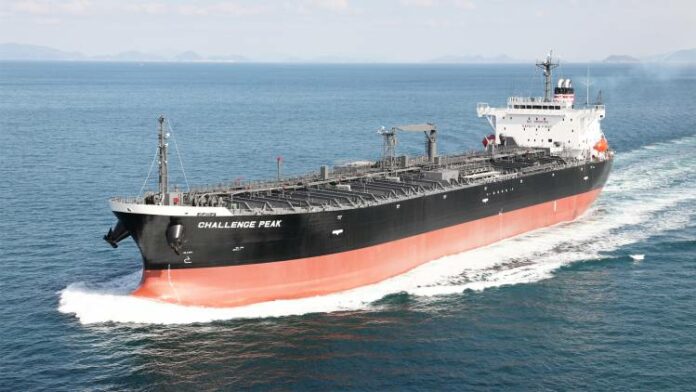
Challenge Peak, an oil products tanker operated by NYK Bulkship (Asia) Pte. Ltd. based in Singapore, has shipped the first batch of plant condensate produced at the onshore gas liquefaction plant of the INPEX-operated Ichthys LNG Project. The condensate was loaded from the gas liquefaction plant in Darwin in the Northern Territory of Australia, and the vessel departed for an Asian country on December 26.

A joint venture among INPEX (the operator), oil major Total, and others, the Ichthys LNG Project is one of the largest LNG projects in the world.

At its peak, the project is expected to produce approximately 8.9 million tons of LNG and approximately 1.65 million tons of LPG per annum, along with approximately 100,000 barrels of condensate per day.

In accordance with its medium-term management plan “Staying Ahead 2022 with Digitalization and Green,” the NYK Group seeks to secure stable freight rates and provide flexible and optimal transport options that meet customers’ diversifying needs and contribute to stable energy supply.

The project’s first plant condensate shipment by NYK’s Challenge Peak

– Outline of Vessel
Length overall: 181.54 meters
Breadth: 32.20 meters
Deadweight tonnage: 45,945 meters
Gross tonnage: 28,737 tons
Flag: Singapore

Source:portnews

NYK to build its first methanol-fueled chemical tanker with green loan

0

NYK will receive 2 billion from Taiyo Life Insurance Company as a green loan to exclusively finance the building of NYK’s first methanol-fueled chemical tanker. A green loan is a loan whose proceeds are used solely for the purpose of funding environment-friendly projects. NYK will continue to take steps for the development and use of technology linked to environmental performance by proactively promoting green finance, the company said in a press release.

In the medium-term management plan “Staying Ahead 2022 with Digitalization and Green” that NYK announced in March, the company indicated its goal to integrate ESG principles into management strategies to contribute to the sustainable development of society and enrichment of the company’s corporate value.

In fact, in May NYK became the first company in the global shipping industry to issue labeled green bonds, and they have been used to fund environment-friendly liquefied natural gas (LNG) fueled vessels and other NYK projects. To support investment in environmental technology more from a finance viewpoint, NYK decided to enter into this green loan agreement with Taiyo Life Insurance Company.

All the finance procured from this green loan will be used to build the new methanol-fueled chemical tanker. Its methanol-fueled main engine will reduce sulphur oxides (SOx) by approximately 99 percent compared with the use of heavy oil. In fact, the vessel’s entire SOx emissions, including the electrical generator, will fall by about 75 percent compared with using oils that comply with low-sulphur oil regulations. Using methanol as a marine fuel helps meet the International Maritime Organization’s new regulations that cap sulphur content in marine fuels coming into effect in 2020. Methanol is a clean-burning fuel that produces less nitrogen oxides (NOx) and particulate matter (PM), enabling more environment-friendly operation by NYK.

Outline of the ship
Deadweight Tonnage: about 49,000 tons
Length overall: about 183 meters
Breadth: 32.2 meters
Shipbuilder: Hyundai Mipo Dockyard Co. Ltd.
Delivery: Scheduled for 2019


2018 a better-than-expected year for South Korean shipbuilders

0

The 2018 has been a better-than-expected year for South Korean shipbuilders, with an increase in new orders and especially in LNG ships, Yonhap reported citing industry sources. The combined new orders won by the shipyards in 2018 are almost up 20% compared with last year.

Over the recent years, the South Korean shipbuilding industry has been hit by an oversupply of vessels combined with low oil prices and a decrease in new orders in the last years, as a result from global economic downturn in 2008 and Chinese competition. In a bid to address the issue, the Republic of Korea has developed and implemented in recent years a range of measures to provide financial support to its shipbuilders.

Through 2018, a surge in orders for LNG ships and other commercial ships has enabled the country’s three major shipyards Hyundai Heavy Industries, Daewoo Shipbuilding & Marine Engineering and Samsung Heavy Industries, to almost meet their annual order targets:

  • Hyundai Heavy has secured orders valued at $13.4 billion, surpassing 2018 target of $13.2 billion.
  • Daewoo Shipbuilding secured over 90% of its annual order goal of $7.3 billion.
  • Samsung Heavy met some 70% of its annual order target of $8.2 billion.

Their combined orders reached $8 billion and $19.8 billion, respectively, in 2016 and 2017, when they implemented harsh restructuring efforts.

The highlight of the year was LNG ships. The rise in demand for the gas in line with eco-friendly policies pursued by China and the proactive push for energy exports by the US has increased demand for LNG carriers, Yonhap reported. Orders for 65 carriers have been placed this year.

Except from this, South Korean shipbuilders clinched first position in new orders worldwide in the first 11 months of 2018, outpacing Chinese rivals, according to sources.

But some say it is too early to claim that the shipbuilding sector is on a full-fledged recovery as there are still few orders for high-priced offshore facilities, such as FPSO units.

Source:safety4sea

Five strategic steps to offshore wind innovation in the US

0

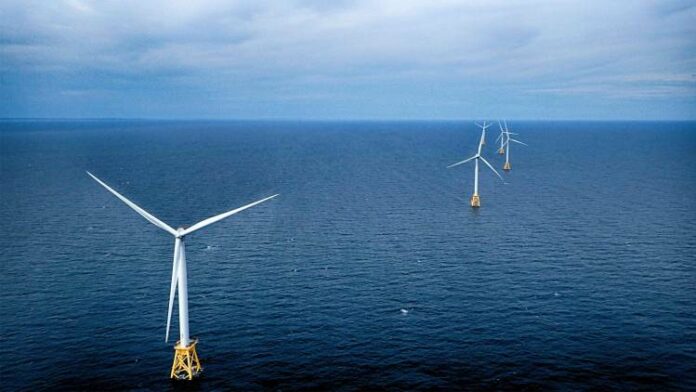
The Partnership for Offshore Wind Energy Research (POWER-US) issued a white paper, proposing a framework for offshore wind research and innovation in the US which establishes the relationships, data, systems-level thinking, and strategic research approaches needed to advance the global offshore wind industry.

The report comes at a time when the offshore wind market has matured substantially in Europe and is growing quickly in Asia, and a well-coordinated, reliably funded approach to research can help secure US stewardship of its natural resources and strengthen US competitiveness in the global market.

Successful large-scale research initiatives in infrastructure, ocean science, and manufacturing provide examples for how the nation can mobilize its research community to help set the long-term vision for an affordable and sustainable market in offshore wind.

The report suggests five key steps toward creating a national framework for offshore wind research and innovation:

  1. An Integrated Community: Convening the overall US offshore wind research community – including universities, research institutions, the national labs, state programs, federal agencies and international partners – is ongoing and a fundamental objective and success of the POWER-US initiative.
  2. Industry Relevance: Federal agencies, offshore wind industry leaders and the research community are engaged in on-going and emerging collaborations which are poised to contribute significantly to industry priorities.
  3. Test Facilities and Staffing: DOE’s Office of Energy Efficiency and Renewable Energy (EERE)’s Wind Energy Technology Office (WETO) is to be commended for a recently issued RFI seeking information on US offshore wind R&D testing facilities, including existing capabilities, opportunities for enhancement, and recommendations for new facilities. The data gathered will provide a basis for considering a long-term vision for research infrastructure in this country, as suggested in this white paper.
  4. Data Archives: Consistent cyber infrastructure and data archiving for multi-disciplinary offshore wind research, with standards for meta-data, format and reporting should be developed with a longterm perspective that recognizes the primacy of domain knowledge over computer system design. Data standards and norms should develop iteratively over time, recognizing the complexity and difficulty of this task, and with emphasis on dialogue between the needs of specific projects and the drive towards a consistent architecture.
  5. Modeling Platform: The development of open-source modeling platforms will enable integrated structural, mechanical and electrical systems models that can be linked, via hybrid simulation, to the testing facilities.

Source:safety4sea

EMAR Offshore Services places order for Damen Tug ASD 2811

0

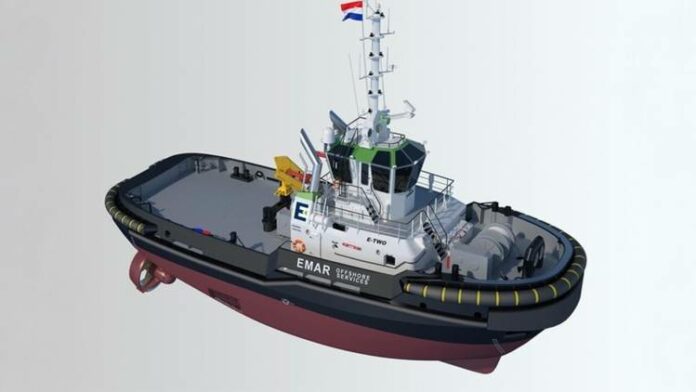
EMAR Offshore Services, a Netherlands-based dedicated maritime service company, has placed an order for a DAMEN ASD Tug 2811. This stock vessel will be named E-TWO and delivered to the client in the first quarter of 2019. An additional FiFi1 system and aft winch will be installed, DAMEN said on Thursday in its news release.

The ASD Tug 2811 is one of Damen’s ‘next-generation’ harbour tugs, announced in 2018. An upgraded version of the best-selling ASD Tug 2810, it has been further optimised for the decade ahead with features that include full compliance with the new stability regulations, a modular marine NOx reduction system and the DAMEN Digital Platform to maximise performance and reliability. These plus 60-tonnes of bollard pull and superb manoeuvrability mean that it is capable of taking on almost any ship-handling operation in even restricted waterways. E-TWO will be the second ASD Tug 2811 to be delivered so far.

EMAR Offshore Services is established in 2010 only but today it operates all over the world, with a current focus on the regions Caribbean, South America, West Africa, Middle East and Russia.

EMAR supports the oil & gas, construction and mining companies with their need for knowledge and equipment. Its own fleet consists of six tugs, of which five have been built by Damen.

Soiurce:portnews