4.2 C
New York
Home Blog Page 1194

Great Ships 2018: World’s Largest MOSS Type LNG Carrier

0

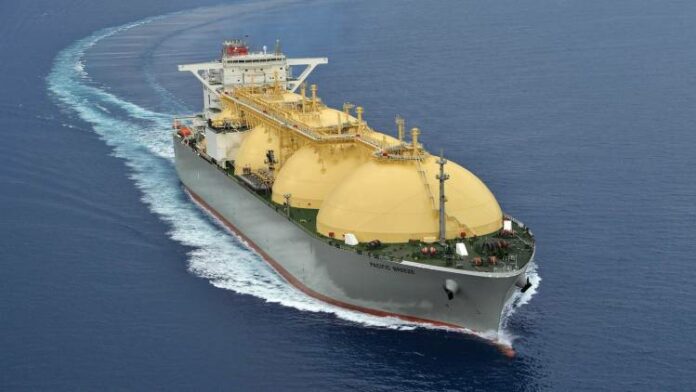
Pacific Breeze, a 182,000 cu. m. capacity LNG carrier, is the world’s largest MOSS type LNG carrier ever constructed, built at Kawasaki Heavy Industries, Ltd., Japan (KHI). This capacity was achieved by extending the equatorial ring section of No. 3 and 4 cargo tanks by 1.6m in height from the conventional spherical shape, which increases approximately 5,000m3 from the second largest MOSS type LNG carrier constructed by KHI.

Kawasaki Panel System was adopted for the thermal insulation system of the cargo tanks, which offers outstanding LNG boil-off rate performance of no more than 0.08% per day. This ship is equipped with a Tri-Fuel diesel (TFD) electric propulsion system performing excellent fuel efficiency across a broad range of speeds. PACIFIC BREEZE is time-chartered by IT Marine Transport Pte. Ltd., a joint-venture company of INPEX Shipping Co., Ltd. and Total Marine Transport B.V. and engaged in transportation of LNG produced at the Ichthys LNG Project in Darwin, Australia.

Ship Name  PACIFIC BREEZE
Ship Type  LNG Carrier
Ship Builder  Kawasaki Heavy Industries, Ltd.
Ship Owner  Kawasaki Kisen Kaisha, Ltd.
Delivery Date  March 8, 2018
Classification  Bureau Veritas
Length (OA)  299.94 m
Length (BP)  286.50 m
Breadth  52 m
DWT  92,830 Tons
Depth  28 m
Draft  12.2 m
Speed about  19.5 Knots
Fuel Type   Fuel gas/Diesel oil/Heavy Fuel Oil
Main engines(Main propulsion unit)   Main propulsion motor x 2 sets
Propellers  1 set of fixed pitch propeller
Generators(Main generator diesel engine)   KAWASAKI-MAN 8L51/60DF x 5 sets

Source:marinelink

Video: OTEC concept set for global clean power stage

0

UK company Global OTEC Resources has recently displayed the first design concept for its 1MW floating ocean thermal energy conversion (OTEC) device. Take a look at the video to see the OTEC plant in operation, and hear more about Global OTEC Resources’ plans for the technology.

According to the company, the decision to focus its design on the needs of Small Island Developing States (SIDS) was made after learning that many small islands consume over 10,000 liters of diesel a day, which generate a significant carbon footprint in locations that many would consider ‘idyllic’ holiday locations.

Global Resources‘ concept, meant primarily for ‘off-grid’ resorts and islands in the Maldives and Caribbean, shows OTEC plant housed on a floating barge which incorporates a deep cold-water pipe into its hull through a ‘weathervaning’ turret mooring system.

The cold-water pipe returns seawater from a depth of 1,000 meters, achieving the temperature difference with the warm surface water of 20 degrees centigrade, Global OTEC Resources said.
Using ammonia, which is repeatedly evaporated and condensed, the device powers a turbine, and produces electricity.

OTEC is an application of solar energy that exploits the heat that the ocean captures from the sun’s rays.

It possesses huge environmental advantages over fossil fuels and nuclear power, as it avoids land-use problems associated with renewable energy technologies such as solar, wind, biomass, and hydroelectric power, with the potential to produce far more useful and affordable energy than could be obtained from other renewable sources, Global Resources claims.

OTEC is a technology for converting some of the energy that the tropical oceans absorb from the sun, first into electricity and then into fuels. The surface waters are a warm-water reservoir 35 to 100 meters deep that is maintained night and day at a temperature of 25 to 28 degrees Celsius (°C).

Below about 800 meters, an enormous source of ice-cold water, which is fed by currents flowing along the ocean bottom from the northern and southern polar regions, is maintained at about 4°C.
OTEC exploits this temperature difference to generate electricity.

Power shutdown at JNPT

0

Please be informed that as part of the Augmentation project being undertaken by the JNPT towards upgrade of the electricity infrastructure at the port, the authorities have planned a power shutdown on 3rd January 2019 between 0830 hrs and 1830 hrs.

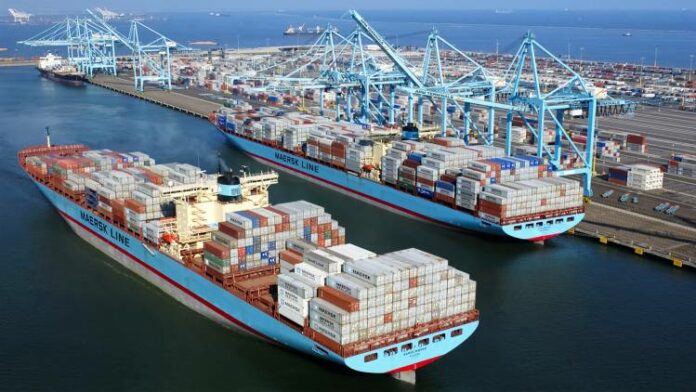
• ME3 Service – Vessel 8LF Maersk Kyrenia 1902 is expected to sail before 03rd January’19 @ 0800 hrs. There are no changes in the Shipping bill and Gate cut off details.
• FM3 Service – Vessel 8XF Maersk Salalah 1903 , berthing is expected to be delayed. There are no changes in the Shipping bill and Gate cut off details.

Terminal operations on the Quayside and Rail siding shall be impacted due to the above activities, however, the terminal Gate and Yard operations shall continue as per normal.

We shall keep you progressively updated with regards to the implementation of the said activities.

Should you require further assistance with your queries, please feel free to contact your local Maersk Line representative.

Source: Maersk


Chinese Govt Speaks on Seizing Mombasa Port Over Debt

0

The Chinese government has finally spoken on seizing Mombasa port over debt owed by the Kenya government.

The Asian nation dismissed allegation that Kenyan government used Mombasa port as collateral for a loan to construction the Standard Gauge Railway (SGR).

We have checked with the relevant Chinese financial institution and found that the allegation that the Kenyan government used the Mombasa port as a collateral in its payment agreement for Nairobi-Mombasa railway is not true,” a statement issued by Foreign ministry spokeswoman Hua Chunying stated.

The statement from the Chinese government echoes sentiments from the Kenyan government that dismissed media reports that Kenya risks losing the Mombasa port if fails to repay the loan.

Chunying further mentioned SGR is progressing smoothly and they have confidence that the Nairobi-Mombasa SGR line is feasible.

She refuted claims that African countries were at risk of bring overburdened with China loans citing feasibility studies are conducted before the projects are undertaken.

When cooperating with African countries including Kenya, Chinese companies and financial institutions will always conduct joint and thorough scientific study on the feasibility of the projects and then proceed to determine construction and funding plans and scales to guard against causing debt risks and fiscal burdens for Africa.

A week ago the Auditor General revealed that Exim bank of China may take over the Mombasa port if Kenya fails to service the loan it took to build Standard Gauge Railway (SGR).

In a letter to the Kenya Ports Authority (KPA) managing director, the auditor noted that the port’s revenue was pledged to pay Kenya’s debt to the Chinese bank.

“The payment arrangement agreement substantively means that the Authority’s revenue would be used to pay the Government of Kenya’s debt to China Exim Bank if minimum volumes required for consignment are not met as per schedule one.

“The China Exim bank would become a principal in over KPA if KPC defaults in its obligations and China Exim bank exercise power over the escrow account security,” the report read in part.

Source:hellenicshippingnews

FLNG unit sets sail for Argentina

0

The Belgian company, EXMAR, announced that its Floating LNG Liquefaction Unit (FLNG) with the name Caribbean will be renamed Tango FLNG and it has already departed China with destination the port of Bahia Blanca, Argentina, for its liquefaction operations.

Tango FLNG is now on the voyage to Argentina which is expected to take approximately 45 days.

Upon its arrival, Tango FLNG will be put in operation for EXMAR’s customer YPF S.A. and is expected to start up LNG production in the second quarter of 2019. YPF will export LNG from the Vaca Muerta source at the Neuquén Basin.

The project will introduce Argentina as a global LNG exporting nation, with a plan to export 500,000 tons of LNG annually to international markets.

Tango FLNG was the world’s first barge-based floating natural gas liquefaction and storage facility and it was delivered from Wison Offshore & Marine to EXMAR in July, 2017.

Source:safety4sea

ClassNK releases amendments to class rules

0

Leading classification society ClassNK has announced that it released amendments to its Rules and Guidance for the Survey and Construction of Steel Ships on 25 December 2018.

ClassNK is constantly revising its Rules and Guidance in order to reflect the latest results from relevant research and development projects, feedback from damage investigations, requests from industry as well as changes made to relevant international conventions, IACS unified requirements (UR), national regulations, etc.

  • Amendments related to the clarification of strength requirements for hatch covers of cargo holds also used as ballast holds, the adoption of Approval of Use to verify the conformance of computer based systems, and the application of the industry standard testing for FRP grating and clarification of testing procedure for approval of its manufacturing process (in response to industry requests, etc.)
  • Amendments related to the incorporation of MARPOL Annex VI amendment to designate nitrogen oxide emission control areas as well as 2017 Finnish-Swedish Ice Class Rules (in response to changes in international or reginal regulations, etc.)
  • Amendment related to the addition of requirements for classification survey using remote inspection techniques and requirements for approval of firms engaged in survey using remote inspection techniques (in response to changes in IACS Unified Requirements, etc.)

Source:ClassNK

Russia Forming Joint Organization With OPEC Highly Unlikely Given US Sanctions Risk

0

It is highly unlikely that OPEC and other oil producers would set up a joint structure due to the additional red tape it would create as well as the risk of U.S. monopoly-related sanctions, Russian Energy Minister Alexander Novak said Dec. 27.

OPEC and other top oil producers led by Russia have since the end of 2016 made an unprecedented joint effort to curb output and support prices.

OPEC and Russia jointly produce more than 40% of the world's oil.

Russia's energy ministry had said that Moscow and OPEC lynchpin Saudi Arabia had reached a general agreement that the OPEC+ format should be "institutionalized" and extended until 2019 and beyond to monitor the market and take joint action if needed.

However, Novak said such an idea has been ditched.

"There is a consensus that there will be no such organization. That's because it requires additional bureaucratic brouhaha in relation to financing, cartel, with the U.S. side," Novak told a briefing to reporters.

Source:epmag

More projects, wells expected in the Caspian Sea in 2019

0

BP and its partners look set to approve the new Azeri Central East (ACE) platform next year for the Azeri-Chirag-Guneshli (ACG) oil field in the Caspian Sea, according to Wood Mackenzie.

The project has been in front-end engineering and design since 2017. Assuming a positive final investment decision (FID), the analyst anticipates first oil in 2023, with 100,000 b/d of incremental output at peak, accounting for 15% of Azerbaijan’s liquids production in the mid-2020s.

More mergers and acquisitions are likely in the Caspian next year, the analyst added, with Chevron having confirmed that its Azerbaijani portfolio – 9.57% of the ACG field and 8.9% of the associated Baku-Tbilisi-Ceyhan (BTC) oil pipeline – are both up for sale.

Another seller could be ExxonMobil, which has 6.79% in ACG and 2.50% in the BTC, the latter only acquired in 2017.

Azerbaijan’s previous major transaction was Equinor’s divestment of a 15.5% stake in the Shah Deniz field in 2015 to Petronas for $2.25 billion.

As for the country’s offshore gas resources, with the government keen to avoid a shortfall of supply in the 2020s, there could be expansion at the 2-tcf Umid field (Socar held talks earlier this year with Total on a farm-in).

There is also 4 tcf of uncontracted non-associated gas (NAG) at ACG field, Wood Mackenzie said, and an initial agreement looks likely on commercial terms in 2019, clearing the path for signature of a risk service agreement or PSC.

Historic drilling successes on the Severni block, in the Russian sector of the Caspian Sea have encouraged Lukoil-Nizhnevolzhskneft to conduct further exploration and appraisal work in the region.

In the Kazakh sector, the company is working with NC KazMunaiGas on exploration of the Zhenis block, and has further plans to drill the Hazri-3 well, in the Central Caspian block.

The analyst also expects Novatek to build on this year’s large North Obskoye discovery in Ob Bay off northern Russia, while Gazpromneft is set to drill another exploration well on the Ayashski block offshore Sakhalin Island.

Source:offshore-mag

Germany’s First LNG Terminal Planned

0

Uniper SE and Mitsui O.S.K. Lines, Ltd. have reached an agreement on a project to install a Floating Storage and Regasification Unit (FSRU) at Uniper site in Wilhelmshaven, Germany. 

The FSRU, expected to be the nation's first, has a planned send-out capacity of 10 bcm/a and an LNG storage capacity of 263,000 cubic meters. It could be in operation as early as the second half of 2022. 

The FSRU will be designed to allow for the loading of small-scale barges to enable the use of LNG as marine fuel. Further, onward transportation of LNG on trucks will be possible.

The project benefits from the existing site in Wilhelmshaven where required infrastructure is already in place. Wilhelmshaven is the only German deepwater port and can be reached without any tidal constraints. In addition, Wilhelmshaven is closely located to the existing pipeline and gas storage infrastructure.

Mitsui O.S.K. Lines plans to own, operate and finance the FSRU. Uniper will act as project developer.

A LNG terminal in Germany, especially with the planed large regasification capacity in Wilhelmshaven, would strengthen the security of gas supply in Germany and increase competition to the benefit of end customers, says Uniper, because it enables large quantities of gas to be procured from the global LNG market and thus serves to diversify gas supplies.

In addition to the agreement in respect of the FSRU Wilhelmshaven, Uniper and MOL entered into a binding transportation agreement. Under the agreement MOL will provide Uniper with shipping capacity equivalent to a 180,000 cubic meter LNG carrier. The agreement will commence in December 2020. Uniper intends to use the additional shipping capacity to optimize LNG volumes sourced from Freeport, U.S., and to further leverage its expanding LNG trading activities. Already in 2015, Uniper contracted approx. 0.9 mtpa of U.S. LNG exports. The supply contract has a duration of 20 years.

More LNG Action

Another LNG terminal is planned for Germany. In September 2018, RWE and German LNG Terminal GmbH, the joint venture driving forward an LNG terminal in Brunsbüttel in Northern Germany, reached an agreement for a considerable part of the terminal’s capacity on a long-term basis. The total capacity of the combined LNG import and small-scale terminal will be five billion cubic metres. RWE has signed a contract that guarantees RWE access to substantial annual capacity. Final investment decision is envisaged for late 2019. Construction work will then start in 2020 with the terminal being fully operational by the end of 2022.

Source:maritime-executive

2019: Smart Containers, Trade Wars, Automation Gains

0

Major opportunities are on the horizon for ocean shipping as the rapid pace of technology change will continue unabated through 2019 and beyond, according to industry research conducted by Navis, a part of Cargotec Corporation. The company predicts that the biggest trends driving the industry over the next year will include increased IT spending, greater collaboration and data standardization, trade wars, smart containers, automation productivity gains, and improved carrier capacity management and environmental efficiencies.

1. More budget allocated to IT spend: According to Navis’ Business Bellwether survey, some 90 percent of respondents believe their organizations will increase technology spending, including 56 percent who plan for an increase of six percent or more. Much of this spend will be targeted at the adoption of new technologies, which was cited as a top three priority for companies looking to improve operational performance.

The top areas for increased technology spending, in descending order include, automation, business intelligence, planning and management systems, big data analytics, and SaaS applications and cloud services. Much discussed technologies like blockchain and IoT sensors were significantly lower on the priority list. Navis’ 2019 predictions for the shipping supply chain include:

“Technology is just one part of overhauling a traditional supply chain industry,” said Andy Barrons, Chief Strategy Officer, Navis. “It may sound obvious but people and the investment decisions they make about the way the supply chain operates in the future will be the critical factor in speeding up transformative change.

2. Greater Advancement in Collaboration and Standardization: The industry’s ability to share data requires dramatic improvement and executives unanimously agree that there is a strong need for standards that facilitate data sharing. According to Navis’ report, Working as One, more than half of all respondents said their operational performance would improve by at least 50 percent if they could share their real-time operational information. Looking forward, 70 percent expect real-time collaboration between shipping lines and terminals to occur within the next five years.

“For transformative technology to take hold, I believe more industry leadership will be required on issues such as standards. The digital world needs interoperability and this requires agreeing upon and enabling better standards,” said Younus Aftab, Chief Technology Officer at Navis. “The industry will move faster and improve performance for itself and its customers with more technical understanding and business know how shared between multiple parties. Technologies like blockchain will help facilitate issues around data ownership and transfer. AI will enable learning systems that use much of the information that exists in the value chain and help drive optimization.

3. Return to Profitability Despite Protectionist Fears: Topping the list of concerns for executives heading into 2019 is the rise in trade protectionism and new tariffs – one third report being extremely concerned about trade tensions, with another 36 percent saying they were concerned. Despite these fears, the industry is cautiously optimistic about the global business environment for world trade and 82 percent anticipate either improved profitability over the next 12 months or continued stabilization and reduced losses.

4. The Rise of Smart Containers: 2019 could be the year that we start to see expanded use of smart containers in the market as shipping begins to run trials of the technology. The industry is already seeing progress with Maersk announcing this year investments in inexpensive, disposable tracking devices, along with earlier initiatives to put sensors into its entire 270,000 fleet of refrigerated boxes. Traxens plans to deploy 100,000 smart containers by the end of 2019 including MSC announcing it will equip 50,000 dry cargo containers with smart container technology.

In addition, CargoSmart is connected to over 40 ocean carriers to advance supply chain visibility. This expanded use of smart containers will provide another way for shippers to gain transparency into the flow of containers through their supply chain.

5. Automation Spurs Continuous Data-Driven Operational Improvement: While the shipping industry has generally been slower than other fields in the shift towards digital technologies, pressure from customers, rising costs of labor, competition, and maturing technology have amplified the demand for terminals to invest and automate. A recent DS Research report reveals that 60 automation projects are planned for the next five years, which will create a combined capacity of 90 million TEU.

Navis currently works with 20 semi- or fully-automated terminals worldwide and is seeing new levels of productivity, with some terminals over 30 moves per hour. In 2019 the expectation is for continuous improvement and optimization programs at automated terminals to enable new levels of productivity.

6. Improved Carrier Capacity Management, Operational and Environmental Efficiencies:

Capacity management will be a major point of emphasis moving into the New Year. Due to the implementation of the latest lashing rules, owners as well as ocean carriers will increasingly seek operation-based opportunities to increase the cargo intake of their vessels in order to increase the flexibility of capacity management. 

In terms of improving operational and environmental efficiency, the initial strategy adopted in April 2018 by the IMO to reduce annual greenhouse gas emissions from ships by at least 50 percent by 2050 will motivate shipping lines to gain technological advantages by continuing operational cargo and vessel tracking and analysis.

Source:maritime-executive