3.4 C
New York
Home Blog Page 1117

Creditors Bail Out Hanjin Heavy Industries

0

The creditors of Hanjin Heavy Industries and Construction (HHIC), the financially troubled South Korean shipbuilder, are expected to receive compensation for unpaid loans in a debt-for-equity swap which will leave them in control of the company. 

Korea Development Bank (KDB), the state-owned policy bank which holds the largest share of HHIC's outstanding debt, said that the group of creditors have agreed to accept HHIC shares in exchange for retiring debts of about $610 million. The deal, along with a 5:1 share reduction for current public shares, will leave the creditors holding about 84 percent of HHIC's stock. 

The creditors have selected Prof. Lee Byung-mo of Inha University to take over the management of HHIC. Lee has shipbuilding experience: he served as a vice president at DSME in 2011, and as president of now-defunct offshore shipbuilder STX in 2015. 

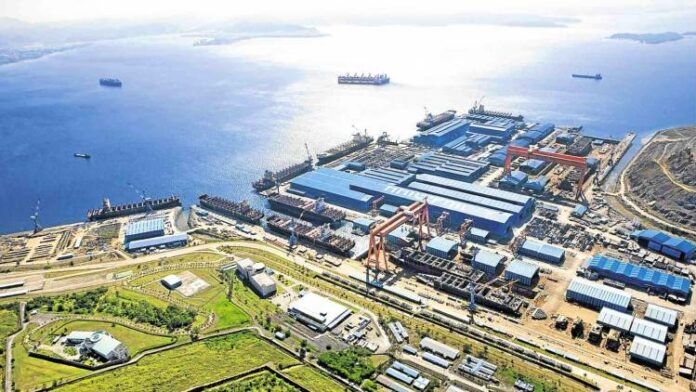
The agreement covers debts owed to a group of Philippine banks for projects at HHIC Phil, the shipbuilder's giant yard in Subic Bay. HHIC Phil has struggled to find new orders since the start of the shipbuilding downturn four years ago, and in December it laid off 7,000 workers due to a lack of work. It sought court receivership in January, and with the help of the Philippine government, it had been seeking a buyer. 

The news that HHIC Phil's creditors have bailed it out will assuage fears that a Chinese state-owned shipbuilder could step in to buy the yard. This would have given China a strategic foothold in Subic Bay, the former home of the largest American overseas naval base, the sprawling U.S. Naval Base Subic Bay. Other parties have also expressed interest in the possibility of purchasing all or part of the yard, including the Dutch shipbuilder Damen and an unnamed American company. Damen spokeswoman Harriet Slager told Nikkei Asian Review that Damen might enter into some form of cooperation with the yard rather than pursuing ownership.

The Philippine Navy is also interested in taking a minority stake if another company will join them in a buyout. The service plans to buy at least two dozen vessels over the next decade, and it would benefit with lower costs and a local boost in employment if it built ships domestically. 

Source:maritime-executive
Morrision acquisition doubles size of pipelay fleet

0

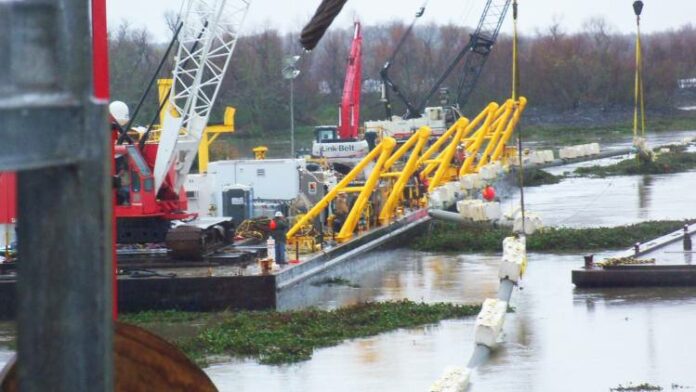
Louisiana based energy services company Chet Morrison Contractors (Morrison) has acquired two pipelay/construction barges and a saturation diving system.

The pipelay barges acquired are the LB Super Chief and DLB Subsea Vision, doubling the size of the company’s pipelay fleet.

The saturation diving system will be installed on dived support vessel  Joanne Morrisonwhich operates in the Gulf of Mexico.

Chet Morrison, chief executive officer of Marrison, commented: “We are excited about this strategic acquisition as it will significantly enhance our capabilities for greater pipe size and water depth operations; globally broaden our service offerings to our clients; and offer employment opportunities for many mariners, divers and other craftsmen. This coupled with our ongoing upgrades to our existing fleet demonstrates the commitment to our clients, employees and the overall industry, reinforcing MORRISON as the trusted subsea infrastructure solution.”

Source:splash247

Rolls-Royce wins contract to supply propulsion package for new Patrol Vessel for Malta

0

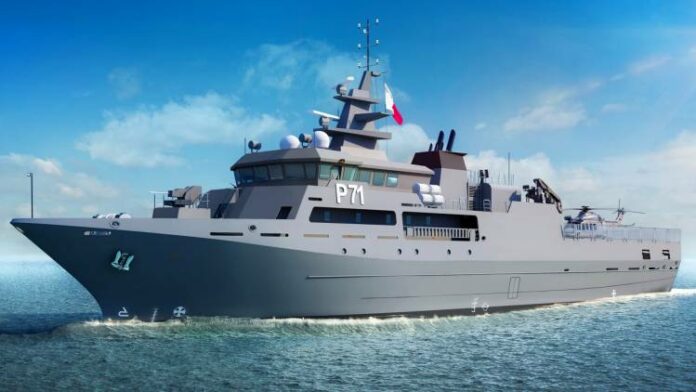
Rolls-Royce has secured a contract with Italian shipbuilder Cantiere Navale Vittoria for the supply of a marine propulsion package to a new Offshore Patrol Vessel under construction for the Armed Forces of Malta (AFM), the company said in its release.

The 1800ton displacement, 74.8 metre, twin-screw vessel will feature a Rolls-Royce scope of supply that includes a pair of PROMAS controllable pitch propellers and rudders, SC722 FCP steering gear, a TT1300 bow thruster, a TT100 stern thruster, Fin Stabilisers, and a touch-screen remote control system that incorporates the novel CanMan Touch Joystick for all units.

Rolls-Royce will also be integrating the various operation modes of the hybrid Diesel-electric-propulsion modes via a power take-in (PTI) for lower patrolling speeds of up to 12 knots. This will ensure lower through-life operating costs.

The vessel will be designed to conduct border control operations in addition to other duties such as search and rescue, replenishment-at-sea and helicopter operations.

A key advantage to operations will be the portable Rolls-Royce CanMan Touch Joystick, which navigating officers can use to manoeuvre the ship remotely from the bridge wings in addition to conventional/independent propulsion controls. It is suitable for a wide range of vessels to control and monitor engines, fixed pitch and controllable pitch propellers and systems with multiple bow and stern tunnel thrusters.

When delivered in 2020, P71 (Hull No. C.0890) will be the largest patrol vessel to emerge from the Vittoria shipyard and the flagship of the AFM complementing OPV P61 Saettia-Class patrol vessel, fulfilling AFM’s requirement for a vessel with greater endurance, sea-keeping and manoeuvring capabilities and improved life-cycle costs, including fuel consumption and maintenance.

QED Naval Secures Canadian Patent for Subhub

0

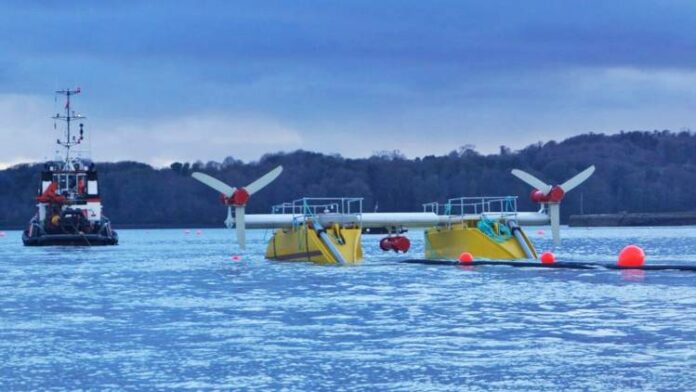
QED Naval’s Canadian patent application (2837613) for the Subhub tidal platform has recently been granted. It covers submersible apparatus and methods of installing anchoring equipment and refers to the hydrodynamic impacts of the Subhub.

With this award of patent and the validation data from the technical demonstrator, QED Naval are looking to exploit the Subhub technology and market in Canada. QED Naval are keen to forge relationships with Canadian stakeholders within the tidal, shipbuilding and fabrication sectors including energy companies, project and infrastructure developers, and marine operators.

The key features of the Subhub are:

  • It supports all the requirements of an offshore tidal power plant and enables the fully integrated platform to be towed offshore using low costs tugs or work boats.
  • Once on site it uses its patented submersible, self-installing and recovery methods, again using low cost installation vessels in a single, quick offshore operation.
  • Its hydrodynamic form accelerates the flow into the turbines significantly increasing capacity factors and energy yield. It also generates down-force to reduce the amount of solid gravity based ballast.

These key features of the Subhub technology provide a step change in the Levelised Cost of Energy of tidal systems which enables communities to manage their own assets as well as utility scale systems to compete with offshore wind.


Port of Amsterdam’s constructions for new sea lock through March and April

0

As Port of Amsterdam announced, during March and April work will be conducted to the exterior facade of the Lock Operation Centre. Engineering works and construction activities are still being carried out to heighten the walls of the inner lock head; whereas, builders are also busy with constructing the lock sill of the inner head.

Additionally, the concrete pouring operations to the floor of the lock sill  cofferdam of the outer head have been completed.

The lock operation centre is still being built. The operations are carried out with the help of a crane and a hydraulic lift platform. The external facade will be given a special, irregular ribbed finish that will give the Lock Operation Centre the appearance of a weathered rock in the waves.

Also, the three lock gates arrived in the port at the end of January.

One of the gates, is placed in a temporary location in the lock chamber at IJmuiden. The remaining two gates,  have been towed to a quay of Open IJ's logistics centre in the Alaskahaven in Amsterdam.

In order for their construction to be completed, the installation of hydraulic systems and all electrical installations are needed.

Moreover, open IJ is working around the walls of the lock gate chamber of the inner head.

The activities mainly have to do with the installation of reinforcement steel and concrete pouring operations.

In the near future, the port will proceed to preparations needed for the sinking of the lock gate chamber. The sand underneath the lock gate chamber (i.e. the caisson) will be loosened by water jets and pumped away. Therefore, because of its own weight, the caisson will sink in the ground.

Following the port's constructions, builders of Open IJ are building the lock sill of the inner head.

The inner lock gate runs on rails fixed on the lock sill and are used for closing and opening. The lock sill is almost entirely circled by water, that's why it's difficult to reach.

In order to make its construction process easier, Open IJ has built a traverse on top of the lock sill cofferdam.

The traverse is a kind of mobile platform construction moving on rails on top of the cofferdam and a crane is placed on top of the mobile platform.

Source:safety4sea

DP World to Accelerate Trade Across Central Asia

0

DP World has announced it will invest heavily in Kazakhstan’s port and logistics infrastructure as it looks to improve the supply chain across central Asia and accelerate the Caspian Sea into a hub of global trade hub, according to a statement.

On March 5, 2019, the global trade enabler announced it had signed two agreements with the Kazakhstan government to build Special Economic Zones (SEZ) at the Port of Aktau, the country’s main cargo and bulk terminal, and Khorgos, situated on the Chinese border and home to the Inland Container Terminal (ICD).

In a statement, the company said it had done so because the country’s vitality potential to boost trade across Asia.

Furthermore, it also sees Kazakhstan as an important player in China’s Belt and Road Initiative (BRI), and both SEZs will promote business and connectivity with Dubai.

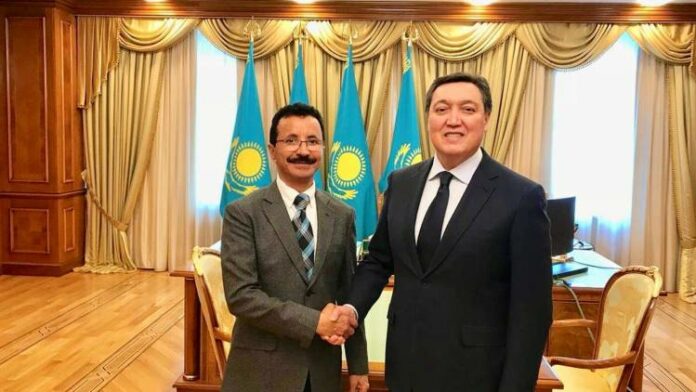
DP World Group Chairman and CEO Sultan Ahmed Bin Sulayem spoke of Kazakhstan’s potential for trade and global logistics: “Our expertise in developing logistics and trade-enabling infrastructure will benefit tremendously from building facilities in Kazakhstan and to the needs of local businesses."

We believe that the economic fundamentals of Kazakhstan are very strong, which is why look forward to continuing investing there.

“President Nursultan Nazarbayev’s vision and progressive policies have laid the groundwork for linking the Far East to Europe and ensuring that the Khorgos Internal Container Depot and SEZ play a crucial role in facilitating this.”  

Source:porttechnology

Spanish tidal hits EMEC milestone

0

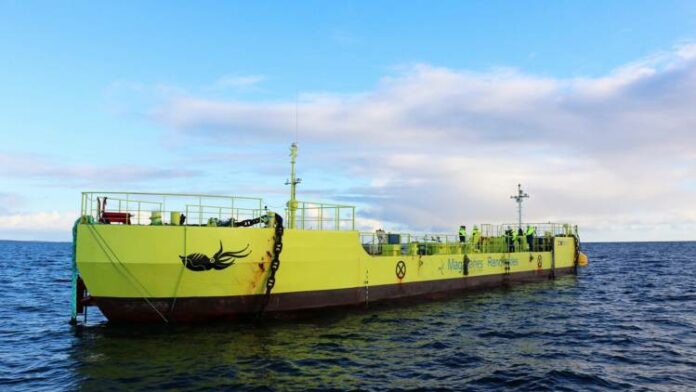
Spanish developer Magallanes Renovables has generated first power from its 2MW floating tidal device at the European Marine Energy Centre off Orkney in Scotland.

The first generation of power is a major milestone within the EU-funded Ocean_2G project, which aims to test, validate and pre-certify Magallanes’ unit.  

The device will now undergo a structured programme of testing, which will demonstrate the operational performance in preparation for readying it to market.

Scottish energy minister Paul Wheelhouse said: “It is great to see this project add to a number of recent success stories where Scotland has been at the forefront of global research, development, tests and demonstrations.”

Magallanes chief executive Alejandro Marques de Magallanes added: “This is a very exciting period in the project, and in the last two weeks we have proven the viability of our floating tidal platform concept.”

The Atir tidal energy converter was deployed last month at EMEC’s Fall of Warness tidal energy test site by local contractor Leask Marine.

Source:renews

India’s Ennore Terminal Gets Qatari LNG

0

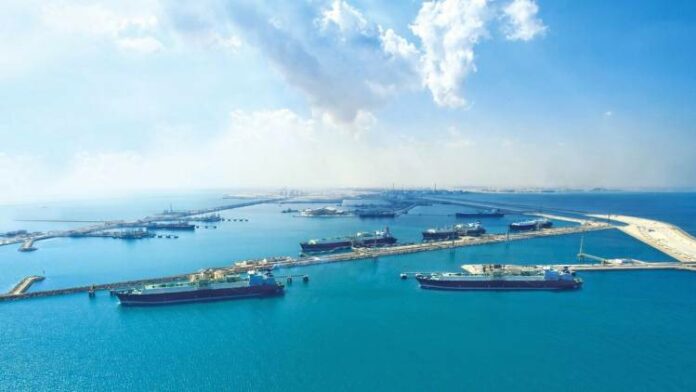
Qatargas, the world’s largest LNG producer, supplied a commissioning cargo for India’s Ennore LNG receiving terminal, near the southern Indian city of Chennai.

The commissioning LNG cargo was delivered onboard the vessel ‘Golar Snow’ on 25th February 2019 by the Swiss commodity trader, Gunvor, to the state-owned Indian Oil Corporation Limited (IOCL), which owns and operates the five million tonnes per annum (MTPA) terminal. Qatargas sold the cargo Free On Board (FOB) basis to Gunvor.

Ennore will be India’s fifth operational LNG terminal and the first LNG terminal on the East Coast of India. Once fully commissioned, Ennore will provide regasified LNG to anchor customers, including Chennai Petroleum Corporation Limited, Madras Fertilizers Limited, and Manali Petrochemicals.

Qatar has established a strong partnership with India since July 1999 when Qatargas started supplying LNG to Petronet. Since then it has delivered over 1,500 cargoes under its various long term sales and purchase agreements as well as supplying significant volumes into the short term/ spot market.

India is a key market for Qatargas given its geographical proximity and growth potential. In addition to the Ennore Terminal, terminals located at Mundra and Jaigarh are also due to be commissioned in the near future as well as a host of other gas related infrastructure projects.

These additional terminals will increase India’s capacity to import LNG from 30 MTPA to 44 MTPA – a 46 per cent increase as India continues to make strides in achieving its ambitious target of 15 per cent gas in the energy mix.

Source:marinelink

Classification Societies keep up with cyber technology

0

In its latest issue of Phish and Ships, Be Cyber Aware at Sea campaign focuses on how classes embrace cyber technology. The Classes also have been getting an insight into changing in order to better serve the increasingly digital maritime industry, and on expanding their services to take into account the security concerns of cyber technology.

Specifically, as Cyber Aware at Sea reports, the role of a classification society is to make sure of the continuous safety and security  of the maritime industry, in respect to the vessels.

Knut Orbeck-Nilssen of DNV GL highlighted that cyber technology is one key factor affecting the industry today, keeping in mind the rapid changes that shipping industry is facing, along with safety and security parameters.

As Mr Nilssen stated, the classification societies have a specific role.

Classification society DNV GL released its first class notations, called 'Cyber Secure' on July 1, aiming to help shipowners and operators protect their assets from cyber security threats.

Moreover, DNV GL has been used in using technology, as Veracity that was launched in 2017, to serve their digitally minded clients.

Veracity is a digitised, automated system that collects and verifies data for the EU MRV scheme.

As DNV GL supports, technology can eliminate human error, support the industry, while in the meantime it can get the maximum data to enhance safety, performance and efficiency.

Yet, DNV GL is not the only class focusing in technology.

Matthieu de Tugny, Bureau Veritasʼ new executive vice president for maritime and offshore, commented that "If we donʼt invest in digitalisation we will not survive as this is part of the industryʼs transformation."

Source:safety4sea


Pecan South well finds oil offshore Ghana

0

Aker Energy says the Pecan South-1A well in the Deepwater Tano Cape Three Points (DWT/CTP) block offshore Ghana has encountered oil.

The drillship Maersk Viking will now drill a side track well in Pecan South, before relocating to drill the third well in the ongoing appraisal campaign, Pecan South East.

Based on the Pecan South result and pre-drill estimates of Pecan South East, Aker Energy estimates that the total volumes to be included in a plan of development (POD) have the potential to increase the resource range to 600-1,000 MMboe.

The company has identified multiple well targets to be drilled as part of a greater area development after submission of the POD.

CEO Jan Arve Haugan said: “…The drilling result is another confirmation of the geological model for the area. The discovered resources from the well will further strengthen the robustness of the Pecan field development. We will now continue the appraisal drilling campaign, while finalizing the plan of development to be submitted by the end of March.”

Aker Energy is the operator of the DWT/CTP block with a 50% participating interest. Its partners are LUKOIL (38%), the Ghana National Petroleum Corp. (10%), and Fueltrade (2%).

Source:offshore-mag