3.4 C
New York
Home Blog Page 1116

Nuclear Container Ship Sets Sail to Arctic LNG2

0

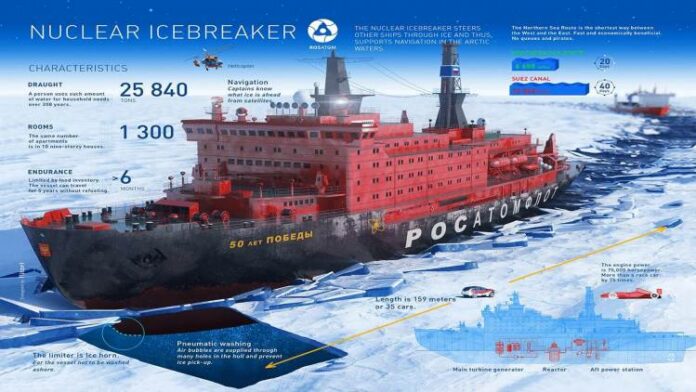
The nuclear-powered, 260 meter long, 33980 tons deadweight 'Sevmorput' this week sailed from Murmansk to Arkhangelsk where it is to pick up more than 17,000 tons of construction goods.

The lighter aboard ship (LASH) system carrier of FSUE Atomflot, the world’s only ship of its kind, will deliver thousands of tons of construction materials to the Arctic LNG 2 project in peninsula Gydan.

At the port of Arkhangelsk, the ship will be loaded with pallets, containers and equipment. Upon completion of the loading works, nuclear-powered container carrier will proceed to the Utrenneye field on the Gydan peninsula in the Gulf of Ob.

The Sevmorput crew will ensure cargo delivery and unloading onto the shore ice. The batch of cargo will consist of about 17,000 freight units for construction of Arctic LNG 2. This amount of cargo could be carried by three voyages if carried ships of the Pavlin Vinogradov type (gross tonnage – 6,395 tonnes).  
 
The ship is to leave the port of Arkhangelsk for the Gydan peninsula in the middle of March. One more voyage to the Utrenneye field is scheduled for April.

The nuclear-powered icebreaking combo LASH carrier / container ship Sevmorput (named after the Northern Sea Route) was built at Kerch, USSR based Zaliv Shipyard. The Sevmorput was laid down on November 2, 1984, launched on February 20, 1986 and put into operation on December 31, 1988.

Source:marinelink

GWEC, World Bank to widen offshore horizons

0

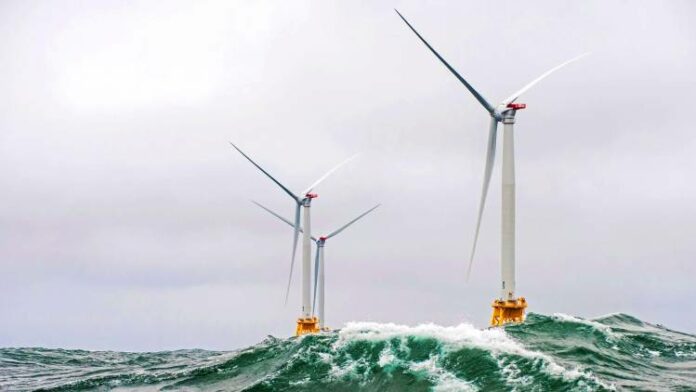
The Global Wind Energy Council (GWEC) and the World Bank will work together to support development of offshore wind in emerging markets.

GWEC will coordinate with the World Bank’s Energy Sector Management Assistance Program (ESMAP) and the International Finance Corporation (IFC) on efforts to speed up the uptake of offshore wind in emerging markets.

As part of the cooperation, a World Bank Group representative will sit on the GWEC Offshore Wind Task Force and contribute to the activities of that group, while a GWEC representative will also sit on an advisory committee to be set up by the bank.

ESMAP is a partnership between the World Bank and 18 partners to help low and middle-income countries reduce poverty and boost growth, through environmentally sustainable energy.

The IFC is the world’s largest global development institution focused exclusively on the private sector in developing countries.

The collaboration follows on from the World Bank’s launch of a new programme accelerating the adoption of offshore wind energy in developing countries, supported by funding from the UK government.

The World Bank and GWEC will organise a series of workshops and other events to discuss the potential of offshore wind in new and emerging markets as part of their cooperation.

GWEC chief executive Ben Backwell said: “GWEC’s Offshore Wind Taskforce was established to help an increasing number of countries provide large-scale, competitive clean power from offshore wind that can help them meet their climate commitments and their sustainable development objectives."

“The cooperation with the World Bank Group is a significant step forward in this journey. Through knowledge-sharing and partnership, we can better achieve our shared vision for development through sustainable energy.”

Recently released preliminary data from GWEC’s Global Wind Report showed that in 2018, new offshore installations of 4.49GW led the global offshore market to reach a total installed capacity of 23GW.

For the first time, China installed more offshore capacity than any other market, with 1.8GW, followed by the UK with 1.3GW.

Source:renews

Singapore Launches Maritime Blockchain

0

Singapore will launch a blockchain pilot to cut waiting times for container ships and the risk of fraud, according to the Minister for Communications and Information S. Iswaran.

Minister Iswaran announced the project, called TradeTrust, in a speech to Singapore’s parliament on March 4, 2019, during a debate on his department’s budget.

He said it will turn paper-based bills of lading into digital documents that can be shared and accessed when container ships dock and unload in Singapore and consequently cut costs and the risk of fraud, and therefore make Singapore a more attractive business hub.

"TradeTrust is an initiative to develop a set of standards to help businesses securely exchange digital trade documents,” Minister Iswaran said.  

It will enhance our attractiveness as a business hub and improve the efficiency of our trading and logistics sectors.

“IMDA and other government agencies are now working with industry partners to conduct proof-of-concept trials and will provide more details later.”

The Singaporean authorities, according to national media outlets, estimate that trade document processing and administration adds 20% to the physical cost of a single container.

The project comes after a previous initiative, which PTI reported on, between Singapore’s national carrier, Pacific International Lines (PIL) and tech giants IBM to utilize blockchain in the maritime supply chain.

Source:porttechnology

MacGregor inks agreement to support Anglo Eastern Univan fleet

0

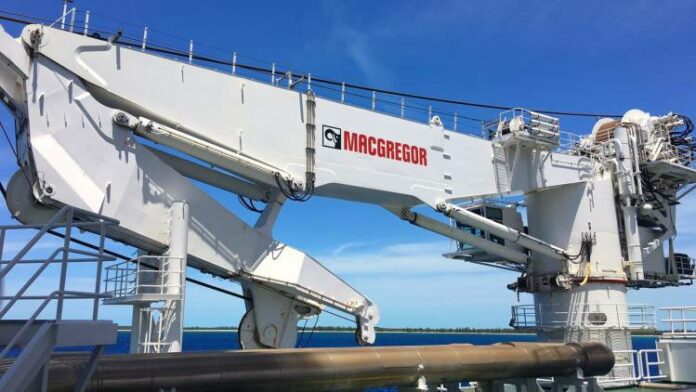
MacGregor, part of Cargotec, has announced the signing of an agreement with Ocean Sourcing to support MacGregor equipment installed on the Anglo Eastern Univan Group’s fleet of 650 managed ships.

The agreement scope includes planned maintenance and dry-docking activities focused on maximising equipment reliability and availability, and additionally enable more effective inventory forecasting across the shipmanager’s fleet.

John Carnall, senior vice president, global lifecycle support, MacGregor, commented: “We are looking forward to increasing our collaboration with Ocean Sourcing and the Anglo Eastern Univan Group.”

Jesper Alex Larsen, managing director of Ocean Sourcing, expects that this new agreement will be of “great benefit to the parties involved.”

Source:seatrade-maritime

Remote electronic monitoring can end EU overfishing, report says

0

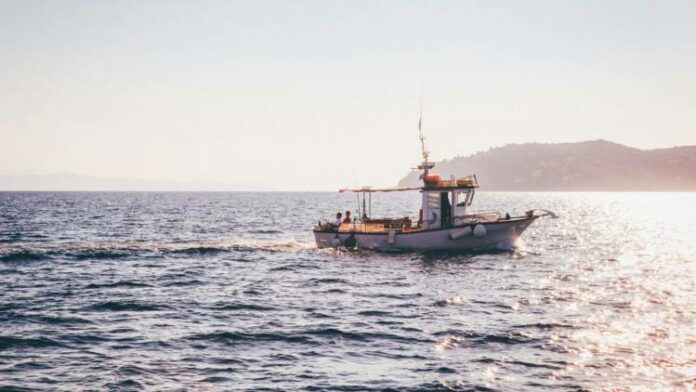
A report called 'Legal Opinion on Video Monitoring on Fishing Vessels with Special Focus on Other Comparable Cases' was published on March 7, showing that the use of video monitoring, or Remote Electronic Monitoring (REM), can be used on board EU fishing vessels to ensure proper catch reporting, and end illegal discarding of fish.

The report, commissioned by Our Fish, indicates that while there are concerns regarding REM, they should not lead to lack of action. As a matter of fact, other sectors are also dealing with the same challenges, showing that it is possible to have effective monitoring while also conforming to data protection requirements.

The EU's ban on discarding dead or dying fish back into the sea, known as the Landing Obligation (LO), was part of the 2013 reform of the Common Fisheries Policy. It aims to end discarding and lead to change in fishing practices, such as avoid catching unwanted and non-valuable fish, give incentives for improvements in selectivity, count everything that is caught, and promote ecosystem-based management.

However, the European Fisheries Control Agency (EFCA) has assessed that most of fishing activities using active gears are still at risk of discarding, and conducting illegal and unreported fishing. For this reason, the European Commission is proposing to use a review of its Control Regulation to introduce Remote Electronic Monitoring (REM). Nonetheless, concerns have been raised regarding privacy and data protection.

The new report notes that legal analysis demonstrates that privacy and data protection are not barriers to video monitoring of fishing. Programming and video technology can avoid damaging privacy and personal data, as vessel operators can own the footage, and governments and scientists can use the data to audit records to have a better knowledge of catches, fish stocks, and achieve better fisheries management.

Rebecca Hubbard, Program Director of Our Fish, highlighted: "It is essential that EU decision-makers take a solutions-based approach to implementing onboard video monitoring, so that we put an end to widespread illegal, unreported fishing, which undermines ocean health, consumer trust and the industry."

In order for video monitoring on board fishing vessels to comply with the Landing Obligation and to fully document fisheries, the report recommends that legislators and operators should consider the following:

  • CCTV surveillance of risk groups: When there is cause to suspect non-compliance with legal requirements, temporary monitoring of the fishing activities would be appropriate.
  • Avoiding personal data: Monitoring only the technical process without making individuals identifiable. This would also mean the GDPR would not apply [2].
  • Anonymisation: Monitoring the entire process and pixelating any recorded persons in such a way that identification is not possible.
  • Data minimisation: Limit the video monitoring to a minimum time i.e during landing, sorting and processing the catch.
  • Data ownership and review: Vessel operators may be the owners of the footage, the review conducted by a third party, and the resulting data provided to governments for auditing purposes of catches and landings. This audited data could also be shared with other interested or relevant parties such as scientists.

Source:

Wallenius Wilhelmsen joins CSA 2020

0

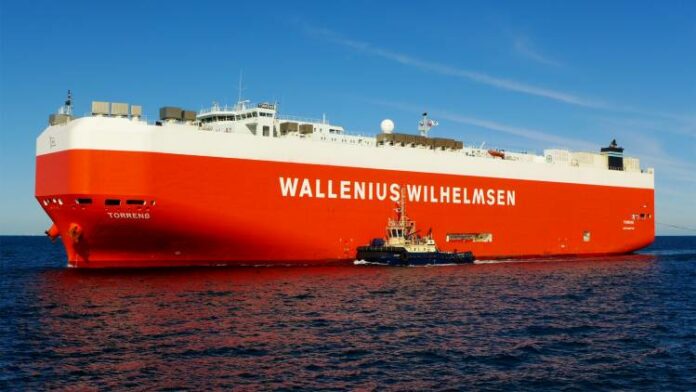
Norway-based Wallenius Wilhelmsen became the latest shipowner to join the Clean Shipping Alliance 2020 (CSA 2020), increasing the organisation’s membership to 35 shipowners operating a combined fleet of almost 2500 vessels.

CSA 2020, launched in September 2018, represents a group of leading companies from the commercial shipping and cruise industries, with a mission to provide information and research data to better inform industry, national and international authorities, non-governmental organizations and the public on the environmental performance and benefits of open- and closed-loop scrubbers (EGCS) and associated air and water emissions.

Other companies to have recently joined the Alliance include Hammonia Reederei, International Seaways, Chandris (Hellas) and Genco Shipping & Trading.

"To mitigate the risk and costs associated with these challenges, Wallenius Wilhelmsen will use low sulphur fuels on the majority of its fleet and scrubbers on the rest of its vessels. We join the Clean Shipping Alliance 2020, to help ensure the wider industry and its stakeholders have a sound scientific understanding of the operational and environmental performance of scrubbers,"…Roger Strevens, Vice President, Global Sustainability, Wallenius Wilhelmsen, pictured, said.

The Norwegian/Swedish shipping group, a market leader in Ro-Ro shipping and vehicle logistics, operates a fleet of about 130 vessels, of which 23 will operate with EGCS by the end of 2021.

Genco Shipping & Trading, another shipowner to join CSA 2020, plans to install scrubbers on 17 capesize vessels with retrofit options for an additional 15 smaller bulk carriers. The decision follows extensive evaluation and analysis of the environmental impact of the technology.

Other than the 35 CSA 2020 members that have already adopted exhaust gas cleaning as an environmentally responsible means of meeting the global sulphur cap, the Alliance has identified a further 242 ship owning/operating companies with investments in EGCS technology.

Source:safety4sea

BP, Enpro forge subsea technology partnership

0

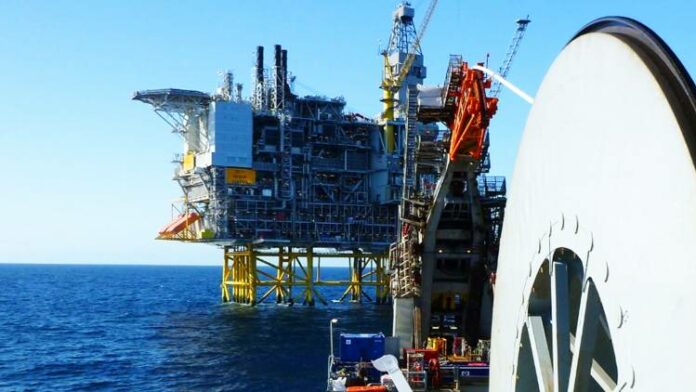
BP and Enpro Subsea have entered a global frame agreement concerning use of Enpro’s patented Flow Access Module (FAM) technology.

FAM, deployed for BP’s Kepler K3 project in the US Gulf of Mexico, can be connected to BP’s standard subsea trees and manifolds, reducing project costs and schedules. In the case of Kepler K3, it helped BP achieve first oil within 12 months of project sanction, Enpro claimed.

The process involves creating an enhanced production ‘USB port’ within the jumper envelope that allows use of standard subsea trees and manifolds, with the FAM and distributed manifold system providing life of field flexibility and the capability to maximize recovery from subsea wells, Enpro explained.

For K3, BP used FAM to install multi-phase metering, water cut metering and sand detection at the Xmas tree end of a 3.2-km (1.99-mi) single spur tieback with hydrate remediation and a flow assurance hydraulic intervention module adjacent to the manifold.

This combination is said to have reduced the cost, risk, and time associated with modifying standard hardware or adopting a dual flow loop alternative.

BP plans a further application of FAM on its Ariel 6 subsea development, where the hardware should be installed later this year.

Source:offshore-mag

Sinopec launches Yangpu oil products terminal

0

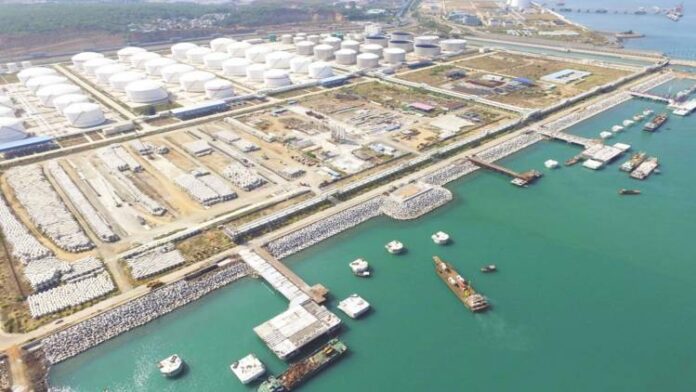
The Yangpu oil products terminal project by Sinopec (Hong Kong) has been completed, and all of the four product oil berths have started operations.

Sinopec (Hong Kong) Yangpu product oil terminal is located at Yangpu economic development zone in Hainan.

The first phase project has four specialized product oil berths, including one 100,000 tonnes-class berth, two 50,000 tonnes-class berths and one 10,000 tonnes-class berth. The annual oil products turnover volume will reach around 15m tons, and the annual handling capacity will be 27.41m tons.

The terminal will provide product oil supply to Hong Kong and for the company’s expansion in Southeast Asia.

Sinopec (Hong Kong) Limited is 100% owned by China Petroleum & Chemical Corporation (Sinopec). The core business of the company is trading petroleum, diesel oil, aviation fuel, fuel oil, liquefied petroleum gas in Hong Kong and other areas around Hong Kong.

Source:seatrade-maritime

Subsea 7 assessing scope for three Woodside projects

0

Woodside Energy has contracted Subsea 7 to perform engineering studies for three new projects offshore Western Australia and Senegal.

In each case there is an option to proceed to the execute phase with an engineering, procurement, construction, and installation (EPCI) contract.

Subsea 7’s program for the Julimar gas field, 200 km (124 mi) offshore Western Australia, involves designing, procuring, installing, and commissioning of a 22-km (13.7-mi), 18-in. corrosion-resistant alloy flowline and an umbilical system.

The contractor’s Perth office is managing the program supported by other Subsea 7 global centers.

Woodside awarded the other two contracts to Subsea Integration Alliance, the partnership between Subsea 7 and OneSubsea, with integrated SPS (subsea production systems) and SURF (subsea umbilicals, risers and flowlines) project teams. 

For the deepwater SNE oil field, 100 km (62 mi) south of Dakar, Senegal, Woodside proposes up to 23 wells with more than 90 km (56 mi) of rigid pipelines incorporating Subsea 7’s Swagelining and BuBi’s pipeline technologies.

In this case the subsea integrated project team will be based in Subsea 7’s London office, with support from other Subsea 7 and OneSubsea offices. 

The Scarborough gas field is 380 km (236 mi) offshore northwest Australia. Subject to a final investment decision, the scope here will encompass EPCI of subsea rigid pipelines, flexible risers, umbilicals and associated infrastructure.

Project management will be from OneSubsea’s Perth office, again supported by the partners’ other locations. 

Subsea 7 will allocate reeled pipelay and heavy construction vessels from its fleet for the offshore installations which are due to take place between 2021 and 2023.

Source:offshore-mag

MAN Energy Hails Historic LNG Retrofit

0

MAN Energy Solutions has announced an agreement with Hapag-Lloyd, one of the world’s largest ocean carriers, to convert its 15,000 TEU container vessel ‘MV SAJIR’ to dual-fuel operation.

According to a statement, this vessel will be the first megaship retrofitted to run, at least partly, on liquefied natural gas (LNG), leading the way for further emissions reduction and decarbonization within the maritime sector.

The pilot project, which will be conducted at the Chinese Hudong shipyard, will involve the conversion of an existing heavy-fuel-oil-burning engine to a dual-fuel prime mover, able to run on both HFO and LNG.

Wayne Jones, Chief Sales Officer at MAN, commented: “We are seeing great interest in this project from the industry as a whole. This is an excellent showcase for the conversion of a mega-container vessel to LNG and the potential benefits for the market is huge."

“With this announcement, MAN Energy Solutions is once again at the forefront of technology with our ability to execute LNG conversions for both four-stroke and two-stroke engines.”

Using LNG more widely within the shipping industry could potentially reduce carbon emissions by 15-20% and deplete the emission of sulphur dioxide and particulate matter by more than 90%.

The Hapag-Lloyd pilot project is currently scheduled to take place in 2020, when MV SAJIR will spend 90 days in dock to undergo the engine conversion.

A new gas storage system approved by DNV GL will be installed as part of the project, occupying an area equivalent to 350 containers, including the pipework between storage and engine.

Richard von Berlepsch, Managing Director of Fleet Management at Hapag-Lloyd, said: “With this unprecedented pilot, we hope to learn for the future and to pave the way for large ships to be retrofitted to use this alternative fuel.”

Jones added: “MAN Energy Solutions’ strategy is to provide complete, fully integrated solutions. Accordingly, MAN Cryo will install an entire gas system to supply gas to the main, as well as to the auxiliary engines, including a MAN Energy Solutions 300 bar high pressure Pump Vaporizer System (PVU).”

Source:porttechnology