2.3 C
New York
Home Blog Page 1115

Wärtsilä announces decisions taken by AGM and BoD

0

Wärtsilä’s Annual General Meeting was held on 7 March 2019 at the Wing in the Helsinki Fair Centre. The Meeting approved the financial statements and discharged the members of the Board of Directors and the company’s President & CEO from liability for the financial year 2018, the Corporation said in a press release.

The use of the profit shown on the balance sheet and the payment of dividend

The Meeting approved the Board of Directors’ proposal to pay a dividend of EUR 0.48 per share. The dividend shall be paid in two instalments. The first instalment of EUR 0.24 per share shall be paid to the shareholders who are registered in the list of shareholders maintained by Euroclear Finland Ltd on the dividend record date of 11 March 2019. The payment day proposed by the Board for this instalment is 18 March 2019. The second instalment of EUR 0.24 shall be paid in September 2019. The second instalment of the dividend shall be paid to shareholders who are registered in the list of shareholders maintained by Euroclear Finland Ltd on the dividend record day, which, together with the payment day, shall be decided by the Board of Directors in its meeting scheduled for 18 September 2019. The dividend record day for the second instalment as per the current rules of the Finnish book-entry system would be 20 September 2019 and the dividend payment day 27 September 2019.

Remuneration of the Board of Directors

The fees to the members of the Board of Directors were approved as follows:
– to the ordinary members EUR 70,000/year
– to the deputy chairman EUR 105,000/year
– to the chairman EUR 140,000/year

Approximately 40% of the annual Board remuneration will be paid in Wärtsilä Corporation shares, and the rest in cash. The Company will compensate the transaction costs and costs in relation to the applicable asset transfer tax arising from the share purchases.

In addition, each member will be paid EUR 750 per meeting of the Board attended, the Chairman’s meeting fee being double this amount. Further, the Chairman of the Audit Committee will receive a fixed fee of EUR 20,000 and each member of the Committee a fixed fee of EUR 10,000 for the term; the Chairman of the Remuneration Committee will receive a fixed fee of EUR 10,000 and each member of the Committee a fixed fee of EUR 5,000 for the term; and the Chairman of the Nomination Committee will receive a fixed fee of EUR 8,000 and each member of the Committee a fixed fee of EUR 4,000 for the term.

Board of Directors and Auditor

The Annual General Meeting decided that the Board of Directors shall have eight members. The following were elected to the Board: Maarit Aarni-Sirviö, Kaj-Gustaf Bergh, Karin Falk, Johan Forssell, Tom Johnstone, Mikael Lilius, Risto Murto and Markus Rauramo.

It was decided to pay the auditors’ fees as invoiced and approved by the company. The audit firm PricewaterhouseCoopers Oy was elected as the auditor of the Company for the year 2019.

Authorisation to repurchase the Company’s own shares

The Board of Directors was authorised to resolve to repurchase a maximum of 57,000,000 of the Company’s own shares. The authorisation to repurchase the Company’s own shares shall be valid until the close of the next Annual General Meeting, however no longer than for 18 months from the authorisation of the shareholders’ meeting.

Authorisation to issue shares

The Board of Directors was authorised to resolve to issue shares in the Company as follows:

The Board may issue either new shares or transfer own shares held by the Company. The maximum amount of shares to be so issued shall not exceed 57,000,000. The shares can be issued for consideration or without consideration. They can also be issued in deviation from the shareholders’ pre-emptive rights by way of a directed issue if there is a weighty financial reason for the Company to do so.

The authorisation for the Board of Directors to issue shares shall be valid for three years from the authorisation of the shareholders’ meeting and it cancels the authorisation given by the General Meeting on 8 March 2018 to distribute the Company’s own shares.

The decisions were taken without voting. The minutes of the meeting will be available on www.wartsila.com/investors as of 21 March 2019 at the latest.

Decisions of the Board of Directors 

Convening after the Annual General Meeting the Board of Directors elected Mikael Lilius as its chairman and Tom Johnstone as the deputy chairman. The Board decided to establish an Audit Committee, a Nomination Committee and a Remuneration Committee. The Board appointed from among its members the following members to the Committees:

Audit Committee: Chairman Markus Rauramo, Maarit Aarni-Sirviö, Risto Murto.
Nomination Committee: Chairman Mikael Lilius, Kaj-Gustaf Bergh, Johan Forssell, Risto Murto.
Remuneration Committee: Chairman Mikael Lilius, Maarit Aarni-Sirviö, Tom Johnstone.
 

DNV GL and Metalships & Docks Win Contracts for New Sailing Ship

0

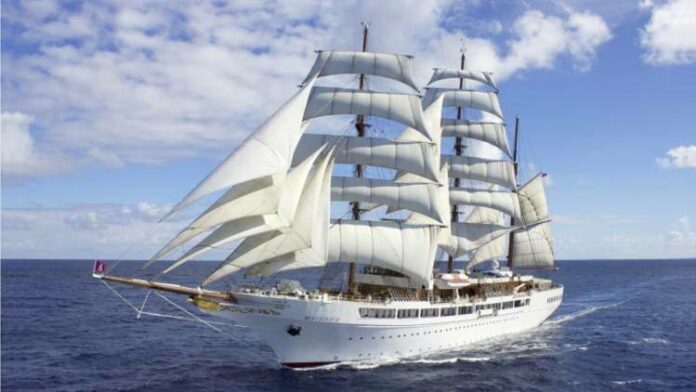
DNV GL has been awarded a contract for the classification of the passenger sailing ship Sea Cloud Spirit, built by Metalships & Docks in Vigo, Spain. Ordered by the Hamburg-based operator Sea Cloud Cruises, the vessel is designed for independent travelers and the charter market, mainly in the Caribbean and the Mediterranean.

Sea Cloud Spirit will be the third vessel in the company's fleet, sister ship to Sea Cloud and Sea Cloud II, and will have the first elevator ever to be installed on a large sailing ship that will connect her five different decks

Measuring 138 meters (453 feet), Sea Cloud Spirit will be equipped with 69 outside cabins, 25 of which will have a private balcony. The vessel is a full three-masted sailing ship, able to carry up to 136 passengers on luxury cruises, with 85 crew members on board. The planning firm Partner Ship Design from Hamburg will be responsible for the design of the ship's interior. 

Sea Cloud Spirit is scheduled to set sail in the summer of 2020.

Technical Data:

Length overall: 452.7 feet / 138 meters
Beam: 56.4 feet / 17.20 meters
Draft: 18.5 feet / 5.65 meters
Main mast height: 189.30 feet / 57.70 meters
Total sail area: 43,055.64 square feet / 4,000 square meters
Number of sails: 27
Crew: approx. 85
Guests max: 136
Outside cabins: 69 (of those 22 Junior Suites and 3 Owner Suites are equipped with balconies)
Decks: five
Flag: Malta
Engine: Sails and hybrid diesel-electric engine (2 x 1.700 KW)

Source:maritime-executive

Mapping Phytoplankton with a Smart AUV

0

Phytoplankton form the base of the marine food chain but are notoriously difficult for scientists to account for — a little like trying to identify and count motes of dust in the air. A truly independent underwater vehicle shows it can do the job.

Declining seabird numbers

Trygve Olav Fossum watched an orange, torpedo-shaped instrument slide off the R/V Gunnerus and plop into the coastal waters near the island called Runde. It was June 2017 and Fossum, a PhD candidate at NTNU, was part of a team of researchers trying to find answers to a vexing problem.

Runde, a triangle-shaped island off the mid-Norwegian coast, is known for its large seabird populations, including Atlantic puffins and Northern Gannets. In recent years, bird numbers here and in much of the North Atlantic have dropped precipitously. No one knows quite why.

As a first step in their search for clues, NTNU researchers had assembled an interdisciplinary team of geologists, biologists, mathematicians, computer scientists and engineers, like Fossum, whose two metre-long autonomous underwater vehicle (AUV) would contribute to one of the most unusual pieces of information on the Gunnerus’s week-long survey.

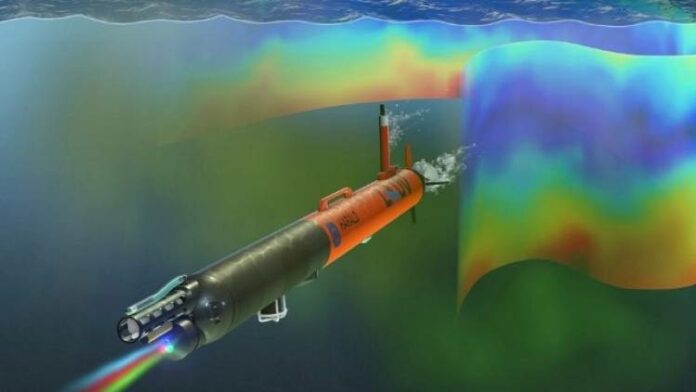
Fossum’s AUV, named after the Norwegian oceanographer Harald Sverdrup, would collect information that allowed scientists to make a 3-D map of hot spots of phytoplankton. These are the tiny single-celled algal cells at the base of the food chain. Their microscopic size and tendency to collect in patches have made this information nearly impossible for biologists to gather in the past.

The AUV was programmed to think on the go — “seeing” where the phytoplankton were, choosing its own course to zoom in on patches in an area to get a better sample. Scientists call this “adaptive sampling.” The 3-D maps, in turn, could provide important clues as to why bird populations around Runde were plummeting.

Coloured scanning electron micrograph (SEM) of Ceratium spp., one of the main types of phytoplankton being studied off Runde. Photo: NTB scanpix Science Photo Library

Zooplankton eat phytoplankton. Little fish eat zooplankton. Bigger fish eat the smaller fish. Finally, seabirds like puffins feast on these patches of fish. If something was changing phytoplankton amounts or distribution, it could set off a chain reaction that could affect the birds.

Having a smart AUV that can be programmed to seek out phytoplankton patches “is a complete game-changer,” says Geir Johnsen, an NTNU biologist is collaborating on the project. The results from Harald’s tour in the waters off Runde were recently reported in Science Robotics.

Large areas of unknown, and concentrated patches of fecundity

Marine biologists face a fundamental problem. The ocean is deep, broad and generally poorly understood. Some areas are more interesting than others, especially the small, concentrated areas that teem with life, such as coastal waters or the places where currents meet. To do their job, biologists need to understand what factors make some patches of ocean fertile while others are not.

Biologists describe this situation as, well, “patchiness,” Fossum said. The patchiness of phytoplankton is related to a number of different biophysical interactions, such as currents, turbulence and mixing, and biological processes, like how many other creatures are eating the phytoplankton.

“That means it’s a very hard question to figure out what controls the patchiness of these organisms in the ocean,” Fossum said.

 Even if you are in a place that’s known to be a hot spot, patchiness can make it difficult to accurately quantify marine organisms in the area, especially if you are taking samples from a research boat, says Glaucia Fragoso, a postdoc at NTNU’s Department of Biology who was on the cruise with Fossum.

“If we drop our sampler in the wrong spot, we may undersample and underestimate phytoplankton numbers,” she said. “Or if we drop our sampler right in the middle of a patch, we can overestimate.”

Why patches are where they are

That’s what makes the adaptive sampling of Harald, the AUV, so unique, Fragoso said. Given an area to explore, it can make a 3-D map of phytoplankton patches. And knowing where patches are allows scientists to study other characteristics of that area so they better understand why the patches are where they are.

“Is the (phytoplankton) concentration there because of salinity?” said Fossum. “Maybe the phytoplankton are concentrated along a temperature or salinity layer, or maybe there is some other physical effect that is keeping them where they are?”

Knowing where and why phytoplankton aggregate and cluster in different ways can help answer questions about creatures that depend on the ocean for food, like the seabirds at Runde. Seabirds typically nest in areas where they have easy access to food, since they have to feed themselves and their chicks, too. So figuring out phytoplankton amounts and where they are, in combination with other measurements, may help explain larger trends in seabird populations.

Adaptive sampling for greater detail

Harald was programmed with a sophisticated brain and equipped with a special measuring device called an ECOpuck nestled in its backside. When Fossum released it into the water that June day, Harald would roam the ocean’s depths in an area bounded by a 700×700 metre box, collecting information to make a 3-D map of phytoplankton. 

The ECOpuck doesn’t actually measure phytoplankton itself, but something called chlorophyll a fluorescence. Phytoplankton use chlorophyll a pigments in the process of photosynthesis, and the substance fluoresces red when exposed to light. The ECOpuck detects the fluorescence, which can indicate how much phytoplankton biomass is found in the water.

At the start of the AUV’s journey, it takes measurements on the sides of the box and then gradually zooms into the area outlined by the box as it detects the region that seems to have the most chlorophyll a, Fossum says.

“It boxes in a volume of water and based on what it sees, it estimates what is inside,” he said. “Then it plans a route for inside and makes a map of the most interesting region. What I really want from this is an accurate map, with the accuracy where it is most needed — where the plankton aggregation is high.”

The researchers also relied on other sampling methods to collect even more information about plankton around Runde, including a special camera that took pictures of individual plankton, and counted and identified them automatically to help verify the results from the AUV.

A future for ships and AUVs

In spite of the success of the AUV, Fossum and others explain that biologists still need to gather information from other sources — like research cruises aboard the R/V Gunnerus.

“Oceanography is moving towards combined efforts to collect data, where robotic sampling is an essential part, providing capabilities and resolution that were previously unattainable with traditional methods,” Fossum said. “The ultimate goal is to effectively measure the impact of climate change in the ecosystem, for example.”

Fossum says there’s a need for much more persistent monitoring of Norway’s coasts, marine protected areas, and fragile habitats.

“The goal is to eventually automate much more of this work, but we are not aiming to replace ships, they are still vital in this endeavour,” he said.

The mystery remains

For her part, Fragoso sees the value of having an AUV like Harald to help pinpoint where she and other biologists should conduct more detailed sampling. “Phytoplankton are just not easy to sample because they are constantly responding to an ever-changing environment,” she said. “This gives us a lot of additional information about how phytoplankton occur in the water column. And the more information we have, the better.”

As for the mystery of the birds on Runde, Fossum and Johnsen say scientists need to do more research over a longer period. For example, the timing of food availability is very important for both fish and birds.

“Birds need to find food especially when their chicks are hatching, and the fish need to be the right species and size for seabirds to survive,” Johnsen says. “Climate change and pollution are now rapidly altering conditions in the marine ecosystem, and we need to know more.”

“We took a snapshot of that area, which tells us something about the current ecosystem at that time,” Fossum added. “But we’ll need to go back and get another snapshot to detect changes and identify potential causes to say something about why the birds are declining.”

Source:maritime-executive

Inmarsat Unveils Connected Ships Solution

0

Inmarsat, a leader in the field of satellite communications, has announced the launch of Crew Xpress, a service that will enable the company to stay ahead of “fast-changing dynamics in ship connectivity”.

The new package from Inmarsat includes a managed Wi-Fi solution, a leased antenna, automated billing, and a usage revenue recovery scheme that is expected to help ship managers invest in crew connectivity.

Accessing the internet with a unique login, users of Fleet Hotspot Wi-Fi can secure time or data with allocated vouchers or by making online payments.

According to a statement, several Asian shipping companies have been trialling the Crew Xpress service on board their vessels since January 2019, with the full commercial launch of the product currently scheduled for April.

Developed from a portal first created for pilots and cabin crew in the aviation sector, Inmarsat recognizes that ship crews require greater variety in payment methods and is concluding arrangements with a range of electronic payment services.

Ronald Spithout, President of Inmarsat Maritime, said: “We have seen migration by a significant part of our customer base to our full high-speed Fleet Xpress service, but we also recognise crew wellbeing as a separate connectivity imperative."

There is a group of owners and managers who seek fully-managed Wi-Fi connectivity that crew can use on a self-service basis, but whose business data needs do not yet extend to the sensor-driven equipment maintenance or IoT-based route planning enabled by Ka-band.

“Crew Xpress allows those managers to start offering a managed, high-speed crew internet solution, while staying on an allowance plan, with the ability to migrate at any time to the full Fleet Xpress package.”

Spithout also asserted that seafarers must not be “short-changed” in terms of the coverage, stability and reliability of their mobile connection.

Source:porttechnology

Fincantieri Pact with Genova Industrie

0

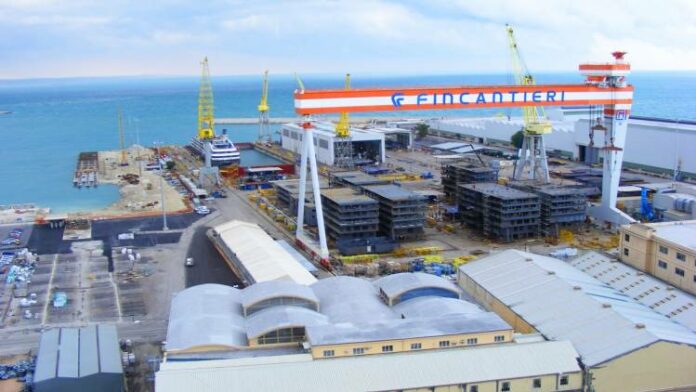
Two Italian shipbuilders – Genova Industrie Navali (GIN), a holding company by two historic Genoese shipyards, T. Mariotti and San Giorgio del Porto, and Fincantieri -have reached a cooperation agreement covering different areas, from new buildings, to ship repair, conversions and outfitting.

The agreement provides for the acquisition by Fincantieri of a minority stake in GIN Group’s holding company and an option for a minority stake in T. Mariotti.

Fincantieri’s stake will allow GIN to achieve further financial strength, an increasingly important asset to face complex projects and to overcome market challenges, especially in the field of small and medium-sized luxury cruise ships construction.

Incidentally,  T. Mariotti's agreement formed a cooperation with Damen under the Mariotti Damen Cruise banner in 2018.  That partnership is starting with a pair of luxury expedition newbuilds for Seabourn.

The Genova Industrie Navali Holding is an holding constituted by San Giorgio del Porto Company (an important name in ship repairs), and T. Mariotti Company (specialising in the construction of luxury vessels) which, coincidentally, both share the same place and date of founding: Genoa (Italy), 1928. The holding company,formed in 2008, has the important role of coordinating and developing the activities of all the maritime companies directly affiliated with it.

Source:marinelink

Moda Midstream Eyes Second TX VLCC Berth

0

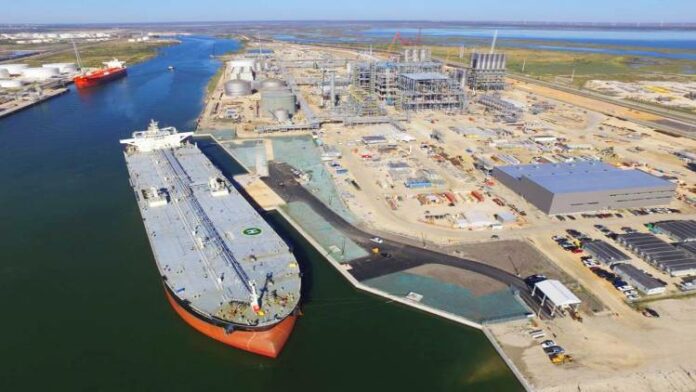
Moda Midstream LLC is considering building a second berth at its Ingleside, Texas, crude export terminal to accommodate booming shale oil production on the Gulf Coast, the company's chief executive said on Thursday.

The expansion to the terminal that loads oil tankers will come as three major pipelines open in the second half of 2019, CEO Bo McCall said in an interview. Moda is also increasing the facility's crude storage capacity to 10 million barrels from 2 million.

"When these new pipelines come online, there is going to be close to 3.5 million barrels a day coming into the market," McCall said. "Demand is very strong. And we're working very fast."

Moda will decide if it will modify additional berths within three months, McCall said. Once approvals are received, the berths could go into use within two years.

U.S. crude exports hit a record 3.36 million barrels per day (bpd) in late February, according to the U.S. Energy Information Administration, as a shale boom lifted production to 12.1 million bpd. The United States began exporting crude in 2016 after Congress halted a 40-year-old export ban and has become a major supplier to global markets.

McCall said he expects U.S. oil exports to rise sharply after new pipeline projects advanced by Plains All American Pipeline LP, EPIC Crude Pipeline LP and Enbridge Inc start service.

Moda purchased the Ingleside facility from Occidental Petroleum Corp last August. The terminal can partially load very large crude carriers, which have the capacity to carry as much as 2 million barrels of oil.

The U.S. Army Corp of Engineers this year is expected to award a contract to dredge the Corpus Christi ship channel to the Ingleside facility to a depth of 54 feet from 47 feet, which would allow Moda's loading ability per supertanker to rise to 1.5 million barrels.

Source:marinelink

Hyundai Heavy clinches official agreement with KDB for DSME takeover

0

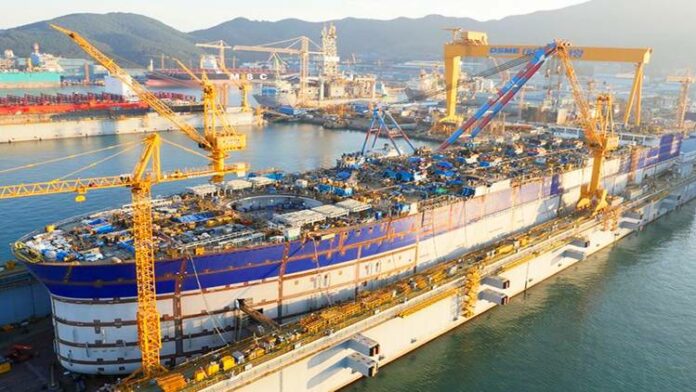
South Korean shipbuilding major Hyundai Heavy Industries (HHI) has signed an official contract with Korea Development Bank (KDB) today for the takeover of Daewoo Shipbuilding & Marine Engineering (DSME).

In January, HHI signed a conditional agreement with KDB to acquire the controlling stake in DSME.

Under the agreement, HHI will create a holding company to control its shipbuilding business after the takeover. HHI will be the largest shareholder of the holding company, controlling a 26% stake while KDB will be granted a 18% stake in the company, becoming the second largest shareholder.

Following the takeover, the major shareholders of DSME including HHI, KDB, National Pension Service (NPS) and KCC will jointly replenish KRW1.5 trillion ($1.3bn) of capital into the company.

Lee Sung-keun, head of shipyards at DSME, has been nominated to take the role of CEO to replace Jung Sung-leep.

The combination of the two shipbuilders would create one of the largest shipbuilding conglomerates in the world, controlling over 20% of the world’s orderbook.

HHI said last month that the aim of the merger is to enhance the overall competitiveness of the South Korean shipbuilding industry.

HHI’s takeover of DSME has been facing strong oppositions from unions of both yards as they worry that the merger will lead to massive layoffs.

Hundreds of union workers had a run-in with police at a protest in front of the KDB building today, after attempting to enter into the building to block the signing ceremony.

ABB to work with BP on upstream electrical needs

0

 BP has named ABB as one of its global main electrical contractors (MEC) responsible for engineering, procurement, and construction of electrical equipment for BP major upstream capital projects.

Under the agreement, which carries an initial five-year term, ABB is committed to deliver innovation, improved scheduling, and lower risk.

Peter Terwiesch, president, Industrial Automation, ABB, said the accord would “further exemplify our resolve to help major oil and gas projects make savings, reduce risk, and enhance efficiencies into the future.”

As a global MEC partner, ABB can take on full responsibility for the design and engineering, procurement and supply, project management, installation, commissioning and on-time start up for overall electrical systems on any projects BP decides to award the contractor.

MSC Bellissima Christened

0

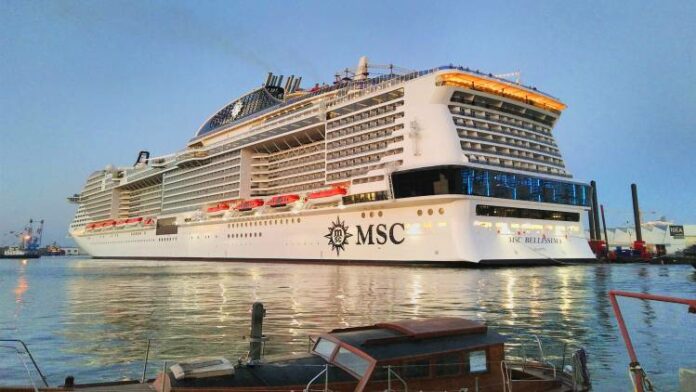
MSC Cruises' Godmother Sophia Loren officially named her 14th ship MSC Bellissima on March 2 in the port of Southampton. 

MSC Bellissima is the second Meraviglia class ship to come into service, designed as the ship for all seasons and including the new guest-centric technology with the introduction of the world's first virtual personal cruise assistant, ZOE. The voice-enabled tool will be located in every cabin and can answer hundreds of questions about the cruise.

The vessel will be fitted with a large number of environmental features and innovative technology to reduce her environmental footprint. Just like her sister ship MSC Meraviglia, she will be equipped with: an exhaust gas cleaning system for cleaner emissions; an advanced wastewater treatment system; smart heating, ventilation and air conditioning systems to recover heat from machinery spaces; and LED lighting and smart devices to save energy. 

MSC Bellissima will spend her inaugural season offering Western Mediterranean cruises. In November 2019, she will reposition to the Gulf, providing weekly sailings out of Dubai. In spring 2020 she will be deployed to Asia.

The 315-meter vessel was built by Chantiers de l’Atlantique; the yard has three Meraviglia generation ships under simultaneous construction in Saint-Nazaire.

MSC Bellissima has become the fourth ship to join MSC Cruises’ fleet in less than two years. As part of MSC Cruises’ newbuilding program, another 13 cruise ships are due to join its fleet by 2027. These include four mega cruise ships capable of welcoming nearly 7,000 guests as well as four smaller ships that will serve the ultra-luxury segment.

MSC Cruises and Chantiers de l’Atlantique also held a coin ceremony for MSC Virtuosa last week. Due to be delivered in November 2020, she will become the fourth Meraviglia Class ship in MSC Cruises’ fleet and the second of three Meraviglia-Plus ships, a larger and enriched version of the Meraviglia prototype with an increased number of cabins, more public space and additional features. 

Source:maritime-executive

SSE mulls sites for Arklow Bank O&M base

0

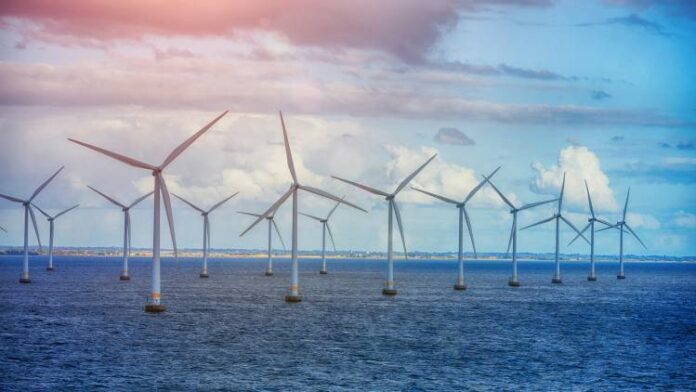
SSE is assessing Wicklow Port and Arklow Harbour in Ireland as possible locations for its operations and maintenance (O&M) hub for servicing the Arklow Bank offshore wind farm.

SSE is developing the 520MW second phase of the Arklow Bank and has appointed local specialist engineering and marine consultancy Gavin and Doherty Geosolutions (GDG) to help select the location for its servicing base.

As part of the process GDG is providing an engineering appraisal of individual port-side facilities in both Arklow and Wicklow against a set of constraints and development requirements identified by SSE and wind turbine suppliers.

The study will be completed in a few months’ time with the preferred location chosen by early summer.

Arklow Bank’s second phase will be based off the coastline of County Wicklow on Ireland’s eastern seaboard. The first phase of Arklow Bank consists of 25.2MW of operational capacity, owned by GE.

The O&M base will support around 60 full-time employees as well as various companies across the supply chain, including those involved in vessel services, fuel supplies, technical inputs, and loading and unloading of project cargoes.

According to SSE the development of the service base and associated long-term employment represents an opportunity for significant new investment and ongoing economic activity in County Wicklow.

The study, currently underway, is considering the marine infrastructure required for the O&M hub, such as the type and number of crew transfer vessels necessary to support the wind farm, and the layout and requirements of any permanent quayside operations buildings.

Development plans for the facility will then be subject to the normal planning application and consultation process.

SSE Arklow Bank Wind Park project manager James O’Hara said: “In north-east Scotland, where we are currently developing the 588MW Beatrice offshore wind farm in the Moray Firth, we have seen the creation of a major new operations base in nearby Wick Harbour to support the wind farm."

“This has involved the renovation of existing harbour buildings and facilities, out of which 90 local and full-time employees will be based to support the wind farm when completed.”

O’Hara said in selecting the location for the facility SSE will have full regard for the technical requirements of the proposed base, as well as local stakeholder interests.

“To that end, we are actively engaging with community representatives in both towns to fully understand stakeholder interactions and current user activities in each port location,” he said.

Source:renews