1.4 C
New York
Home Blog Page 1114

Watch: Propeller installation at Spectrum of the Seas

0

This video published by the Royal Caribbean, depicts the installation of the ship's massive propellers for its azipod propulsion system. Designed especially for the Chinese market, Spectrum of the Seas will be the largest and most expensive ship in Asia when it sails from Shanghai, China starting in June 2019.

Now, Spectrum of the Seas is nearing completion, as it was floated out of the dry dock on February 25, 2019, to start the next phase of construction at Meyer Werft shipyard in Papenburg, Germany. Spectrum will be delivered in April 2019, and will be operating in the Chinese market.

The dry dock was filled with 277,000 cubic metres of water, which equals to 86 olympic-sized swimming pools.

Two tugboats, with 9,000 horsepower each, pulled the ship out of the dry dock.

However, at a speed of only 1 knot, Spectrum of the Seas was moving slightly faster than a sloth.

Now, the ship will undergo its final touches before being delivered in April.

Source:safety4sea

UK north east eyes sector deal riches

0

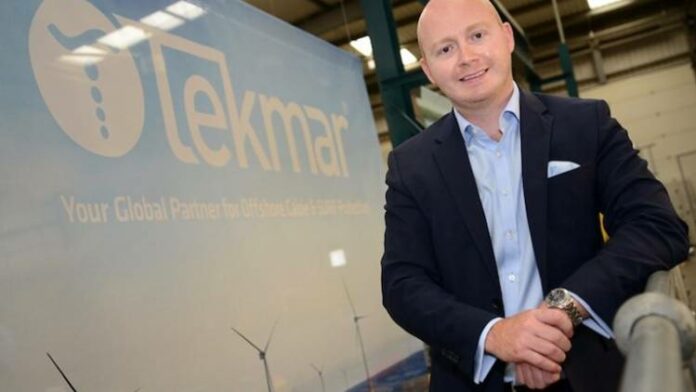
The supply chain in the north east of England is “fit and ready” to support offshore wind growth following the sector deal between industry and government, according to the region's offshore wind cluster Energi Coast.

The cluster was formed in 2011 by energy sector business developers NOF to champion the north east's supply chain companies.

Energi Coast chairman and Tekmar Group chief executive James Ritchie (pictured) said: “The sector deal for the offshore wind industry is a significant step forward in creating a sustainable industry and providing real value creation to our local supply chain, which is fit and ready to serve our growing sector.”

He added that the deal will support the development of supply chain clusters in the region.

This region has been instrumental in the establishment of the UK offshore wind industry and has led the way as a major contributor to local content with innovative subsea and offshore technology.

“We hope to increase our role to play as the industry evolves further on the back of this significant sector deal,” he said.

Energi Coast covers a range of industries delivering services to the offshore wind industry including foundations, design, cables and cable laying, as well as port facilities and operations and maintenance support.

NOF chief executive George Rafferty said: “The sector deal has the potential to attract considerable inward investment to the UK and in turn generate thousands of jobs in the supply chain."

Innovative British companies, particularly those in the north east England cluster, have been integral to the helping the UK establish a world-renowned offshore wind industry and the sector deal will support further development in the supply chain.

This will aid the use of more local content in both construction and operations and maintenance of UK offshore wind farms, but also in the export of skills, products and services to other parts of the world.

Source;renews

ScottishPower plans offshore wind push

0

ScottishPower is “actively pursuing” future offshore wind projects in England and Scotland as part of a £6bn investment plan.

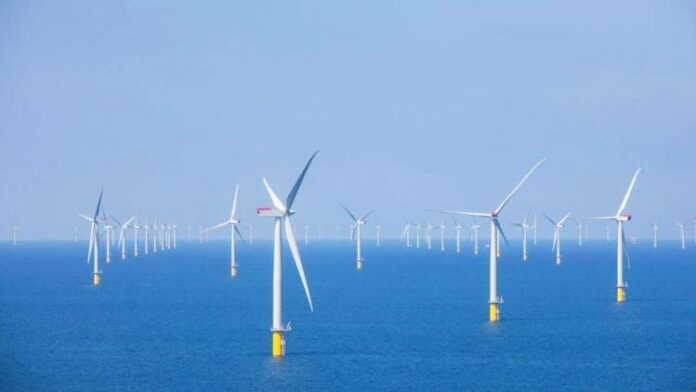
Chief executive Keith Anderson (pictured, left) said that offshore wind sector deal, announced yesterday, will “drive the transformation of offshore wind generation, increasing the amount of low-cost, low-carbon generation for the UK”.

He added that ScottishPower aims to build more wind farms on top of the projects it already has under development.

Construction is underway at the 714MW East Anglia 1 project off the east coast, and the company has planning consent for the up to 1.2GW East Anglia 3 development.

Planning consultations are also currently taking place for the 900MW East Anglia 2 and 800MW East Anglia 1 North wind farms. If granted consent the former will kick off construction in 2024 and the latter in 2025.

Anderson said: “Two of our offshore wind farms in East Anglia will replace all of the old thermal generation we’ve sold and we are ready to invest more by actively pursuing future offshore projects both north and south of the border."

We have a fantastic supply chain already in place in the UK, from businesses in and around East Anglia to across England, across Scotland as well as Northern Ireland.

The sector deal will attract even more businesses in the UK to join the offshore wind supply chain and we are excited to see the transformative impact this will have on our projects.

“We’re pleased the importance of UK businesses is recognised within the sector deal investing £250m into the UK supply chain.”

Source:renews

ABS: Guidance on safe use of Remote Inspection Technologies

0

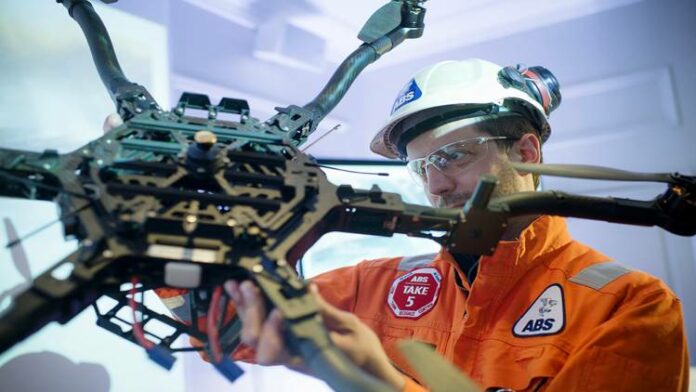
ABS published guidance notes on the use of remote inspection technologies, detailing best practices for their use on class surveys and non-class inspections. The guidance notes cover pilot-operated unmanned aerial vehicles, remotely operated underwater vehicles and robotic crawlers, collectively known as remote inspection technologies (RITS).

The use of RITs can reduce risk for Surveyors and inspectors by lessening the need to access potentially hazardous locations at height, or other hazardous inspection areas. This guidance facilitates safer, more effective and efficient, use of these technologies,

…said John McDonald ABS Senior Vice President, Western Hemisphere Operations.

Remote Inspection Vehicle (RIV) Operational Considerations

-In-operation

The remote inspection Service Provider should possess an organizational Standard Operation Procedure (SOP) for each RIV operation. The following action items are recommended to be included in the SOP, at a minimum:

i) Checklist Clearance: The checklist should contain relevant system checks, inspection condition checks, personnel readiness checks, communication equipment checks, and testing RIV operation checks (e.g., flight for UAV, magnetic capability for crawler, underwater operation for ROV).

ii) RIV Launch and Recovery Zones: For typical restrictions of launch and recovery zones to be considered, see Section 4, Table 3, below:

  • UAVS: Launch and recovery zones should be identified, and access should be restricted. It is recommended that the designated landing zone(s) remain clear of any personnel and obstacles during the inspection process in case of any unexpected lost-link incidents.
  • ROVs: Launch and recovery zones should be identified, and access should be restricted. It is recommended that the designated launch and recovery zones remain clear of any personnel during the inspection process to avoid tripping hazards of tethers.
  • Robotic Crawlers: Launch and recovery zones should be identified, and access should be restricted. It is recommended that the designated launch and recovery zones remain clear of any personnel during the inspection process in case of any unexpected dropped crawlers and modules

iii) Communication: If the communication signal is lost or experiences significant interference, the operation should be aborted immediately. The time and duration of each lost-link event should be recorded by the RIV operations team and reported through the incident reporting system in Safety Assurance.

iv) Documentation: Whenever conditions that do or may affect Classare found during operations, reference data (i.e., still image capture, location and orientation in relation the vessel, etc.) should be properly documented for final reporting and be documented in the operations and maintenance logbooks.

v) Visual Line of Sight (VLOS) for UAVs: Some aviation authorities require human direct and unaided VLOS be maintained throughout the operation. It is recommended that VLOS be maintained even if no regulatory requirement applies. Extended VLOS (EVLOS) or beyond VLOS (BVLOS) can be accepted upon agreement by all parties when no regulatory requirements apply.

vi) De-confliction for UAV: Procedures should be in place so that adequate de-confliction with helicopters or surface vessels servicing the asset is achieved (e.g., There should be no UAV operations for external inspection within 30 minutes prior to scheduled helicopter activities). The attending Surveyor should be present and direct the RIV operations team, as needed, with regard to the survey requirements

Seaways International takes delivery of two Damen FCS 2206

0

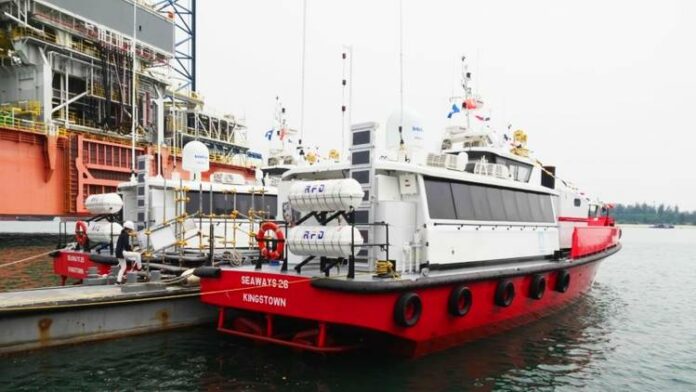
On March 4th at Damen Shipyards Singapore, Seaways International took delivery of two Damen Fast Crew Suppliers (FCS) 2206. The Dubai-headquartered company has previously operated a Damen FCS 3307. Seaways International specialises in offshore marine services and will use the new vessels to transport crew to offshore energy locations in West Africa, Damen said in a press release.

Damen signed the contract with Seaways International on 9th of May 2018. The swiftness of the delivery is due to Damen’s philosophy of standardised shipbuilding. Building vessels in series and for stock enables the group to deliver proven technology to its clients in the fastest possible timeframe.

Kush Nijhawan, Director of Seaways International said, “Having worked with Damen before, we felt very confident in returning to them for these Fast Crew Suppliers. Not only were Damen able to deliver the vessels to us very quickly, they were able to customise their proven design exactly as we needed it.”

Though part of the group’s standardised vessel portfolio, Damen has tailored Seaways International’s Fast Crew Suppliers 2206 including the addition of FiFi with a capacity of 600m3 per hour and a throw length of 85 metres, additional accommodation and crew facilities, business class seating, fuel monitoring and a full 3G WiFi system.

The vessels will carry up to 30 passengers as well as six crew. Featuring Damen’s Sea Axe hull shape, the FCS 2206 provides optimal seakeeping at speeds of up to 30 knots.

Damen Sales Manager Hidde Nooteboom said, “We are very pleased to deliver these, the first two of a three vessel order, to Seaways International. We are honoured by the trust Seaways International has placed in Damen to help support the expansion of their business. During the project we have enjoyed an excellent collaboration with the client’s project team, which has enabled us to develop an outstanding all-round crew supplier according to the highest standards.”

The vessels will be transported on a heavy-lift vessel to Luanda, Angola. The third vessel is currently under construction at Damen Shipyards Antalya, in Turkey and is scheduled for delivery in July.

PTTEP makes gas discovery offshore northern Australia

0

PTTEP Australasia has made a gas and condensate discovery with the Orchid-1 exploration well in permit AC/P54 in the Timor Sea.

Drilling began in January and reached a TD of 2,925 m (9,596 ft). The Orchid-1 well encountered gas and condensate with net pay thickness around 34 m (112 ft).

PTTEP said the result will be incorporated into development planning of the Cash-Maple field, which is estimated to contain 3.5 tcf of resources.

Source:offshore-mag

SEALNG Welcomes Vancouver Fraser Port

0

The Vancouver Fraser Port Authority has joined SEALNG, the multi-sector industry coalition aiming to accelerate the widespread adoption of liquefied natural gas (LNG) as a marine fuel. Vancouver Fraser Port  is the first North America port member to join the industry group.

The Vancouver Fraser Port Authority is the federal agency of the Port of Vancouver, Canada’s largest port, and the fourth port member to join the coalition, alongside Port of Rotterdam, Yokohama-Kawasaki International Port Corporation (YKIP), and most recently the Maritime and Port Authority of Singapore (MPA). Together, the ports remain committed to supporting the coalition’s vision of a competitive global LNG value chain for cleaner maritime shipping.

Peter Keller, SEALNG chairman, commented: “We are pleased to welcome the Vancouver Fraser Port Authority to our growing coalition and look forward to leveraging their expertise to realise our vision of developing LNG infrastructure in ports around the globe to enable quick, safe, and cost-effective bunkering.”

SEALNG’s vision of a competitive global LNG value chain for cleaner maritime shipping by 2020 has clear synergies with the Vancouver Fraser Port Authority and British Columbia’s efforts to drive further use of natural gas in the Canadian region. The Vancouver Fraser Port Authority is working closely with the regional gas supplier, Fortis BC, and with industry, academia and government to advance LNG bunkering in the Port of Vancouver.

Duncan Wilson, Vice President, Environment, Community and Government Affairs of the Vancouver Fraser Port Authority, commented: “As part of our vision to be the world’s most sustainable port, we engage in a number of emissions management initiatives that help support a healthy environment. This partnership with SEALNG represents an opportunity for us to be part of a multi-sector group that is reducing marine shipping emissions and improving air quality.”

SEALNG continues to unite key industry players from across the LNG marine value chain, from major LNG suppliers, shipping companies, infrastructure providers, downstream companies, and shipyards, to OEMs (original equipment manufacturers), classification societies, port authorities, shipbrokers, and financial institutions, to address the commercial barriers to LNG, particularly in the deep-sea shipping segment.

Together, the coalition advocates for collaboration, demonstration, and communication on key areas such as regulation, emissions, infrastructure, and the economic case, to provide the confidence and demand required for an effective and efficient global LNG value chain by 2020 and beyond.

To date, LNG presents the most promising path to decarbonisation as all other alternative fuels are too embryonic for deep-sea shipping. LNG emits zero sulphur oxides (SOx) and virtually zero particulate matter (PM), and compared to existing heavy marine fuel oils, LNG emits 90% less nitrogen oxides (NOx).

Through the use of best practices and appropriate technologies to minimise methane leakage, realistic reductions of GHG by 10-20% are achievable, with a potential for up to 25% or more as technology develops, compared with conventional oil-based fuels. LNG, in combination with efficiency measures being developed for new ships in response to the IMO’s Energy Efficiency Design Index (EEDI), will provide a way of meeting the IMO’s target of a 40% decrease in GHG by 2030 for international shipping.

SEALNG, in conjunction with SGMF, is undertaking studies and developing tools for the industry to better understand the true benefits of LNG from both an air quality and GHG mitigation perspective. The coalition continues to encourage meaningful debate using accurate, independent data which has been academically verified through sound analysis.

Source:marinelink

Keppel receives repeat harsh environment semisub order from Awilco

0

Awilco Drilling PLC has exercised an option for a second mid-water harsh environment semisubmersible from Keppel FELS Ltd.

The terms of this repeat order are subject to the finalization and entry into definitive agreements between the parties within 15 days of the exercise of the option.      

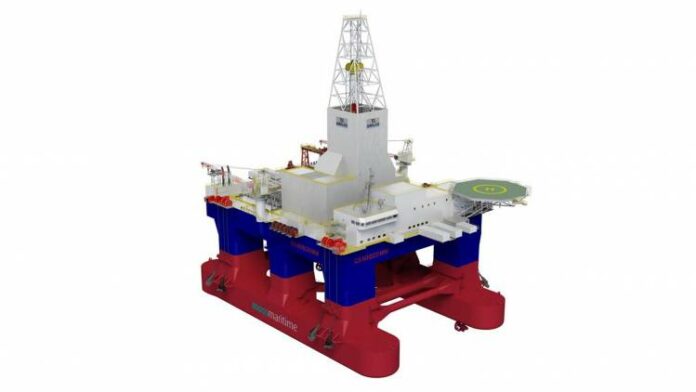
As with the first $425-million order, signed in March 2018, the rig will be built to Moss Maritime’s CS60 ECO MW design. Delivery is scheduled for 1Q 2022.

Like the first rig, it is specially designed, configured, and outfitted for mid-water operations in water depths up to 1,500 m (4,921 ft). The drilling rig will be able to operate in harsh environments, including the Norwegian continental shelf, the UK continental shelf, and the Barents Sea.

Equipped with a hydraulic hoisting system capable of two million pounds of lifting capacity, it also features an optimized 12-point thruster assisted mooring system for vessel station keeping, complete with hybrid power supply and energy saving features.

As part of that transaction, Awilco has independent options to order up to another two similar rigs to be exercised in 2020 and 2021, respectively.

Tan Leong Peng, Executive Director (Offshore) of Keppel O&M, said: “Work on the first rig is progressing well and we will be able to benefit from economies of scale and cost efficiencies from undertaking a repeat project. For this second rig, we will be able to leverage the engineering and construction process of the first rig to further improve productivity.”

Sigurd E. Thorvildsen, chairman of the board of Awilco, said: “We have exercised the first of our three options because we see growing demand for such mid-water, harsh environments rigs in northwest Europe…”

Source:offshore-mag

Blockchain could boost transparency in fisheries, says new study

0

Blockchain could boost transparency of the aquaculture sector by providing a means to trace and record the entire fish supply chain, according to a new report by DNV GL and Deloitte. The report suggests that data from the ‘bait to plate’ could be stored in a publicly available blockchain, which will help to appease public, industry and consumer concerns about sustainability and food safety.

Blockchain could offer a way of improving confidence in the industry and its products. As a decentralized database that is based on well-established cryptographic principles that allow for the recording of unalterable transactions logs, it may serve to create transparency and establish trust in sustainable fishing sources and practices.

If the fish was produced on a farm, the owner could upload information about the farm itself, e.g. a code of conduct, or information about people and fish welfare. The blockchain could also be used to record the composition of the feed and water conditions. Fish caught at sea could be tagged with the location of the trawler and the fishing method, storage conditions (temperate, humidity) could also be logged.

Similar information could then be collated in the processing plant and transportation to the supermarket shelf. At the point of purchase, the consumer would be able to scan a smart label and get instant access to this information.

The potential benefits of making data available on a blockchain go beyond the consumer. The transparency of the supply chain increases the effectiveness of audits and communication between different parts of the supply chain. Financial institutions and insurance companies will get a much clearer insight into operations and will therefore be able to tailor their products accordingly; public administrations would be able to improve their license management and monitoring.

However, to achieve the complete data trail, significant barriers must be overcome, such as commonly low degrees of digital maturity and some key player’s reluctance to share information, the report adds.

The authors of the study conducted interviews with stakeholders across the whole supply chain and found several barriers to the uptake of blockchain. There is already extensive record keeping but traceability data has not been prioritized and companies are often reluctant to share that information. Currently, it is often kept in siloed legacy systems.

The business case is not yet clear enough for companies to make the investment, and the potential value of data in a blockchain is not fully understood.

Source:safety4sea

Wärtsilä’s dual technology offering provides full fleet coverage of Eletson’s BWMS requirements

0

The technology group Wärtsilä’s dual technology option for Ballast Water Management Systems (BWMS) will enable Greece based operator Eletson Corporation to have its entire fleet retrofitted from a single provider. A total of 23 product oil, chemical, and LPG carriers of the company’s fleet will be retrofitted with up to 69 Wärtsilä BWMS units, comprising of both their Aquarius UV (ultra-violet) and Aquarius EC (electro-chlorination) systems. The order was booked in February 2019.

The International Maritime Organization’s (IMO) Ballast Water Management Convention came into force for newbuild vessels in September 2017, and for existing vessels by their next special survey after September 2019. It is aimed at preventing the spread of harmful aquatic organisms from one region to another, and at halting damage to the marine environment from ballast water discharge.

“For Eletson, the BWMS supplier selection was a very important decision. Compliance enablement was naturally a prime requirement, but also the track record, the lifecycle costs, and the supplier’s support capabilities had to be considered. For all these reasons, we chose Wärtsilä,” says Lazaros Skoularikos, COO of Eletson Corp.

“Ballast Water Management Systems are one part of Wärtsilä’s extremely strong portfolio of environmental solutions. As the only dual technology provider in this field, we can meet all the requirements of ships with differing operational profiles, which gives the customer all the benefits of having to deal with only one supplier,” says Timo Koponen, Vice President, Processing Solutions, Wärtsilä Marine.

The Wärtsilä BWMS technology is well proven for its efficiency and robustness. The Wärtsilä Aquarius UV BWMS has successfully completed all the required testing procedures and has been submitted for US Coastguard (USCG) Type Approval. This follows the International Maritime Organization’s (IMO) Type Approval for the Aquarius UV system, which was granted in 2012. The USCG approval process is extensive and involves both land and sea testing. The company’s alternative BWMS technology, the Wärtsilä Aquarius EC, was granted USCG Type Approval in August 2018, and IMO Type Approval in 2013.